
Affiliate disclosure: Adventurism is reader-supported. Some links on this page are affiliate links, including Amazon Associates links. If you buy through them, we may earn a small commission at no extra cost to you. It never changes what we recommend.
Short answer: if you hike where there is no cell service, carry a way to call for help by satellite. A Garmin inReach Mini 3 is the best standalone choice because it can send SOS, texts and tracking without your phone. ZOLEO is the cheaper device and gives you your own SMS number and email, but you type messages through your phone. Phone satellite SOS (iPhone 14 and later, Google Pixel 9 and some others) costs nothing extra and is a real backup, but it depends on your phone’s battery and on aiming at the sky. A PLB has no subscription but can only send an SOS.
How we put this together: this comparison is based on manufacturer plan pages (Garmin, ZOLEO) and published field tests such as Backpacker’s satellite communicator review. We have not timed SOS responses ourselves. Prices and plans were checked in early November 2026 and change often, so confirm before you buy.
Quick Comparison
| Garmin inReach Mini 3 | ZOLEO | Phone satellite SOS | PLB (e.g. ACR ResQLink) | |
|---|---|---|---|---|
| Network | Iridium | Iridium | Varies by phone (Globalstar for iPhone, Skylo for many Androids) | Cospas-Sarsat rescue satellites |
| Works without phone | Yes (touchscreen texting) | SOS and check-in only | It is the phone | Yes (SOS only) |
| Two-way texting | Yes | Yes, via app | Limited; depends on phone and carrier | No |
| Device price (approx.) | $449.99 list (Mini 3 Plus $499.99) | About $199 | $0 extra | About $300-$400 |
| Monthly plan | $7.99-$49.99, plus $39.99 activation | $19.99 or $34.99, plus $19.99 activation, 3-month minimum | Apple: free for 2 years after activation; others vary | None (registration required) |
| Pause service | Free suspend, up to 12 months at a time | $4.50/month (no SOS while paused) | n/a | n/a |
| Rescue coordination | Garmin Response (24/7) | 24/7 monitoring via Global Rescue | Relayed to emergency services | Government search and rescue |
Subscription Cost: What a Hiking Season Really Costs
The device is a one-time cost. The plan is what adds up. Here is how the entry-level options compare for someone who texts a little:
| Plan | Monthly | Included satellite messages | Activation |
|---|---|---|---|
| Garmin Enabled | $7.99 | SOS + pay-as-you-go | $39.99 |
| Garmin Essential | $14.99 | 50 texts / weather requests | $39.99 |
| Garmin Standard | $29.99 | 150 texts, unlimited tracking | $39.99 |
| ZOLEO Prepare | $19.99 | 50 (check-ins count) | $19.99 |
| ZOLEO Protect | $34.99 | Unlimited | $19.99 |
Example: a five-month hiking season on Garmin Essential is about $75 plus activation, and you can suspend the plan for free in winter. ZOLEO Prepare for five months is about $100 plus activation, and after the 3-month minimum a pause costs $4.50/month. SOS messages never count against your allowance on either service.
Garmin inReach Mini 3: Best Standalone Messenger
Garmin launched the inReach Mini 3 and Mini 3 Plus in late 2025. Both add a color touchscreen so you can type and read messages on the device itself, without pairing a phone. The Plus adds photo and voice messages. The older inReach Mini 2 is still sold and is a good value if you mostly use preset messages and the Garmin Messenger app.
- Best for: solo hikers, people whose phone may die or break, and anyone who wants tracking that family can follow.
- Trade-offs: highest device cost, and you need an active plan for messaging.
ZOLEO: Best Value and Easiest to Text With
ZOLEO is a small, screenless puck that uses the same Iridium network as Garmin. Every plan gives you a dedicated ZOLEO phone number and email address, so people at home can text you first, and messages automatically go over cellular or Wi-Fi when you have a signal. On its own, the device can send only a check-in and an SOS. You need the ZOLEO app on your phone to write custom messages or get weather.
- Best for: hikers who always carry a phone and want the cheapest two-way device.
- Trade-offs: phone-dependent messaging, 3-month minimum plan, and paused plans cannot send SOS.
Phone Satellite SOS: A Free Backup, Not a Replacement
An iPhone 14 or later can text emergency services by satellite when there is no cell or Wi-Fi signal, and Apple says the service is free for two years after activation. Google Pixel 9 phones in the U.S. offer Satellite SOS with Garmin Response handling the emergency coordination. Some carriers, such as T-Mobile’s T-Satellite, now add satellite texting for a monthly fee on some plans.
- Pros: nothing extra to buy or carry.
- Cons: you need clear sky, it can take minutes to connect, and when your phone battery dies, so does your rescue plan. Cold weather drains phones fast.
If you rely on your phone, carry a power bank and keep the phone warm in an inside pocket. Check your phone’s satellite demo mode at home before your trip.
PLB: SOS Only, No Subscription
A personal locator beacon sends a powerful distress signal to government search-and-rescue satellites. There is no plan to pay, and it is built to work in harsh conditions, but it is one-way: you cannot tell rescuers what happened or get a reply. It is a good choice if you want the simplest possible emergency button. Learn more in our guide to emergency beacons vs. signal flares.
How an SOS Actually Works: A Walkthrough
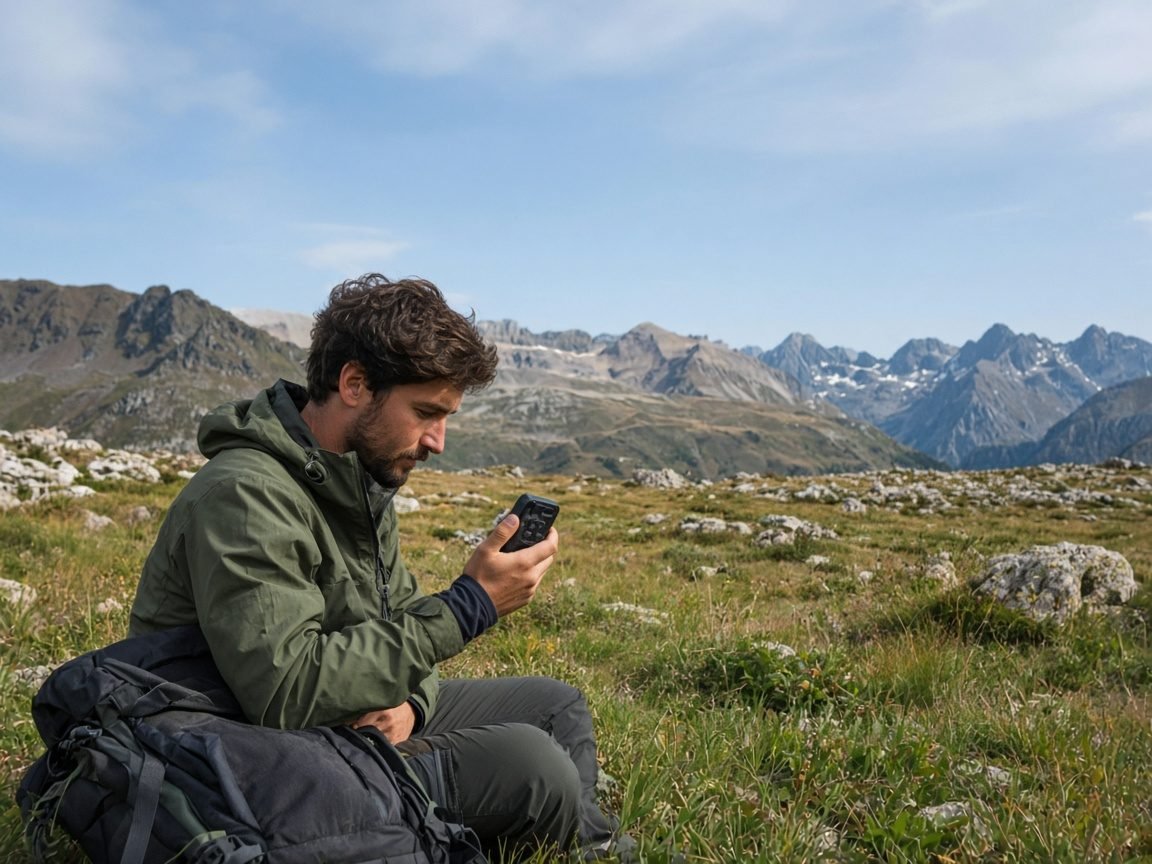
- Before the trip: activate your plan, update the firmware or app, add emergency contacts, and send a test message from your driveway. Tell someone your route and turnaround time. Our guide to assessing trail risks helps here.
- Decide it is an emergency: life, limb or eyesight at risk, or you cannot get yourself out. For a non-emergency (late, minor injury, need advice), send a normal message instead.
- Get a clear view of the sky: move out of deep canyons or heavy tree cover if you safely can.
- Trigger SOS: lift the cover and hold the SOS button (inReach or ZOLEO), or follow the on-screen prompts on your phone.
- Answer the questions: two-way devices let the response center ask what happened, how many people are hurt, and your condition. Keep replies short.
- Stay put and save battery: keep the device on and facing the sky, and stay where you sent the SOS unless it is unsafe.
- Treat injuries while you wait: a good kit matters. See our hiking first aid kit guide and common hiking injuries.
Which Should You Buy?
- Solo hiker or remote routes: Garmin inReach Mini 3 (or Mini 2 to save money).
- Budget-minded, always carry a phone: ZOLEO.
- Day hikes on popular trails with spotty service: phone satellite SOS plus a power bank is a reasonable minimum.
- Want zero subscriptions: PLB.
Pair any of these with a real navigation plan. See our best hiking GPS devices, how to track backcountry weather, and tips for backpacking alone. Heading out this winter? Add winter traction too.
Frequently Asked Questions
Is a Garmin inReach worth it for day hikes?
If you hike where there is no cell service, alone, or in winter, yes. For busy trails with partial service, phone satellite SOS plus a power bank may be enough.
Is ZOLEO better than inReach?
ZOLEO is cheaper to buy and gives you a dedicated phone number and email, but it needs your phone for custom messages. The inReach Mini 3 works fully on its own. Both use the Iridium network.
Can my iPhone replace a satellite messenger?
An iPhone 14 or later can text emergency services by satellite, which is a useful backup. It depends on your phone’s battery and a clear view of the sky, so many hikers still carry a dedicated device on remote trips.
Do I need a subscription for a satellite messenger?
Garmin inReach and ZOLEO need an active plan to send messages and SOS. A PLB has no subscription but only sends a one-way distress signal.
Does sending an SOS cost money?
SOS messages are included in Garmin and ZOLEO plans and do not count against your message allowance. Rescue costs depend on where you are and who responds, so check local rules or consider rescue insurance.
The Bottom Line
Carry a satellite option whenever you leave cell coverage. Buy the inReach Mini 3 if you want a standalone device, ZOLEO if you want the best value and always carry a phone, and treat phone satellite SOS as a free backup rather than your only plan.