

Surfing isn’t just about riding waves; it’s about respect, safety, and understanding the unspoken rules of the water. Whether you’re new to surfing or experienced, following proper etiquette ensures a safer and more enjoyable experience for everyone. Here’s what you need to know:
- Prioritize Safety: Always wear a leash, control your board, and check conditions before entering the water.
- Respect Wave Priority: The surfer closest to the wave’s peak has the right of way. Avoid dropping in or cutting others off.
- Communicate Clearly: Use signals or shout your direction (“Going left!”) to avoid confusion and collisions.
- Paddle Smart: Stay out of the impact zone and use channels to paddle back to the lineup.
- Respect Locals and the Environment: Observe the lineup, start on the wave’s shoulder, and leave the beach cleaner than you found it.
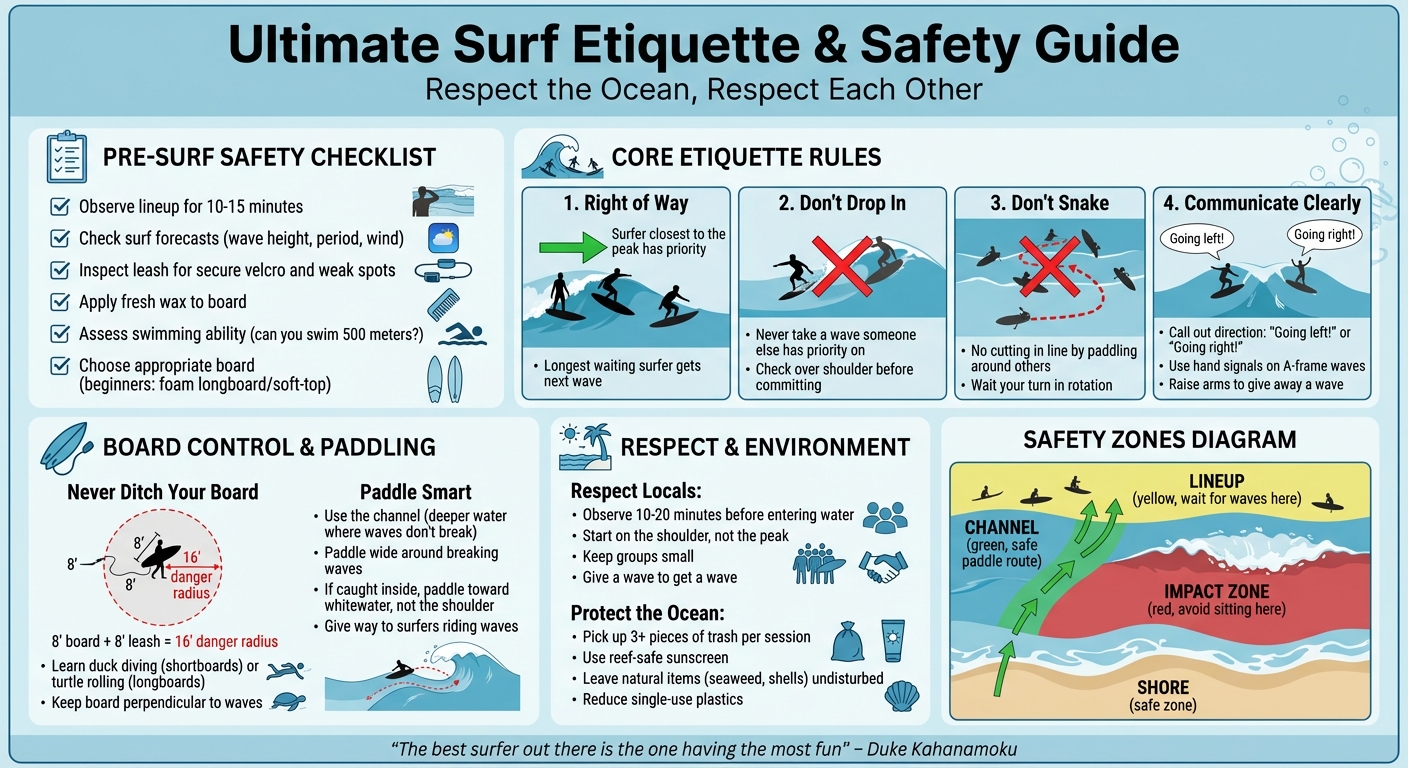
Essential Surf Etiquette and Safety Rules for Beginners and Experienced Surfers
THE SURF ETIQUETTE (Surf rules, priorities, safety rules) – How to surf
sbb-itb-5a98267
Surf Etiquette Basics
To surf safely and respectfully, it’s essential to understand the basics of surf etiquette. Think of it as the unspoken "rules of the road" for the ocean – a set of guidelines that help prevent chaos and ensure everyone can share waves peacefully.
The lineup, where surfers wait for waves, is constantly shifting. These rules bring order to the lineup, giving everyone a fair shot at catching waves while keeping safety a top priority. Without them, the ocean could quickly turn into a free-for-all.
Why Surf Etiquette Matters
Good surf etiquette plays a key role in keeping the water safe and enjoyable. By establishing clear rules for wave priority and paddling behavior, it helps prevent collisions. Without these guidelines, boards and bodies would inevitably collide.
It’s not just about safety, though. Proper etiquette also helps reduce tension in the lineup. When surfers feel disrespected, conflicts – both verbal and, occasionally, physical – can arise. As Jake Howard, Editor in Chief of SURFER, puts it:
"If everyone’s playing by the rules, there should be enough empty waves and wide-open faces for everyone."
Fairness is another reason surf etiquette matters. A system of taking turns ensures that everyone, regardless of skill level, gets a chance to enjoy the waves. This shared respect for the ocean as a resource helps create a more welcoming environment.
Core Principles of Surf Etiquette
At the heart of surf etiquette are a few key rules designed to keep things safe and harmonious. The most important is the right of way: the surfer closest to the peak – where the wave starts to break – has priority. This prevents multiple surfers from dropping in on the same wave, which could lead to dangerous collisions. Many lineups also follow a "gentleman’s rule", where the surfer who has been waiting the longest gets the next wave.
Respect for personal space and taking turns are equally important. Avoid "snaking", which is when someone paddles around another surfer to steal their spot – it’s the ocean equivalent of cutting in line. Similarly, don’t "hog" waves. Even if you’re skilled enough to catch every wave, sharing ensures everyone in the lineup has a good experience.
Clear communication and proper board control are also crucial. Use verbal cues like "going left!" or hand signals to let others know your intentions, especially when riding A-frame peaks that can be shared. Always maintain control of your board – letting it go in a crowded lineup can turn it into a dangerous weapon. These practices not only protect everyone in the water but also make surfing more enjoyable for all.
Safety Rules for Surfing
While practicing good etiquette keeps the vibe friendly in the water, safety rules are all about protecting everyone out there. These aren’t optional – they’re must-follow guidelines.
Pre-Surf Safety Preparation
Before you even touch the water, take 10–15 minutes to observe the lineup and check reliable surf forecasts like Surfline or the National Weather Service. Look for details like wave height, period, and wind conditions. For instance, a 3-foot swell with a 20-second period packs way more energy than one with a 10-second period, which can mean waves that are nearly twice as tall. These steps not only help you stay safe but also ensure you’re respecting others in the lineup.
Your gear plays a huge role in keeping you safe. A surfboard leash is non-negotiable – it keeps your board from turning into a runaway missile and ensures you stay connected to your main flotation device. As Robert Elgar from Watersport Geek puts it:
Your surfboard is your flotation device, and keeping it attached to you is highly recommended.
Choose the right wetsuit for the water temperature and apply fresh wax to your board before every session for better grip. If you’re a beginner, go for a high-volume board like a foam longboard or soft-top – they’re easier to handle and less likely to hurt someone. And be honest about your swimming skills – if you’re not confident you can make it back to shore without your board, it’s best to stay out of challenging conditions.
Maintaining Board Control
Once you’re prepped, the next priority is keeping control of your board at all times. Never let go of your board – ditching it creates a serious hazard. Andrew Iida, Head Writer and Resident EMT at Everyday California, explains:
If you have an 8′ board with an 8-foot leash, ditching your board means that anyone within a 16′ radius of you is in danger.
Instead, learn techniques like duck diving (for shortboards) or turtle rolling (for longboards) to get under waves safely. Always keep your board perpendicular to incoming waves – going parallel increases the risk of losing control or getting hit by your own board.
Make it a habit to check your leash before every session. Ensure the velcro is secure and there are no weak spots. In emergencies, grab the leash where it connects to the board to reduce its swing radius. Mastering board control is a key skill before you tackle the more challenging parts of the surf zone.
Avoiding the Impact Zone
The impact zone – where waves break hardest – is the riskiest spot in the lineup. Sitting between the shore and breaking waves puts you in a collision hotspot. Instead, look for the "channel", a deeper area where waves don’t break, and use it to paddle out safely.
When paddling back to the lineup after catching a wave, take a wide route around the breaking waves to avoid crossing paths with other surfers. If you’re caught in the wrong spot and someone is riding toward you, paddle toward the whitewater (behind the surfer) instead of heading for the open face of the wave.
Visiting a new surf spot? Check it out during low tide to spot hidden hazards like boulders, reef heads, or sandbars that might be invisible at high tide. And always respect the ocean’s power – it’s a force to be reckoned with. Water is heavy and unforgiving, so stay cautious and aware.
Key Surf Etiquette Rules
Now that we’ve covered safety basics, let’s dive into some essential etiquette rules to keep things running smoothly in the lineup.
Right of Way and Wave Priority
On A-frame waves that break both left and right, two surfers can share the wave – if they communicate clearly. A quick call of "left" or "right" lets everyone know which direction you’re heading, reducing confusion and the chance of collisions.
In many lineups, there’s also an unwritten rule: the surfer who has been waiting the longest at the peak gets priority. Jake Howard, Editor in Chief at SURFER, describes this as a way to maintain fairness, especially in crowded conditions. If you’re new to a spot, take 10–15 minutes to watch from the shore. Observe how the locals interact, and consider starting out on the shoulder – the outer edge of where waves break – before moving into the prime takeoff zone.
These guidelines help avoid conflicts, which brings us to two major no-nos: dropping in and snaking.
Avoiding Dropping In and Snaking
Respecting wave priority means steering clear of two common mistakes: dropping in and snaking.
Dropping in – taking off on a wave someone else already has priority for – is one of the biggest breaches of surf etiquette. Not only does it ruin the ride for the other surfer, but it also increases the risk of accidents. Luís MP, Founder of SurferToday.com, puts it simply:
Drop in may result in severe injuries and damaged surfboards, so don’t do to others what you wouldn’t want to be done to yourself.
Before committing to a wave, always glance over your shoulder toward the peak to ensure no one else is already on it. If you accidentally drop in, exit the wave immediately and apologize.
Similarly, snaking – cutting in line by paddling in an "S" pattern to gain priority – disrupts the flow of the lineup. It’s a surefire way to spark verbal confrontations or create unnecessary tension.
Proper Paddling Etiquette
Good paddling habits are essential for avoiding collisions and keeping the lineup orderly.
When paddling back out, always give way to surfers riding waves. Avoid paddling straight through the main takeoff zone; instead, use the channel – a deeper area where waves aren’t breaking – or take a wide route around the action. If a surfer is heading toward you while you’re caught inside, aim for the whitewater instead of the wave’s face.
Surfline offers this advice:
If you find yourself paddling out into the path of another surfer, it’s always wise to head for the whitewater, not the shoulder. It might mean a few extra duck-dives, but it’s by far the safest and most considerate move.
Plan your paddle-outs during lulls between sets to avoid interfering with riders. And if you can’t paddle behind someone already on a wave, move as quickly as possible to clear their path.
Respecting Local Surf Culture and the Environment
Respecting Locals and Choosing the Right Break
When you visit a new surf spot, you’re stepping into a community with its own rhythms and unspoken rules. Local surfers often take pride in maintaining their home breaks, and as a visitor, it’s important to approach with respect.
Before jumping into the water, take 10–20 minutes to observe the lineup from the shore. Pay attention to how locals interact, where they position themselves, and how they take turns catching waves. This will also give you a sense of the skill level in the water. Jake Howard, Editor in Chief at SURFER, offers some timeless advice:
Give respect to get respect… treading lightly, avoiding burning or snaking people and understanding your place in the lineup are essential.
Start by sitting on the shoulder of the wave and ease into the rotation. Showing up in large groups can disrupt the lineup, so keep it small and low-key. If you’re new to surfing, stick to beginner-friendly beach breaks with sandy bottoms and gentle, waist-high waves. Advanced reef breaks are best left to experienced surfers who are familiar with the terrain and the expectations of the local crew. A simple nod or a quick, friendly chat can go a long way in building goodwill and showing you respect the community.
Respecting the locals is just one part of the equation – caring for the environment that sustains these surf spots is equally crucial.
Practicing Environmental Responsibility
Every surfer can play a role in protecting the ocean. A great habit to adopt is picking up at least three pieces of trash on your way to or from the beach. With over 800 miles of coastline in California alone, small actions like this can make a big difference. Plastics are especially harmful, as they degrade into microplastics that marine animals ingest, spreading toxins throughout the food chain.
While cleaning up, leave natural items like seaweed, shells, and feathers where they are. These belong to the "wrack line", a vital habitat for crabs and insects, which also serves as a food source for birds and helps stabilize sand dunes. As Jake Howard reminds us:
As surfers, we’re all stewards of the ocean and environment – don’t trash it!
Opt for reef-safe sunscreen to avoid harming marine ecosystems, and cut back on single-use plastics. If you encounter dead or injured wildlife, contact local authorities instead of handling it yourself. Protecting surf spots isn’t just about today; it’s about ensuring they thrive for future generations of surfers.
Building a Positive Surfing Community
When safety and etiquette are in place, creating a supportive surfing community can elevate the experience for everyone involved.
Helping Surfers in Need
Surfing is more than just catching waves – it’s about looking out for one another. In the water, adopt a mindset similar to a lifeguard’s by staying aware of your surroundings and keeping an eye out for anyone in trouble. You don’t need formal training to make a difference; simply being alert can turn a potential tragedy into a minor incident.
If you see someone struggling, act quickly to offer help and guide them to safety. Learning basic skills like first aid, CPR, and how to treat sun-related illnesses can prepare you to step in when it counts. These abilities make you more than just another surfer – they make you someone who can genuinely assist in emergencies. Also, make sure your board is secured; an unsecured board can become a hazard for others paddling nearby.
Pairing quick action with clear communication ensures that rescues are effective and conflicts are minimized.
Using Communication to Avoid Conflicts
Good communication is just as important as physical safety when it comes to keeping the lineup harmonious. When you’re paddling for a wave, call out your direction loud and clear – say “Going left!” or “Going right!”. For A-frame waves, which break both ways, this simple habit allows two surfers to share the wave by heading in opposite directions.
If you’re in the priority position but decide to pass on a wave, let others know by raising your arms or shouting that they can take it. This not only prevents waves from going unridden but also shows you’re thinking about the group rather than just yourself. A cooperative attitude reinforces the etiquette and safety principles that make surfing enjoyable for everyone. And when mistakes happen – like accidentally dropping in on someone – own up to it with a quick, sincere apology. Legendary surfer Gerry Lopez put it best:
Respect gets respect. Give it to get it.
Small gestures like smiling, nodding, or saying “hello” can go a long way in easing tension before it even starts. Experienced surfers should also take the time to mentor younger or less experienced riders, giving away waves and sharing knowledge. This generosity creates an environment where everyone can thrive. As Duke Kahanamoku, the father of modern surfing, famously said:
The best surfer out there is the one having the most fun.
Conclusion
Surfing etiquette and safety play a crucial role in turning crowded, chaotic lineups into enjoyable and safe sessions. The basics are simple: give priority to the surfer closest to the peak, keep control of your board in busy waters, and paddle wide to avoid disrupting others. These habits not only reduce the risk of accidents but also help create a positive atmosphere in the surf community.
Before you paddle out, spend 10–15 minutes observing the ocean – watch the sets, identify rip currents, and understand the lineup dynamics. Make sure you’re physically prepared, able to swim 500 meters, and that your leash is secure. While in the water, communicate your intentions clearly and don’t hesitate to apologize if you make a mistake.
Surfing is more than just a sport; it’s a shared experience grounded in mutual respect. Jake Howard, Editor in Chief at SURFER, sums it up perfectly:
Give a wave, get a wave – it’s really not that complicated if you pay a little bit of attention and understand the dynamics of the beach, surfing lineups and culture.
Respecting locals, sharing waves with generosity, and offering help when needed are small actions that make a big difference in fostering a welcoming surf community.
Equally important is caring for the environment that makes surfing possible. Take a moment to pick up any litter and leave the beach better than you found it. As Howard wisely puts it:
Treat the beach and ocean with love and reverence. Tread lightly. Leave nothing but footprints in the sand.
FAQs
Who has the right of way in surfing, and why does it matter?
The surfer who is nearest to the peak of the wave – or the first one to pop up – has the right of way. Sticking to this rule is crucial to prevent accidents, safeguard everyone’s boards, and maintain a safe and enjoyable lineup for all surfers.
When you respect proper surf etiquette, you help create a more cooperative and safe atmosphere in the water, making the experience better for everyone involved.
What’s the safest way to paddle out through the impact zone?
To navigate the impact zone safely, start by observing the waves from the shore. Pay attention to where the waves break and look for a calmer channel or gap where the waves seem less frequent. Timing plays a big role here – wait for a break between wave sets before paddling out. This can help you avoid getting caught in the middle of breaking waves.
If you spot a rip current, you can use it to your advantage. It can make paddling out past the white-water easier, saving you energy. While paddling, keep your strokes smooth and steady, and stay low on your board to minimize drag. Always be aware of other surfers around you – give them the right-of-way and stay out of their paths. If the conditions feel too intense or the area is overcrowded, it’s okay to head back to shore, reassess, and wait for a better opportunity.
Practicing these techniques in quieter spots can help you gain confidence and improve your skills over time.
How can I show respect to local surfers and the environment while surfing?
Respecting local surfers and taking care of the environment are essential aspects of surf etiquette. Start by recognizing the locals at their break – let them have priority, wait your turn, and steer clear of actions like cutting in on someone’s wave or jumping ahead in the lineup. A simple nod or a quick "hello" when you show up can speak volumes about your respect.
On the environmental side, always aim to leave the beach in better shape than you found it. Pick up any trash you see, avoid trampling on delicate dune plants, and choose reef-safe sunscreen to help protect marine ecosystems. These small but meaningful actions not only help preserve the beach but also highlight the collective responsibility surfers share in caring for the ocean.
For more advice on surf etiquette and staying safe in the water, check out Adventurism.co’s guide – it’s packed with practical tips that emphasize respect, safety, and sustainability.