
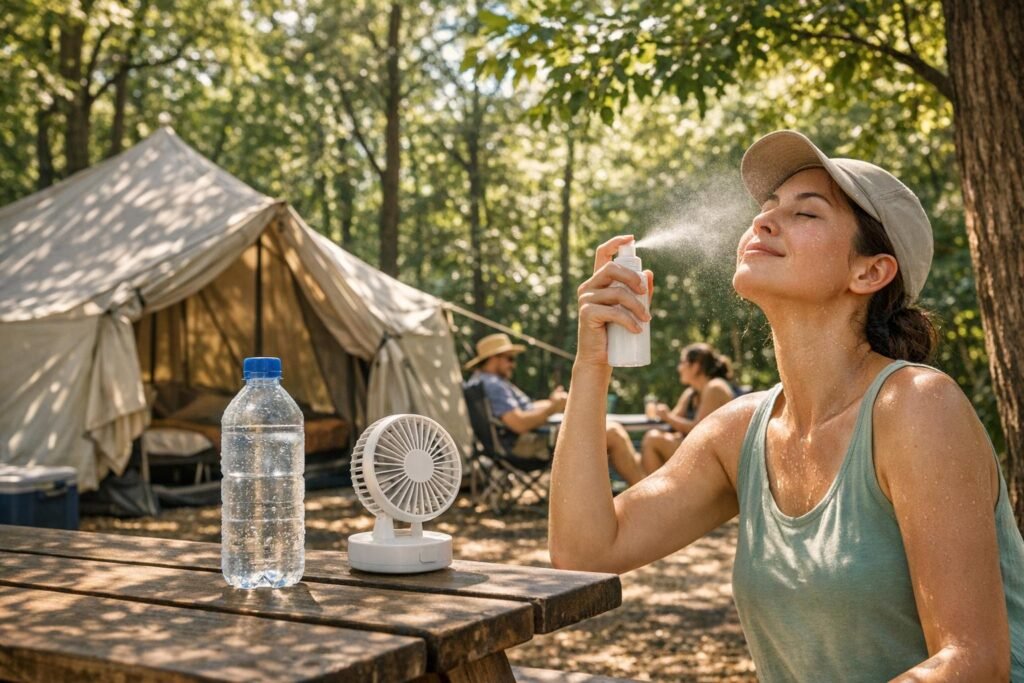
Camping in the heat can be challenging, but staying cool is crucial for both comfort and safety. Extreme temperatures, especially above 95°F, can lead to dehydration, heat exhaustion, or even heat stroke. Here’s a quick breakdown of practical strategies to help you beat the heat:
- Choose the right campsite: Look for shaded areas with good airflow, preferably near water sources for natural cooling.
- Optimize your tent setup: Position your tent to catch the breeze, use reflective tarps, and remove the rainfly on clear nights for better ventilation.
- Stay hydrated: Drink plenty of water and replenish electrolytes with snacks like bananas or sports drinks.
- Cool your body: Use wet towels on pulse points, wear loose, light-colored clothes, and consider battery-powered fans.
- Sleep smarter: Use raised cots or lightweight sleeping bags and skip heavy bedding.
- Plan activities wisely: Stick to mornings and evenings when it’s cooler.
- Recognize heat-related risks: Learn the signs of heat exhaustion and heat stroke to act quickly if needed.
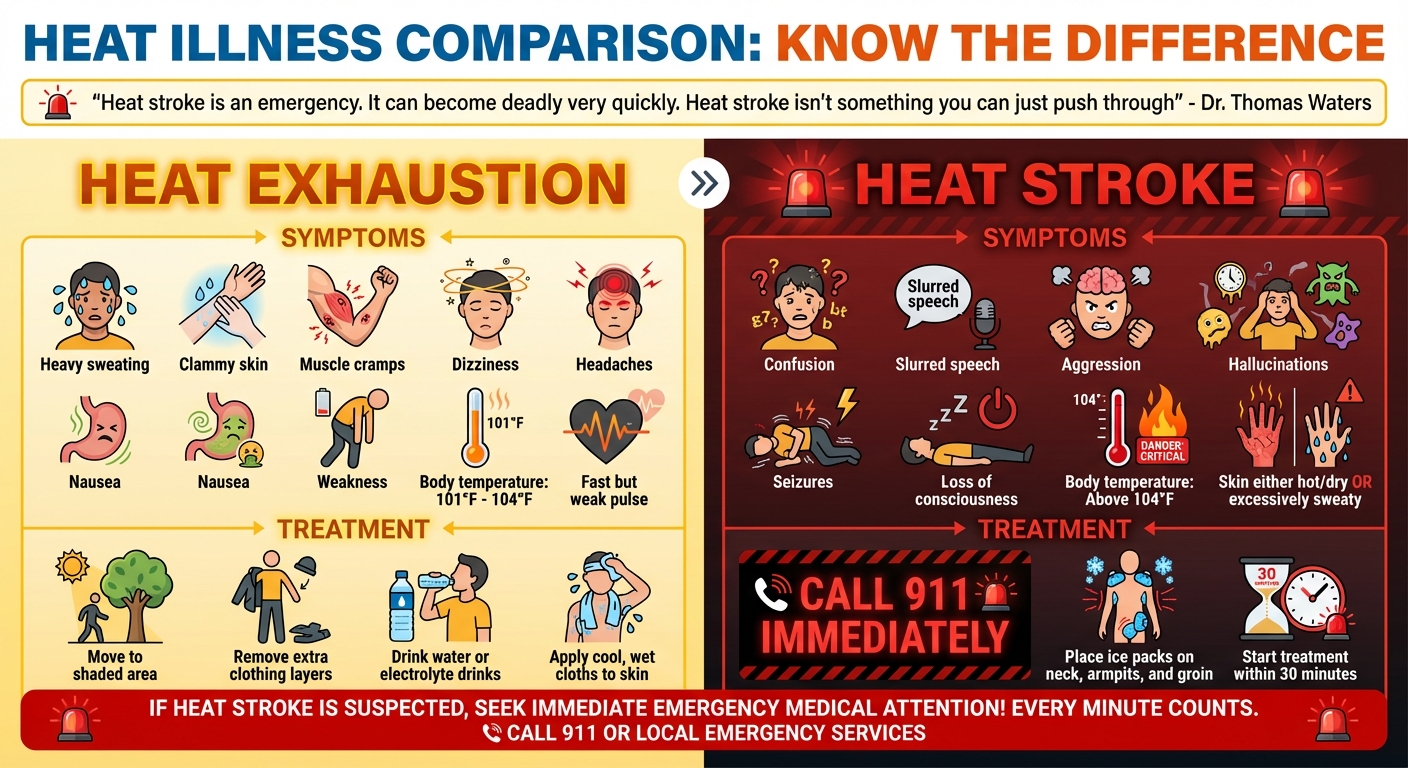
Heat Exhaustion vs Heat Stroke Warning Signs and Treatment
10 TIPS to STAY COOL while CAMPING
1. Pick a campsite with shade and good air circulation
When camping in hot weather, finding a spot with plenty of shade and good airflow can make all the difference. A shaded campsite helps keep your tent cooler, while proper air circulation prevents it from becoming a stifling greenhouse.
Look for areas with natural features that provide both shade and ventilation. Large, mature trees with thick canopies are ideal for consistent shade throughout the day. Pay attention to the sun’s path – shade at noon might disappear by late afternoon. Elevated campsites are another great option since higher ground tends to be breezier and cooler, with temperatures dropping about 3–5°F for every 1,000 feet of elevation gain. On the other hand, avoid low-lying spots like valleys, where hot, humid air can settle and linger well into the night.
Water sources can also enhance your comfort. Streams, rivers, lakes, and ponds not only offer a chance to cool off but also create a cooler microclimate around them. To make the most of this, check the direction of the prevailing breeze near the water and set up your tent to take advantage of it.
2. Set up camp near water sources
After securing a shaded spot, picking a campsite near a water source can take your comfort to the next level. Lakes, rivers, streams, or ponds naturally cool the air around them, offering a refreshing escape from the heat. These waterfront locations are often more comfortable in hot weather, thanks to the cooler air they provide.
Waterfront camping also tends to come with lush vegetation – trees, shrubs, and other greenery – that adds extra shade and helps block the sun’s direct rays. This combination of shade and cooler air can make a big difference in preventing heat-related discomfort and keeping your campsite enjoyable.
On particularly hot days, a quick dip in the water can work wonders for cooling down and rinsing away sweat. If swimming isn’t an option, you can soak a bandana in the water to wear around your neck or use the water to chill drinks in a mesh bag. These small tricks can make your camping experience much more pleasant.
3. Position Your Tent to Catch the Breeze
Once you’ve set up your shaded, waterfront campsite, it’s time to think about airflow. Positioning your tent to catch the breeze can make a huge difference in keeping it cool. A tent that allows natural airflow will feel much more comfortable than one that blocks it, so it’s worth spending a few extra minutes to get this step right.
Start by checking the weather forecast for wind direction or asking locals at the campsite about typical breeze patterns. You can also try the simple "finger test" – wet your finger, hold it up, and see which side feels cooler. Once you’ve identified the breeze, pitch your tent with the entrance facing into it. This setup creates a natural tunnel effect, pulling fresh air through the tent.
If possible, choose a spot on higher ground. Elevated areas tend to have stronger, more consistent breezes, which not only help cool your tent but also keep bugs at bay. Avoid low-lying areas like valleys or depressions, as these spots often trap heat, moisture, and humidity. Open spaces are ideal since they allow air to flow freely without being obstructed by trees or terrain.
To improve airflow even more, consider elevating your tent slightly using a platform or stakes. When securing your rainfly, pull it tight to create a larger gap for air circulation. If you’re using a sunshade or reflective tarp, make sure it’s at least 12 inches above the tent to avoid trapping heat underneath.
4. Add a Reflective Tarp or Sunshade Over Your Tent
To keep your tent cooler during the day, consider adding a reflective tarp or sunshade to block direct sunlight. This simple addition can work alongside proper airflow to lower the interior temperature significantly. A reflective tarp helps bounce sunlight away, reducing the amount of heat absorbed by your tent’s surface.
Not all tarps are created equal when it comes to heat management. For instance, blue poly tarps can absorb 60–70% more heat than silver or white tarps under direct sunlight. By early afternoon, the surface of a blue tarp can reach over 120°F, while silver tarps typically stay in the range of 88–92°F. This difference can keep your tent’s interior at a more manageable 80–85°F. For the best results, choose lightweight tarps in silver or white, or look for ones labeled as "UV-resistant" or "UV-treated."
When setting up your tarp, follow the "12-inch rule." Suspend the tarp at least a foot above your tent to create an air gap. This gap prevents heat from building up between the tarp and the tent, allowing hot air to escape. Use durable rope or paracord to secure the tarp to nearby trees, poles, or stakes positioned higher than your tent’s peak.
For optimal shade, align the tarp with the sun’s east-to-west movement. This setup ensures your tent remains shaded throughout the day while maintaining good airflow around the edges. If the weather is clear, you can also remove your rainfly at night to improve ventilation while still benefiting from the tarp’s light rain protection.
5. Take Off the Rainfly on Clear Nights
The rainfly on your tent is great for keeping rain at bay, but during warm, dry nights, it can trap heat and make things stuffy inside. By removing the rainfly in these conditions, you expose the tent’s mesh layers, which helps with cross-ventilation. This allows heat, moisture, and body warmth to escape, cooling your tent by about 5–10°F. Just make sure the weather forecast promises clear skies before you go rainfly-free.
If you’ve already set up a reflective tarp or sunshade above your tent (as suggested earlier), you’ll still have some protection against unexpected light rain or morning dew while benefiting from the improved airflow. For even better ventilation, position your tent door to face the prevailing wind.
To keep bugs out, zip up all mesh windows and doors. One thing to keep in mind: without the rainfly, the inside of your tent will be more visible, so plan accordingly for privacy.
6. Wear Loose, Light-Colored, and Breathable Clothes
Choosing the right clothes can make a big difference in keeping your body cool. Loose-fitting garments allow for better airflow and help sweat evaporate more effectively, while tight clothing tends to trap heat and moisture. Light-colored fabrics – think whites, pastels, or pale grays – are excellent for reflecting sunlight and reducing heat absorption.
"Wearing light colors that reflect the sun’s rays rather than absorb them (as dark colors can) helps keep you cool." – REI Expert Advice
When it comes to materials, pick breathable options based on the weather. In dry heat, loosely woven cotton can extend the cooling effect of sweat evaporation. For humid conditions, quick-drying fabrics like polyester or nylon work well to wick away moisture, while merino wool offers odor resistance and moisture management.
Clothing with mesh panels or vents can also improve airflow, making a noticeable difference on hot days. Avoid anything tight or restrictive that could trap heat. Dressing smartly is an easy way to stay comfortable and cool during your adventures.
7. Drink Plenty of Water and Add Electrolytes
Camping in warm weather means your body works overtime to cool itself by sweating. While this keeps you from overheating, it also drains your body of water and essential minerals like sodium, potassium, calcium, and magnesium. If you don’t replenish these, you could end up feeling fatigued, dizzy, or dealing with headaches and muscle cramps.
Aim to drink about 8–10 cups (roughly 3 liters) of water each day, and increase that amount if you’re hiking, climbing, or doing other strenuous activities. Don’t wait until you’re thirsty to hydrate – by then, your body is already on its way to dehydration. A quick way to check if you’re drinking enough? Look at your urine. It should be a pale yellow color, not dark or overly concentrated.
But staying hydrated is only part of the equation. Replacing lost electrolytes is just as important. These minerals keep your muscles and nerves functioning properly and help maintain your body’s fluid balance. While sports drinks or electrolyte powders are a convenient option, you can also turn to whole foods. Pack snacks like bananas, avocados, leafy greens, nuts, or even a small bottle of pickle juice. Hydrating fruits and vegetables like watermelon, cucumbers, and tomatoes are also great choices – they provide both water and nutrients.
Steer clear of salty chips and sugary snacks, as they can throw off your fluid balance. If you’re drinking coffee or beer, make sure to offset those with extra water. Using an insulated bottle or a hydration pack can help keep your water cool and within easy reach throughout your adventure.
8. Cool Down with Wet Towels on Your Neck and Wrists
When the heat starts to rise, simple personal cooling tricks can make a world of difference – especially if you’ve already chosen a shady campsite.
One effective method is placing a wet towel, bandana, or washcloth on your neck and wrists. These areas, known as pulse points, have blood vessels close to the skin, which makes them perfect for cooling. As the water evaporates, it helps lower your body temperature by circulating cooler blood.
A basic soaked bandana does the trick, but for an added edge, consider using a microfiber or synthetic cooling towel. According to CNN Underscored, these towels are designed with special fibers that speed up evaporation and hold moisture without feeling soggy.
To keep the cooling effect going, re-soak your towel as needed or store it in a cooler between uses. At night, a damp washcloth placed on your forehead or neck can help bring down your temperature for a more comfortable sleep. For even longer-lasting relief, a microfiber cooling wrap is a great budget-friendly option to keep your neck, arms, or face cool for hours.
If you’re out hiking, rotate your wet bandana regularly to stay refreshed. For an extra boost, some campers even freeze their bandanas ahead of time to enjoy an icy burst of relief when they need it most.
sbb-itb-5a98267
9. Bring battery-powered fans for your tent
To keep your tent cool and comfortable, a battery-powered fan can make a big difference. These fans help circulate air effectively, especially during warm nights, and work well alongside other cooling tricks like damp towels.
Look for rechargeable fans with high-capacity batteries (7,800mAh to 20,000mAh) to ensure they last through the night. Rechargeable models save you the hassle of constantly buying disposable batteries, making them a convenient and eco-friendly choice.
When choosing a fan, consider the size of your tent. Compact 4-6 inch fans are great for solo campers or bedside use, while larger 8-16 inch models are better for bigger tents or sharing with others. Some mid-range fans come with extra perks like built-in LED lights or power bank functionality for charging devices. If you’re on a budget, options like the Odoland Camping Fan, priced under $20, provide solid performance without breaking the bank.
For the best results, place your fan in an open area, away from tent walls, and angle it toward your sleeping space to maximize airflow. If your fan has an oscillating feature, position it along the tent’s edge and tilt it slightly inward for even air circulation. To conserve battery life, start with the lowest speed that keeps you comfortable.
Quiet operation is key for a good night’s sleep, so aim for a fan with a noise level under 28 dBA. For added durability, choose a model with an IPX4 rating to protect against rain or condensation.
10. Freeze water bottles before your trip
Frozen water bottles are a clever way to stay cool on hot nights while also providing cold drinking water as the ice melts. When ice melts, it absorbs 334 joules of energy per gram, which creates a steady cooling effect for hours. As the ice turns into water, it pulls heat away from its surroundings, cooling the air and surfaces nearby. Here’s how to make the most of this simple yet effective trick.
Start by filling your bottles about 85–90% full before freezing. This prevents them from bursting, as water expands by roughly 9% when it freezes. Opt for sturdy 1–2 liter bottles with thick walls for better durability. Bottles labeled with recycling codes 1 (PET) or 2 (HDPE) are ideal since they handle temperature changes more effectively. Allow your bottles to freeze for 4–6 hours before heading out.
To avoid ice burns, wrap the frozen bottles in a thin towel or pillowcase before placing them in your tent. Position the bottles near pulse points, such as your feet, ankles, or wrists, for optimal cooling. You can also place them on a towel or plate to catch condensation and keep your sleeping bag dry.
For even longer-lasting cooling, mix 1 part salt with 10 parts water before freezing. Saltwater ice can absorb around 20% more heat energy than regular ice before fully melting. To boost the cooling effect, position the bottles near a battery-powered fan to help circulate the cold air.
11. Make a Simple Ice Cooler with a Fan
Looking for a way to stay cool during those sweltering nights in your tent? Try building a DIY tent air conditioner! It’s an easy and cost-effective project that can make a big difference. Here’s how to put it together:
Start by gathering the materials you’ll need: a hard-sided cooler (or a Styrofoam box if you’re on a budget), a battery-powered or USB fan, PVC pipes or dryer vent hoses, ice packs or frozen water bottles, and some basic tools like duct tape, a knife, and a drill.
Once you have everything ready, clean the cooler and cut two holes into its lid. One hole should be slightly smaller than the fan to ensure a snug fit, while the other should be sized to fit the PVC pipe or vent hose. Place these holes on opposite sides of the lid for better airflow. Attach the fan securely over the smaller hole so it blows air into the cooler, and use the pipe or hose to direct the cooled air out.
Next, fill the cooler with ice packs or frozen water bottles – block ice tends to last the longest. Close the lid tightly, power up the fan, and watch as the warm air is cooled by the ice before being pushed out through the duct. To keep the air even cooler, consider insulating the duct.
For the best results, set up your tent in a shady spot to reduce overall heat. Remember to replace or refill the ice packs as needed to maintain the cooling effect. With this simple setup, you can enjoy much cooler nights, even in the middle of summer!
12. Sleep on a Cot or Raised Pad for Better Airflow
When you sleep directly on the ground, heat tends to get trapped, making it harder to stay cool. Using a camping cot or a raised sleeping pad can solve this by creating a gap for airflow, which helps sweat evaporate and reduces heat buildup.
"The more air can circulate around your body, the cooler you’ll be overnight. Lying in a sleeping bag or on a mat on the ground isn’t ideal in hot weather. Sleeping on a thin camping cot or even in a woven hammock helps keep you sweat-free by morning." – eHow
If you’re camping in warm weather, opt for sleeping pads with a low R-value (below 2.0) to avoid unnecessary insulation. Affordable options like the NEMO Switchback and Therm-a-Rest Z Lite Sol, both priced around $60, are great choices. These closed-cell foam pads are lightweight and work well for hot nights. For those who want a bit more comfort, the NEMO Tensor Elite is an ultralight air pad with a 3-inch thickness and an R-value of 2.4, offering better airflow while still providing some cushioning.
To enhance cooling further, pair your raised pad with a lightweight sheet or a thin blanket instead of a sleeping bag. This setup keeps you covered during cooler pre-dawn hours while still allowing maximum airflow. It’s a simple yet effective way to stay cool and comfortable all night long.
13. Use lightweight sleeping bags or just a sheet
After exploring ways to improve airflow with raised sleeping systems, let’s talk about how your choice of sleeping bag – or even a simple sheet – can help you stay cool. When temperatures are above 50°F (10°C), traditional sleeping bags often trap too much heat, leaving you uncomfortable. Lightweight sleeping bags designed specifically for warmer weather use thinner insulation and breathable materials to help regulate your body temperature, so you don’t wake up drenched in sweat.
If you’re in the market for a summer sleeping bag, consider rectangular designs. Unlike mummy-style bags, rectangular ones provide more space to move around and allow better airflow. Look for models with full-length two-way zippers and open footboxes – these features make it easy to ventilate and cool off quickly.
On especially hot nights, you might not even need a full sleeping bag. A cotton or silk liner can be a perfect alternative. These lightweight liners provide just enough coverage while being breathable and easy to clean, which is a big plus after sticky summer nights.
"If you don’t want to be warm but cool at night, opt for a lightweight blanket or a thin sheet in your tent. Using one of these items instead will keep you far cooler than a sleeping bag will and make your trip overall more pleasant." – American Hat Makers
A simple sheet is another excellent option. It’s flexible, lightweight, and free of zippers or confining fabrics, making it easy to adjust as the temperature changes through the night. Most people already have sheets at home, so it’s a budget-friendly solution for summer camping trips.
14. Do Activities During Morning and Evening Hours
To stay comfortable in the heat, plan your activities for the cooler parts of the day – morning and evening. Start hikes early, ideally before sunrise, to take advantage of the refreshing morning air and finish any demanding tasks before the sun reaches its peak. During the hottest hours, typically between 11:00 a.m. and 3:00 p.m., take a break in the shade to rest and recharge. As the day cools down, you can get back to activities like biking or cooking dinner. This approach works particularly well in desert regions, where temperatures drop significantly in the evening. Adjusting your schedule to match these temperature shifts is a simple way to stay safe and make your camping experience more enjoyable.
15. Know the warning signs of heat exhaustion and heat stroke
Keeping cool isn’t just about staying comfortable – it’s about avoiding serious health risks. Even with precautions, heat-related illnesses can still happen. That’s why it’s so important to recognize the early signs of heat exhaustion before it progresses to heat stroke.
Heat exhaustion often shows up as heavy sweating, clammy skin, muscle cramps, dizziness, headaches, nausea, weakness, and a body temperature between 101°F and 104°F. You might also notice a fast but weak pulse. If you spot these symptoms, act quickly: move to a shaded area, take off extra layers of clothing, drink water or electrolyte drinks, and use cool, wet cloths on the skin to bring the temperature down.
Heat stroke, on the other hand, is much more dangerous. Dr. Thomas Waters emphasizes this urgency:
"Heat stroke is an emergency. It can become deadly very quickly. Heat stroke isn’t something you can just push through".
Symptoms of heat stroke can include confusion, slurred speech, aggression, hallucinations, seizures, or even loss of consciousness. The body temperature will spike above 104°F, and the skin may feel either hot and dry or excessively sweaty. If you notice these signs, call 911 immediately. While waiting for help, try to cool the person down by placing ice packs on key areas like the neck, armpits, and groin.
Quick action is essential – starting treatment within 30 minutes can make a huge difference in recovery. Since heat stroke can impair judgment, keeping a close eye on everyone in your group during outdoor activities is a smart way to catch any warning signs early.
Conclusion
Camping in hot weather doesn’t have to be a struggle. With a few thoughtful adjustments, you can turn a potentially exhausting experience into a refreshing outdoor adventure – without sacrificing your comfort or safety.
"Remember, preparation and thoughtful campsite choices are key to staying cool and comfortable during your midsummer adventures".
The tips we’ve discussed go beyond just making you feel more at ease. They tackle serious risks like dehydration, heat exhaustion, and heat stroke by emphasizing hydration, sun protection, and smart planning. By using the right gear and simple cooling techniques, you can enjoy the outdoors instead of merely enduring it.
Being prepared is the cornerstone of a safe and enjoyable camping trip. Often, the difference between a memorable outing and a risky one comes down to checking the weather, packing wisely, and recognizing the early signs of heat-related illnesses. It’s all about layering small, practical strategies – together, they create a much cooler and safer environment for your adventure.
If you’re looking for more tips on camping, gear recommendations, or outdoor activities, check out Adventurism.co. From hiking and backpacking to fishing and kayaking, you’ll find plenty of resources to help you make the most of your time in nature.
FAQs
What are the warning signs of heat exhaustion and heat stroke while camping?
When camping in hot weather, keeping an eye out for heat exhaustion and heat stroke is crucial. Early recognition can make all the difference.
Signs of heat exhaustion include muscle cramps, headaches, dizziness, weakness, fatigue, nausea, or even vomiting. If these symptoms are ignored, they can progress into something far more serious – heat stroke.
Heat stroke is a medical emergency. It can cause confusion, disorientation, or changes in mental state, along with a core body temperature climbing above 104°F. If you or someone else experiences these symptoms, act fast: cool the person down and get medical help immediately.
What are the best ways to improve airflow in a tent during hot weather?
To keep your tent cool on warm nights, airflow is your best friend. Start by setting up your tent in a shady spot to avoid it soaking up too much heat during the day. Once pitched, open up all the vents, doors, and windows to encourage a cross-breeze. If your tent has a rainfly, consider removing it or propping it up slightly to let heat escape more easily.
A battery-powered fan placed near an opening can also work wonders for circulating cooler air inside. For added comfort, hang a tarp above your tent to create extra shade and help guide breezes toward it. These simple tweaks can make your tent feel much cooler and more comfortable when temperatures rise.
How can I stay hydrated and replenish electrolytes while camping in hot weather?
Staying hydrated is key to staying comfortable and energized during warm-weather camping. A good rule of thumb is to drink half to one liter of water per hour of activity. To make it more enjoyable, use an insulated bottle or cooler to keep your water cold – it’s a refreshing way to beat the heat. Don’t wait until you’re thirsty to drink; thirst is often a sign of mild dehydration. Also, try to limit caffeine and alcohol since they can lead to fluid loss. A quick hydration check? Your urine should be light yellow.
Sweating during outdoor activities means you’re losing electrolytes, so it’s important to replace them. Foods like bananas, oranges, leafy greens, nuts, seeds, and dairy are great options. If you need something quicker, toss electrolyte tablets or powder into your water. You can even whip up a DIY sports drink by mixing 1 liter of water, 1/4 teaspoon of salt, the juice of one lemon or orange, and a bit of honey. Keeping electrolyte supplements or pre-made drinks in your cooler ensures you’re always ready.
For added convenience, freeze water bottles before your trip – they double as ice packs and provide cold, drinkable water as they melt. Setting up a shaded hydration station at your campsite can also help you stay cool and make refilling easy. By keeping up with your water intake and replacing lost electrolytes, you’ll stay refreshed and avoid heat-related discomfort during your camping trip.