
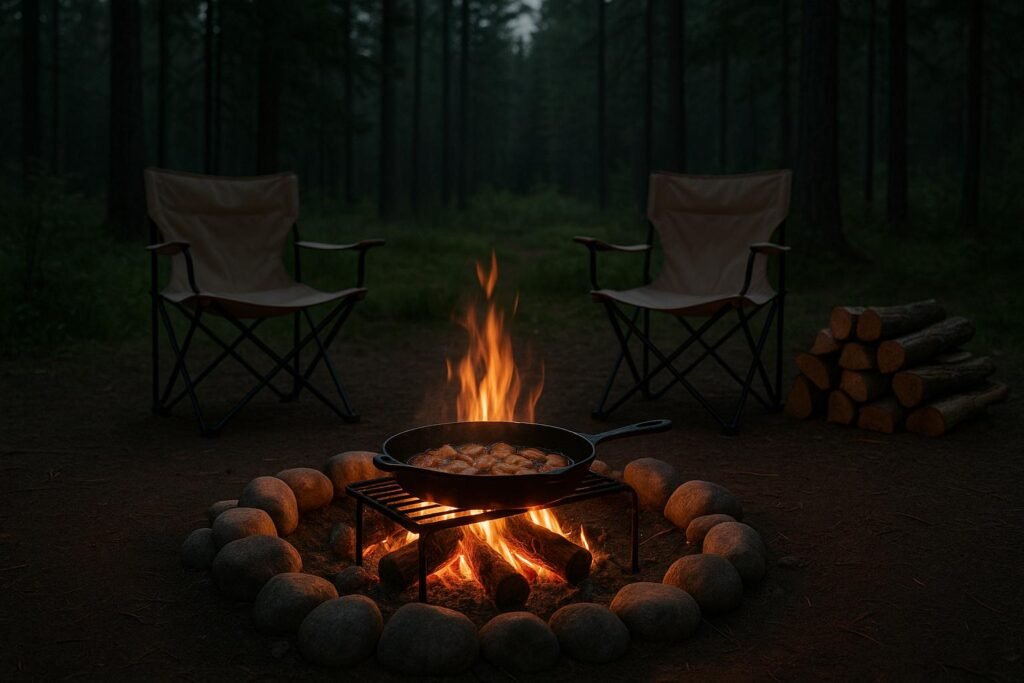
Campfire cooking can be fun and memorable, but it comes with risks. Each year, thousands of fires and injuries are caused by unsafe practices. To stay safe while enjoying your outdoor meals, follow these 10 essential fire safety tips:
- Check Fire Rules and Weather Conditions: Always review local fire regulations and weather updates before starting a campfire. Avoid fires during high winds or Red Flag Warnings.
- Choose a Safe Fire Location: Use designated fire rings or clear an area at least 10 feet wide, away from tents, trees, and flammable materials.
- Use Proper Firewood: Burn only dry, seasoned wood. Avoid treated, painted, or green wood to prevent toxic fumes and excessive smoke.
- Build a Small, Controlled Fire: Keep fires manageable and focus on creating steady, white-hot coals for cooking.
- Keep Flammable Items Away: Store extra firewood, propane, and other flammables at least 25 feet from the fire.
- Use Safe Cooking Equipment: Opt for heat-resistant cookware like cast iron and long-handled utensils to maintain a safe distance.
- Watch the Fire at All Times: Never leave a fire unattended. Fires can double in size in seconds.
- Practice Safe Cooking Methods: Use stable setups, wear protective clothing, and keep children supervised.
- Keep Fire Extinguishing Tools Ready: Always have water, sand, and a shovel nearby to quickly extinguish flames.
- Put Out the Fire Completely: Douse the fire with water, stir the ashes, and ensure everything is cool to the touch before leaving.
Quick Tip: If it’s too hot to touch, it’s too hot to leave. Following these steps ensures a safe and enjoyable campfire experience while protecting the environment and those around you.
Campfire Cooking Safety Tips
1. Check Fire Rules and Weather Conditions
Before you pack your camping gear, take a moment to review the fire regulations and weather conditions for your destination. Fire restrictions can differ widely between states, counties, and even local municipalities. What’s permitted in one area might be completely off-limits just a few miles away.
Start by contacting local managing agencies to get the specifics on permits and fire restrictions. Many federally managed lands require campfire permits, while private lands often have their own rules. If you’re unsure who to reach out to, local law enforcement or your fire department can point you in the right direction.
"Each park has their own rules on where and when you can have a campfire. Ask at the visitor center or contact the park before you visit so you know any relevant rules."
– U.S. National Park Service
It’s also a good idea to subscribe to weather alerts at www.weather.gov/subscribe before your trip. For instance, in California, CAL FIRE oversees campfire permits and works to contain 95% of wildfires within 20 minutes. In June 2025, the Bureau of Land Management implemented seasonal fire restrictions across several California counties due to dry conditions and heightened wildfire risks.
Weather plays a big role in fire safety. High winds, especially those exceeding 40 mph, can make campfire cooking hazardous by carrying embers that might ignite nearby vegetation. If you notice vegetation swaying noticeably in the wind, it’s best to hold off on lighting a fire.
Stay alert for Red Flag Warnings issued by the National Weather Service. These warnings indicate conditions that make wildfires more likely to spread quickly, such as dry air and low humidity.
"The damage caused by wildfires can be catastrophic not only to a campground but also to the surrounding forest and wildlife. Prevention and understanding the risks are the keys to ensuring a safe environment for everyone."
– Daniel Smith, Fire Safety Inspector at the National Park Service
Additionally, check with your local Air Pollution Control District to confirm whether recreational fires are allowed, especially on "Spare the Air" days when burn bans may be in effect . For further guidance, consult the National Weather Service’s Fire Weather Hazard Map .
Once you’ve confirmed fire regulations and assessed weather conditions, you’ll be ready to choose a safe spot for your campfire.
2. Choose a Safe Fire Location
Once you’ve confirmed it’s okay to have a fire in your area, the next step is to pick a safe spot. The location you choose can make or break your campfire experience. A poorly chosen site can turn a peaceful outdoor meal into a dangerous situation, so it’s crucial to find a spot that minimizes risks and gives you full control.
If you’re at a developed campground, always use established fire rings. These are specifically designed to keep campfires contained and are usually located in areas cleared of flammable materials. For example, in Great Smoky Mountains National Park, campfires are only allowed in designated fire rings, and campers are limited to collecting dead wood found on the ground for fuel.
Camping somewhere without fire pits? No problem – you’ll just need to create a safe cooking area yourself. Start by clearing a space at least 10 feet in diameter. Remove anything that could catch fire, like dry grass, leaves, pine needles, and sticks. Ideally, build your fire pit on a rocky or sandy surface rather than in areas with tall grass. Arrange larger rocks in a circle to contain the fire, and you can even place a big rock at the back to act as a natural chimney, helping to direct smoke away from your cooking area.
Keep your fire at least 15 feet away from tents, trees, shrubs, and anything else that could catch fire. This safety buffer gives you enough room to cook comfortably without worrying about accidental sparks. Also, look up – check for low-hanging branches or overhanging vegetation that could ignite from rising embers.
"Pick a safe spot… Keep at least 15 feet away from tent walls, shrubs or any other items and debris. Also, stay away from overhanging branches, power lines or other hazards that could catch on fire." – Foremost Insurance Group
Pay attention to wind direction and the size of your planned fire. Position your fire so the wind won’t blow smoke into your face or send sparks toward flammable materials. An open, level area away from dense vegetation is ideal for keeping your campfire under control.
Lastly, remember that fire regulations vary depending on where you are. Always check for fire danger signs at trailheads and campgrounds. If you’re dispersed camping on public lands, try to use existing campsites to help reduce your environmental impact. Once you’ve got the location sorted, the next step is gathering the right firewood and materials to keep things safe and efficient.
3. Use Proper Firewood and Materials
The type of wood you burn plays a huge role in campfire safety. Using the wrong materials can lead to excessive smoke, unpredictable flames, or even toxic fumes, putting everyone nearby at risk.
Stick to dry, seasoned wood that’s been dried for at least six months. Seasoned wood has a moisture content of about 20% or less, compared to freshly cut wood, which can hold up to 50% water. You can spot seasoned wood by its darker color, cracked surface, and lighter weight. Another way to check? Knock two logs together – seasoned wood gives a sharp "clack", while damp wood makes a dull "thud".
For the best results, use hardwoods like oak, maple, or hickory for long-lasting heat, and softwoods like pine, cedar, or fir to easily start your fire. Kiln-dried firewood, which is heated to around 250°F for 36 hours, can produce up to 35% more heat than regular seasoned wood[36,39].
Buy firewood locally to avoid spreading pests and diseases. Aim to purchase wood within 50 miles of your campsite, or gather it nearby if local regulations allow.
When it comes to what you burn, keep it simple: clean, untreated wood only. Treated or painted wood contains chemicals that release harmful toxins when burned.
"Never burn … demolition and construction waste, materials from autos, household plastic items, rubber, foam, treated wood, textiles, synthetic materials, and electronics. They contain chemicals that are hazardous."
- Jay Osterberg, Michigan Department of Natural Resources Escanaba Forest Management Unit Fire Supervisor
Skip using leaves, paper, or cardboard as quick fire starters. Burning leaves and grass creates thick smoke that can irritate allergies, while cardboard and paper may smolder unpredictably and release fumes from ink.
Finally, store your firewood the right way. Keep it covered and off the ground to protect it from moisture. Choosing and storing the right wood not only ensures a safe and steady fire but also makes campfire cooking much easier. With properly prepared firewood, you’re ready to enjoy a safe and controlled campfire experience.
4. Build and Keep a Small Fire
When it comes to campfire cooking, size matters – and smaller is better. A small fire is not only easier to manage but also safer and more reliable for cooking. Large fires can quickly get out of control and often produce uneven heat, leaving you with food that’s burned on the outside and raw on the inside. By sticking to a small, controlled fire, you’ll create the perfect setup for cooking without unnecessary risks.
Start by choosing a safe location. Clear at least a 10-foot radius around your fire area to remove any flammable materials. If there’s a pre-made fire pit, use it. Otherwise, build a containment ring with rocks or green logs to keep your fire in check. Make sure the fire is at least 15 feet away from tents or other structures, and check that there’s nothing hanging overhead that could catch fire.
When building your fire, begin with softwoods like pine or cedar for kindling, as they ignite quickly. Once you have a steady base, add hardwoods such as oak, elm, or ash. These burn slower and provide consistent, long-lasting heat – perfect for cooking. To help direct smoke away from your cooking area, place a large rock at the back of the fire pit to act as a natural chimney.
To maintain your fire, focus on fuel management. Add new logs only when the existing ones are mostly burned down and still providing steady heat. Avoid constantly moving logs around, as this disrupts the fire’s stability and can cause flare-ups. Keep adjustments minimal to ensure the fire burns evenly and maintains a consistent oxygen flow.
Before you start cooking, let the fire burn down to glowing, white-hot coals. This process can take about 45 minutes, but these embers provide steady, even heat that’s far better for cooking than open flames. You can adjust the temperature by moving the coals, raising or lowering your cooking grate, or shifting food to different spots over the coals.
For uninterrupted cooking, keep a small secondary fire nearby. This gives you a steady supply of fresh coals to maintain consistent heat. And don’t forget safety – always have a bucket of water or sand close by. When it’s time to leave, start extinguishing your fire at least 20 minutes beforehand to ensure it’s completely out.
5. Keep Flammable Items Away
Creating a safe zone around your campfire is critical to preventing the fire from spreading quickly. Fires can double in size in just 30 seconds, so it’s crucial to keep anything that could catch fire far from your cooking area.
Position your campfire at least 25 feet away from tents, shrubs, trees, and any other structures. Additionally, maintain a 3-foot clear zone around the fire pit to minimize risks. Personal safety is just as important, so be mindful of your clothing and how you handle fire aids.
Wear tight-fitting, natural-fiber clothing, as synthetic fabrics like cotton blends, rayon, nylon, and acrylic are more likely to ignite.
"Do keep flammable objects including wood, clothing, or aerosol cans away from the fire." – Summa Health
Avoid using accelerants or flammable liquids near your fire. Dr. Daniel Bachmann, MD, an Emergency Medicine Physician and Associate Professor at Ohio State Wexner Medical Center, highlights the dangers of these substances:
"Never use flammable liquids like gasoline, acetone or alcohol to light a fire. Flammable liquids are dangerous because the vapors they produce can also ignite. If you can’t see the vapor or understand where it is, then you run the risk of accidentally sparking an out-of-control fire." – Daniel Bachmann, MD
Store extra firewood, propane canisters, and lighter fluid at least 25 feet away from the fire. Aerosol cans, in particular, are hazardous near heat and should be kept in a cool, shaded spot far from the cooking area.
For families camping with kids, it’s a good idea to create a visible "safety circle" around the fire pit using rocks or rope. This helps children understand the boundaries they shouldn’t cross. Use long-handled cooking tools to keep a safe distance while preparing food, and always check for low-hanging branches above the fire that could catch sparks.
6. Use Safe Cooking Equipment
When cooking over an open flame, having the right tools and cookware can make all the difference – not just for your meal, but for your safety too. Always opt for heat-resistant cookware and long-handled tools to maintain a safe distance from the fire.
For cookware, materials like cast iron and carbon steel are excellent choices. Cast iron can withstand temperatures up to 900°F, while carbon steel handles even higher heat, up to 1,200°F. Stainless steel is another reliable option, offering good heat distribution and quick responsiveness. If you’re looking for a budget-friendly choice, check out the Stanley Adventure Camp Cook Set, priced at $35.00.
On the other hand, steer clear of cookware made from non-stick coatings, rubber, silicone, plastic, or thin aluminum. These materials can melt, warp, or release harmful fumes when exposed to direct flames.
For cast iron enthusiasts, versatile options like the Lodge 3.2 Quart Cast Iron Combo Cooker ($54.90) are perfect for campfire meals. If weight is a concern, consider the GSI Guidecast Lightweight Cast Iron Dutch Oven, starting at $69.95.
When it comes to utensils, long-handled tools (at least 12 inches) are a must. Look for items made from anodized aluminum, titanium, or stainless steel. Tools like sturdy steel tongs or a compact three-in-one grilling tool allow you to handle food safely without getting too close to the fire.
For additional safety, wear heat-resistant grill gloves and keep a heavy-duty steel log grabber or fireplace poker handy for adjusting coals or logs without risking burns.
Finally, if kids are around, teach them proper utensil use. Never let them run with roasting forks, and always supervise cooking activities near the fire. With the right gear and precautions, you can enjoy your outdoor cooking experience while staying safe.
sbb-itb-5a98267
7. Watch the Fire at All Times
Never leave your campfire unattended. Even a small breeze can quickly turn a controlled fire into a dangerous situation, making constant supervision a must for safe campfire cooking.
Did you know that humans are responsible for over 90% of all wildfires in the United States? Unattended campfires are a major contributor. Fires can double in size in as little as 30 seconds, and campfires are also a leading cause of injuries among children during camping trips. Keeping a close eye on the flames isn’t just about safety – it’s about preventing accidents and injuries.
When camping with others, consider setting up a rotation where adults take turns acting as the designated fire watcher. This person’s job is to monitor the fire at all times and take immediate action if anything goes wrong. Just like choosing the right materials and building a proper fire ring, consistent supervision is a key step in avoiding preventable mishaps.
The dangers of leaving a fire unattended are numerous. Logs can roll out of the ring, winds can carry embers to nearby flammable materials, and sparks can ignite overhanging branches or underground roots. Even fires that appear extinguished can retain enough heat to reignite unexpectedly.
To stay prepared, always keep water and a shovel within reach of the fire watcher. These tools are essential for quickly putting out any stray flames or embers. The fire watcher should also ensure everyone at the campsite follows basic campfire safety rules.
If you need to leave the campsite, make sure the fire is completely extinguished before stepping away. By staying vigilant and prepared, you can enjoy your campfire while keeping everyone safe and avoiding unnecessary disasters.
8. Practice Safe Cooking Methods
Once you’ve set up your fire safely, the next step is ensuring you use safe cooking methods to avoid injuries and accidents. Taking precautions while cooking can go a long way in preventing burns and mishaps.
Start by using long-handled utensils like roasting forks that are at least 24 inches long or sturdy steel tongs. These tools allow you to keep a safe distance from the flames, keeping your body outside the fire ring or containment area. If you’re camping with children, remind them not to run with roasting forks or swing them around carelessly, as this can lead to accidents.
Dress appropriately for the task. Wear full-length pants and closed-toe shoes to protect your skin from sparks or hot spills. Heat-resistant gloves are also a must, especially when handling hot cookware or adjusting grill grates. These gloves provide an extra layer of safety when dealing with high temperatures.
Make sure your cooking setup is stable to avoid accidents. A grill grate positioned securely over the campfire offers a reliable cooking surface. For a bit more versatility, consider using a Dutch oven stand – it elevates your cookware off the ground while keeping it close to the heat for efficient cooking. Cast iron grills and griddles are excellent for preparing a variety of meals, from morning pancakes and eggs to evening steaks.
When actively cooking, maintain a safe distance of at least 10 feet from the fire. Use tools like gloves, tongs, and brushes to handle food and cookware without risking burns. Stir food carefully and add ingredients slowly to prevent spills that could cause dangerous flare-ups. By following these safe cooking practices, you’ll not only enjoy your campfire meals but also ensure a safer experience for everyone involved.
9. Keep Fire Extinguishing Tools Ready
Having fire extinguishing tools on hand can be the difference between quickly controlling a small flare-up and facing a dangerous situation. A sudden gust of wind can spread flames beyond your fire ring in seconds, creating a serious hazard.
Water should always be your go-to tool for extinguishing fires. Keep at least 5 gallons of water in a container nearby for immediate use. The US Forest Service emphasizes this by stating:
"First, drown the campfire with water!"
A shovel is another must-have tool. Use it to stir the embers and scrape burned logs to ensure there are no hidden hot spots .
In addition to water, sand or dirt can help smother flames. However, don’t just bury the fire – mix the sand or dirt with ashes to prevent the risk of re-ignition .
Consider packing a multipurpose fire extinguisher designed for small fires. Place all your fire safety tools near your cooking area, and wet the ground several feet beyond the fire ring to create a safety zone.
One crucial rule from the US Forest Service to keep in mind:
"If it is too hot to touch, it is too hot to leave"
Only leave the area once the fire is completely cool to the touch. By following these precautions, you can enjoy your campfire cooking safely while minimizing risks.
10. Put Out the Fire Completely
When you’re done enjoying your campfire, it’s crucial to extinguish it properly to help prevent wildfires. Start by letting the fire burn down to ash. Then, pour plenty of water over the embers until you no longer hear any hissing sounds. This builds on earlier fire safety tips and ensures you’re leaving no room for accidental flare-ups.
Next, grab a shovel and stir the ashes and embers. This helps expose any hidden hot spots. Firefighter James Pearson emphasizes the importance of this step:
"The water has to completely soak the fire. The way to do that is to stir it while soaking it. Any piece of wood or other debris that repels water will shelter a hot ember. All it takes is a small amount of hot dry fuel. It will smolder until it dries the area around it and reignites."
Remove any remaining sticks or logs, as even partially burned wood can retain heat. If you’re short on water, you can mix dirt or sand into the embers to help cool them down. However, never bury the fire. Jon Mincks, an education, outreach, and safety specialist at the Arizona Hiking Shack and AHS Rescue, explains why this is dangerous:
"If I burn the fire down to coals and put dirt on top of it to extinguish it, I could cause roots to catch underneath all this dirt. There may be something underground that I can’t see smoldering, and this can actually cause forest fires."
Finally, perform a touch test. Check the fire ring and surrounding debris to ensure everything is cool to the touch. Only then can you confidently say the fire is completely out.
Safe vs. Unsafe Campfire Cooking Practices
Knowing the difference between safe and unsafe campfire cooking practices can make or break your outdoor experience. A well-prepared campfire can lead to a delicious meal under the stars, while poor practices can result in accidents or even hazardous conditions. Let’s break down the essentials for keeping your campfire both safe and effective.
Firewood Selection
The type of firewood you use plays a huge role in both safety and cooking quality. Stick to seasoned hardwoods like oak, maple, hickory, birch, or cherry. These woods burn hotter, longer, and produce less smoke, making them ideal for cooking. On the flip side, avoid treated wood, painted or stained wood, green or unseasoned wood, driftwood, and softwoods like pine, fir, or spruce. These materials can release harmful fumes, produce excessive smoke and sparks, or be difficult to ignite.
One major safety hazard is burning poisonous woods such as poison ivy, poison oak, or poison sumac. When burned, these woods release urushiol oil into the air, which can cause severe respiratory issues and skin irritation.
Fire Size Management
Managing the size of your fire is just as important as choosing the right wood. Fires can double in size in as little as 30 seconds, so keeping them small and controlled is key. A safe campfire is built using sticks you can break by hand and should primarily consist of hot coals with just a few burning logs.
On the other hand, building large fires is unsafe. Big fires not only pose a risk of spreading out of control but also burn down quickly, leaving behind extremely hot coals without a manageable flame. To build a safe cooking fire, start small with kindling and smaller logs. Let it burn for about 30 minutes before adding larger pieces of wood as needed.
Safe vs. Unsafe Practices at a Glance
Here’s a quick comparison of practices to keep in mind:
| Safe Campfire Cooking Practices | Unsafe Campfire Cooking Practices |
|---|---|
| Use seasoned hardwoods like oak or hickory | Use treated, painted, or green wood |
| Keep fires small and manageable | Build large, uncontrollable fires |
| Allow wood to burn down to ash | Bury coals instead of extinguishing them properly |
| Pour water until all hissing stops | Leave the fire unattended while it’s still hot |
| Stir dirt or sand into embers if water isn’t available | Burn driftwood or composite materials |
| Ensure everything is cool to the touch before leaving | Use softwoods that create excessive sparks |
| Use fire rings or rocks to contain the fire | Skip using containment barriers around the fire pit |
Extinguishing Methods
Putting out your campfire safely is critical. The best method involves letting the fire burn completely to ash, then pouring water over it until all hissing sounds stop. If water isn’t available, stir dirt or sand into the embers. Always make sure the fire is completely cool to the touch before leaving the area.
Unsafe practices, like burying coals, can leave hot embers that might reignite later. Similarly, leaving a fire unattended because it “looks” extinguished is a recipe for disaster. A good rule of thumb: if it’s too hot to touch, it’s too hot to leave.
Equipment and Setup
The right setup can prevent accidents before they happen. Use fire rings, rocks, or bricks to encircle your fire pit and keep the flames contained. Also, source your firewood locally to avoid spreading invasive species.
The Bottom Line
Safe campfire practices boil down to patience and preparation. From choosing the right firewood to fully extinguishing your fire, each step matters. A little extra effort ensures your campfire remains a source of warmth and enjoyment, not a danger.
Conclusion
Cooking over a campfire can be a truly rewarding experience, but it comes with a serious responsibility: fire safety. The numbers don’t lie – humans cause nearly nine out of ten wildfires in the United States, and over 90% of all annual wildfires are human-caused. These figures highlight just how important it is to approach campfire cooking with caution.
The safety tips outlined earlier are more than just good advice – they’re essential steps to prevent wildfires, protect natural habitats, and ensure the well-being of everyone around you. Whether it’s checking for local fire restrictions or making sure your campfire is completely extinguished, every precaution matters. It’s especially critical to remain vigilant when children are present, as campfires are the leading cause of camping injuries among kids in the United States. Supervision and careful planning can make all the difference.
"A campfire that is not properly built, maintained, and extinguished can quickly become a hazard to the people, animals, and land around it." – ReserveAmerica
Taking these precautions not only keeps everyone safe but also enhances your campfire experience. There’s a special magic to cooking over an open flame – 75% of Americans say they "crave the flavor, flame, and freshness of outdoor cooking". By prioritizing safety, you can fully enjoy these moments without worry.
No matter how experienced you are, fire safety should always remain at the forefront of your outdoor adventures. Spending a few extra minutes to properly set up and extinguish your fire can mean the difference between a memorable night under the stars and a potential disaster.
Looking for more ways to make your outdoor adventures safe and unforgettable? Head over to Adventurism.co for expert advice on camping, hiking, and other outdoor activities. With the right preparation, you can enjoy nature responsibly and confidently while creating lasting memories.
FAQs
What should I do if strong winds suddenly pick up while my campfire is burning?
If high winds suddenly pick up while your campfire is burning, your first focus should be on safety. Strong gusts can cause flames and embers to spread rapidly, turning your campfire into a serious hazard.
To minimize the danger, act immediately to extinguish the fire. Begin by pouring water over the flames and embers, making sure to soak every part of the fire. Once the water is applied, stir the ashes to ensure no hidden embers remain. If water isn’t available, dirt or sand can be used as an alternative. Cover the fire completely, leaving no embers exposed.
Never leave the fire unattended, especially in windy conditions. Before leaving the area, double-check that the fire is entirely out. Quick action and careful attention can prevent accidents when the wind becomes unpredictable.
What steps should I take to make sure my campfire is fully extinguished before leaving?
To make sure your campfire is completely out and safe, follow these steps:
- Douse the fire with water: Pour plenty of water over the fire, soaking all the embers – not just the visible flames. Use a stick to stir the ashes and ensure everything is thoroughly wet.
- Stir and repeat: After the first round of water, stir the ashes and embers again, then add more water. Keep repeating this process until the fire feels completely cool.
- Check for heat: Hold the back of your hand just above the ashes (without touching) to check for any remaining warmth. If you feel heat, keep dousing and stirring until the area is entirely cold.
Always make sure your campfire is fully extinguished and cool before leaving the campsite. This simple habit can help prevent wildfires and protect the environment for everyone.
What are some safe and natural ways to start a campfire without using accelerants?
Using materials from nature to start a campfire isn’t just a safer option – it’s kinder to the environment too. Here are some simple and effective choices to get your fire going:
- Dry kindling: Look for small, dry sticks, twigs, or pieces of bark to create a strong foundation.
- Pinecones: Dried pinecones are easy to find in wooded areas and make excellent fire starters.
- Cotton balls with petroleum jelly: A small dab of petroleum jelly on a cotton ball creates a fire starter that’s easy to ignite and burns longer.
- Dry leaves or grass: These catch fire quickly and can help your fire spread, but use them sparingly to minimize smoke.
Remember, always build your campfire in a designated fire ring or pit, and keep it small and under control to ensure safety.