

Want to make your hiking trips safer and more enjoyable? The right tools can help you plan routes, navigate with confidence, and stay prepared. Here’s a quick look at the best hiking route planning tools and what they offer:
- AllTrails: Perfect for discovering trails with user reviews, trail difficulty ratings, and offline maps. ($35.99/year)
- Gaia GPS: Best for serious hikers needing detailed maps, terrain analysis, and offline navigation. ($39.99/year)
- Komoot: Great for adaptive routing with turn-by-turn navigation and terrain-specific suggestions. ($59.99/year)
- Outdoor Active: Offers professional-grade mapping and multi-day route planning tools. ($59.99/year)
- Wikiloc: Community-driven with global trails, altitude profiles, and offline maps. (Free, with premium options)
Quick Comparison
| Feature | AllTrails Pro | Gaia GPS Premium | Komoot Premium | Outdoor Active Pro | Wikiloc |
|---|---|---|---|---|---|
| Annual Cost | $35.99 | $39.99 | $59.99 | $59.99 | Free |
| Offline Maps | ✓ | ✓ | ✓ | ✓ | ✓ |
| US Trail Coverage | 300,000+ trails | Extensive | Good | Moderate | Limited |
| Emergency Features | Lifeline tracking | InReach SOS | None | Offline SOS | None |
Each tool has unique strengths. Whether you’re a casual hiker or a backcountry adventurer, there’s a tool tailored to your needs. Keep reading to find out which one suits your hiking style best.
Best Hiking Apps Compared
Must-Have Features in Route Planning Tools
When picking a hiking route planning tool, some features are essential for safe and efficient navigation. These key elements help ensure you’re prepared for your outdoor adventure.
GPS Navigation
Accurate GPS navigation is a must-have for staying on track during your hike. With this feature, you can:
- Track your real-time location to avoid getting lost.
- Monitor your speed and elevation for better planning and pacing.
- Set waypoints for important spots like water sources or campsites.
By combining GPS tools with detailed topographic maps, you can cross-check your location with natural landmarks and trail markers. This is especially helpful in tough terrain or areas with poor visibility.
Offline Maps
When you’re in remote areas without cell service, offline maps become indispensable. They allow you to:
- Access trail details without needing an internet connection.
- View topographic features and elevation data to plan your route effectively.
- Navigate confidently even in areas with no signal.
Just make sure to download the maps ahead of time so you have everything you need when you’re off the grid.
Trail Sharing
Trail sharing brings a sense of community to your hiking experience. This feature lets you:
- Discover new routes recommended by other hikers.
- Check current trail conditions and updates shared by the community.
- Share your own experiences to help others plan their trips.
- Save and create custom routes for future hikes.
These shared insights help hikers stay informed about hazards, closures, or seasonal changes that could affect their plans.
Together, GPS navigation, offline maps, and trail sharing create a strong foundation for dependable route planning.
5 Best Route Planning Tools
AllTrails
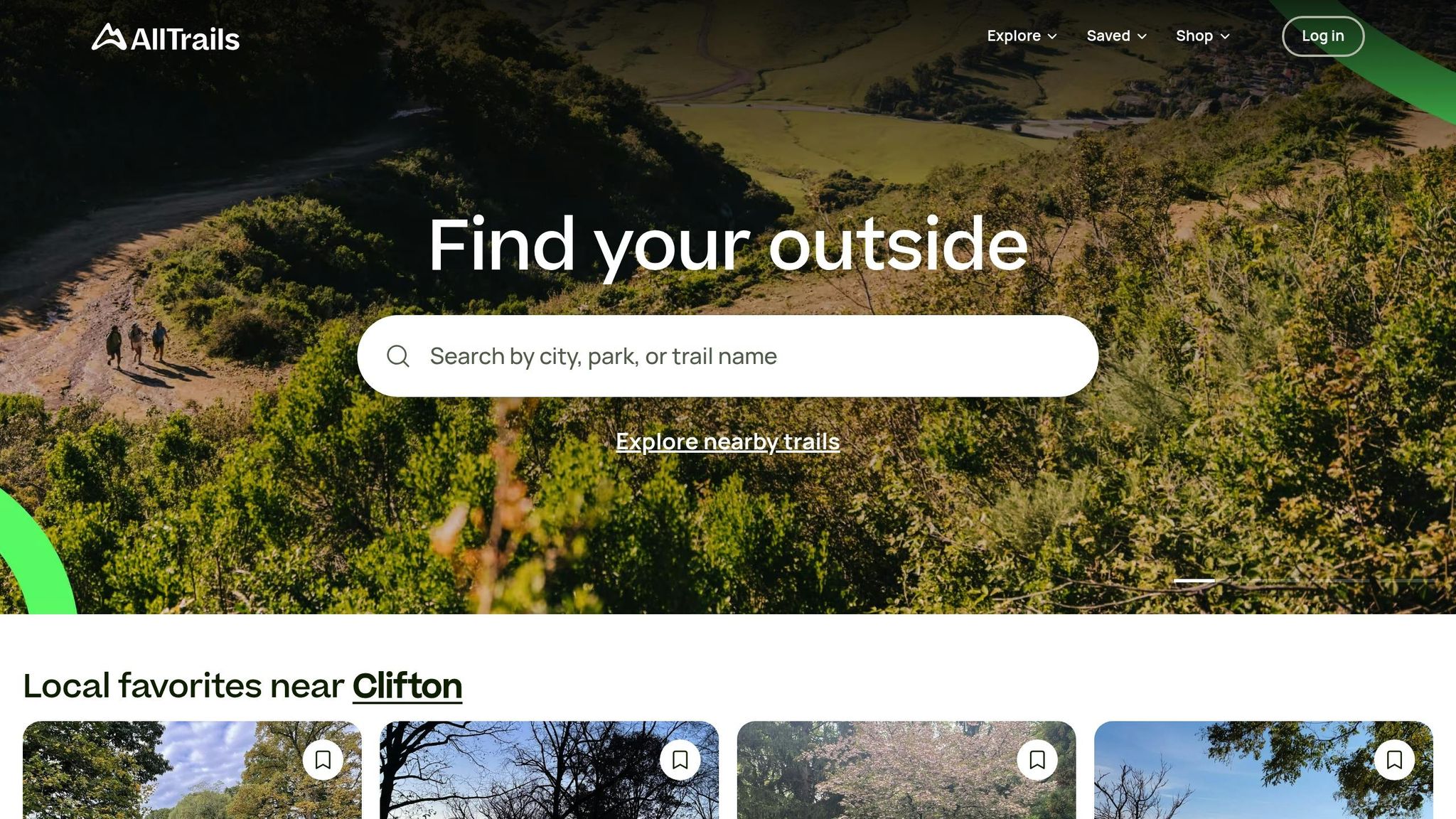
AllTrails provides an extensive database of U.S. trails, making it easy to find and plan hikes based on difficulty, length, and elevation changes.
Key features:
- Ratings for trail difficulty and user reviews
- Topographic maps with elevation details
- Real-time weather updates
- Photo waypoints shared by other hikers
- In-app trail recording with stats tracking
A premium subscription adds offline maps and detailed trail previews.
Komoot

Komoot offers navigation tailored to terrain and surface conditions, with sport-specific routing for a variety of hiking experiences.
Key features:
- Turn-by-turn voice navigation
- Routing that adjusts to surface types
- Terrain analysis for better planning
- Automated suggestions for highlights
- Integrated weather updates
Premium users get access to expanded regions and advanced routing options.
Wikiloc
Wikiloc features a global collection of trails enriched by community contributions and documentation.
Key features:
- Extensive trail photos and documentation
- Voice-guided navigation for hands-free use
- Altitude profiles for elevation insights
- Ability to create custom waypoints
Premium access includes offline maps and enhanced tracking features.
Outdoor Active
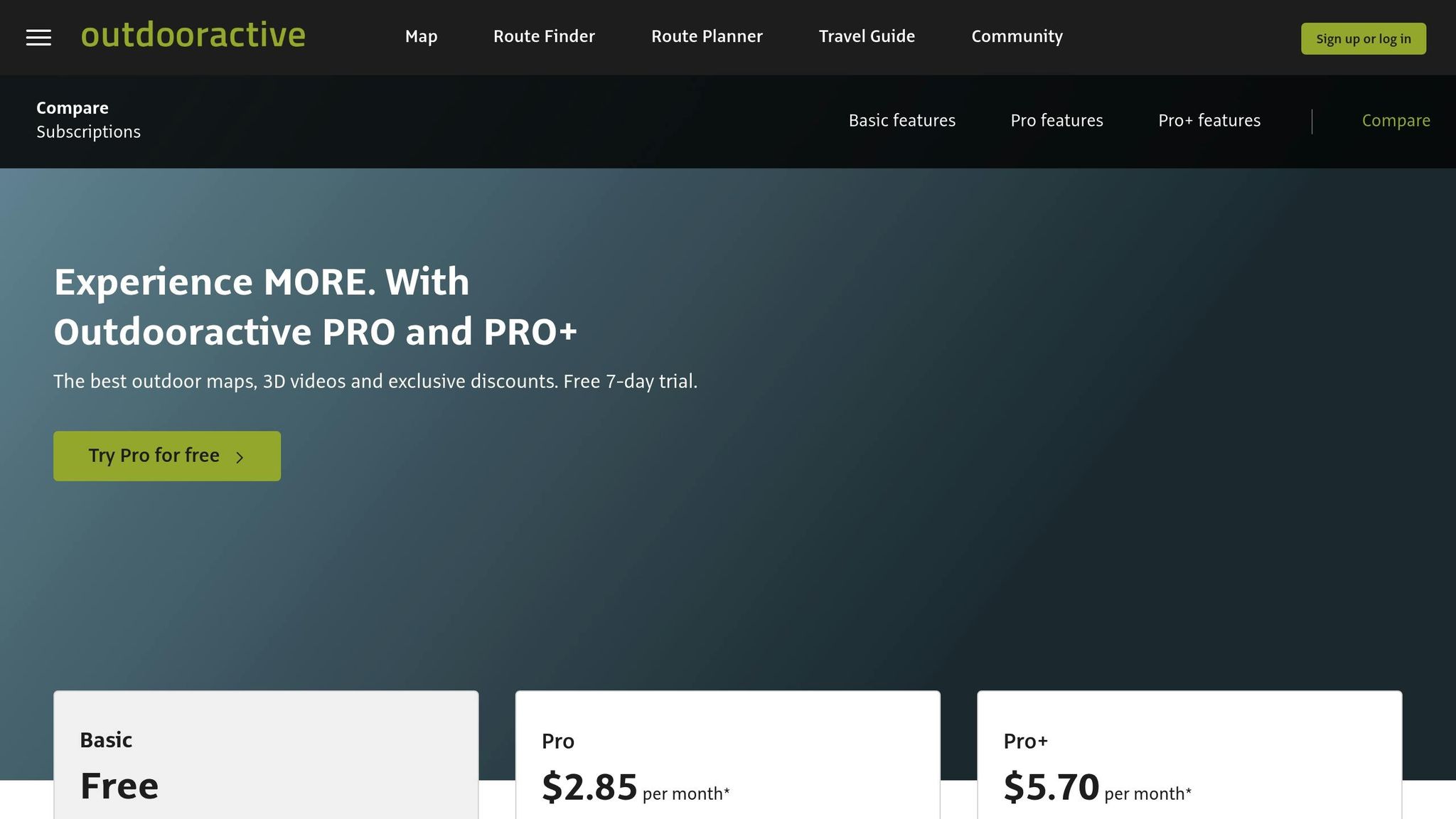
Outdoor Active blends professional-grade mapping with tools for planning both short hikes and multi-day trips.
Key features:
- High-resolution topographic maps
- Tools for planning multi-day routes
- Gradient-based elevation profiles
- Trail difficulty ratings
- Emergency location sharing for added safety
Premium unlocks additional maps and advanced planning tools.
Gaia GPS

Gaia GPS is designed for serious hikers, offering advanced navigation tools and offline capabilities, ideal for backcountry and extended trips.
Key features:
- Multiple map overlays for detailed navigation
- Advanced GPS tracking
- Tools for terrain analysis
- Custom map printing options
- Track recording and sharing
Premium includes specialized maps and advanced functionality.
Each tool caters to specific hiking needs. AllTrails is great for discovering trails, Komoot shines in adaptive routing, and Gaia GPS is perfect for offline navigation. Wikiloc offers rich community-driven details, while Outdoor Active provides precision mapping and planning tools. Consider your hiking style and goals to pick the best fit!
sbb-itb-5a98267
Tool Comparison Guide
This guide compares popular route planning tools based on key metrics, helping you pick the right one for your hiking needs.
Features and Pricing Table
Each tool caters to different hiking styles and preferences. Here’s a breakdown of their pricing, features, and compatibility:
| Feature | AllTrails Pro | Gaia GPS Premium | Komoot Premium | Outdoor Active Pro | Wikiloc |
|---|---|---|---|---|---|
| Annual Cost | $35.99 | $39.99 | $59.99 | $59.99 | Free |
| Offline Maps | ✓ | ✓ | ✓ | ✓ | ✓ |
| US Trail Coverage | 300,000+ trails | Extensive | Good | Moderate | Limited |
| Battery Efficiency | Best | High battery use | Good | Moderate | Good |
| Emergency Features | Lifeline tracking | InReach SOS integration | None | Offline SOS | None |
| Storage Required | 850 MB per region | 2.1 GB per state | 1 GB per region | 500 MB/100 sq mi | Varies |
Performance and Accuracy
Performance tests revealed some differences. Gaia GPS excelled in remote navigation with 92% accuracy during 2023 Appalachian Trail surveys. However, it uses about 40% more battery than AllTrails in continuous use. Komoot stood out for its quick route updates, even in areas with weak cell service.
Specialized Features
Each tool brings something unique to the table:
- AllTrails: Delivers 94% trail accuracy in National Parks, supported by user-verified data.
- Gaia GPS: Features over 300 map types, including detailed USGS topographic maps.
- Komoot: Uses AI to suggest routes, cutting planning time by 40% in 2024.
- Outdoor Active: Offers high-resolution 3D previews of routes.
- Wikiloc: Shines with user-generated content for lesser-known trails.
"Adventurism.co’s 2024 review highlights Gaia GPS for its ‘unmatched detail in US backcountry,’ while recommending AllTrails for family-friendly outings."
Device Integration
How these tools work with your devices can be a deciding factor:
- AllTrails: Syncs effortlessly with Apple Watch.
- Gaia GPS: Pairs with Garmin inReach for wilderness SOS.
- Outdoor Active: Compatible with Garmin devices.
- Komoot: Offers voice navigation for hands-free guidance.
Weather and Safety Features
Weather updates and safety tools vary by platform. AllTrails Pro, Gaia GPS, and Outdoor Active provide real-time weather updates, emergency alerts, and wrong-turn notifications. Gaia GPS goes a step further with wildfire alert overlays.
For multi-day hikes or remote adventures, Gaia GPS Premium offers the most comprehensive features at $39.99/year. Casual hikers and families might prefer AllTrails Pro for its ease of use and extensive trail database at $35.99/year.
Final Thoughts
The right hiking tool can make your adventures safer and more enjoyable. Based on the comparisons above, selecting the right option will elevate your time on the trail.
Offline maps and emergency features are crucial, but it’s important to pick a tool that matches your hiking habits. For casual hikes, an easy-to-use interface is key. On the other hand, multi-day treks benefit from detailed mapping and input from fellow hikers. Look for tools with offline maps, dependable GPS tracking, and effective trail-sharing options that fit your needs and experience level.
Think about how each tool’s features align with your outdoor goals – whether you’re tackling relaxed day hikes or venturing into remote backcountry. Finding the right balance will improve your overall experience while keeping safety a top priority.
FAQs
What key features should I look for in a hiking route planning tool?
When choosing a hiking route planning tool, look for features that enhance safety, convenience, and accuracy. GPS functionality is essential to track your location and guide you on the trail. High-quality topographic maps help you understand elevation changes and terrain. Tools with offline access are a must for remote areas without cell service.
Additional features like customizable route planning, weather forecasts, and trail reviews can make your hike more enjoyable and well-prepared. Prioritize tools that are easy to use and compatible with your device for a seamless experience outdoors.
Why are offline maps important for a safe and enjoyable hiking trip?
Offline maps are essential for hiking because they provide reliable navigation even in areas without cell service. They let you access detailed trail routes, landmarks, and points of interest, ensuring you stay on track and avoid getting lost.
By having offline maps, you can confidently explore remote areas, stay informed about your surroundings, and enhance your overall hiking experience, no matter how far off the grid you go.
What are the best tools for planning multi-day hiking trips?
For planning multi-day hiking trips, GPS apps and mapping software are invaluable. Tools like topographic maps, route planners, and offline navigation apps can help you chart your path, track your progress, and stay safe in remote areas. Look for features like elevation profiles, weather forecasting, and offline capabilities to ensure you’re fully prepared.
Some popular options include apps with detailed trail maps, customizable routes, and user reviews to help you plan your trek with confidence. Always consider the specific needs of your trip, such as terrain difficulty, distance, and available resources, when choosing the right tool.