
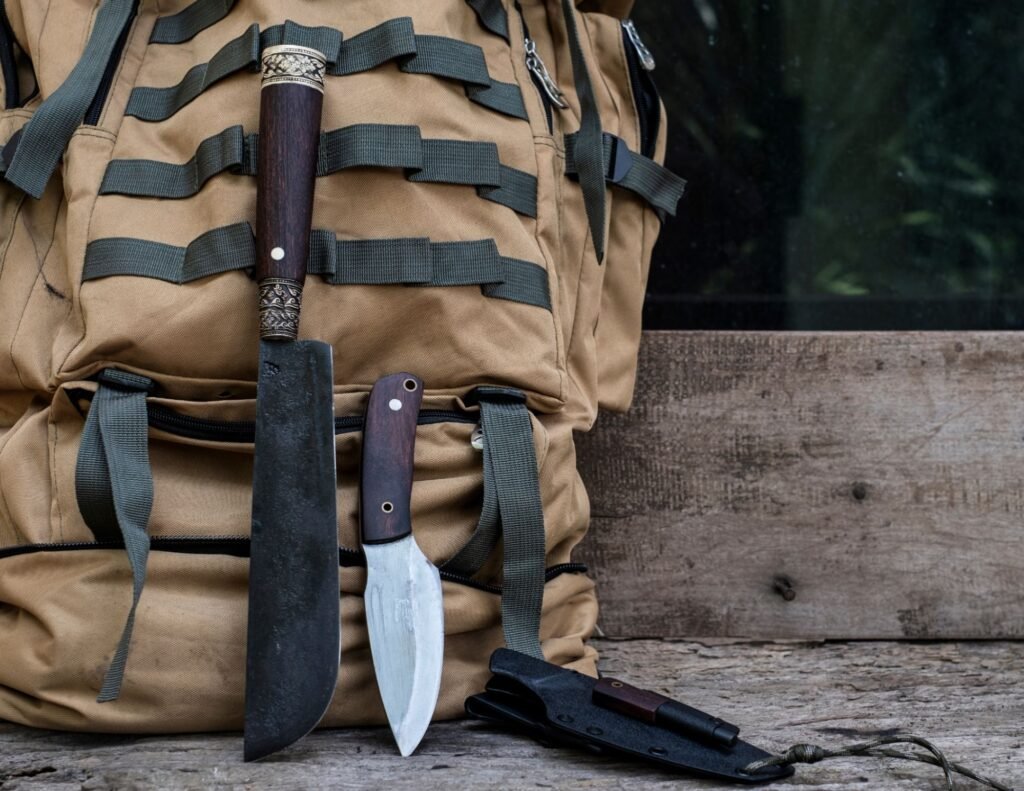
Being amply prepared in a survival situation is something most people at least think about when planning any excursion or outdoor experience, and you don’t necessarily need to be a Debbie Downer to consider the what-ifs of a worst-case scenario. With that being said, one might ask if you should carry a knife with you while hiking.
You should most definitely carry a knife with you when hiking. Still, it’s even more imperative that you know how to utilize the knife itself as well as any other additional features your knife might have, depending on which you purchase.
In this article, we will discuss why it is important to carry a knife during a hike, how knives can support your hike, and what the best knife to choose is. On top of this, we will discuss a few knives we find are good quality and affordable for you to choose from. With that being said, we encourage you to continue reading for more information!
Is It Important to Carry a Knife With You While Hiking?
Absolutely, a knife is an incredibly versatile tool that can not only allow you to fashion makeshift tools in a pinch, but also protect yourself, potentially start a fire, reflect light from long distances to make your position known, and more.
It’s hard to overstate how pivotal it is to carry one with you. Still, the ability to do so largely depends on where you live and whether or not carrying a knife or any bladed object is legal; it wouldn’t make sense to try and sneak one if it meant possibly doing jail time for the effort.
Is It Legal to Carry a Knife With You During Your Hike?
In most broad circumstances, carrying a normal knife should be legal, especially if the purpose of the knife is for utility and survival. However, certain stipulations can make this issue a bit more complicated.
The specific make of the knife can play a large part in how legal it is. A normal flip knife should be acceptable in most situations, but something like a ballistic knife, gravity knife, switchblade, and sometimes even knives made of synthetic or organic materials (i.e, cannot be detected via metal scanners) can all be legal issues.
You’d be wise to understand that certain areas also have stipulations on the length of the knife you carry, or its innate design. For instance, a dagger or stiletto can be considered illegal in almost all scenarios because they are specifically designed for stabbing, meaning you aren’t bringing it with you for utility purposes but more than likely with the intent of inflicting harm.
If you aren’t aware of the specifics of knife laws where you live, you’d be incredibly wise to take some time to read up on them before setting out on your next excursion, and definitely before purchasing something that could potentially be illegal even to acquire, let alone bring with you.
How Can a Knife Support Your Hike?
A knife can support your hike by making certain activities easier, or allowing you to navigate difficult terrain with tools or oddities you might have fashioned yourself. Alternatively, it can prove useful in making meals, or even cobbling together a small tent of sorts.
- Emergencies
- Food preparation
- Shelter-building
- Builds confidence
1. Emergencies
There isn’t a person alive who can aptly predict precisely what will happen to them. Still, doomsday preppers exist on the premise that you can be ready for just about anything, and following that mindset, being aware of certain misfortunes that may befall you while you are on your hike can make things easier to deal with, or ultimately save your life.
In a pinch, a knife can be used for cutting away clothing, fabrics, or other materials to be fashioned into slings, backpacks, or bandages, or even to make a gurney to help get someone from point A to point B if they are injured. You aren’t, but have a large distance to go.
Assuming you’ve done some research, you can use a knife to fashion small traps for survival, or even fletch an entire bow and accompanying arrows, which sounds incredibly silly, or like something out of a movie. Still, these skills were utilized long ago for a reason, and while they may have used sharpened stones, you could have a razor-edged knife to make the work much faster.
Certain knives come specifically tailored to aid you in survival situations; these are called, as you might expect, “Survival Knives,” and while some can be as simple as a sturdy blade in a nice sheath, some have several removable bits along the handle that will store anything from flint and tinder to a compass, small map storage, or even medication.
2. Food Preparation
Out in the wild, food prep can take on any number of different meanings, anything from cleaning a fish or a freshly hunted rabbit to dicing some foraged veggies or mushrooms for a nice stew (only if you know precisely what you are eating). A knife will make this whole process easier, and can typically be cleaned quickly afterward.
Keeping standards is important, though, so if you used your knife for whittling branches or any other purpose, you’d be wise to clean it between uses to avoid cross-contamination, both from different meat and food types and from whatever substances may be lingering on the blade.
3. Shelter-Building
As with most people going on a hike, you more than likely don’t need to consider getting your expert construction hat on and fashioning an entire small home on the mountainside when attempting to go for a bit of exploration; it’s in the off-hand chance you get lost, or decide you’d like to stay the night that this knowledge and skill becomes invaluable.
Building a shelter isn’t exactly an easy task, especially if you are looking at things like long-term structural stability, or even worse, fighting nature’s elements, be it extreme downpours or snow; shelter building takes different forms. It will need different understandings to have something better than sleeping on the ground.
If your knife is sturdy enough, or you have the specific blade types (looking at you, survival knife), you can do everything from cutting down small vines and twigs for support pieces to sawing down larger ones to serve as the foundation for surfaces between you and the ground.
Utilizing larger, leafy materials in layers can allow you to make a very unique roofing material, especially when done in a stick/twig/branch layer, fronds, leaves, and other flora between, and then repeating this cycle until the roof is thick enough to prevent most moisture from coming down on you, but also not so heavy that it might collapse on you in your sleep.
4. Builds Confidence
The adage of “Carry a big stick” might have changed greatly since the words themselves were once uttered. Still, the mantra behind them remains the same; knowing you have something that can substitute as a defensive measure in an otherwise dangerous situation can give you a sense of confidence and security you might not have otherwise.
It’s worth noting this doesn’t necessarily mean you need to be expecting violence and having a weapon to gain confidence; the other side of the coin is knowing that your utility tool will allow you to fashion any number of different useful things to make your journey much more enjoyable, or if the need was there, your capacity for survival is heightened.
What Is the Right Knife to Choose for Hiking?
While there are any number of different knives you can go with when hiking, the ideal choice usually boils down to a solid survival knife that is not only well-built, but comes with additional features like a serrated back for sawing tree limbs if needed, or a removable hilt that once again can store a flint to make starting a fire a breeze in the right conditions.
When shopping around, you’ll want a full-tang blade, meaning the metal will go through the entire length of the knife itself and be able to endure stress and use much better (think about the knife breaking during those sawing motions), and made out of high-carbon steel, to remain sharp for a long time and be fairly resistant to rust.
How Can You Carry and Store a Knife During Your Hike?
Just about every knife you purchase, most notably survival knives, comes with sheathes that usually have clips that allow you to secure them directly onto your pants or your backpack, with most people preferring to have them clipped directly to your pocket lining for ease of access.
Are There Any Safety Concerns While Carrying a Knife?
Absolutely, a knife is always going to be a knife. While that might sound redundant, the big takeaway is that it can be a safety hazard if used poorly or stored improperly. Doing things like running with the blade out or leaving it resting in a pocket without the sheath can have disastrous results, so treat your blade with the respect it deserves to keep yourself and those around you safe.
How to Choose a Knife for Hiking Purposes
Depending on what you are using your knife for can easily determine what type of knife you need for hiking purposes. Let us review them below.
1. Carbon Steel vs. Stainless Steel
The optimal steel type depends on what you are facing, or how keen you are on generalized upkeep of the knife itself, for those of us who don’t mind getting our hands dirty, or a little more idle work, Carbon Steel will take the cake, not only will your blade be honed to a razor’s edge assuming you sharpen it routinely, but the active maintenance will let you keep an eye on any possible rust attempting to sneak up on you.
If you are someone who likes a more relaxed approach or are utilizing your knife in more damp scenarios, you’ll probably want to go with the stainless steel, as you won’t have to deal with the onset of corrosion quite as much, and obviously won’t need to sharpen your blade nearly as often.
2. Folding or Fixed Knife
Assuming we remove cost from the equation just for a moment, most folding knives can put up similar results to a fixed knife if you aren’t pushing them to their uppermost limits or using them for grueling tasks like sawing wood or something equally demanding.
All cards on the table, however, you’d be much better off going with a fixed knife due to the raw stability of the knife itself and the trust that there aren’t any small mechanisms, parts, or oddities that can fail you or fall apart when you need them most.
3. Blade Length
We noted on it briefly earlier, but blade length is a big component of just how useful your knife can be. Unfortunately enough, you’ll also have to be wary of the size you purchase from a legality standpoint, so take some time in making your choice, and brush up on your local laws before making a selection.
4. Maintenance Routine
The kind of steel you go with for your knife will largely impact what a routine maintenance looks like for you and your knife; as noted above, stainless steel won’t need you to work on the blade nearly as much as carbon steel, but it also won’t be as sharp.
General upkeep of your knives will dictate you using a whetstone of some kind and sticking to a nice wash, dry, oil, and sharpen routine, allowing you to ensure there isn’t any excess or buildup on the blade, no rust to get rid of, and finally preventing any from gathering.
5. Selecting a Budget
In most situations, the bare minimum you should expect to spend on a hiking knife that has a little meat on its bones would be roughly 50$ or so, with higher-end models going upwards of 150$, with the primary differences between those points being the raw materials they are made of and what they are specifically capable of.
What Are the Best Knives to Have for Hiking?
The best knives you can have for hiking are ultimately ones that are affordable, reliable, and have a use outside of simply dicing meat or cutting small twigs. To that end, we’ll go over five fantastic options that will give you a better scope of what to look for, and hopefully some that might tickle your fancy and fulfill your specific needs.
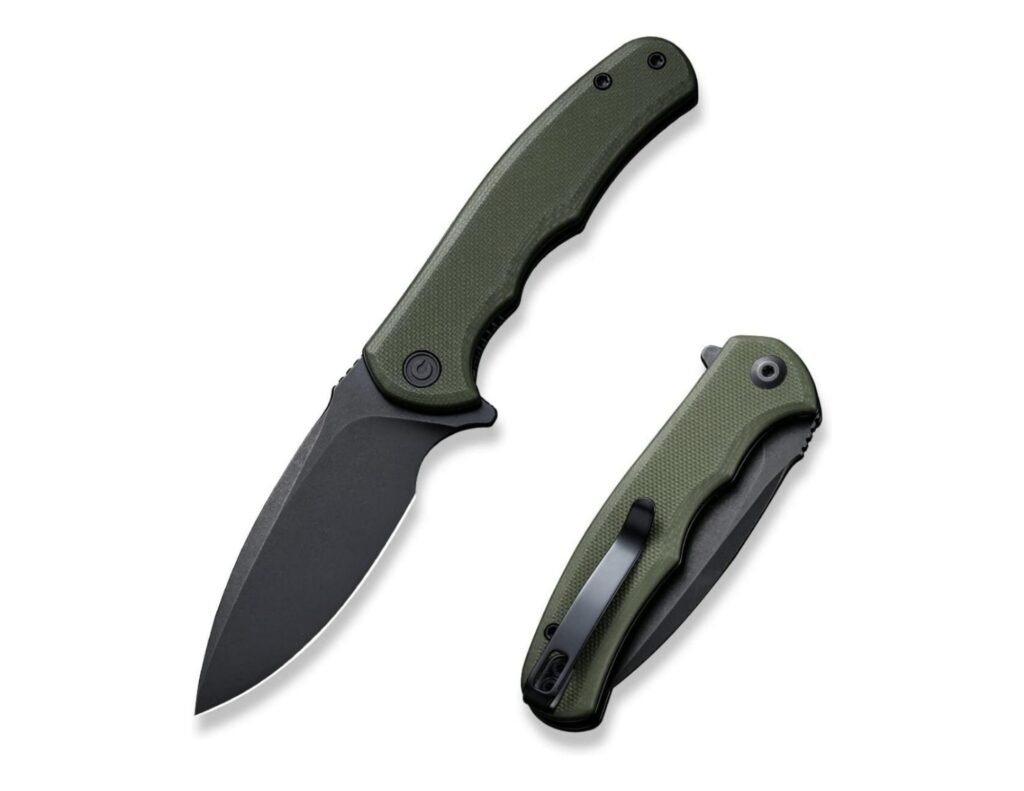
1. CIVIVI Mini Praxis Folding Pocket Knife
Here we have a knife with a very sleek, no-nonsense design. The handle has a custom-made comfort grip that lets you maintain control even during a downpour. Despite being a folding knife, it is incredibly stable and is made out of alloy steel, granting it innate corrosion resistance and enhanced edge retention.
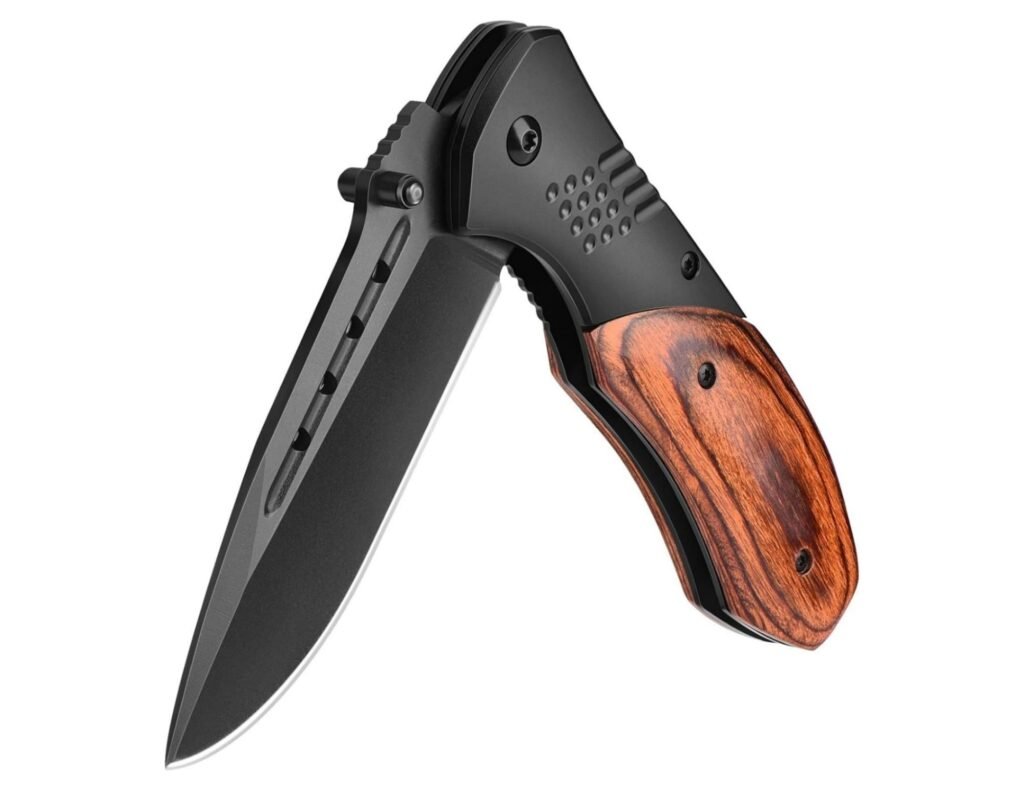
2. KEXMO Pocket Knife for Men
KEXMO makes a beautiful knife, and these bad boys are incredibly affordable and come in a myriad of different designs, ranging from a sleek wooden handle and blackened blade to something straight out of a comic book, with an iridescent finish, which doesn’t offer any tactical advantage but could be more interesting to look at if that is a need for you.
The KEXMO is also a flip blade, but uses a simple finger lever to open the blade, keeping that simplistic design while offering balanced versatility; the blade itself is made of stainless steel as well.
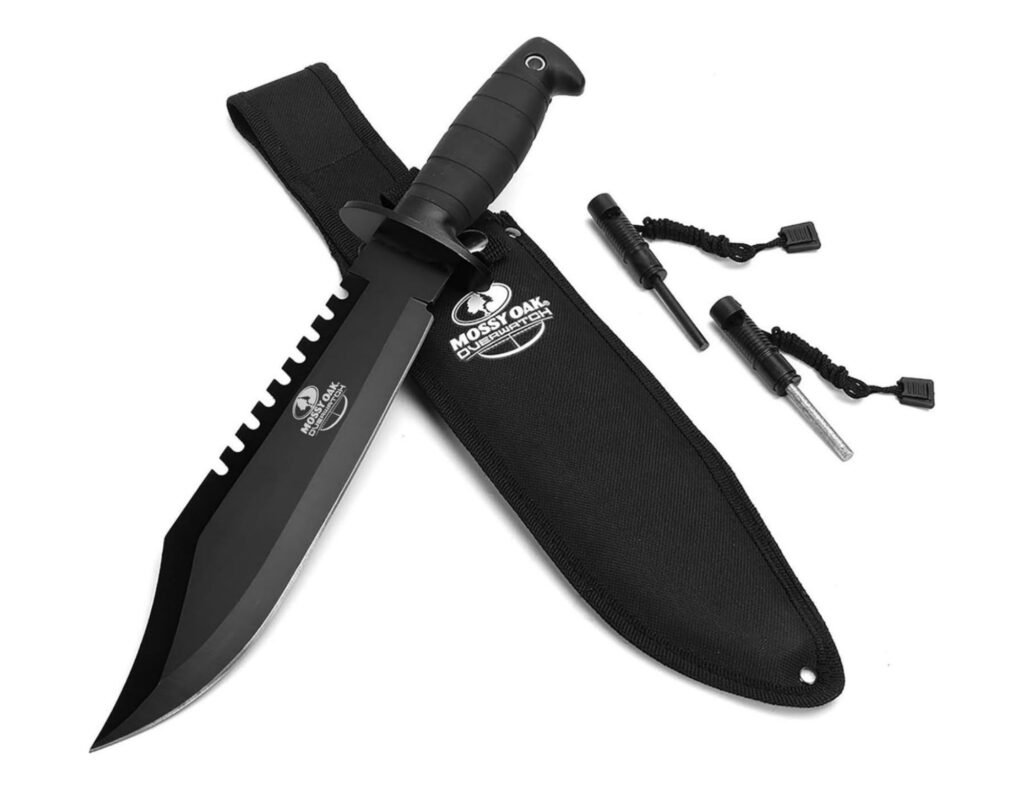
3. Mossy Oak 15-inch Fixed Blade Hunting Bowie Knife
Arguably one of the first proper survival knives on the list, the Mossy Oak is a 15 inch knife, meaning it can suitably handle most needs that should arise on any hike, but more importantly is a fixed blade, so it’s made to endure more, comes with both a sharpener and a fire starter, meaning you’ll get more bang for your buck, and to finish it all off, the blade is made out of stainless steel.
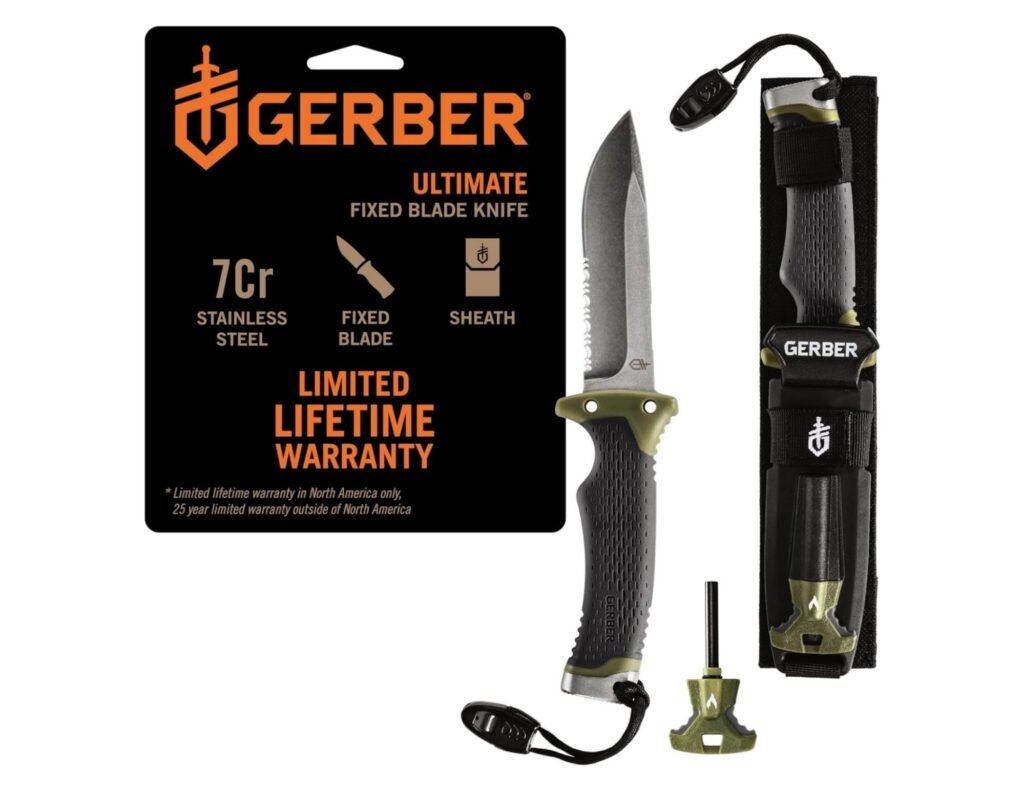
4. Gerber Gear Ultimate Survival Knife
Flexing into the more utility based side of things, Gerber’s survival knife starts its quality list off by being a fixed blade, meaning you can trust it to go the distance with you, but it has quite a few cards up its sleeve, ranging from a firestarter edge and fire striker, built-in whistle, serrated edge on the lower part of the knife making it perfect for bushcraft too.
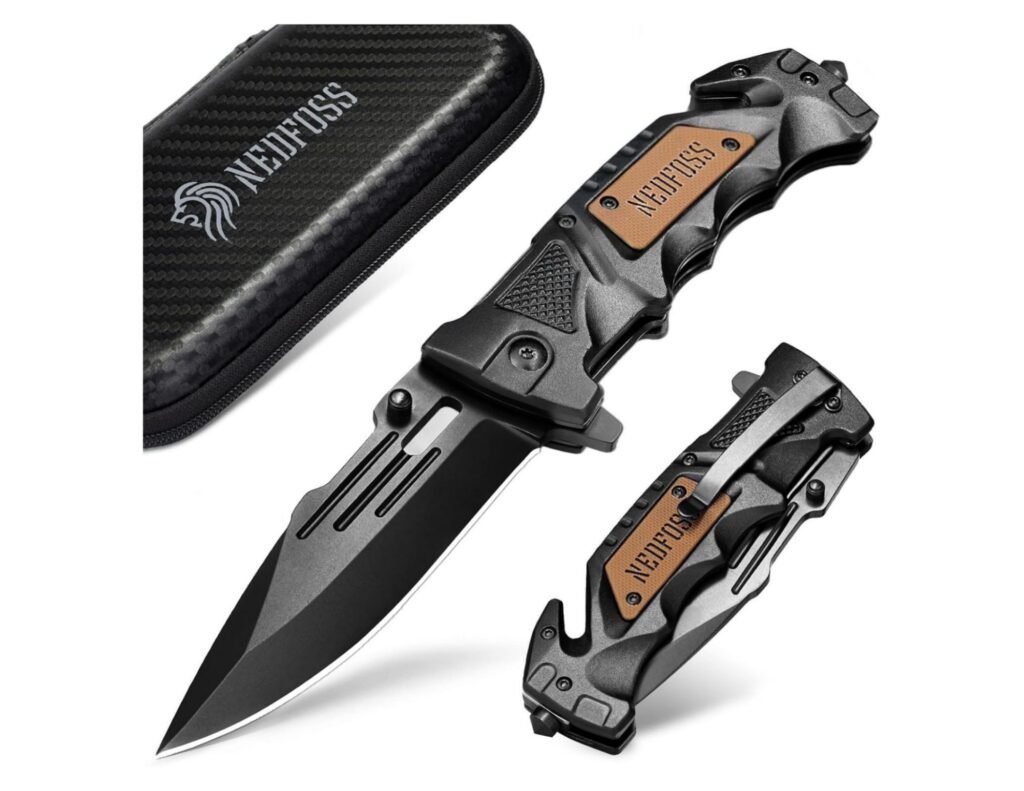
5. NedFoss Pocket Folding Knife DA75
If a get-out-of-jail-free card were ever to have a proper meaning, the NedFoss pocket folding knife would be just it. Still, the survival aspect of this knife is more in tune with being able to escape your vehicle should something disastrous happen.
Features like the seatbelt cutter, or glass breaker on the end of the knife showcase its function towards getting you out of a vehicle in a wreck, or should your car be on fire, sinking, whatever situation might befall you, or someone else, you can ensure you have a much higher chance of getting that person to safety with this knife, obviously as a knife it has its uses for hiking specifically as well.
Final Thoughts
If it weren’t abundantly clear by now, knives come in any number of designs and shapes that will allow you to focus on just about anything you’d hope to accomplish on your hiking trip. Still, in most circumstances, you should invest in a survival knife for the raw utility and options it provides, assuming your laws allow you to bring a knife equipped to do what you need it to, of course.