
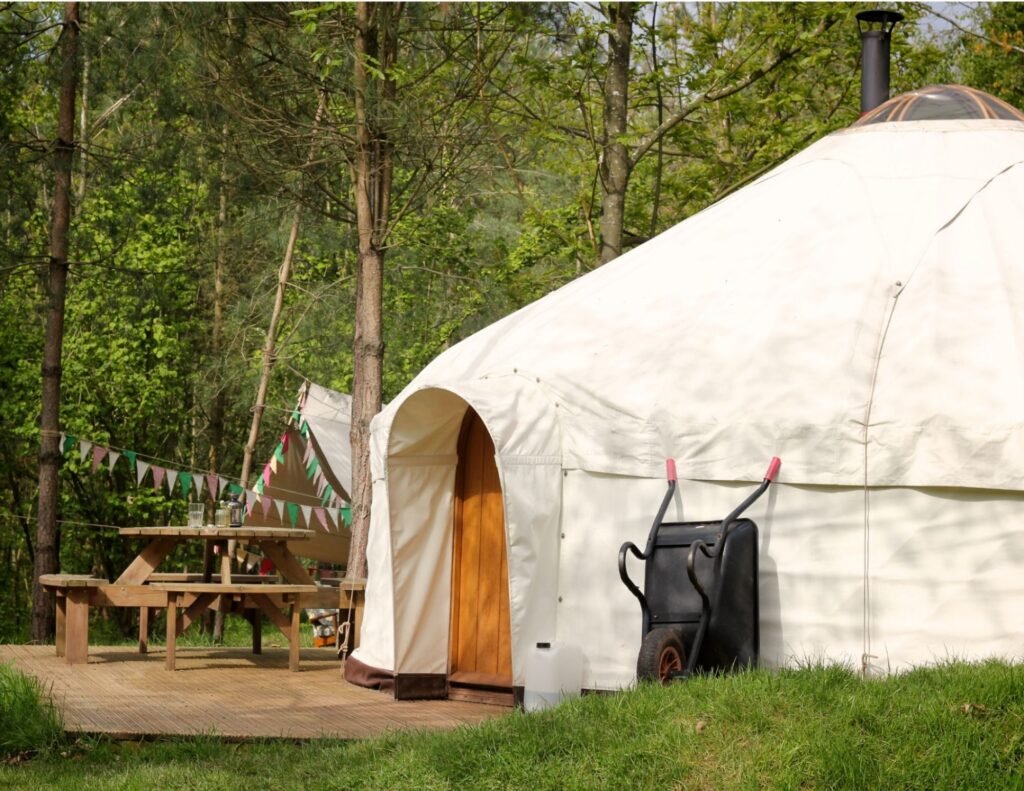
Yurt camping is becoming more popular as the days go on, especially in places like the Pacific Northwest, where it offers a unique camping experience unlike regular tent camping. Even so, if it is your first time camping in a yurt, you will need to know all the essentials and entertainment items you may want to consider bringing.
In the most technical sense, the essentials for a Yurt Camping trip are the things that would make you personally feel most at home, comfortable, and allow you to enjoy your stay in the great outdoors (albeit with some amenities) to the fullest. While that might fluctuate from person to person, chargers that work with your phone, shoes that work for going from outdoor to indoor practicality, and tools that can be used anywhere are some of the easiest choices.
In this article, we will discuss what yurt camping actually is, what kind of things you need to do to set up a yurt, and most importantly, what you should bring. We encourage you to continue reading, especially if you are a beginner trying to learn everything there is to know about yurt camping!
What Is Yurt Tent Camping?
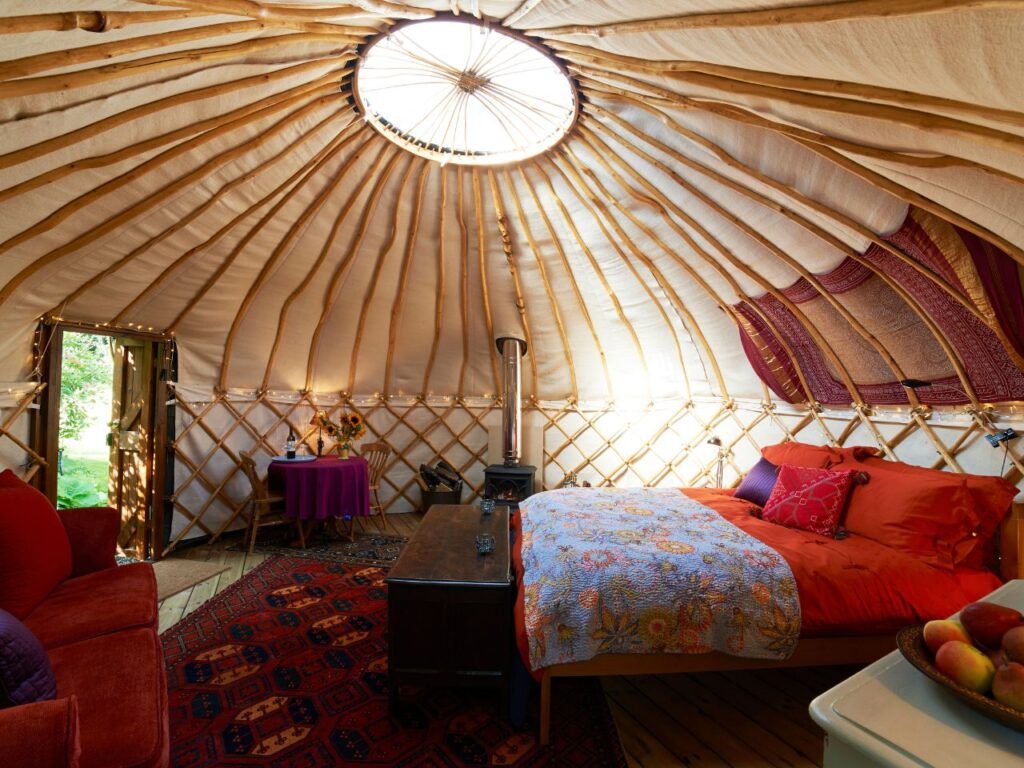
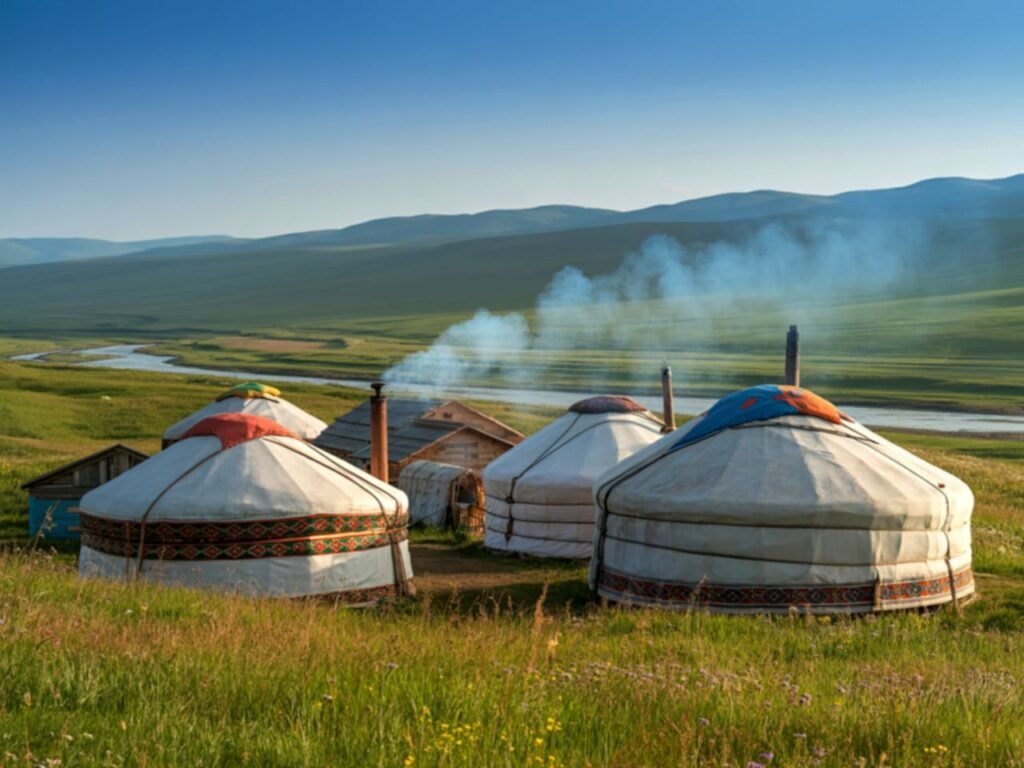
While most people are familiar with normal camping, Yurt Tent camping is by definition staying inside a rustic nomadic dome shaped tent, that usually is stationed higher than a normal tent to give you some separation from the ground, and often has electric, heating, and other creature comforts that make your adventure into the wilds something you can take at your own leisure, so the second you’ve had enough, you can retreat into a wonderful domicile nestled into the side of a mountain or forest!
In most scenarios, a Yurt doesn’t inherently feature things that a normal house would, like running water, or functional bathrooms, but most Yurt camping locations have them nearby, or a short walk away, one of the biggest cosmetic differences from a normal tent and a Yurt, comes down to the unique dome shape that tops it, typically featuring a skylight, or some similar opening that allows you to glimpse the sky at night, or let some natural light in.
What Kind of Things Do You Need to Set Up a Yurt Tent?
Before doing a deep dive on how to set up a Yurt Tent, it’s worth noting there are most definitely levels to Yurt camping; for instance, a “Solo” or smaller Yurt Tent might run you upwards of $8,000 for one of the more basic models. While these can be set up alone, you’ll probably want a few hands on deck, and you’ll want to plan to be in the location for a time that justifies the initial cost and ensures you get the most out of it.
In most situations, people looking to go Yurt Camping aren’t buying their own Yurts. Still, they often choose to rent a pre-built one, often sponsored by a resort or something similar; these experiences are typically cheaper than the upfront cost of a smaller Yurt and are far larger, often mimicking an entire room in a normal house, with accompanying furniture and luxuries inside.
Assuming, however, we are strictly speaking towards a smaller Yurt, you’ll need some of the normalized tools you’d need to set up a basic tent, things like a mallet for stakes, the stakes themselves, and other odds and ends to facilitate the process, but we’ll get into that below.
1. Yurt Tent
It would be incredibly difficult to imagine setting up a Yurt without actually having the tent itself, so starting with a strong foundation is a must, in most locations, The size of the tent itself sells yurts, then broken down into additional costs depending on what is added afterwards, everything ranging from raised decks, to things like shipping, or even insulation choices can make this initial investment far more expensive than you realize.
When shopping for a Yurt, take time to understand the climate you are going to be using the Yurt in, as well as what precautionary measures need to be taken to ensure you can place it without getting into legal trouble, as Yurts typically need permits, and a bit of land prep to guarantee you won’t be asked to relocate, or better, your Yurt isn’t damaged by setting up on weak or unstable ground.
Once you begin getting a better grasp on how many facets are going into your Yurt experience, it becomes easier to understand why the initial set up is so much more difficult than a normal tent, things like Heating and Cooling systems can make this process even more tedious and time consuming, as you’ll need to take into consideration how the airflow will work, keeping the structure properly ventilated and safe for everyone inside.
While you can technically set up a Yurt by yourself, or with a few friends, if this isn’t your forte, or you’d prefer someone else to do it, you can definitely hire contractors to set up the structure for you, but again, this is costly and will make things take a bit longer. Still, the trade-off is that it often comes with a seal of approval and guarantees for overall safety.
Finally, there are even smaller Yurts available, which are quite literally called “Glamping Yurts,” which are, in most regards, fancier-shaped tents, with dome shapes atop them. Still, often having access to ports and other measures that allow you to get electricity from generators and the like, these are the cheapest and easiest-to-set-up options, and rarely require permits and other legalities to get into.
2. Mallet
All structures require something to keep them from collapsing upon themselves, via structural design or simple ingenuity. Smaller Yurts, and to a certain extent larger ones, make use of stakes and other poles to build the foundation of the structure itself, but to secure these firmly into the ground, you’ll need to make use of a mallet.
Depending on the brand you go with, these mallets may come included in your package, but you’d be wise to research everything your particular Yurt comes with so you aren’t left empty-handed in the middle of a forest.
3. Pocket Knife or Multi-Tool
While a pocket knife will more than likely get the job done in a multitude of areas, the Multi-Tool will definitely prove to be the jack of all trades you’ll want by your side when setting up a Yurt. It’s a fantastic piece of equipment to have at your disposal for just about any job, especially the smaller ones that can be kept on you at all times.
Anything from making small cuts to fixing lines, or clamping down on something with the pliers for a better grip, can be invaluable when you don’t have anything else readily available; this is doubly true if you find yourself in a weird angle that other tools might struggle to fit into.
4. Tent Stakes
These little guys probably aren’t going to be seen on your larger Yurts, as you’ll need something far larger to give structural stability to them. The smallest Yurts on the market will make use of tent stakes, and you can probably find a use for them in securing mounted coverings as well, preventing rain and other natural elements from lashing out at you.
5. Ground Tarp
In much the same way, you will need to do some ground prep work to guarantee your Yurt isn’t lopsided or, worse, sliding around in a gentle breeze. Setting up a ground tarp will prevent bugs, moist soil, and slippage in most scenarios, so you can definitely consider it one of the most valuable pieces of the Yurt prefab foundation.
6. Rainfly Sheet
A rainfly sheet is essentially a highly decorated and more durable tarp, often geared at handling a specific issue that you would be encountering, be it excessive rainfall, being water resistant, or keeping out anything nature can usually throw at you, with the biggest difference between the two often boiling down to a rainfly sheet offering some level of UV resistance, whilst a tarp is for all intents and purposes just a covering.
What Do You Need to Pack for Yurt Camping?
Packing for a Yurt trip often is separated into two categories: needs and wants. Thankfully, the needs are simple. Often you have ample supplies of them, either from things you innately have around your house or things you’d probably pick up before going on your excursion; either way, we’ll go over them so you know precisely what to bring on your adventure.

1. Essentials
Water Bottles
If you are planning on surviving your trip, you’ll want to stay hydrated, this rings doubly true if you are going to be situated in an incredibly dry, arid area with little access to other forms of water (regardless of if you can filter them or not), to that end, bringing an ample supply of water bottles will give you access to hydration on the go, and empty bottles afterward, which can be used for simple crafts, or disposed of afterwards.
The saviest of outdoorspeople can fashion a filter out of empty bottles of water using layers of rocks, pebbles, sand, charcoal, and a bit of cotton; we won’t go over the precise way to set that up here, but it’s information definitely worth knowing if you intend to spend some time in nature; after all, being prepared is half of the experience.
Cooler(s)
Bringing a cooler will allow you to easily store and chill most of the foods you intend to use throughout the duration of your trip, often being capable of keeping large quantities of ice in spare coolers to “refill” other ones, especially if you are storing certain coolers in more shaded areas, letting their ice contents last longer.
Juggling ice like this will allow you to get the most out of every beverage and perishable food type you bring, and make for a fantastic way to carry away things that wouldn’t fit into whatever backpacks and other luggage you bring afterward.
The alternative storage functionality can be put to great use in remote locations where you aren’t able to dispose of any trash you and your family/friends generate, and allow you to be respectful and mindful of both nature and anyone else who might be looking to share the location with you.
Blankets
Regardless of if you plan on resting under the open sky, or nuzzling up in the sanctity of your Yurt in a nice bed, a few spare blankets are always a solid choice, ideally one for using outside (perhaps on a smaller tarp), and another for bed, but in either scenario you’d definitely want to bring one with you even if you intended on Yurting up in a desert location.
Sheets
If you can see the value in bringing a blanket, you can definitely understand how important it is to bring a sheet for whatever bedding situation you opt to go with, as sheets act as a barrier between your skin and the bed itself. These are fairly important, but if you want to keep it primitive, you can skip out and go full savage mode!
Pillows
Cushions of comfort, pillows will make even the most rigid and uncomfortable areas places where you can rest your head, and kick your feet up, and if not used strictly for sleeping, you can lounge about on them, or elevate any limbs that are tired, or worse injured.
If someone were to get hurt while you are camping, having a few extra pillows may make all the difference in letting that person sleep peacefully for the remainder of the trip, or preventing any painful injuries they have worsened over the duration of the stay.
You can alternatively fill backpacks with random assortments of clothes and other soft/malleable materials to have some makeshift pillows. Still, Yurt camping is typically about finding the glamorous side of life, with the outdoorsy portion of camping, so you probably won’t mind splurging for a few pillows.
Sleeping Bags
Sleeping bags are a very cost effective way to get the most bang for your buck when it comes to catching up on some valuable sleep, especially with how expensive certain Yurts can be, not only are these more portable than an inflatable bed in most cases, but they are often more durable, and easier to store when you are done, letting you have the most room in your Yurt when they are properly stored away.
Air Mattresses or Foldable Cots
If the size of the mattress does matter, or you need to get the most extravagant sleep possible, Air Mattresses are your ideal choice for truly enjoying your sleep in the great outdoors with a true semblance of opulence.
A good air mattress, or a foldable cot, will let you stretch out, kick your feet up, and take a load off, which truthfully might be your best course of action depending on how active you are throughout the day, as letting your body recover properly is just as important as your diet is while camping.
Air Pump for Air Mattress
As tempting as it is to sleep on what can only be described as a deflated tarp, an air pump is an absolute necessity if you are going to be bringing an air mattress, as otherwise it won’t amount to much more than a simple ground decoration.
In most circumstances your air mattress will come with a pump to get it set up, however, not all air pumps are created equally, purchasing a separate, standalone pump will give you access to potentially better airflow, perhaps a more quiet running set up, or simply being more durable, regardless of where you stand, it’s good to know there are different options available, if you don’t mind spending a bit more for it.
Toothbrush
Just because you are going to be spending time amongst animals doesn’t mean you need to devolve to one. To that end, you must keep up good dental hygiene; thus, bringing your toothbrush with you will keep your teeth in great shape and, more importantly, equip you to battle a severe case of morning breath.
Toothpaste
Utilizing toothpaste with a toothbrush is about as basic of a concept as you can get, as they both even have tooth in the name, however, if you are something of a dental specialist, perhaps you can skip on the toothpaste, especially if you are using a miswak stick as your choice for dental care, (A miswak is a stick from a plant that boasts extreme dental hygiene properties, with fibers that easily clean teeth and gums, and chemical composites inside the plant itself that actively fight plaque and germs).
Hair Brush
Once again, being in nature does not mean we need to go full caveman (or woman), a hair brush will let you tame the beast inside, or I suppose outside, keeping your hair free of twigs, bugs, and simply looking well managed even in the most remote locations, for those with longer hair, this is a must, especially if smaller bugs frequently fly into you.
Sunscreen
A solid bottle of sunscreen will keep you from ending up looking like a piece of jerky after your delightful romp through nature. More importantly, it will keep you from dealing with painful sunburns throughout the week when you need to return to work afterward.
Sunscreen itself is only part of the solution, though, as you’ll want to wear clothing and other accessories that truthfully help protect every part of your body from exposure.
Clothes
Keeping in step with the above, bringing spare change of clothes should be a no-brainer. Still, you must bring clothes that fit the location you are staying at, and be mindful of temperature fluctuations, as well as the flexibility you’ll need to be comfortable where you are camping out.
A good example of that would be utilizing hats, sun glasses, shorts, and short sleeve shorts in hotter areas, but long sleeve pants, perhaps an under layering of thicker pants in regions where you are fighting off snow and struggling to stay warm, granted your Yurt can be equipped to keep you regulated regardless, if you plan on stepping foot outside of it, you’ll want to be ready for lies in wait outside it!
First-Aid Kit
“Better safe than sorry” is truly some timeless advice. Having a First-Aid kit on hand will allow you to deal with moderate to severe injuries that might crop up while you are camping, but even more important than having the kit itself is equipping yourself with the knowledge of how to employ it properly and its contents.
Afterall, having a First-Aid Kit handy is almost useless if you don’t know how to use gauze properly, disinfect a wound, or apply ointment, they typically have things like tweezers and other utensils as well for removing any foreign objects lodged in someone’s skin, but again, if you don’t know how to utilize these tools, you might end up causing more harm than good.
If you aren’t sure how to treat wounds, burns, or other simple injuries, you may want to sign up for a First Aid class in your area; in some places, these classes can be free. Still, the more in-depth ones will have a cost attached; however, these are often what you’d want to attend, as they cover a broader range of scenarios and allow you to gain extensive knowledge on what scenarios can play out, and how to adapt to them.
Headlamp and Flashlight
When darkness comes, having a source of light can mean all the difference between you finding your way back to camp, or stumbling around in circles unthinkingly, most people can get by with buying a simple flashlight and calling it a day, but if you plan on utilizing your hands, or working extensively at night (especially when setting up the Yurt), you and your friends may want to invest in headlamps, as silly as they might appear initially.
Navigational Tools
Everything ranging from a compass to a GPS can prove invaluable when camping, as it truthfully only takes a handful of events to have you completely lost and disoriented, especially if this is your first time in the area.
In today’s age, your phone can suffice for a vast majority of your navigational needs. Still, there is a certain charm that comes with knowing how to use a normal compass expertly, or having a separate GPS device (typically because the GPS itself won’t need to be on constantly and can be used if your phone’s battery dies).
You can opt to lean further into technology too, however, by bringing spare battery chargers and the like that will allow you to make the most of your phone no matter how long you are stranded for; even more impressively, in an emergency, the locational ping from your phone will allow you to be located fairly easily depending on how far you were from the nearest tower.
Physical Copy of Current Map
While we are creeping into territory where some people haven’t even seen a physical map in their lifetime, they do indeed exist. You’d be wise to get hold of one if possible, especially if the territory you plan on camping in has been extensively mapped, with geographical landmarks letting you better chart where you are, as opposed to where you want to be.
Lighter, Firewood and Firestarter
In the most technical of senses, you don’t necessarily need all three of them; you can definitely condense these roles into one simple tool. Even better than that, you can get them attached to something that has an even broader spectrum of uses, like a survival knife, as most of them come with firestarter kits, admittedly minus the lighter itself in most cases.
The overarching idea, however, is being capable of making a fire if you need to, which is not only something that can provide creature comfort and mental stability depending on how dire your situation it, a nice fire can provide warmth, allow you to cook food, sanitize water, and the smoke can help give away your location, making it easier for rescue parties to find you.
2. Cooking and Dining
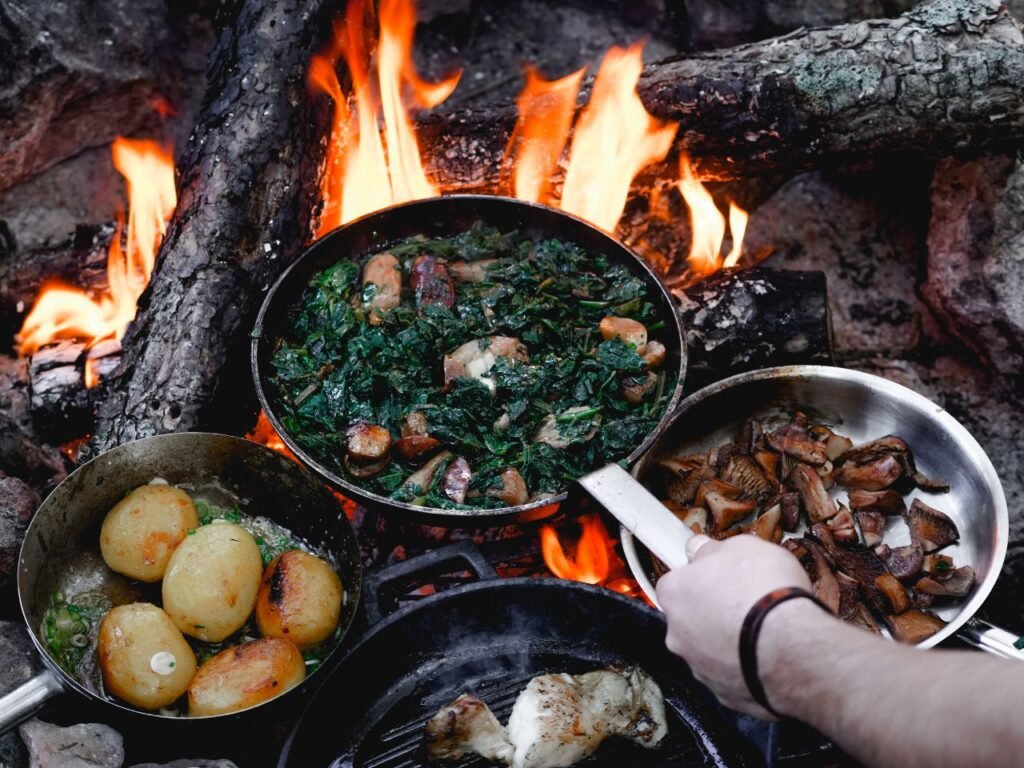
If talking about fires wasn’t warming you up to the idea of getting something hearty to eat, then nothing will (I absolutely adore puns, apologies); all jokes aside, it’s perfectly well and good to enjoy some meals that aren’t exactly the most nutritionally balanced. Still, you want to have some way to cook anything you do have on hand, and the proper utensils on hand to eat them, but eating spaghetti with only your open hands to grasp them with is definitely a choice you can make as well.
Camping Chairs
Lazing about in style with a few camping chairs is one of the best parts about any camping experience, especially around a roaring bonfire, with a tasty beverage in hand, or warming up some nice hot dogs and s’mores.
The chairs themselves can typically be very cheap, and most have cupholders built into them, with breathable fabrics that will keep you from getting too damp. The only issue you might run into if you decide to go with cheaper ones would be the distinct possibility of them being flimsy and breaking on you.
Stick Lighter
A stick lighter is a simple lighter with an extended end that will prevent you from needing to place your hand directly into whatever you are trying to ignite, be it a bundle of sticks or the entrance to a grill; either way, a stick lighter will prove its worth in time, either from the safety it provides or simply being able to start a flame.
Foldable Table With Tablecloth
Anything ranging from copious amounts of food, or stationary objects that shouldn’t be directly exposed to dirt and the elements can benefit from being elevated on a folding table, these tables are also incredibly cheap in most places, and when accompanied with a table cloth, you can skip the clean up and simply put them away, and set the table cloth in your washables and go about your day.
Tin Foil
While you might not see the near infinite uses tin foil offers at first glance, it shapes into just about anything you’d want with a little ingenuity, can act as a barrier for keeping bugs off of your delicious food, and with a little know how can allow you to cook potatoes expertly, or certain meats in an open flame, but be sure to take the foil off immediately afterwards, as this has a chance of creating the perfect nesting environment for bacteria.
Campfire Silverware
Depending on where you stand on disposable silverware, you can either be of the view that plastic utensils are great because they save time, Money, allowing you to eat your food with whatever is required, or you can go with the notion that plastic is bad for the environment, and opt for everyone attending to bring a fork, knife and spoon (metal sporks do exist, but are obviously cumbersome to find).
Thankfully enough, you are welcome to do whichever you like; just be sure to clean your metallic silverware when you are done with a bottle of water and some soap, if possible, to prevent any sickness from befalling you, or bacteria gestating on the utensils.
Plates and Bowls
Similarly to the silverware choices, you get the same luxuries when it comes to plates and bowls, with the ultimate choice still boiling down to how you plan on disposing of them later, or cleaning them when you are done. It is worth noting, however, that large groups can quickly generate a lot of trash in a short amount of time. More remote locations will not have a place for you to dispose of waste easily.
Cooking Supplies (Knives, Large Spoons, Strainers, Etc.)
How you prepare your food is far less flexible, unless you lean directly towards foods that don’t truthfully require utensils to eat, or cook; for example, things like hot dogs (or even burgers if you have a bit of finesse), can be prepared without any large utensils, and “plated” directly onto bread, or buns, creating a very easily clean up situation.
If this isn’t your cup of tea, however, metallic or wooden utensils are ideal, as they can be used and quickly cleaned up later.
Campfire Pie Iron
If you’ve ever made a waffle, you are at least familiar with the concept of a campfire pie iron; it is essentially a small metallic box that opens into two distinct halves, allowing you to put any number of food combinations inside and cook something over an open flame with little to no spillage.
Utilizing one of these, you can make delicious sandwiches, wraps, or even small pizzas and pastries to help satiate your carnal urges for yummy treats while exploring the wilds. Best of all, these are extremely simple to use, so you can get everyone involved in food prep, ranging from young to old.
3. Comfort and Entertainment
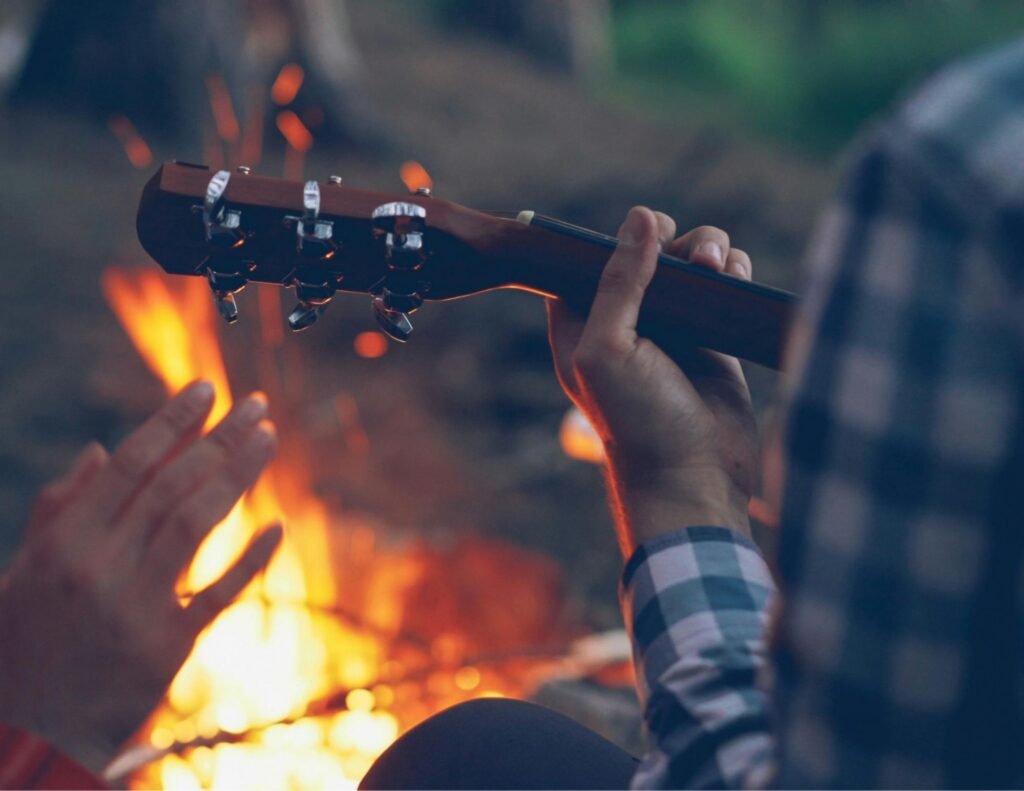
Here we may be entering a point of contention for some, as you might be inclined to say that the entertainment of the camping trip itself is the time you spend outdoors, and making memories for yourself, or with loved ones. Anything else might serve as a distraction; alternatively, you could see anything you add as something that elevates the experience to something greater, amplifying what was already there. Either way, being happy and comfortable is the name of the game here.
String Lights
Perhaps a far cry from being directly necessary, string lights do let you create a certain mood for almost any occasion. While you can drape them across the interior of your Yurt, you can also use them to showcase boundaries of your camping site, or color coordinate them so people can get directions to certain locations at a glance (think red lights lead to the bathroom area, for instance).
Cheap string lights usually come with static colors; however, more deluxe models may let you choose the color and strobe or pulse with different colors, ideal for coordinating with musical events or setting certain aesthetic standards.
Portable WiFi Device
It wouldn’t be the modern age without having access to the internet in a forest; to that end, portable WiFi devices and hotspots allow everyone to update their social media, pull up YouTube or Netflix, and enjoy everything the internet has to offer, while potentially having a row of beautiful trees and shrubbery as the backdrop.
When shopping for these, you’ll want to take note of the range they can cover and what tolerance they have for the elements, as getting too hot or too cold can easily damage these devices like all electronics. Obviously, water damage does exist in most cases.
Laptops
Justifying an entire TV being escorted into the wilderness might be a stretch, but thankfully enough we can get by with a much small, and far more versatile version in the laptop, and what’s better, you can use your laptop for everything from mindlessly scrolling whatever media platform you choose, to doing some work, or setting up a projector, truthfully the options are only limited by your avenue of connection, and technically your hotspot capabilities.
In a pinch, you can even go so far as to set up offline options, like pre-downloaded music, movies, and games, to get the most out of your laptop and perhaps circumvent the need for a hotspot entirely.
Speakers
Projecting your favorite song across the camp is as easy as pressing a button if you’ve got a quality pair of speakers, and pairing them with either your car, a laptop, or perhaps even your phone will let you choose what you (and everyone around you) gets to listen to, again, just be mindful of what can potentially break them, how you are powering them, and finally, who is subjected to your music tastes.
Lanterns
In going with the older definition, solid lanterns can completely change the atmosphere of a camp setting when used properly; everything from good placement to proper visibility can make your Yurt vacation change from something you’d expect in a hotel to something that can be straight out of a western movie.
Lanterns can also be another name for flashlights depending on where you are from, or even “Torch”; regardless, it is a form of stationary light source in most cases, and with lenses that can alter the color of light they project, you can definitely get some fascinating experiences going.
Books
A true return to form if there ever was one, bringing your favorite book, or books depending on how long you are staying in your Yurt can elevate your experience and world building to an entirely different level, if you thought reading next to your window with a good thunderstorm pattering outside was relaxing, imagine all the noise of the city completely gone, with only the isolation of rain, wind, and rustling trees getting you further immersed in a good story.
Portable Fan
Assuming you are taking your glamping trip seriously. If you have a nice generator at your disposal, you can definitely combat the heat with a portable fan (or use a battery-operated one). Positioning is very important when it comes to getting the most out of these in a Yurt, or even better outside; good airflow can make one fan stretch around the entire domicile!
Portable Heater
Valuing both heat and the ability to cool an area are viewed in equal step, so long as you have access to a means of powering it, a heater can prove invaluable on those chilly winter nights; just be sure the heater itself is safely elevated, and your Yurt has proper ventilation, as falling heaters can start fires or pose other health risks.
Tent Stove
Traditionally not seen in smaller Yurt Tents, Tent stoves can be an amazing addition to your camping experience and open up a wide array of food types without the need to ever get assaulted by insects or whatever temperatures nature is brewing outside your tent. Just be sure to follow safety regulations when setting it up and using it!
Tent Awning
While you might struggle to find a use for a tent awning if you aren’t going far from your Yurt or campsite in general, you can definitely set up eating areas, or gathering ones, by having a few of these set up a few feet away from your personal lodgings.
Utilizing these can let you save space in your Yurt, especially when it comes to cumbersome or large utilities like coolers, fans, or other storage units that might make navigating your sleeping area more troublesome than it needs to be.
Campsite Decor
Aesthetics, while less important than things of raw functionality, are important if you are looking to set a certain mood on arrival, or better whilst enjoying whatever festivities or activities you are doing. Everything from lighting, plants, hanging decorations, and coverings can be considered camp decor; you could even look at certain mats or stone walkways to help achieve a certain appeal.
Some of us are born with the ability to strategize and coordinate how things appear visually with ease, others might benefit greatly by shopping for specific designs that are already put together in sets from local retailers, this is perfect if you want to make a whole scene come together around a firepit for example, as certain dealers and manufacturers will sell pillow sets, hanging swings, rugs, chairs, and even tables that all mesh together wonderfully to give a certain vibe when viewed in unison.
Final Thoughts
The most invaluable things to pack when Yurt camping typically boil down to what you plan on eating, the appropriate clothing for the weather, and finally things that will keep everyone safe or prevent accidents from happening; everything else can typically be considered optional, but enjoying the experience does have its own value and place in the grand scheme of things!