
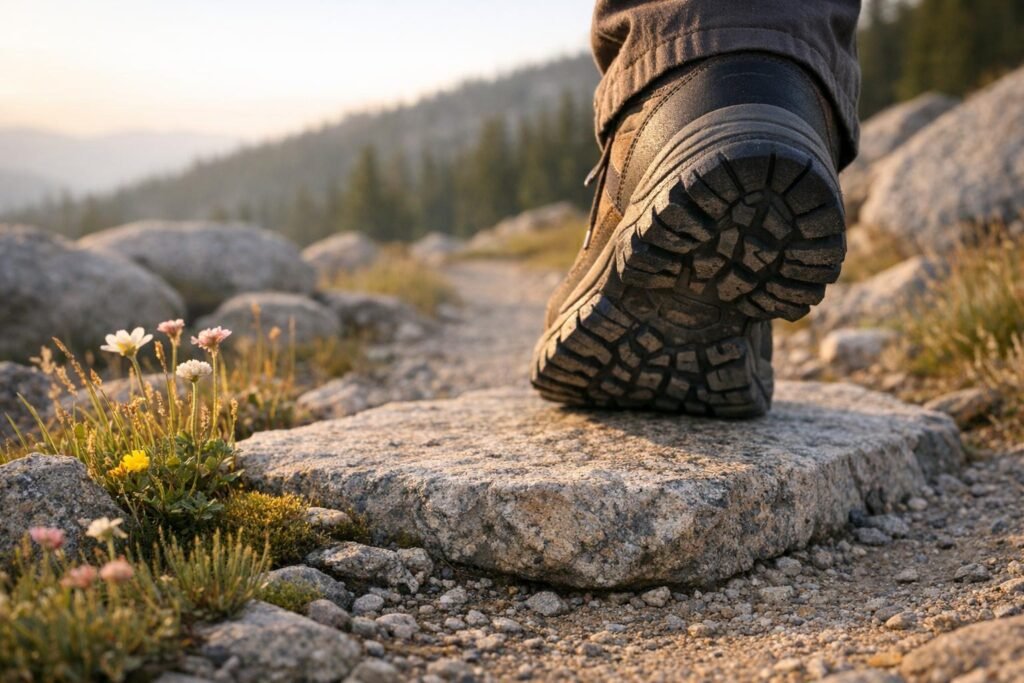
When you’re outdoors, every step you take impacts the environment. The key to minimizing this impact? Stick to durable surfaces. These are areas that can handle repeated use without lasting damage – like rock, sand, gravel, snow (at least 6 inches deep), and established trails. Here’s why it matters:
- A single step on fragile desert soil can cause damage that lasts decades.
- Walking on sensitive vegetation fewer than 25 times can leave permanent scars.
- Trails and campsites are designed to handle traffic, while off-trail areas are not.
How to reduce your impact:
- Stay on trails: Walk single file, even through mud, to avoid damaging trail edges.
- Choose durable campsites: Use established spots or non-vegetated surfaces like rock or sand.
- Be mindful off-trail: In untouched areas, spread out to avoid creating new paths.
- Desert and snow travel: Watch for delicate ecosystems like cryptobiotic soil or thin snow cover.
How To Leave No Trace | Ep 2: Wild Camping
sbb-itb-5a98267
What Are Durable Surfaces?
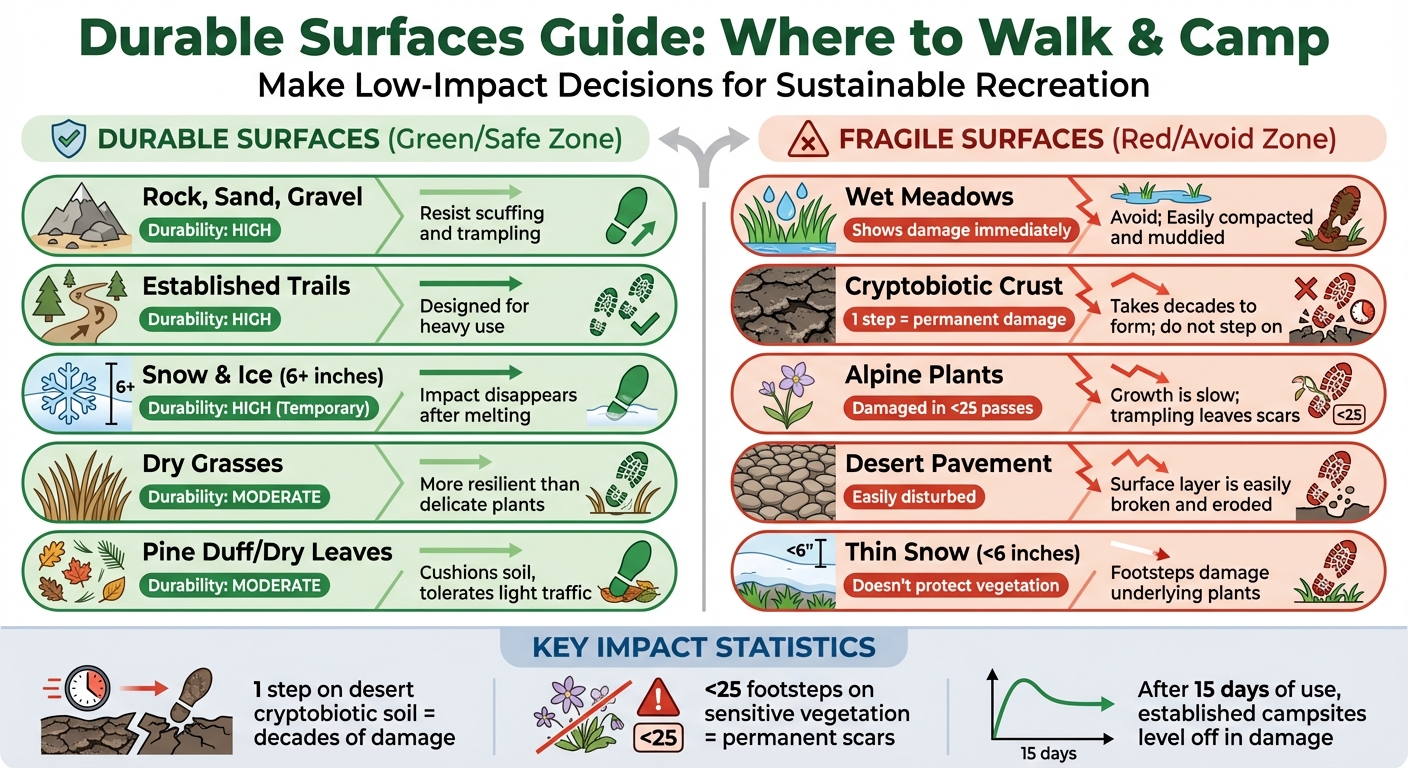
Durable vs Fragile Surfaces Guide for Leave No Trace Camping and Hiking
Durable surfaces are those that can withstand repeated use without suffering permanent damage. They protect passive organisms and resist erosion, making them ideal for activities like hiking and camping. Essentially, they’re surfaces that can handle wear and tear without leaving a lasting impact. For example, a rocky terrain can endure thousands of footsteps, whereas delicate alpine plants can be irreparably harmed by just a few. By choosing durable surfaces, you help prevent damage that nature might not be able to recover from.
Key Features of Durable Surfaces
What makes a surface "durable"? These surfaces are typically resistant to wear, less prone to damage, and either recover quickly or don’t require recovery at all. For instance, rocks, gravel, and sand are tough enough to handle repeated use without noticeable change. Snow and ice, while different, also qualify as durable – if the snow is at least 6 inches deep, it protects the vegetation underneath and any impact disappears when the snow melts. Dry grasses are moderately resilient, but they still hold up better than sensitive ecosystems like wet meadows or fragile alpine plants.
It’s important to remember that "durable" doesn’t mean "indestructible." These surfaces can handle reasonable use, but they’re not immune to harm if overused. Understanding this helps guide responsible choices for outdoor activities.
Common Types of Durable Surfaces
Practicing Leave No Trace principles starts with selecting surfaces that can handle human activity. Here’s a quick guide to some of the most durable options:
| Surface Type | Durability Level | Why It Works |
|---|---|---|
| Rock, Sand, Gravel | High | Tough materials that resist scuffing and trampling; great for off-trail use. |
| Established Trails | High | Designed to handle concentrated traffic and heavy use. |
| Snow and Ice | High (Temporary) | Impacts disappear after melting; requires at least 6 inches of depth. |
| Dry Grasses | Moderate | More resilient than delicate plants but benefits from dispersed use. |
| Pine Duff / Dry Leaves | Moderate | Cushions the soil and tolerates light traffic. |
Whenever possible, stick to established trails – they’re specifically designed to endure heavy use. As the National Park Service explains:
"The most durable surface for us to walk, hike, or bike on is always going to be the trail. That is still true when the trail is muddy".
On the other hand, some surfaces are incredibly fragile. Wet meadows, for example, can show signs of damage almost immediately. Similarly, in desert environments, cryptobiotic crust – or "living soil" – is so delicate that a single step can cause permanent harm. By being mindful of where you walk, you can help protect these sensitive areas.
How to Travel on Durable Surfaces
How you travel matters – well-trodden areas require sticking to marked trails, while untouched, pristine environments demand spreading out to avoid creating new paths.
Stay on Established Trails
In heavily used areas, always stick to the marked trails. Walk single file and stay in the center of the path, even if it’s muddy. Instead of stepping around puddles, walk straight through them to protect the vegetation along the sides of the trail. Waterproof boots or gaiters can make this easier and keep your feet dry.
Avoid cutting across switchbacks. These zigzagging trails are designed to reduce erosion and provide better footing on slopes. Cutting through them can lead to the formation of unofficial "social trails", which damage the landscape. If you need to step aside for a break or to let others pass, choose a durable surface like a large rock or a gravel patch rather than stepping onto fragile vegetation. Once done, return to the trail promptly.
In less-frequented areas, you’ll need a different approach.
Off-Trail Travel Tips
When no trails are present, you’ll need to tread carefully to minimize your impact. In areas with established vegetation, spread out instead of following in a single line. This prevents the repeated foot traffic that can create permanent trails – some sensitive vegetation can be damaged in fewer than 25 passes.
"Hiking off trail, especially in fragile alpine environments of the Northeast, can cause significant damage to vegetation and contribute to erosion and soil loss." – Alex Delucia, Leave No Trace programs manager for AMC
In desert landscapes, watch for cryptobiotic soil, which looks like a black, raised crust. This type of soil is vital for the ecosystem but fragile underfoot. To protect it, walk in single file, following each other’s steps to limit the overall footprint. Steep slopes should be avoided entirely, as trampling causes more severe damage on inclines. Before leaving an undisturbed area, disguise any scuffed spots by covering them with pine needles or leaf litter to prevent new trail formation.
Choosing and Using Campsites
Picking the right campsite is all about reducing our impact on nature. Along with carefully choosing trails, selecting a campsite thoughtfully helps protect the environment.
When to Use Established Campsites
In well-traveled areas, stick to campsites that are already established. These spots have already endured significant use – research shows that after about 15 days of activity, the damage levels off and recovery becomes slow. This aligns perfectly with the Leave No Trace principle of concentrating activity on durable surfaces. Keep all your activities within the barren, vegetation-free core of the site to avoid further harm.
Look for areas with surfaces like rock, sand, gravel, or compacted dirt – places that are already free of vegetation. To protect water quality and wildlife, make sure your campsite is at least 200 feet (around 70 to 80 adult steps) away from lakes, streams, and trails. Also, ensure the site is big enough for your group and gear without needing to expand into surrounding areas, which can gradually damage more ground.
"Good campsites are found, not made. Altering a site is not necessary." – Leave No Trace
Keep everything – tents, cooking areas, and walking paths – on the most worn parts of the ground. Avoid setting up on recovering vegetation at the edges of the site. Bringing a large water container for hauling water in fewer trips can also help prevent creating new trails.
For undisturbed areas, however, a different approach is needed to leave as little impact as possible.
Camping in Undisturbed Areas
In remote locations without signs of prior use, it’s important to camp in a way that leaves no lasting trace. Choose durable surfaces like rock slabs, gravel, sand, or dry grasses for your campsite. In winter, snow at least 6 inches deep is ideal for protecting vegetation.
Spread out your tents and cooking areas rather than clustering them together, and avoid repeatedly walking the same path between spots. This helps prevent new trails from forming. Limit your stay to two nights and, if possible, move to a new site each night to minimize your impact on the environment. Before leaving, restore the area by brushing away footprints, fluffing up flattened grass, and using natural debris to cover any disturbed spots. The less evidence you leave behind, the less likely others will use the same spot, which helps keep the area as pristine as possible.
Durable Surfaces in Different Environments
Different environments call for specific strategies when it comes to responsible hiking and camping. What works on a forest trail might not be suitable for a desert or snowy landscape. Understanding the unique characteristics of each setting helps you make informed choices about where to walk and set up camp.
Desert Travel and Camping
Deserts are fragile landscapes where disturbances can last for centuries. The most resilient surfaces in these arid areas include rock (slickrock), sand, and gravel. Stick to these surfaces to minimize your impact. Be especially cautious of cryptobiotic soil – a black, bumpy living crust that takes decades to form but can be destroyed with a single step.
"Don’t Bust the Crust – How You Can Protect The Desert Ground" – Leave No Trace
When hiking off-trail, use dry washes and rocky areas to avoid damaging sensitive soils. If crossing cryptobiotic soil is unavoidable, walk in a single file to limit your footprint. Also, steer clear of desert pavement (those tightly packed pebbles with a dark varnish) and avoid disturbing potholes, which are vital water sources for wildlife. For camping, use pre-established sites or choose non-vegetated areas like rock or gravel. Rotate your routes to prevent creating new trails.
Winter settings, however, bring a completely different set of considerations.
Winter and Snow Camping
Snow and ice are excellent surfaces for minimizing your impact since their effects disappear with the spring melt. To protect the ground and vegetation beneath the snow, ensure there is at least 6 inches of snow before setting up camp. Use snowshoes or skis to compact the snow and create a sturdy platform for your tent.
"Snow is more durable than tundra plants or anything else." – Hannah Olson, REI Day Guide
Winter camping also demands special waste management. Always pack out solid human waste using a WAG bag or similar system, as frozen ground prevents proper burial and snow-covered waste will resurface during the thaw. Before leaving, dismantle any snow structures you’ve built. Lastly, prioritize safety by avoiding avalanche zones, cornices, and unstable slopes when choosing your campsite.
Each environment presents its own challenges, but with careful planning and adherence to Leave No Trace principles, you can minimize your impact wherever you go.
Conclusion
Each step you take and every night you camp in the wilderness leaves an impact – sometimes temporary, but other times permanent. For example, fewer than 25 footsteps on fragile vegetation or even a single step on desert cryptobiotic crust can cause damage that can’t be undone. As Leave No Trace puts it:
"Travel damage occurs when surface vegetation or communities of organisms are trampled beyond recovery".
The approach to minimizing this impact is straightforward but requires commitment. In high-traffic areas, stick to established trails and campsites to prevent the gradual spread of damage. On the other hand, in untouched, remote areas, spread out your activities, move your camp each night, and restore the site to its natural state before leaving. Alex Delucia, programs manager for Leave No Trace at AMC, highlights the importance of this practice:
"It is important to consolidate our recreation-related impacts to these hardened surfaces designed to withstand visitor use".
Simple actions like walking through muddy sections of trails instead of skirting around them, choosing rock or gravel over soft ground, and camping at least 200 feet away from water sources can make a big difference. Avoid altering the environment – don’t move rocks or cut branches. As the saying goes:
"Good campsites are found, not made".
When you take steps to protect soil, water, and delicate ecosystems like alpine meadows, you’re safeguarding these spaces for wildlife and future visitors. Repairing damaged trails is costly and takes significant time, and in some cases, the harm can last for centuries. By following Leave No Trace principles and focusing on durable surfaces, you’re playing a crucial role in preserving the wild places you love for generations to come.
FAQs
How do I tell if a surface is durable?
Durable surfaces are those that can withstand frequent use without being damaged. These include established trails, rocks, gravel, dry grasses, and snow. When you’re venturing off-trail, it’s essential to steer clear of fragile areas such as wet meadows, living soil, or delicate vegetation. By sticking to durable surfaces, you help protect these sensitive ecosystems and reduce your environmental impact.
What should I do when the trail is muddy?
When you encounter a muddy trail, stick to the center, even if it means getting a little wet or dirty. This simple action helps prevent the formation of unofficial paths and minimizes erosion. Stepping off the trail can damage the surrounding area, so it’s best to stay on track.
How can I camp off-trail without creating a new campsite?
To camp off-trail without leaving a mark, the key is to reduce your impact on the environment. Steer clear of delicate plants and instead set up on durable surfaces like rocks, gravel, dry grass, or snow. Spread out your activities to avoid forming new paths or harming sensitive spots like wet meadows or fragile desert soils. Keep your campsite compact and stick to areas with minimal or no vegetation to help preserve the natural surroundings.