
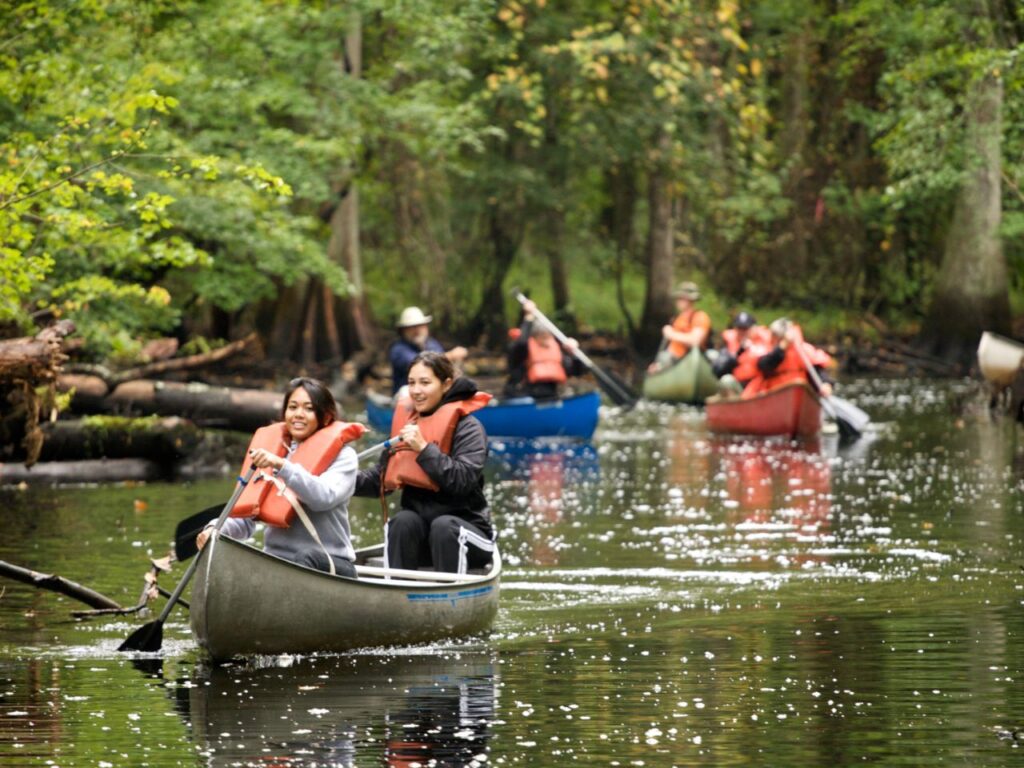
Canoeing and kayaking are excellent sports to be a part of because you are not only getting exercise in, but you are also spending time in nature and (hopefully) gaining lots of clarity and peace due to your surroundings. Overall, if you have never tried it before, we highly recommend doing so!
Suppose you are living or visiting the Midwest, more specifically, Missouri. In that case, you will quickly find that it is an excellent place to explore, sightsee, and discover new adventures to travel on.
Because of this, we have done a massive amount of research on what the best canoe and kayak rivers are in Missouri, where they are located, and why they are some of the best to go to. Here is a quick list for those pressed for time:
- Gasconade River
- Current River
- Big River
- North Fork River
- Black River
- Niangua River
- Elk River
- Meramec River
This article will provide a more in-depth look at these creeks. We will also answer some commonly asked questions and review some safety rules to consider before going canoeing or kayaking, especially if you are traveling alone. Even still, these are all essential factors to know to ensure you remain safe while also having a good time. Without further ado, let us continue with the article below.

Best Canoe and Kayak Rivers in Missouri
If you are from Missouri, the Midwest, or anywhere else in the USA (or even in the world), then we recommend making a goal of which ones you would like to see the most. A good suggestion is to create a bucket list of all of them to do within one or two years! Regardless of your goals, any of these rivers listed below will be worth seeing!
1. Gasconade River
The first river we will discuss today is the Gasconade River! This river flows through the Mark Twain National Forest and is one of the most crooked rivers in the world. This river is labeled as a Class I with occasional labels for a Class II.
This particular river is the longest river located entirely in Missouri and is about 280 miles long! The Gasconade River flows from the Ozark Mountains in south-central Missouri and goes northward to the Missouri River.
On top of the location, this river is well known for its excellent fishing, including smallmouth bass, channel catfish, walleye, and largemouth bass. You will find this river has a good mixture of calm pools and rougher waters with a lot of beautiful bluffs and formations.
Lastly, the Gasconade River has many species of wildlife that come to these rivers, such as the white-tail deer, raccoons, bobcats, coyotes, beavers, black bears, and many more.
2. Current River
Many people thoroughly enjoy the current river! It is packed during summer weekends, Labor Day weekend, and other warm holidays. Many people enjoy float and boat trips out here.
The Current River is approximately 184 miles long. It is well-known for its clear spring-fed waters and is classified as a Class I or sometimes Class II river. It is relatively easy to maneuver around. On top of this, the Current River flows through the Ozark Mountains.
The Current River runs through many other parts of Missouri, including Carter, Ripley, Shannon, and Dent counties. On top of this, you will find plenty of springs feeding into this river, creating a unique and exciting experience.
You can also rent canoes in Salem, MO. The longitude and latitude of the Pulltite Ranger Station are 37.33403391399929, -91.47701211772234.
3. Big River
Big River has its name for a reason, as this river stretches a wide 145 miles long! However, about 83 miles of the Big River is considered navigable and is suitable for floating or canoeing, which offers a slow and gentle flow. Because of this, Big River is often classified as a Class I difficulty rating.
This river flows through multiple areas and contains access points in places like Washington State Park, Cedar Hill Park, St. Francois State Park, and Twin River Park.
The riverbank provides many historic tours, fishing spots, hiking trails, lodging, and other similar amenities. You can expect to see a variety of wildlife, such as birds, fish, and other animals.
You can expect to see common wildlife plant edibles, including cattails, dandelions, pawpaws, elderberries, and more. It is imperative to make sure you can forage specific plants in an area before doing so, as some places might have restrictions.
4. North Fork River
The North Fork River’s full name is the “North Fork of the White River,” which runs roughly 109 miles long and flows from the Southern region of Missouri to Arkansas. This river flows through the Mark Twain National Forest, where many people do their outdoor recreational activities.
In terms of its difficulty, you will be happy to know these waters remain calm for the majority of the time, ranging from a level I and II according to the Missouri Department of Conservation.
Lastly, there are quite a few places where you can camp and rent floaters, canoes, kayaks, etc. Sunburst Ranch in Caulfield, MO, is an excellent choice for a low-cost stay.
5. Black River
The Black River got its name because of its dark, tea-colored appearance. This is due to tannins leached from decaying vegetation. Despite its name, this river is known as one of the cleanest rivers in Missouri. It is well-known for its sandy beaches and clear waters. Many people love coming here to swim, float, kayak, canoe, and enjoy the outdoors.
Nevertheless, the Black River is considered a Class I or II and is one of the largest rivers out of the bunch, extending approximately 300 miles! It originates in the Ozark Mountains in Reynolds County, MO, and joins the White River near Newport, AR.
You can access roughly 30 miles of the river, which features lazy waters that carry floaters past sandstone bluffs. On top of this, you will find a variety of wildlife and vegetation available along your journey.
6. Niangua River
The Niangua is one of the most crowded rivers in Missouri. It is located near Haa Haa Tonka State Park, which is home to one of the most beautiful castle ruins built in the 20th century. On top of that, this state park contains over 15 miles of hiking trails for you to stop by and enjoy!
On top of this, the Niangua River is popular for fishing and floating. It is considered a Class I river, while some parts are a Class II. The river itself runs 125 miles long and is a tributary of the Osage River. It also flows through multiple counties, including Camden, Laclede, and Dallas.
If you’re looking for a great place to start your trip, we recommend going to the Bennett Springs State Park, which offers many excellent campsites for you to stay and have a relaxing weekend.
7. Elk River
For those living in McDonald County, it might not be a secret that Elk River flows through it. It is one of the best places to visit for canoeing and floating.
Many people who fish make their way to this spectacular area and enjoy catching the large population of bass. You can also find other fish like the cutthroat trout, winter steelhead, and the native Chinook salmon in the Elk River as well.
This river is relatively small compared to the other rivers, running at a little over 43 miles long. Its official headwaters are near Pineville, MO, where Big Sugar Creek and Little Sugar Creek converge.
8. Meramec River
The Meramec River runs approximately 218 miles long. One of the best places to start your adventure is at Maramec Spring at Maramec Spring Park, and float (or canoe) your way down to Maramec State Park.
This river is extremely relaxed, being classified as a Class I river while also having certain sections classified as a Class II river during higher flow conditions. Because of this, it is perfect for rafting, kayaking, and canoeing.
We recommend staying at the State Park for a while, as you can experience more than 40 caverns, hiking trails, and natural springs. You will innately find this is one of the most scenic and beautiful float trips you have ever been on!
What Is the Cleanest River to Float in Missouri?
There are quite a few cleaner rivers in Missouri, but the river most known for having crystal-clear water is the Black River.
However, some other rivers that are clear and good for floating are the Current River, Jack’s Fork, White River, and North Fork River. We recommend constantly checking the water levels and conditions before planning a trip, especially if it has rained for several days beforehand.
Is It Safe to Canoe and Kayak the Missouri River?
Yes, it is most likely safe to canoe and kayak in the Missouri River, but you have to know what you are getting yourself into first. However, with everything in life, you must be constantly taking extra precautionary measures. For example, the Missouri River has a strong current that can reach up to 3 to 5 miles per hour and can change pretty quickly.
The Missouri River’s water levels can also change. Debris and wind barriers require careful planning. Lastly, it is essential always to wear a Coast Guard-approved life jacket that is fitted adequately to ensure you remain as safe as you can during these times.
Things to Know Before Kayaking or Canoeing
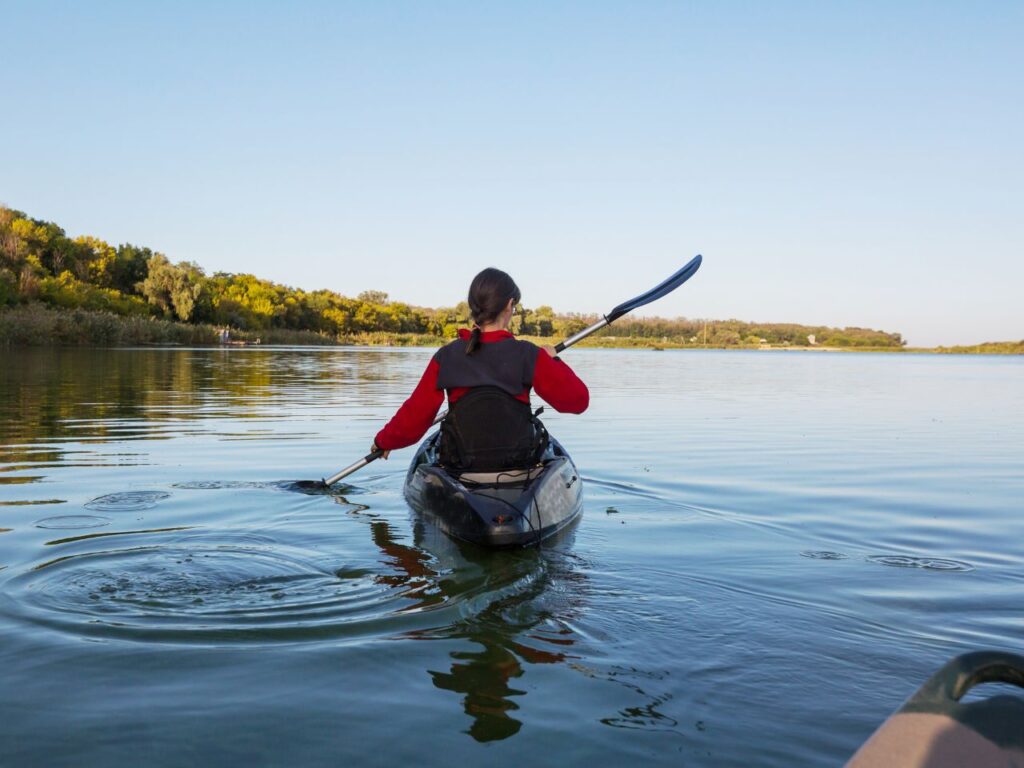
Although many of the rivers we have mentioned are suitable for floating, kayaking, and canoeing, it is still essential to take extra precautions before entering the water.
After all, regardless of where you go, it is important to respect nature, as things can change instantaneously. Lastly, if you are going out while the waters are high, then it is essential to know you are risking a decent amount to be there in the first place.
1. Know Your Limits
Suppose you have a limitation on your body that limits your ability to do so much. In this case, it is essential to know your limits and what you can and cannot handle.
However, if you are fine physically but are not doing so well mentally, then you must wait until you can make a rash decision before going out and getting in the water. Suppose you gain the most clarity by being out in the wilderness or even simply being outside. In that case, we recommend bringing some mental clarity outdoors where it is safe beforehand as well.
2. Bring a First Aid Kit
Having a first aid kit wherever you go, especially if you are by yourself, is imperative. First aid kits are an essential tool that provides immediate medical supplies to treat multiple injuries and prevent them from becoming worse. If something significant happened to you, then it will help you when you return to your spot and get professional help.
3. Let People Know Where You Will Be
Every time you go out into the woods or anywhere else in the wilderness, it is vital to make sure you let people know where you will be and when you expect to return. You never know what might happen, and if someone needs to come out to find you, then they know the first place to look.
On top of this, if you are someone who loves company, make sure to bring a family member or friend! Having these connections will help ensure you are taking safe precautions.
4. Know What the Water Conditions Are
As mentioned briefly above, make sure to know the water conditions. For example, if there are choppy waves involved and you occasionally kayak or canoe, then odds are you will have a harder time maneuvering the boat than if you were to do it in calm waters.
5. Always Wear a PFD
This might be a given, but wearing a PFD (Personal Floating Device) will help many things, but more importantly, keep you afloat. Even if you are the best swimmer in the world, it is essential to make sure you are wearing it. This is because, as mentioned earlier, anything can happen, and one of those things means you might get unconscious. In this case, it is essential to make sure you are consistently wearing it.
As a side note, it is also a good idea to wear a tracking or locating device with you. That way, if anything horrible were to occur, the authorities can find you anywhere you are.
6. Bring Extra Food and Water
You never know if you might get stranded somewhere for the night. On top of this, you may stay longer than anticipated. Because of this, it is essential to bring extra food and water to ensure you are remaining hydrated and have food in your stomach. Alternatively, if you do not wish to bring a ton of water, then we recommend getting a personal water filter straw or even a water filter cup to refill consistently.

Conclusion
To summarize everything, there are many excellent canoe and kayak rivers to explore in Missouri. However, make sure you take extra time to check out how the water is looking, what the weather will be, and stay safe at all times! For more information on canoeing and kayaking, we recommend checking out any of our other articles. Until next time!