
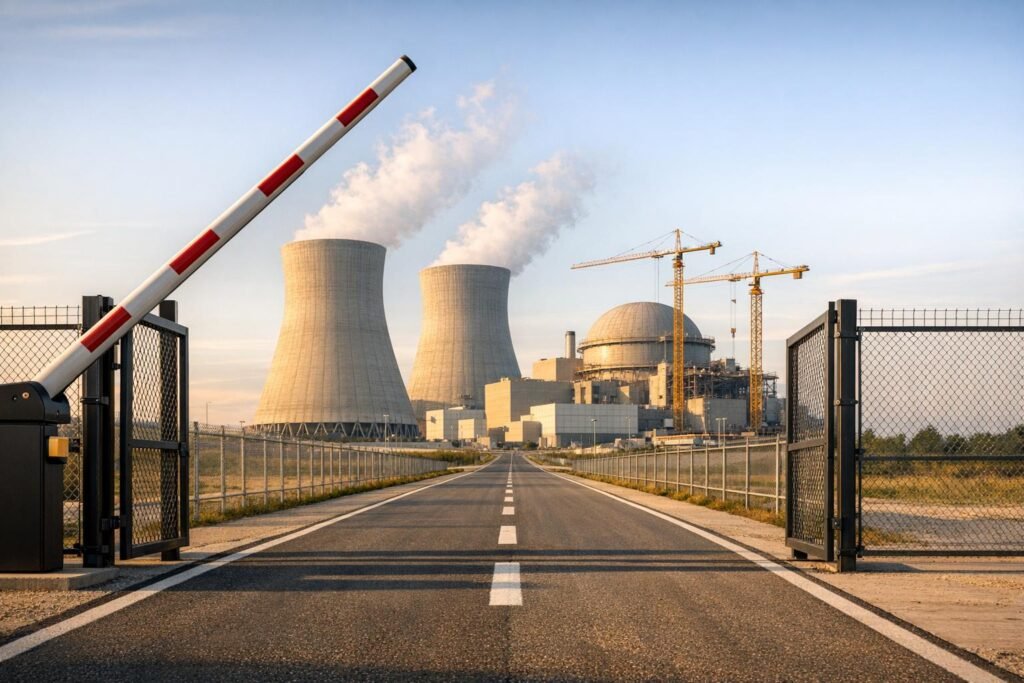
The Trump administration has unveiled a series of regulatory changes aimed at accelerating nuclear energy development in the United States. The proposals, which involve loosening environmental and safety standards, are part of a broader strategy to expand the nation’s energy infrastructure and encourage investment in nuclear power.
DOE Eases Environmental Reviews for Nuclear Reactors
In early February, the Department of Energy (DOE) issued a "categorical exclusion" that exempts nuclear reactors under its jurisdiction from undergoing environmental reviews mandated by the National Environmental Policy Act (NEPA). According to Amy Roma, a partner at Hogan Lovells law firm who advises nuclear energy clients, this decision represents a significant shift.
"It’s going to significantly reduce the environmental reviews that are mandated under NEPA that need to be conducted for the projects under DOE authorization", Roma said, adding that the exemption is justified because the agency is already familiar with the environmental impacts of these reactors.
The exclusion currently applies to microreactors under the DOE’s jurisdiction, but the department has not ruled out expanding the policy to larger reactors in the future. A DOE spokesperson explained that the efforts "will accelerate licensing of advanced reactors while upholding the highest standards of safety and security."
However, some experts have raised concerns. Edwin Lyman, director of nuclear power safety at the Union of Concerned Scientists, criticized the move, warning that "the public and policymakers are not going to have any resource to fully understand the actual environmental impacts of these projects, which, despite what DOE is claiming, certainly have the potential to be significant."
sbb-itb-5a98267
Changes to Long-Standing Safety Standards
The DOE is reportedly making additional adjustments to radiation safety protocols. According to reports, the department has decided to eliminate its decades-old standard that required radiation from reactors to be kept "as low as reasonably achievable." A DOE spokesperson confirmed that changes to radiation protection standards are still being evaluated.
Concerns about these adjustments have been echoed by critics like Lyman, who argued that weakening safety standards could have ramifications beyond the DOE. "That’s how DOE weakening safety and environmental standards could end up leaking into NRC’s oversight of commercial nuclear power", he said.
Specifically, the DOE has also raised the threshold of radiation exposure levels that would trigger accident investigations and has loosened groundwater protection rules. These changes, according to a DOE spokesperson, aim to "remove unnecessary administrative burdens that are redundant to other requirements, such as items that are covered by the U.S. EPA."
NRC Considers Broader Overhaul of Regulations
At the same time, the Nuclear Regulatory Commission (NRC) – the independent agency responsible for overseeing most of the country’s nuclear power plants – is considering revisions to its own regulatory framework. The NRC has been tasked with evaluating rules related to licensing, safety oversight, and radiation protection in response to executive orders issued by President Trump.
One of the proposed changes includes streamlining the licensing process for advanced reactor designs, with an emphasis on reducing the time required for approval. Current licensing processes often take years, but the Trump administration has called for decisions to be made within 18 months. The NRC’s regulatory dashboard lists several initiatives, such as "Modernizing Reactor Licensing, Safety Oversight, and Siting Practices", as part of this effort.
The changes have sparked debate over the potential risks of relaxing regulatory requirements. Proponents argue that the current rules are outdated and not tailored to accommodate advancements in nuclear technology. Niko McMurray, managing director of international and nuclear policy at ClearPath, commented that "a lot of the regulations at the NRC … were not developed for a lot of these new technologies."
However, critics fear that these reforms could prioritize speed over safety. "I’m afraid that regulators are going to start licensing on the basis of talking points rather than actually looking at the safety and security and environmental impacts of these facilities", Lyman warned.
Advocates and Critics Weigh In on Nuclear Expansion
Nuclear energy proponents point to its potential as a climate-friendly power source that can address concerns about fossil fuels and renewables. Goldman Sachs analysts have predicted that global nuclear generating capacity could grow by 52 percent by 2040, highlighting increasing interest in the technology.
Still, nuclear energy remains a subject of contention. Concerns about radiation, nuclear waste, and the risk of accidents continue to fuel skepticism. As the Trump administration presses forward, the implications of these regulatory changes could shape the future of nuclear energy in the United States for decades to come.