
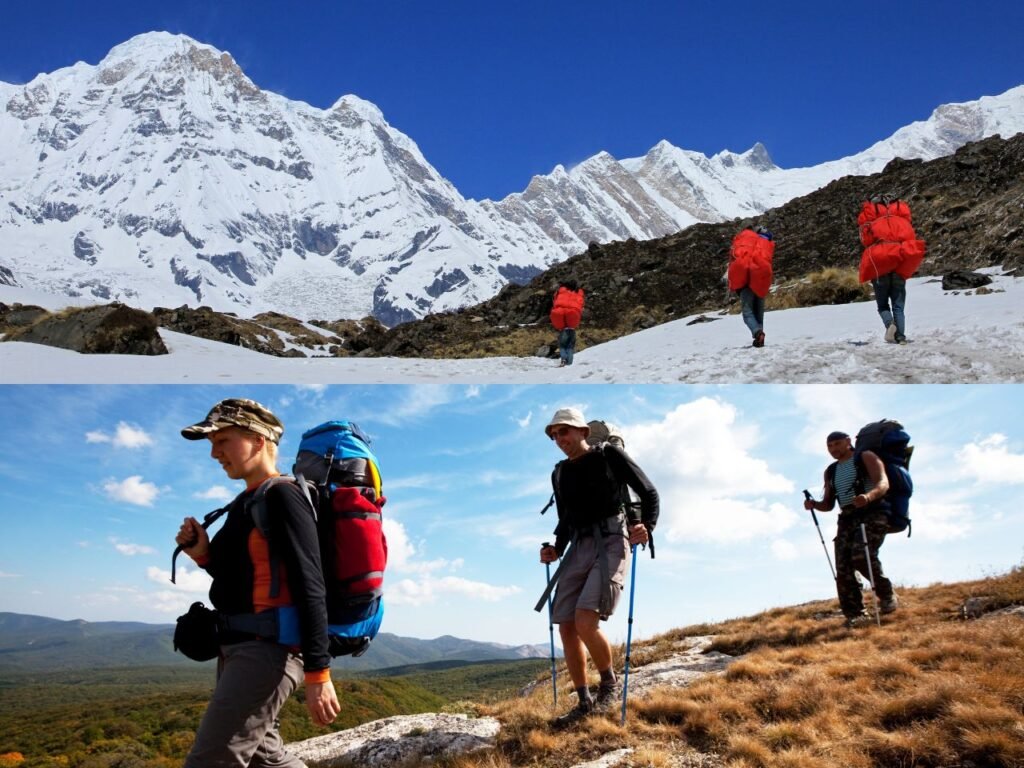
Whether you are taking a grueling, multi-week journey high into the mountains or you want to stroll on a nice, forest path, both of them are adventurous and involve taking risks to an extent! Not only are you experiencing the wonders around you, but you are also reaping health benefits and nourishing your soul.
Outdoor enthusiasts know the differences between hiking and trekking, but if you are starting your outdoor adventure, you should learn more and decide which is right for you. In that case, what are the significant differences between hiking and trekking?
Hiking and trekking, by definition, are not the same thing. Hiking typically lasts 1 to 3 days and does not require much rugged terrain, whereas trekking can last a long time, often 1 to several weeks or months.
Trekking typically takes you off the official paths and allows you to explore more than what you could if you were on a hike. On top of this, trekking requires more physical energy and planning than hiking, so keep this in mind when planning your next trip.
In this article, we will discuss the definition of trekking and hiking. In addition, we will discuss the main differences between the two and the health benefits of each. Overall, they are both excellent options to explore if you are physically able to. We encourage you to continue reading for all the information you need about these two activities!
What Is the Definition of Trekking?
Trekking is where you walk long distances for pleasure. Those who trek typically hike through rugged terrain, and some people turn it into a lifestyle, meaning they may trek multiple times throughout the year or live it to the fullest, with their home being nature itself.
What Is the Definition of Hiking?
Hiking is going on a long walk in the countryside or walking a great distance. Some hikes are short, whereas others can be several miles long. Depending on how much you want to hike, you can go from a few minutes to all day long. Sometimes people hike for several days, depending on what they are doing. Overall, hiking can be strenuous or extremely easy, depending on your preferences.
Why Are People Confused Between the Two?
More often than not, social media influencers might use the hashtags hiking and trekking in the same post, leading to some confusion between the two physical activities. Because of this, many people believe that walking and trekking are the same thing.
Sometimes people book a trekking tour thinking it is a hike, only to find it’s several days of extreme terrain and discomfort. In that case, it is essential to know the difference between the two. Although they are similar in many areas, they differ entirely in others.
What Are the Main Differences Between Hiking and Trekking?
There are five main differences between hiking and trekking. They differ in terrain, altitude, duration, required gear, and fitness requirements. Although we have laid out a table below, if you wish to learn more, we encourage you to read on.
| Trekking | Hiking | |
| Terrain | More rugged (complete wilderness, dirt roads, mountain trails) | Has established hiking trails and footpaths to stay on |
| Altitude | Usually requires higher altitudes | Typically does not require a high elevation |
| Duration | Lasts several days or weeks | Typically lasts 1 to 2 days |
| Gear needed | Minimal (water, lunch, spare socks, First Aid kit, etc.) | Large backpacks, tents, sleeping bags, multiple days’ worth of food and water, etc. |
| Fitness requirements | Basic to moderate | Moderate to high |
| Accomodations | Usually comes back within the same day | Requires camping or staying on the route until you reach said destination |
1. Terrain
Terrain is everything when it comes to hiking and trekking. Although both activities require being in nature and enjoying lovely surroundings, the terrain differs in terms of altitude and the routes you take.
Hiking
Hiking mainly requires you to stay on a trail and keep going. More often than not, there will be signs at the beginning of the trail showing you how long it will take to get from point A to point B. On top of this, the trails are often marked either with dirt, mulch, or pavement. Some of these trails might be overgrown and hard to walk on, but others are straightforward.
Trekking
On the other hand, trekking involves much rougher terrain that lacks specific signs telling you which direction you can and can’t go. Because of this, it is much easier to get lost and find your way back. That is why having a compass, a map, and other objects that let you know which way to go is highly essential.
2. Altitude
In most cases, you will be trekking at a much higher altitude than hiking. For example, those who climb mountains quite literally trek through them. More often than not, a high altitude is considered 8,000 feet above sea level.
However, it becomes more apparent when you consider how difficult it is to get higher and climb steeper terrain. This can require better equipment and gear to maintain a good pace and ensure your own safety.
Equipment such as solid gloves, boots with good grip on the soles, and your trusty trekking pole will prove invaluable in both situations, especially on more rugged terrain.
3. Duration
Traditionally, a normal hike will take a few hours at most to reach your destination. These factors include breaks and usual pacing, as well as a vague idea of where you intend to go in the first place.
Trekking, however, typically spans several days, making a small jaunt through the woods become a fully fledges expedition. The goal is often broken down into hitting multiple key landmarks and other notable areas of interest, sometimes camping near them to forge wonderful memories.
When preparing for hiking or trekking, be mindful of how much food and supplies you bring and avoid running out of anything vital to your well-being or safety.
4. Gear Needed
To have a successful hike or trek, you need the right gear. Sometimes all of this might not be necessary if you will be hiking for a few minutes to a couple of hours.
However, it would be wise to invest in this gear if you plan to hike or trek year-round. You never know when you need to be prepared for something unexpected!
Keep in mind that when you are trekking, this gear is necessary because you will be going off designated pathways and venturing into rugged places.
- Hiking boots: Essential because they help you stabilize your footing without worrying about injury. This is especially true if you are going to walk on pathways (or off course) and are unsure what they will be like.
- A sleeping bag: When trekking, you will be away from home for several days or weeks. Make sure to pack a warm, comfortable sleeping bag, especially during the winter months.
- A tent: It is wise to bring a tent so you can keep specific animals and bugs outside while staying safe inside.
- Large enough backpack: We recommend bringing a 40-60-liter backpack to ensure you have plenty of space for the essentials on your journey.
For more information on what to bring specifically for each activity, we have created a specific table for your convenience.
| Hiking gear | Trekking gear |
| First aid kit | First aid kit |
| Large water bottle | Enough water for a specific number of days has passed |
| Snacks or lunch (make sure some items are protein-based to ensure you have enough energy) | Snacks, energy bars, hydration packs, breakfast, lunch, dinner, etc. |
| Good hiking shoes or boots | Good hiking boots (high-ankle) |
| Lightweight backpack | Trekking backpack (40 to 60 liters) |
| Sunscreen, hat, sunglasses | Sunscreen, hat, sunglasses, rain gear |
| Optional: trekking poles | Compass, maps, or GPS |
| Trekking poles | |
| Layered clothing for altitude change | |
| Sleeping bag and tent (unless provided by organizers) |
5. Fitness Requirements
There are apps like AllTrails that show you how hard a trail is before you go. Not only that, but in their premium feature, you can use it to find your location. Keep in mind that this feature will drain your phone battery, so consider investing in a portable phone charger.
Hiking
Hiking does not necessarily require much fitness unless you are on a challenging trail. Hiking can be as easy or as hard as you want it to be. It is important to note that if you are not physically capable of certain hikes, make sure to find a paved trail or something similar so you can complete them.
Trekking
On the other hand, trekking is more physically demanding than hiking. This is because it leaves the trails and is at a higher altitude. The higher you go into the sky, the heavier everything seems and the more complicated it is to manage.
What Are the Health Benefits of Trekking and Hiking?
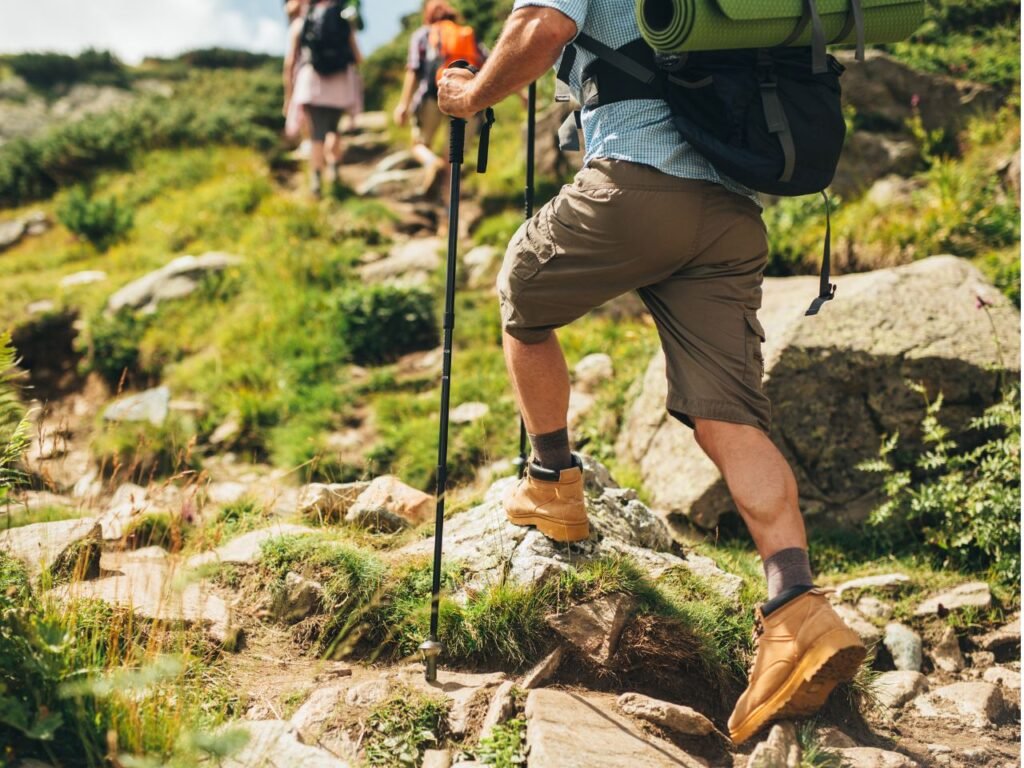
Regardless of whether you are trekking or hiking, both offer the same benefits! Although one requires more rugged activities than the other, both activities still promote a healthy lifestyle.
1. Improves Blood Pressure
The first health benefit of hiking and trekking is that it significantly improves blood pressure! This is done by making the arteries more elastic, thereby strengthening the heart and reducing its workload. Not only that, but because hiking lowers stress hormones in most people, it helps regulate blood pressure.
2. Both Activities Burn Calories
What better way to lose weight and burn calories than to go on one of your favorite walks in the wilderness? You will not limit yourself to a specific location, like going to the gym every day and doing the same activities. Plus, you will also allow yourself to experience different things in the process!
3. Better for Overall Fitness
As you think about it, both trekking and hiking deal with constantly moving your body, even if you take multiple breaks during the hike. Because of this, it is better to do hiking and trekking for your overall fitness. If your goal is to start trekking but you might not be in the best of shape, consider hiking short, easy routes first, then work your way up to rugged trails that will finally lead you to start trekking!
4. Makes You More Creative
Suppose you have spent your entire life in one specific location and did not get out much as a kid. However, in your adult life, you discover the great outdoors and never want to go back!
In that case, hiking and trekking can make you more creative. If you think about it, being in the same four walls your entire life may become boring after a while, and it is harder to think up new things. In some cases, this might not be true; in others, it is incredibly accurate.
Because of this, being in different locations, whether you are trekking through the deep woods or simply hiking near the ocean, would cause you to think up things for yourself or in your life that you may not have thought about previously. Regardless of the case, being creative in any fashion is excellent for building up the mind!
5. Lowers the Risk of Heart Disease
Did you know that walking at least 1 hour per day reduces the risk of heart disease? Not only that, but if you walk for one hour for five days a week, it will significantly decrease the risk of having a stroke by half! Whether you like taking a stroll in the park or prefer more rigorous workouts (outdoors), both will significantly improve your overall health.
6. Improves Mental Health
Imagine going to the great outdoors and hearing the birds sing, the crickets chirping, and the wind rushing through the trees. All of these things usually help those who need some relief in their minds.
It is even better if you get moving, like going on a hike or planning a trek adventure. Doing these activities will help you get out of your head, leaving you feeling refreshed when you come home, and will help you get things done.
What Are Some Tips to Start Hiking or Trekking?
If you are new to hiking, we highly recommend you start there. However, to have a successful hike, you need the right gear and clothes. For example, if you hike in regular shoes that aren’t meant for hiking, you might slip and fall, which could cause discomfort or, worse, sprain or break something! Because of this, finding the right shoes is a must.
Another thing to consider is finding the right backpack. Having a backpack specifically designed for hiking will significantly reduce back pain. On top of this, a hiking backpack evenly distributes the weight, rather than having it all on one side or end.
If you wish to get more acclimated to hiking, we recommend starting with day hikes. You can do this by spending an afternoon at a local forest or park, walking around. Make this a daily routine and gradually work up to more strenuous activities. Consider getting an app like AllTrails to see what kind of terrain a specific location has and push yourself to your limits! It would also be a wise idea to go on an overnight hike to ensure you are ready for trekking.
Lastly, we recommend joining a local hiking or trekking group! In doing so, you can go into a community where you and other like-minded people can encourage one another during easy and hard times. Also, some of these groups might have weekly meet-ups. Some of these people might be more experienced hikers or trekkers, meaning you can gain knowledge from them if they are willing to share.
Which One Is Right for You?
As you can see, trekking and hiking are both wonderful activities! However, if you are not an experienced hiker or do not enjoy spending much time outdoors, then trekking is likely not your strong suit, as it requires significant physical activity. On the other hand, if you are up for the challenge and wish to go the extra mile (or miles), then trekking is the right adventure for you!
If this article was helpful, we encourage you to share it with your friends and family. Overall, we hope this article will help people understand the differences between hiking and trekking. If you have any more questions about adventuring, we are always here to help you in any way that is needed!