
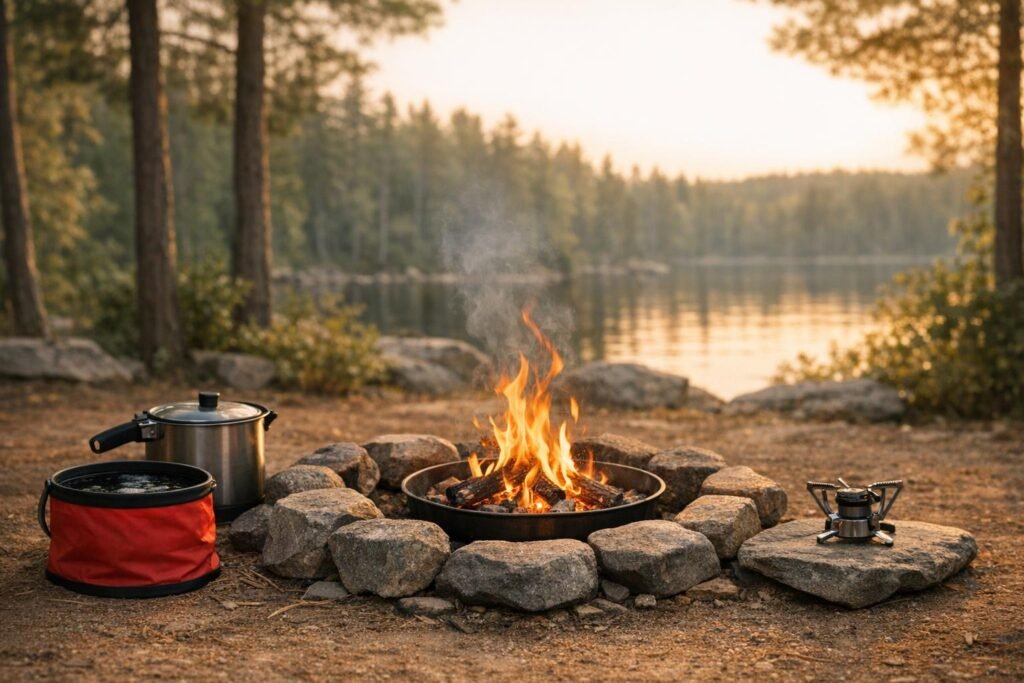
Campfires are a cherished part of outdoor adventures, but they can harm nature if not handled responsibly. Human activity causes 80%-90% of wildfires annually, many sparked by poorly managed fires. Beyond fire risks, campfires can damage soil, hinder vegetation recovery, and disrupt wildlife habitats. Here’s how you can enjoy campfires while protecting the outdoors:
- Use existing fire rings: Stick to designated spots to minimize soil damage.
- Build mound fires: Use mineral soil to shield the ground when fire rings aren’t available.
- Opt for portable fire pans: Contain flames and ash to prevent ground damage.
- Keep fires small: Use wrist-thick wood to reduce heat and risk.
- Collect only fallen wood: Avoid stripping trees and gather wood responsibly.
- Burn wood completely to ash: This makes cleanup easier and reduces environmental scars.
- Extinguish with water: Fully soak, stir, and cool ashes to prevent wildfires.
- Avoid fire near rocks or vegetation: Protect soil, plants, and wildlife.
- Consider camp stoves: A low-impact alternative for cooking and warmth.
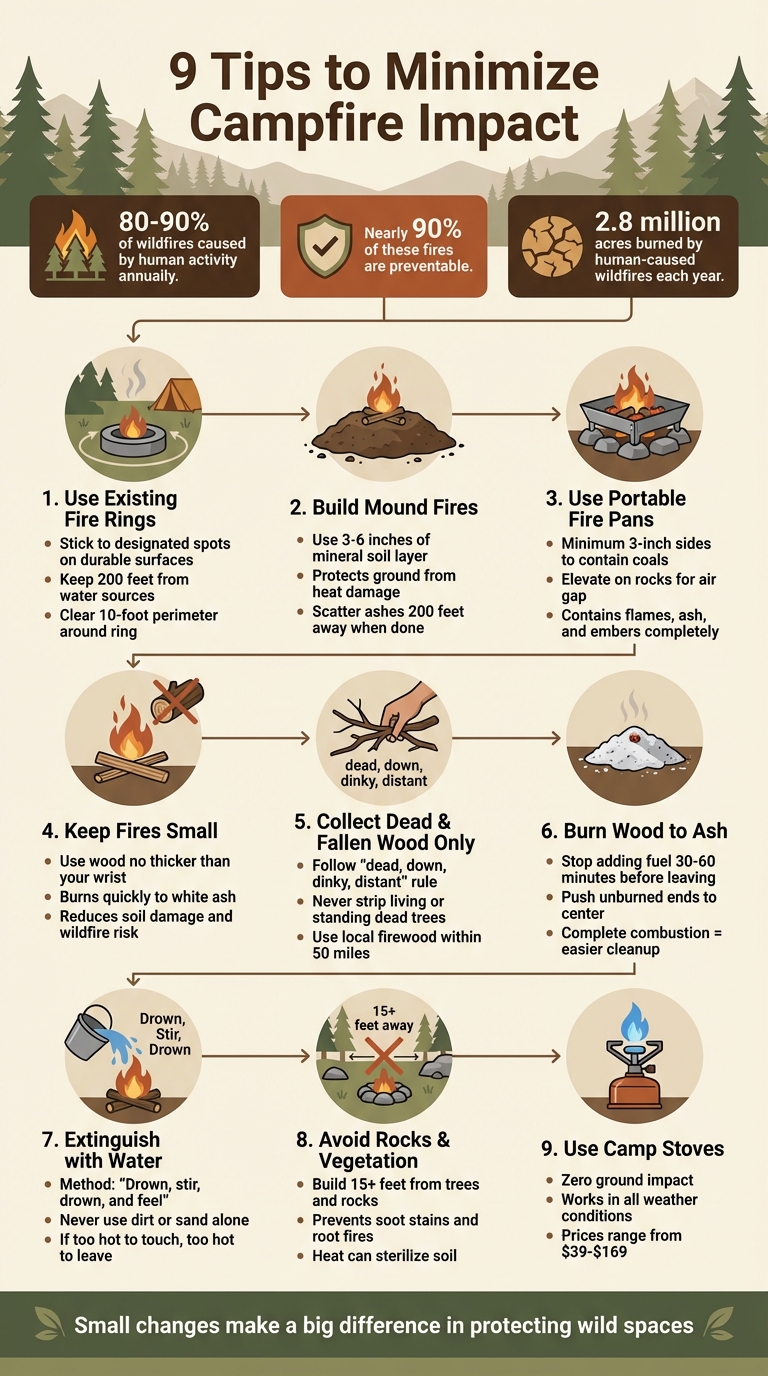
9 Essential Tips to Minimize Campfire Impact on Nature
Leave No Trace: Minimize Campfire Impacts | stay safe with your fire in the backcountry

1. Use Existing Fire Rings in Established Campsites
When it comes to campfires, sticking to existing fire rings in established campsites is key. These rings are already on disturbed ground, which helps minimize damage to untouched areas. By concentrating the impact, you’re not just protecting the natural surroundings – you’re also preventing long-term harm to the ecosystem.
Building fires on undisturbed soil can actually sterilize it, making it harder for plants to grow back. Using pre-existing fire rings keeps this damage contained and aligns with the Leave No Trace principles.
Before starting a fire, make sure to use designated fire rings on durable surfaces like mineral soil or gravel. Keep them at least 200 feet away from water sources. Clear a 10-foot perimeter around the ring to remove any debris , and ensure there’s enough overhead clearance – at least three times the height of your flames.
"There are countless sites across the Northeast where I have seen the evidence of fire where there should not have been – on summits, viewpoints, along rivers and ponds".
These unsightly scars can linger for years, leaving a lasting mark on the landscape.
Always check local fire regulations before lighting up. Conditions can change daily due to weather or fire risks. If there’s no designated fire ring in your area, consider using a portable fire pan or a camp stove instead. And if you’re curious about other low-impact options, the next section covers how mound fires on mineral soil can further reduce environmental harm.
2. Build Mound Fires on Mineral Soil
If you’re camping in an area without designated fire rings, a mound fire is a great way to enjoy a campfire without leaving a lasting impact on the environment. This technique, rooted in Leave No Trace principles, involves creating a temporary fire platform using mineral soil – such as sand, gravel, or silt – that resists burning. Mineral soil doesn’t catch fire and acts as a heat barrier, protecting the ground beneath it. Just like using established fire rings, this method helps preserve the natural landscape.
Campfires can seriously harm the soil, often sterilizing it and slowing vegetation recovery. By building your fire on a 3-to-6-inch layer of mineral soil placed on a ground cloth or heavy-duty bag, you create a protective layer that shields the earth from heat damage. The ground cloth also makes cleanup easier when it’s time to leave.
"The thickness of the mound is critical to insulate the ground below from the heat of the fire." – Leave No Trace Center for Outdoor Ethics
To get started, gather mineral soil from areas that are already disturbed, like the hole left by an uprooted tree or a dry riverbed. Avoid digging into undisturbed ground. With simple tools like a trowel and a ground cloth, shape the soil into a flat-topped mound wide enough to contain stray embers or coals.
When breaking camp, let the fire burn down completely to white ash. Douse it thoroughly with water to ensure it’s fully extinguished, then scatter the cooled ashes at least 200 feet away from your campsite. Finally, return the mineral soil to its original location and pack up the ground cloth, leaving no evidence of your fire behind.
3. Consider Portable Fire Pans and Fireboxes
Portable fire pans and fireboxes let you enjoy the warmth of a campfire without harming the ground. These tools completely contain flames, coals, and ash, protecting the soil from overheating and preventing damage to nearby vegetation.
"One option is to pack along a fire pan that can fully contain the fire and ash… The pan can be placed on some stones to keep it off the ground".
To use a fire pan effectively, make sure it has sides at least 3 inches high to keep coals safely contained. Elevating the pan on rocks creates an air gap that helps minimize heat transfer to the ground. Alternatively, you can line the bottom with sand or gravel for added insulation. Both methods help prevent scorched soil.
If you’re looking for a ready-made option, there are commercial products like the LavaBox Portable Campfire ($259.00) or the Hekla Combo ($369.00). However, you can save money by repurposing items like a metal oil drain pan or a small backyard grill. Just be cautious with steel pans treated with rust-prevention chemicals – burn them in a large flame first to remove any toxic coatings.
Once your fire has burned down to white ash, extinguish it thoroughly with water. Scatter the cooled ashes at least 200 feet from your campsite, and if you used mineral soil as insulation, return it to its original spot.
Fire pans are especially practical in backcountry areas without established fire rings. They also play a key role in wildfire prevention by containing embers – a critical benefit given that human activity causes 87% to 90% of all wildfires annually . For campfire enthusiasts seeking a low-impact solution, fire pans are a reliable and responsible choice, much like mound fires.
4. Keep Fires Small and Time-Limited
Keeping campfires small and short-lived is a simple way to reduce risks and minimize their impact on the environment. John Cataldo, Wildland Fire and Aviation Officer at Yellowstone National Park, explains:
"A little fire can go a long way. If conditions change, they’re just easy to put out and get under control."
Stick to using wood no thicker than your wrist. This type of wood burns quickly into white ash, leaving behind minimal residue and reducing the visual footprint. In contrast, large fires can superheat the soil up to 4 inches deep, destroying up to 90% of organic matter in the topsoil and even sterilizing the ground. Choosing the right fuel and keeping the fire small are key steps for safe and responsible fire management.
Size isn’t the only thing to consider – timing matters too. Keep your fire burning only as long as necessary. Stop adding wood well before you plan to leave or go to sleep, so the flames naturally die down to ash. This approach not only makes cleanup easier but also reduces the risk of stray embers igniting nearby vegetation. Between 2006 and 2015, nearly one-third of human-caused wildfires on U.S. Forest Service land were linked to campfires, and smaller fires are less likely to send embers flying.
Never leave a fire unattended. Before you leave, make sure the ashes are completely cool to the touch. Beth Ipsen, Public Affairs Specialist for the BLM, offers a practical reminder:
"Remember that you don’t need a large fire visible from the international space center to keep warm or cook food during your outing. Keep it small and manageable."
Small, short-lived fires also help preserve the local ecosystem. Fallen wood plays a vital role in wildlife habitats and nutrient recycling, so burning only what you need ensures these resources remain available. By keeping your fire modest and intentional, you not only safeguard your campsite but also contribute to the broader health of the environment, aligning perfectly with Leave No Trace principles.
5. Collect Only Dead and Fallen Firewood
When gathering firewood, stick to the "dead, down, dinky, and distant" rule. This means using wood that’s no longer alive, already on the ground, no thicker than your wrist, and collected from a wide area away from your campsite. Never strip branches from standing trees, even if they look dead – these trees often serve as vital habitats for birds and insects.
Here’s how to ensure the wood is suitable:
- Check if it’s dead: Use the scratch test – dry, brittle bark indicates the wood is no longer alive.
- Use the Hand-Break rule: If the wood doesn’t snap easily by hand, it’s likely too large to burn completely.
Avoid gathering snags (standing dead trees), as they play an important role in the ecosystem. According to Leave No Trace:
"Standing trees, dead or alive, are home to birds and insects, so leave them intact. Fallen trees also provide bird and animal shelter, increase the soil’s water-holding capacity, and recycle nutrients back into the environment through decomposition."
Spread out your firewood collection to prevent creating bare spots around your campsite. In desert areas, be extra cautious – many shrubs that seem dead are simply dormant, waiting for rainfall. If you’re camping near rivers or along the coast, dry driftwood makes an excellent and sustainable fuel source.
For added environmental care, always use local firewood sourced within 50 miles to prevent the spread of invasive pests. Your firewood supply should include three types: tinder (small twigs or dry leaves), kindling (sticks under 1 inch in diameter), and fuel wood (pieces about the size of your wrist). Steer clear of wood covered in leaves, as it tends to hold moisture and often harbors fungi or insects. By carefully selecting your firewood, you reduce environmental impact and lay the groundwork for responsible fire practices.
sbb-itb-5a98267
6. Allow Wood to Burn Completely to Ash
When managing a campfire, letting the wood burn down completely to white ash is key to minimizing environmental impact. A fully burned fire not only protects the soil beneath but also makes cleanup much easier. Instead of leaving behind heavy, partially burned logs or chunks of charcoal, complete combustion creates lightweight ash, helping to preserve the natural look of the campsite.
To achieve this, stop adding fuel to the fire about 30–60 minutes before you plan to leave. This gives the fire enough time to burn through all the remaining wood. As Leave No Trace advises, "Burn all wood and coals to ash, put out campfires completely, then scatter cool ashes". You can speed up this process by pushing unburned stick ends into the center of the fire and stirring the coals to expose them to more oxygen, which encourages efficient burning.
Stick to using small pieces of wood, no larger than the diameter of an adult wrist. According to Scouting America, "Use small pieces of wood – no larger than the diameter of an adult wrist – that can be broken with your hands. This practice avoids having to use a saw or hatchet, and the wood readily burns to ash". Smaller pieces burn more completely and produce less persistent heat, making the cleanup process quicker and easier.
Once the fire reduces to fine, white ash, extinguishing it becomes much simpler. As Katie Jackson explains, "A pile of half-burned logs and embers will take much longer to extinguish than a bed of fine ash. Letting the fire burn down as much as possible minimizes the effort needed to put it out". For any remaining coals, grind them into ash using gloved hands before pouring water over the fire to ensure it’s fully extinguished.
7. Extinguish Fires Thoroughly with Water
Putting out your campfire properly is a must – humans are responsible for 80% to 90% of wildfires every year. The encouraging part? Nearly 9 out of 10 of these fires can be avoided with proper fire management. Taking the right steps not only ensures safety but also helps protect nature.
The best approach is summed up by Gwen Beavans, National Fire-Prevention Program Manager for the U.S. Forest Service, as "Drown, stir, drown, and feel". Start by pouring water over the fire until the hissing sound completely stops. Make sure to soak all embers, not just the glowing red ones. Next, use a shovel to stir the water, ashes, and soil together. This ensures any remaining embers are mixed and extinguished. Be cautious while pouring water to avoid steam burns. Keep adding water and stirring until there’s no heat left.
A critical reminder: never rely on dirt or sand alone to put out a fire. These materials can trap heat, allowing embers to stay hot for hours and potentially spark a wildfire after you’ve left. Water is the only reliable way to fully eliminate heat.
Once the fire seems out, perform the touch test. Hold your hand about four inches above the ashes. If you feel any warmth, repeat the process. As Beavans emphasizes:
"If it’s too hot to touch, it’s too hot to leave".
Stick around for a few extra minutes after the fire feels cool to ensure no embers reignite, especially if the wind picks up. This thorough approach not only prevents wildfires but also aligns with Leave No Trace principles.
Lastly, always prepare before starting your fire. Have a large bucket of water and a metal shovel ready to go before you light it. This small step ensures you’re equipped to safely extinguish the fire when needed.
8. Avoid Building Fires Near Rock Outcrops and Vegetation
Choosing the right spot for your campfire is just as important as knowing how to build it. Fires placed against rock outcrops can leave behind unsightly soot stains and heat scars that are nearly impossible to erase. Plus, this practice can lead to long-term harm to the soil and surrounding vegetation.
The impact isn’t just visual. Alex DeLucia, Leave No Trace programs manager for AMC, points out that the intense heat from a fire can sterilize the soil, making it harder for plants to grow back. This sterilization disrupts the delicate balance of microorganisms that plants rely on to thrive.
It’s also essential to avoid building fires near trees. Heat can travel through the duff – the layer of decomposing leaves and organic material on the forest floor – and ignite tree roots. As Mountain House explains:
"A smoldering campfire may ignite vegetation days after it’s abandoned; it may also spread through duff and cause a root fire, a partly underground blaze that can be very difficult to put out".
To reduce these risks, choose a fire site at least 15 feet away from trees, shrubs, and rock formations. Clear a 10-foot radius around the fire pit, removing any flammable debris like dry leaves or sticks.
If you’re in a backcountry area without established fire rings, consider using a mound fire. Build it with 3–5 inches of mineral soil, such as sand or gravel, to protect the ground beneath. You can gather mineral soil from disturbed spots like upturned tree roots or dry riverbeds. This technique not only minimizes your fire’s impact but also helps preserve the natural environment for others to enjoy.
9. Use Camp Stoves as a Fire Alternative
Camp stoves are a must-have for anyone aiming to camp responsibly. They’re efficient, clean-burning, and eliminate the need for firewood, helping to preserve fragile ecosystems and reduce human impact on the environment.
Unlike traditional campfires, which can harm the ground by super-heating and sterilizing the soil, stoves leave no trace behind. They also protect wildlife habitats and nutrient cycles by avoiding the overharvesting of firewood.
"We encourage people to bring head lamps, cook meals on camp stoves, and enjoy the evening sights and sounds without the impacts and potential risks of fires."
Modern camp stoves are designed to work in almost any weather condition, whether it’s windy, rainy, or cold – situations where building a fire might not even be possible. And they’re accessible too, with prices starting around $39 for basic single-burner models and ranging up to $109–$169 for advanced backpacking systems.
In sensitive environments like alpine or desert regions, camp stoves are more than just a convenience – they’re essential. These areas often lack the resources to regenerate wood fast enough to meet the demand of campers. By opting for a camp stove, you’re not only reducing your environmental footprint but also ensuring you can still enjoy the simple pleasure of cooking outdoors.
Conclusion
By adopting simple, thoughtful strategies – like using established fire rings or opting for camp stoves – we can help protect our wild spaces. These small changes make a big difference. When you stick to existing fire rings, keep fires small, burn wood down to ash, and fully extinguish fires with water, you reduce the risk of soil damage and habitat destruction caused by careless campfires.
Each year, humans are responsible for 80% to 90% of wildfires, and nearly 90% of those are entirely preventable.
Using designated fire rings, mound fires, fire pans, or camp stoves not only minimizes fire-related damage but also helps maintain soil health. The impact of low-impact practices goes beyond just preventing wildfires. Gathering only dead, fallen wood and avoiding long-distance collection helps preserve local ecosystems. And choosing a camp stove over a traditional fire allows you to enjoy a hot meal under the stars without leaving scars on the ground.
"Protecting our ecosystems and putting safety first is a job for us all… sharing knowledge is so important!"
Every campfire decision leaves a mark on the environment. Human-caused wildfires burn more than 2.8 million acres annually – a number that could drop significantly if everyone embraced these nine practices. Whether you’re crafting a mound fire in the backcountry or relying on a fire pan at your go-to campsite, you’re contributing to the solution. Every mindful choice helps create a healthier, more resilient outdoor environment.
FAQs
What’s the best way to fully extinguish a campfire and prevent wildfires?
To completely put out a campfire and reduce the risk of wildfires, use the drown, stir, and feel technique:
- Drown: Slowly pour water over the fire, making sure to cover all flames, embers, and ash. Keep going until the hissing and crackling sounds stop. Avoid using soil, as it can trap hot embers instead of extinguishing them.
- Stir: Use a stick or shovel to mix the wet ashes, exposing any hidden hot spots. Add more water to ensure everything is soaked thoroughly.
- Feel: Carefully hover the back of your hand over the fire pit to check for heat. If it feels warm, repeat the process until the area is completely cool to the touch.
Once the fire is cold and out, scatter the ashes away from plants or dry vegetation. These steps help ensure no embers are left behind, minimizing the chance of an accidental wildfire.
Why is using a portable fire pan better than building a traditional campfire?
Using a portable fire pan lets you enjoy a cozy campfire while being mindful of nature. By keeping the fire elevated, it protects the soil from damage and reduces the chances of accidentally starting a wildfire. These fire pans are lightweight, easy to carry, and specifically designed to leave minimal impact on the environment – perfect for eco-conscious campers. They offer all the warmth and charm of a traditional campfire without disrupting the natural landscape.
Why should I only use fallen wood for my campfire?
Using fallen wood is a great way to safeguard living trees and maintain the balance of nature. Dead wood is essential to ecosystems – it enriches the soil with nutrients and offers shelter to various wildlife. By gathering only what’s already on the ground, you can enjoy its benefits while ensuring the forest remains healthy and thriving for generations to come.