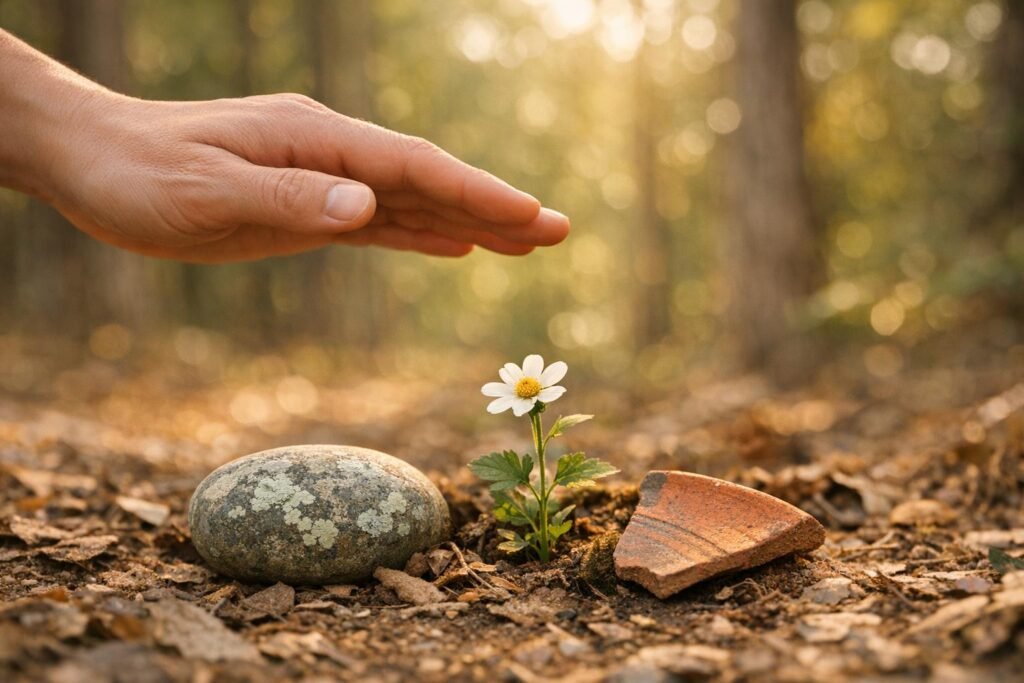
When you’re outdoors, leaving nature untouched is one of the simplest yet most impactful ways to protect it. The "Leave What You Find" principle encourages you to avoid taking natural objects like rocks, flowers, or artifacts. Why? Because every item plays a role in ecosystems – rocks shelter animals, dead wood nourishes soil, and flowers feed pollinators. Removing these disrupts ecosystems and can harm wildlife.
Key points:
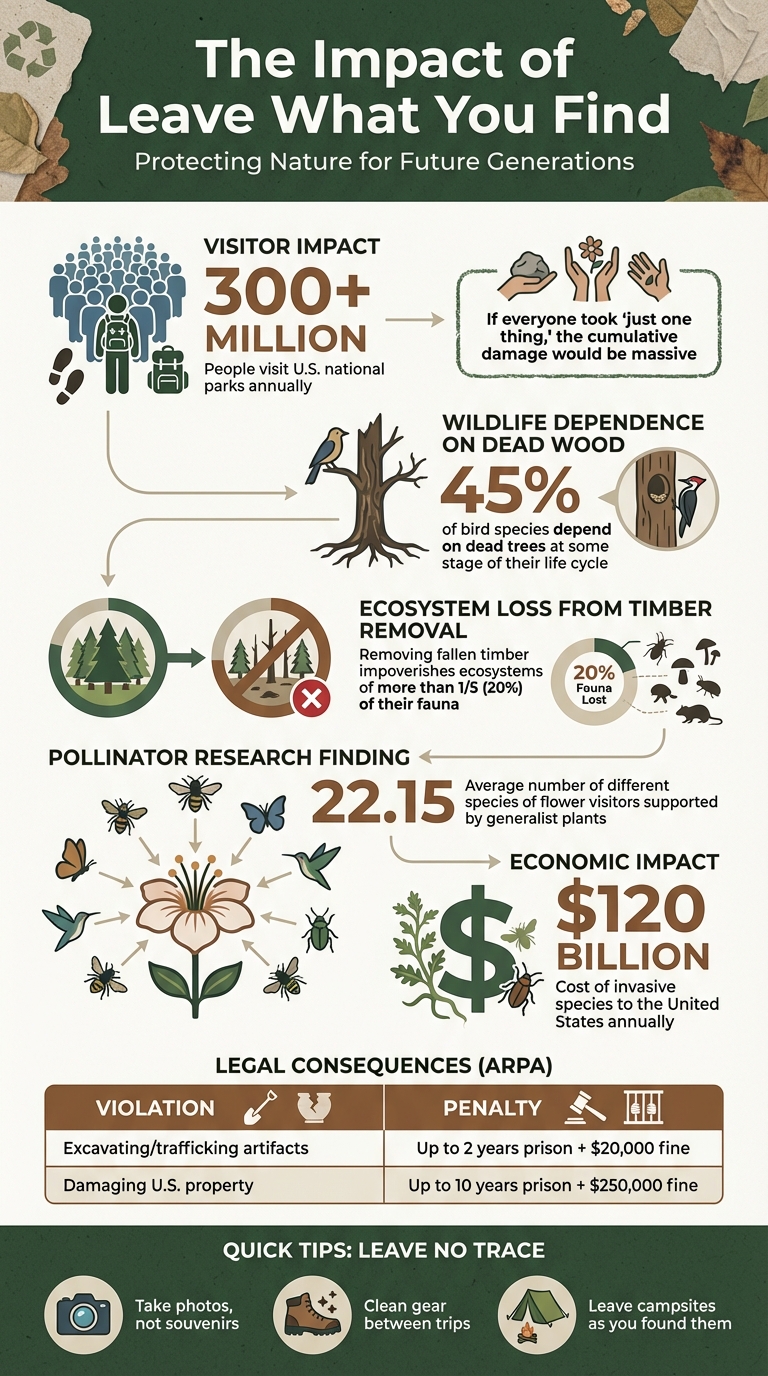
- Over 300 million people visit U.S. national parks annually. If everyone took "just one thing", the cumulative damage would be massive.
- Natural objects like rocks, leaves, and wood support habitats, nutrient cycles, and soil health.
- Picking wildflowers or plants reduces food sources for pollinators and prevents plants from reproducing.
- Artifacts hold historical value and context – removing them erases important stories about the past.
- Laws like ARPA protect natural and historical objects, with severe penalties for violations.
Instead of taking items, enjoy nature through photos, sketches, or journaling. Follow local rules, clean your gear to prevent spreading harmful species, and leave campsites as you found them. These small actions help preserve nature for everyone.
Impact of Leave What You Find: Key Statistics on Nature Protection
Why Natural Objects Matter to Ecosystems
How Natural Elements Support Ecosystems
Natural elements like rocks, wood, and leaves play a critical role in maintaining ecosystems. Rocks, for instance, break down over time to form soil, help regulate temperature for insects and reptiles, retain moisture to combat erosion, and create small habitats for various species.
Dead wood is another powerhouse in ecosystems. It’s teeming with fungi and nitrogen-fixing bacteria, which release nutrients essential for soil health. Around 45% of bird species depend on dead trees at some stage of their life cycle. Larger logs serve as dens for mammals like bears and wolves.
In aquatic environments, fallen logs transform streams and rivers. They create hiding spots for fish, slow water currents to form spawning pools, and trap gravel where fish can lay eggs. The more logs present, the more spawning opportunities arise. Even smaller items, like fallen leaves and pine cones, play a role by decomposing into nutrients, holding moisture, and providing shelter for amphibians and small mammals.
When these natural components are removed, the effects ripple across entire ecosystems.
Problems Caused by Removing Natural Objects
Taking natural objects from ecosystems disrupts nutrient cycles and destroys habitats. As ecologist Charles S. Elton wrote in The Pattern of Animal Communities:
"If fallen timber and slightly decayed trees are removed the whole system is gravely impoverished of perhaps more than a fifth of its fauna".
For example, moving rocks in streams can destroy habitats for aquatic insects. Picking wildflowers halts seed production and deprives pollinators of a food source. Collecting shed antlers removes a vital source of calcium and phosphorus for small mammals. These actions directly oppose the "Leave What You Find" principle, which aims to preserve nature’s delicate balance.
Beyond ecological harm, removing natural objects is also illegal in all U.S. National Parks and many other protected public lands.
sbb-itb-5a98267
How Plant Removal Affects Pollinators and Wildlife
What Happens When You Take Flowers and Plants
Picking wildflowers might seem harmless, but it can trigger a ripple effect across the ecosystem. When you remove a flower, you’re taking away a vital food source for pollinators like bees, butterflies, birds, and even bats. Plus, without the opportunity to produce seeds or fruit, the plant’s life cycle is cut short, which reduces future food supplies for other wildlife.
Some pollinators are highly dependent on specific plant species. Leave No Trace highlights this delicate relationship:
"Pollinators supported by these plants often have small ranges and may depend on just a few species of flowers for survival".
Removing these plants can lead to noticeable declines in local populations, especially among pollinators that rely on only a handful of flower species to thrive.
A 2019 study in South Bohemia, Czech Republic, offers a striking example of the consequences. Researchers removed the four most-visited plant species from experimental sites measuring between 16,150 and 19,400 square feet. The results were dramatic: pollinator visits plummeted, and plant-pollinator interactions were disrupted across the board. These plants, which served as generalists, supported an average of 22.15 different species of flower visitors, proving how essential they are for maintaining complex foraging networks.
Even the removal of a single plant, especially when done repeatedly, can significantly reduce plant populations and the resources available to wildlife. Instead of taking plants home, consider other ways to enjoy their beauty while leaving them intact.
Better Ways to Enjoy Plants in Nature
You can still appreciate the beauty of wildflowers and plants without disturbing them. Here are some low-impact alternatives to picking flowers. Try photography or nature journaling to capture the moment. A photo scavenger hunt can also be a fun and eco-friendly way to engage with wildflowers.
Sketching flowers, noting their colors and shapes, or observing the pollinators that visit them can help you connect with nature on a deeper level. As Alex DeLucia, Leave No Trace programs manager for AMC, puts it:
"Wild things are more special in their natural elements".
Carrying a field guide during your hikes can enhance your experience by helping you identify plants and understand their roles in the ecosystem. If foraging is allowed in your area, always follow local rules, take only what’s necessary, and ensure enough of the plant remains to recover.
Why You Should Leave Cultural and Historical Artifacts Alone
The Importance of Artifacts in Their Original Location
Artifacts are like puzzle pieces that help us understand the past, and their true value lies in the context of where they’re found. Removing them doesn’t just take an object – it erases a story. For example, at Flowerdew Hundred in Virginia, researchers uncovered three types of tobacco pipes – Native American, locally made Chesapeake, and imported English. These findings revealed how Native Americans, enslaved Africans, and European colonists interacted during the 1600s and 1700s. As the National Park Service explains:
"The meaning of the object is just as important as the object itself".
Artifacts like ceramics and tobacco pipes are particularly useful because they don’t decay, allowing archaeologists to date sites based on the soil layers where they’re found. Even something as mundane as food remains in trash pits can reveal stark contrasts between the diets of plantation owners and enslaved people. Disturbing these sites destroys historical context forever. As Arizona State Parks notes:
"Artifacts are the single-most tangible resource that connects Tribes to their heritage; as footprints of the past, their significance is reliant upon where they are located".
Every artifact, no matter how small, holds a key to understanding history. Federal laws exist to protect these irreplaceable links to the past because once they’re gone, they’re gone for good.
Laws That Protect Historical Items
Strict regulations, like the Archaeological Resources Protection Act (ARPA) of 1979, make it illegal to excavate, remove, or damage artifacts on public and Indian lands [16,18]. The penalties are severe. For example:
| Violation Type | Prison Time | Fine Amount | Additional Penalties |
|---|---|---|---|
| Excavating or trafficking artifacts | Up to 2 years | Up to $20,000 | Equipment confiscation |
| Damaging U.S. property | Up to 10 years | Up to $250,000 | 1–3 years supervised release |
The government can confiscate tools used in these offenses, including metal detectors and vehicles [16,18]. In fact, metal detectors are banned in national parks, and simply carrying one can be illegal [13,16].
If you come across an artifact, resist the urge to take it. Instead, document its location with a clear photo (preferably including a nearby landmark for scale), record the GPS coordinates, and report your find to a park ranger or through the official park website [14,16]. Avoid posting these photos online, as they might attract looters [12,16]. Additionally, don’t touch rock art – natural oils from your skin can accelerate its deterioration.
The National Park Service offers clear advice:
"Artifacts are not souvenirs! Leave the artifact where you found it. Please don’t pick it up, move it, throw it, put it in your pocket or your bag, or bury it".
Even items that might seem like old trash – glass bottles, cans, or metal fragments – can provide archaeologists with critical insights into human history. By leaving artifacts undisturbed, you help preserve the stories they tell for future generations.
How to Practice ‘Leave What You Find’ Outdoors
Camping and Hiking Guidelines
When it comes to camping, the best sites are those that already exist. As Leave No Trace advises:
"Good campsites are found and not made".
This approach helps preserve the natural environment, which can take years to recover from even minor changes. Avoid altering your campsite – don’t dig trenches or rearrange rocks and branches. These actions can disrupt the ecosystem.
If you need to move natural materials like rocks or twigs to set up your site, make sure to return them to their original position when you leave. Stick to existing, legally constructed fire rings instead of creating new ones. When gathering firewood, only use fallen branches that can be broken by hand. Never cut branches from living trees.
Alex DeLucia, Leave No Trace programs manager for AMC, highlights the importance of this principle:
"This means striving to ensure that the amazing place you love is just as nice for the next person".
With over 300 million visitors to U.S. national parks each year, small actions can have a big impact. For example, avoid building rock cairns. They may seem harmless, but they can mislead hikers and disrupt fragile alpine environments. Protecting the natural landscape is a shared responsibility, and it extends far beyond campsites.
How to Protect Trees and Landscapes
Preserving the natural world means respecting every tree and rock. Trees, in particular, need careful protection. Avoid damaging tree bark by nailing, carving, or sawing branches. These actions can leave trees vulnerable to disease. When hanging hammocks or clotheslines, use straps at least 1 inch wide to prevent damage – thin ropes can cut into bark like a wire slicing through soft cheese. Similarly, secure tent guylines to stakes in the ground instead of wrapping them around tree trunks to avoid abrasion.
Rocks, too, play an important role in the environment. While it might seem harmless to move them, they help retain water, prevent soil erosion, and provide shelter for small creatures. Building rock cairns in sensitive areas, like alpine zones or riverbeds, can disrupt these natural processes. Use a map or GPS for navigation instead of stacking rocks as markers.
And when it comes to natural "souvenirs" like colorful rocks, antlers, or petrified wood, leave them where you found them. As DeLucia puts it:
"We appreciate the beauty, but do not need to bring it home with us just to put it on our shelf or end up in a closet or attic".
These small actions help protect not just individual trees and rocks, but entire ecosystems. Another important step is cleaning your boots, tent stakes, and bike tires after every trip to prevent spreading invasive species. Each effort contributes to keeping the outdoors as pristine as possible.
LNT Principle 4 // Leave What You Find
Conclusion
The "Leave What You Find" principle goes beyond being a simple guideline – it’s a promise to protect the natural world for those who come after us. By leaving rocks, wildflowers, antlers, and historical artifacts where they are, you help sustain nutrient cycles, protect wildlife habitats, and preserve the joy of discovery that makes outdoor experiences so special. With so many visitors exploring these spaces, even small individual actions can add up, making personal responsibility essential.
Our choices have a direct impact on these natural systems, which is why thoughtful behavior matters. Nature’s beauty is best appreciated when left undisturbed. Instead of taking physical souvenirs, consider capturing the moment with photos or sketches. Taking an extra step, like cleaning your boots and gear between trips, can also prevent the spread of invasive species – a problem that costs the United States over $120 billion annually. By following established practices, you can significantly reduce your impact on the environment.
Every object in nature serves a purpose, whether in the ecosystem or as part of the landscape’s story. As Leave No Trace puts it:
"The items we find in nature have a role to play, either in the ecosystem or the story of the landscape. Leaving what we find in place helps to preserve both."
Your decisions matter. By embracing "Leave What You Find" during hikes, camping trips, or any outdoor adventure, you’re helping to ensure that future generations can enjoy the untouched landscapes and awe-inspiring moments that you treasure today. This thoughtful approach not only protects wildlife and ecosystems but also ensures that every visitor can experience nature’s unspoiled beauty. The outdoors is for all of us – let’s work together to keep it that way. Every mindful choice you make today helps preserve nature’s story for tomorrow.
FAQs
What should I do if I find an artifact on a trail?
If you come across an artifact while on a trail, it’s important to leave it exactly where you found it. Instead of moving it, document its location and take photos from different angles. Then, share your discovery with park authorities or rangers. This approach helps protect the artifact’s historical importance and ensures it’s handled appropriately by professionals.
Is it ever okay to take rocks, antlers, or plants from public lands?
No, it’s not okay to take rocks, antlers, or plants from public lands. Leaving these items where they are plays a key role in protecting ecosystems, preserving historical artifacts, and keeping the natural story of the landscape intact. This approach helps ensure that future visitors can experience and learn from these environments just as they are.
How can I enjoy nature without taking souvenirs?
Enjoying nature responsibly means appreciating its beauty without taking anything home. Resist the urge to collect rocks, plants, flowers, or artifacts. Instead, capture the moment with photos or simply take in the scenery. Removing natural items can disrupt ecosystems and take away from the experience of future visitors. By leaving everything as it is, you help protect the environment and ensure its beauty remains for others to enjoy.