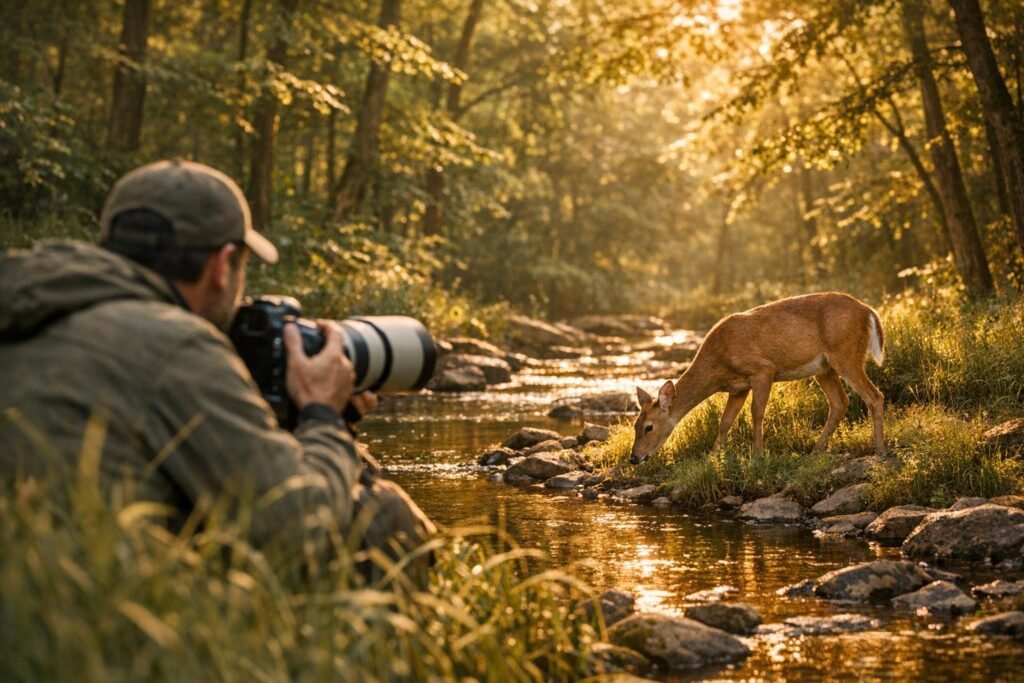
Wildlife photography isn’t just about taking pictures; it’s about respecting the animals and their habitats. Following ethical guidelines ensures that your actions don’t harm wildlife or disrupt natural behaviors. Here are the seven key rules every wildlife photographer should follow:
- Put Animal Welfare First: Never prioritize a photo over an animal’s safety. Use a telephoto lens and maintain a safe distance to avoid causing stress.
- Know and Follow Local Regulations: Research and adhere to laws, permits, and distance requirements for the area you’re photographing.
- Keep Safe Distances and Use Proper Equipment: Stay far enough to avoid altering animal behavior. Invest in lenses with at least 400–600mm focal length for safe, detailed shots.
- Don’t Use Bait, Calls, or Manipulation: Avoid feeding or luring animals, as it disrupts their natural instincts and can endanger them.
- Follow Leave No Trace Principles: Stay on trails, avoid altering environments, and remove GPS data from photos of sensitive species to protect their locations.
- Respect Other Photographers and Guides: Be courteous, share space, and address unethical behavior calmly to maintain a positive environment.
- Use Your Work to Support Conservation: Share your photos responsibly, collaborate with conservation groups, and raise awareness about protecting wildlife.
These principles ensure that your photography contributes positively to wildlife preservation while allowing you to document nature responsibly.
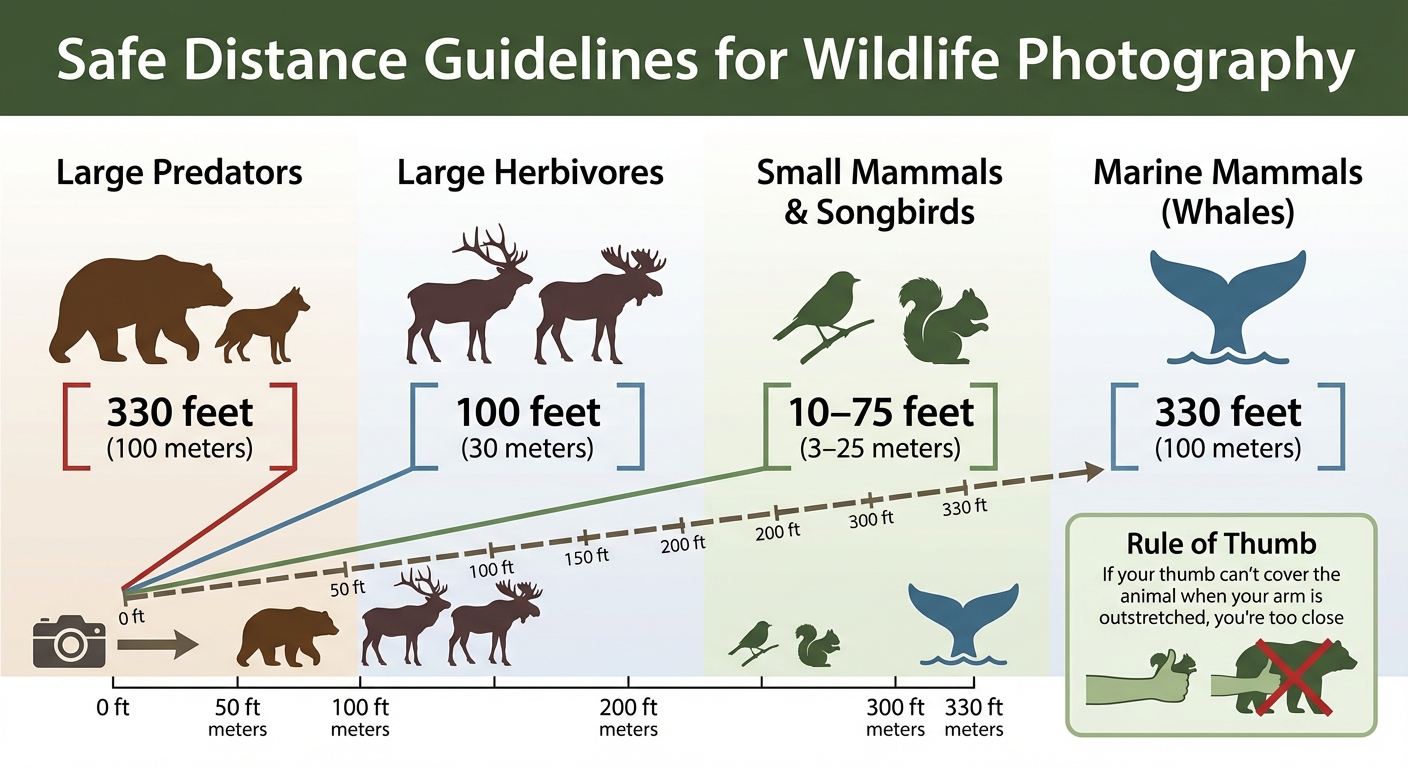
Safe Distance Guidelines for Wildlife Photography by Species
‘The Ethics of Photography’ with Wildlife Photographers Jonathan & Angela Scott
1. Put Animal Welfare First
No photo is worth compromising an animal’s well-being. Wildlife photographer Melissa Groo emphasizes this with clarity:
"These are just about photos to us; but to a wild animal, every single moment is about survival".
Wild animals live with one goal: survival. This reality should guide how close you approach them.
Getting too near can have serious consequences. For instance, startling a bird into fleeing wastes precious energy. If you venture too close to a nest or den, parent animals might abandon their young, leaving them exposed to predators, hunger, or harsh weather . Even your scent can act as an unintentional trail, leading predators straight to vulnerable offspring.
Pay attention to signs of stress. Animals don’t always make it obvious when they’re distressed. Look for subtle cues: if an animal stops eating, freezes, or takes a defensive stance, it’s time to back off. The Audubon Society suggests a simple "Rule of Thumb": if you can’t cover the animal with your outstretched thumb, you’re too close .
Use a telephoto lens (500mm or more) to keep your distance and still capture stunning details . This approach not only keeps the animal safe but also lets you witness its natural behavior. Patience is your best tool – spending time in one spot helps wildlife grow accustomed to your presence, allowing them to return to their normal routines.
"No image is as important as the life of the animal you’re photographing".
When faced with the choice between the perfect shot and the animal’s safety, the answer should always be obvious.
2. Know and Follow Local Regulations
Wildlife photography laws exist for a reason – they’re there to protect both animals and their environments. Before heading out with your camera, take the time to understand the local rules. Regulations can differ depending on the location, the species you’re photographing, and how you plan to use the images.
If you’re planning any kind of commercial photography, you’ll likely need a permit, especially in protected areas. According to the U.S. Fish & Wildlife Service, commercial photography includes any "visual recording intended for distribution for money or consideration". So, if you’re selling photos, running workshops, or using images for advertising, you’ll need to secure a Special Use Permit from the park or refuge manager. These aren’t just bureaucratic hoops – they’re essential for ensuring wildlife and habitats remain undisturbed. Take a cue from conservation photographer Carlton Ward Jr. In his "Path of the Panther" project, he collaborates closely with agencies like the Florida Fish and Wildlife Conservation Commission and the U.S. Fish and Wildlife Service to meet all permitting requirements.
There are also strict rules about how close you can get to wildlife and what equipment you can use. For instance, many areas require staying at least 25 yards away from beach-nesting birds, including their chicks and incubating adults. And drones? They’re a no-go in all U.S. National Parks, wilderness areas, and nature preserves. Studies show that even if animals don’t visibly react to drones, the stress they cause can still be significant.
Feeding wildlife is another big no-no. It’s illegal in national parks and many states. In New York, for example, feeding deer, bears, or moose is prohibited. Yellowstone National Park makes the consequences crystal clear:
"A fed animal is a dead animal – good or bad, the Park Service will destroy animals that are habituated to human contact and food".
Breaking these rules can lead to more than just a slap on the wrist. You could face fines or even criminal charges. In one case, the U.S. Fish and Wildlife Service offered a $5,000 reward for information about the illegal killing of a federally listed threatened nēnē (Hawaiian goose) on Kauaʻi in July 2025. Clearly, following the rules isn’t just about avoiding penalties – it’s about respecting and protecting the wildlife you’re there to capture.
3. Keep Safe Distances and Use the Right Equipment
Getting too close to wildlife is more than just a personal risk – it can also cause unnecessary stress to the animals. The rule to follow is straightforward: if your presence changes an animal’s behavior, you’re too close. Watch for signs like birds stopping their feeding, elk stomping their hooves, or moose licking their lips and flattening their ears. These are clear indicators that you need to back off immediately.
How far is far enough? The safe distance depends on the species. For large predators like bears, wolves, and cougars, stay at least 330 feet (100 meters) away. Large herbivores, including elk, moose, and deer, require a minimum distance of 100 feet (30 meters). For smaller animals like squirrels and songbirds, aim for at least 10 feet. Here’s a handy guide:
| Species Category | Minimum Distance |
|---|---|
| Large Predators (Bears, Wolves, Cougars) | 330 feet (100 meters) |
| Large Herbivores (Elk, Moose, Deer) | 100 feet (30 meters) |
| Small Mammals & Songbirds | 10–75 feet (3–25 meters) |
| Marine Mammals (Whales) | 330 feet (100 meters) |
Keeping your distance doesn’t mean sacrificing the quality of your experience. The right equipment can help you observe and photograph wildlife safely.
Invest in the right gear. A telephoto lens is essential for capturing wildlife without getting too close. According to National Geographic, lenses in the 400–600mm range are ideal for wildlife photography. While a 300mm lens might work for general shots, photographing birds or predators often requires at least 400mm to ensure both safety and excellent image quality. Shooting from a vehicle can also help minimize the perceived threat to animals.
Be mindful of hidden stress. Some disturbances aren’t immediately visible. For example, flash photography can temporarily blind nocturnal animals for up to 20 minutes. Always prioritize the well-being of the wildlife you’re observing, and let that guide your decisions in the field.
A simple trick to gauge distance: Stretch out your arm and hold up your thumb. If your thumb completely covers the animal, you’re likely at a safe distance. If the animal is visible around the edges of your thumb, it’s time to move farther away. And remember – no photograph is worth compromising an animal’s welfare. Always put their well-being first.
4. Don’t Use Bait, Calls, or Manipulation
Avoid baiting, calling, or any manipulative tactics when observing or photographing wildlife. When animals start associating humans with food, they lose their natural caution – a phenomenon called habituation. This can lead to dangerous behaviors, like aggressive begging, and in some cases, it puts both humans and animals at risk. In fact, feeding wildlife such as bears, deer, or moose is illegal in many U.S. states and could result in hefty fines or even jail time.
Using bird call recordings is another harmful practice. These recordings can trigger a territorial response, causing parent birds to abandon their nests. This leaves eggs and chicks vulnerable to predators, harsh weather, and, ultimately, death. To ensure animals maintain their natural instincts, stick to observing them without introducing artificial stimuli.
Baiting animals also creates problems. It increases the chances of roadkill and disrupts crucial activities like foraging, hunting, and resting. National Geographic photographer Brian Skerry highlights the importance of honesty in wildlife photography:
"If I use chum to attract a tiger shark without disclosure, I’m compromising my credibility."
So, how can you ethically capture stunning wildlife photos? Invest in a telephoto lens with a focal length of at least 500mm for bird photography. This allows you to photograph animals up close while keeping a respectful distance. You can also use blinds or hides to remain out of sight or set up unbaited camera traps near natural water sources or animal trails. These techniques let you document wildlife in their element without causing stress or altering their behavior.
Even unintentional actions can be manipulative. For example, don’t "garden" around a nest by removing branches or vegetation to get a clearer shot. Doing so strips away essential camouflage and exposes the nest to predators. Pay attention to the animal’s behavior – if it freezes, changes posture, or stops what it’s doing to focus on you, you’re too close. Back off immediately. As National Geographic photographer Frans Lanting explains:
"The presence of humans can disturb an animal’s ability to engage in natural behaviors."
Use telephoto lenses and natural hides to capture images without interfering, a practice that aligns with the next principle.
sbb-itb-5a98267
5. Follow Leave No Trace Principles
Blend into the wild without leaving a trace. The idea behind Leave No Trace is simple: keep nature as it is. Stick to established trails to protect fragile vegetation and avoid leaving behind visual or scent trails that predators might use to locate nests or dens. Even a single step off the path can harm delicate plants and disrupt ecosystems.
When photographing wildlife, resist the urge to "tidy up" the scene. Moving rocks, cutting branches, or clearing vegetation for a better shot may seem harmless, but it can have serious consequences. As wildlife photographer Melissa Groo highlights:
"Never alter vegetation around nests or dens"
This ensures that animals retain the cover and shelter they rely on.
Always pack out everything you bring in, including trash and food scraps. In areas with bears, such items should be stored securely in bear-resistant containers, lockers, or locked vehicles. Feeding wildlife, even unintentionally, can have devastating effects. Animals that associate humans with food may become aggressive, putting both people and wildlife at risk. Yellowstone National Park reminds visitors:
"A fed animal is a dead animal – good or bad, the Park Service will destroy animals that are habituated to human contact and food"
.
For the digital side of Leave No Trace, remove GPS and EXIF data from photos of rare or sensitive species before sharing them online. This precaution helps prevent crowds, poachers, or other disturbances from threatening vulnerable wildlife. Jonathan Guillot, President of Salva Fauna, puts it perfectly:
"The welfare of our wild friends is and will always be more important than the beautiful pictures we can take"
. By following these steps, photographers can ensure that the wilderness remains unspoiled and safe for future generations of wildlife.
6. Be Respectful to Other Photographers and Guides
Wildlife spaces are shared by many: photographers, birdwatchers, hikers, and researchers. Showing courtesy to everyone not only ensures access to these areas but also enhances the experience for all involved.
Before setting up your tripod, take a moment to check your surroundings and make sure you’re not blocking someone else’s view. If you’re shooting with a group, be mindful of others by taking turns and allowing space for everyone to capture their own shots. As National Geographic photographer Beverly Joubert wisely notes:
"The ethics of photography are the same as the ethics of life, and all revolve around respect".
Keep noise to a minimum – close car doors quietly and avoid loud conversations, especially near public viewing areas. Sharing gear, even briefly, can foster a sense of community and mutual respect among fellow photographers. These small acts of consideration go a long way in upholding the principles of wildlife photography.
If you find a location overcrowded, it’s best to move on. For instance, photographer Brittany Crossman chooses not to stop when she sees a moose surrounded by onlookers on a highway median. She avoids contributing to the "chaos" and ensures the animal isn’t further stressed. Similarly, Jesse Villemaire from Follow Me North Photography emphasizes:
"There’s only so much conversation we can have with people before it becomes a confrontation… You can be an ambassador for good ethics, and that’s the best that we can be".
When you notice unethical behavior, address it calmly and politely. Professional photographer and biologist David Shaw offers a valuable perspective:
"If a passerby thinks you are too close, then you ARE too close. How we are perceived matters".
In the tight-knit world of wildlife photography, maintaining a reputation for respectful and ethical practices is essential. It not only preserves access to these extraordinary spaces but also ensures a positive experience for everyone involved.
7. Use Your Work to Support Conservation
Your wildlife photography can do more than showcase nature’s beauty – it can actively contribute to conservation efforts. As wildlife photographer and conservationist Melissa Groo explains:
"Wildlife photography has the power to turn people on to the wonder of nature. It’s an essential tool to inspire the desire to protect wildlife and spark real change".
By adhering to ethical practices, you can amplify the impact of your work. Transparency is crucial – always share the context behind your photos, including details about filming conditions and any alterations. This kind of openness not only builds trust with your audience but also sets a responsible example for fellow photographers.
Abdulla Moussa, co-founder of the Canadian Conservation Photographers Collective, highlights the influence of compelling imagery:
"I think when people see the images, and they see what exists around them, they’re more likely to care about it. And they’re more likely to protect it because they realize what there is to lose".
Taking additional precautions, such as disabling geotagging and removing GPS metadata from photos of sensitive species, can help protect wildlife from threats like poaching or overcrowding.
Consider using your photography to tell meaningful stories about individual animals and their struggles – whether they face urban challenges or human-made dangers. This approach can help viewers connect with animals on a personal level, seeing them as sentient beings rather than just symbols of their species.
You can also take action by donating your images to non-profits or collaborating with scientists to create accurate, conservation-focused narratives. With a United Nations report stating that one in four species is at risk of extinction, your work can play a critical role in raising awareness and inspiring change.
Conclusion
Ethical wildlife photography goes beyond snapping breathtaking shots – it’s about safeguarding the animals and ecosystems that make those moments possible. As leading photographers emphasize, respect is the foundation of ethical wildlife photography.
Engaging in harmful practices not only endangers wildlife but also puts your credibility at risk. Stressing animals can disrupt their natural behaviors, and improperly habituated wildlife may even face intervention from authorities. With one in four species currently at risk of extinction, every choice you make in the field carries weight.
By adhering to ethical guidelines, you’re not just protecting wildlife – you’re also elevating your ability to capture authentic, natural behavior. As discussed in our equipment and digital ethics sections, the right techniques help preserve vulnerable species from risks like poaching or overcrowding. Being upfront about using tools like camera traps or photographing animals in captivity fosters trust with your audience and sets a positive example for your peers.
This commitment to integrity is more important than ever in today’s media-driven world. Social media has made it easier for harmful practices to come to light, and the community is quick to call out unethical behavior. National Geographic photographer Brian Skerry reminds us of the stakes:
"Never forget that your reputation is everything. If you want to take shortcuts, if you’re exposed, you will set everything back decades."
FAQs
Why should you use a telephoto lens for wildlife photography?
Using a telephoto lens is a game-changer for wildlife photography. It lets you capture close, detailed shots of animals while maintaining a safe distance. This way, you can observe and photograph them without interfering with their natural behavior – or putting yourself in harm’s way.
Another major advantage is how these lenses allow you to fill the frame with your subject, creating striking compositions. By isolating the animal and beautifully softening the background, telephoto lenses give your photos a polished, professional look. This mix of safety and artistic flexibility makes them an essential tool for photographing wildlife responsibly.
How can I take wildlife photos that help with conservation?
To make your wildlife photography truly contribute to conservation, always put the welfare of animals and their habitats above capturing the perfect image. Use a telephoto lens or camera traps to maintain a safe distance, ensuring you don’t disturb the animals or make them too comfortable with human interaction. It’s equally important to adhere to local regulations and secure any required permits, safeguarding both the environment and the legal use of your photos for conservation purposes.
When sharing your work, include detailed and accurate captions that explain the species’ role in its ecosystem and any threats it faces. This transforms your photography into a powerful educational tool that raises awareness. You can take it a step further by donating a portion of your print sales or licensing fees to wildlife charities, directly supporting conservation initiatives. Platforms like Adventurism.co can help you align your photography with meaningful conservation efforts, turning your passion into a force for good.
Why is it harmful to use bait or calls in wildlife photography?
Using bait or calls to attract wildlife might seem like a shortcut to capturing a stunning photo, but it can have serious consequences for the animals and their environment. It can cause unnecessary stress, disrupt natural behaviors, and deplete their energy reserves. Over time, this practice may also lead to animals becoming too comfortable around humans, making them more susceptible to predators or other risks. On top of that, it can disturb nests or inadvertently draw predators to vulnerable areas, further upsetting the ecosystem’s balance. Ethical wildlife photography puts the welfare of animals and their habitats first, ensuring that the pursuit of a great shot never comes at their expense.