
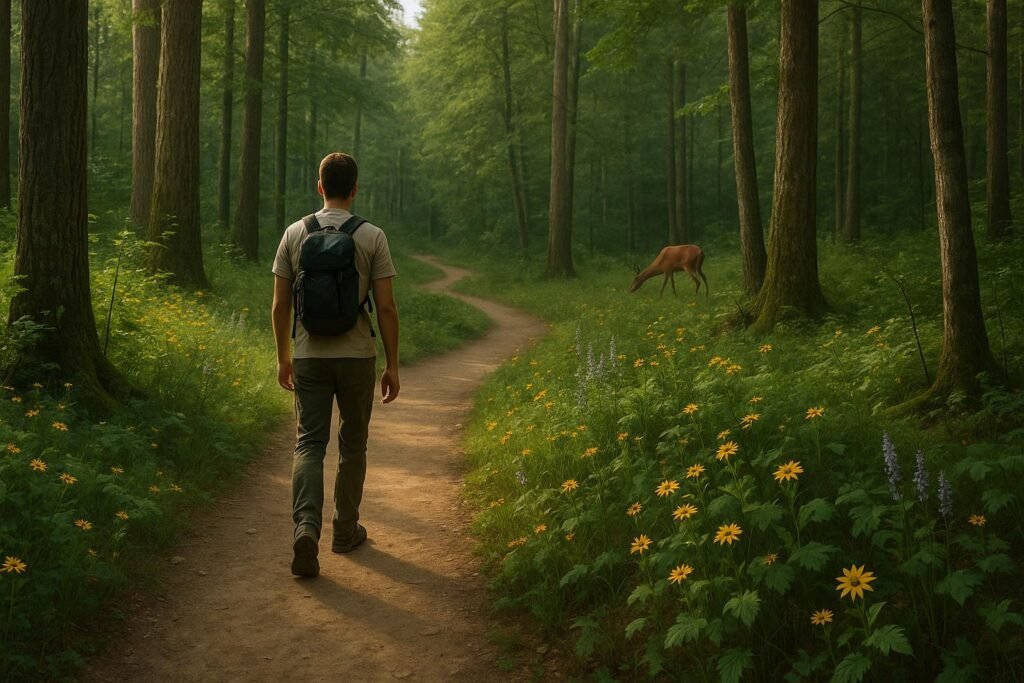
Hiking isn’t just about enjoying the outdoors – it’s about protecting it. Every choice you make on the trail impacts the environment, wildlife, and other hikers. Following proper hiking etiquette ensures trails remain accessible, wildlife stays safe, and natural areas are preserved for future generations. Here’s what you need to know:
- Stay on Trails: Walking off designated paths damages plants, worsens erosion, and creates long-term harm. Stick to marked trails, even in muddy conditions.
- Respect Wildlife: Keep a safe distance, avoid feeding animals, and minimize noise to prevent stress or dangerous encounters.
- Pack Out Waste: Carry out all trash, including biodegradable items, and follow proper disposal rules for human and pet waste.
- Follow Leave No Trace Principles: Plan ahead, use durable surfaces, and leave what you find to protect ecosystems.
Simple habits like staying on paths, picking up litter, and keeping noise low can make a big difference. Hiking responsibly means thinking about your impact with every step.
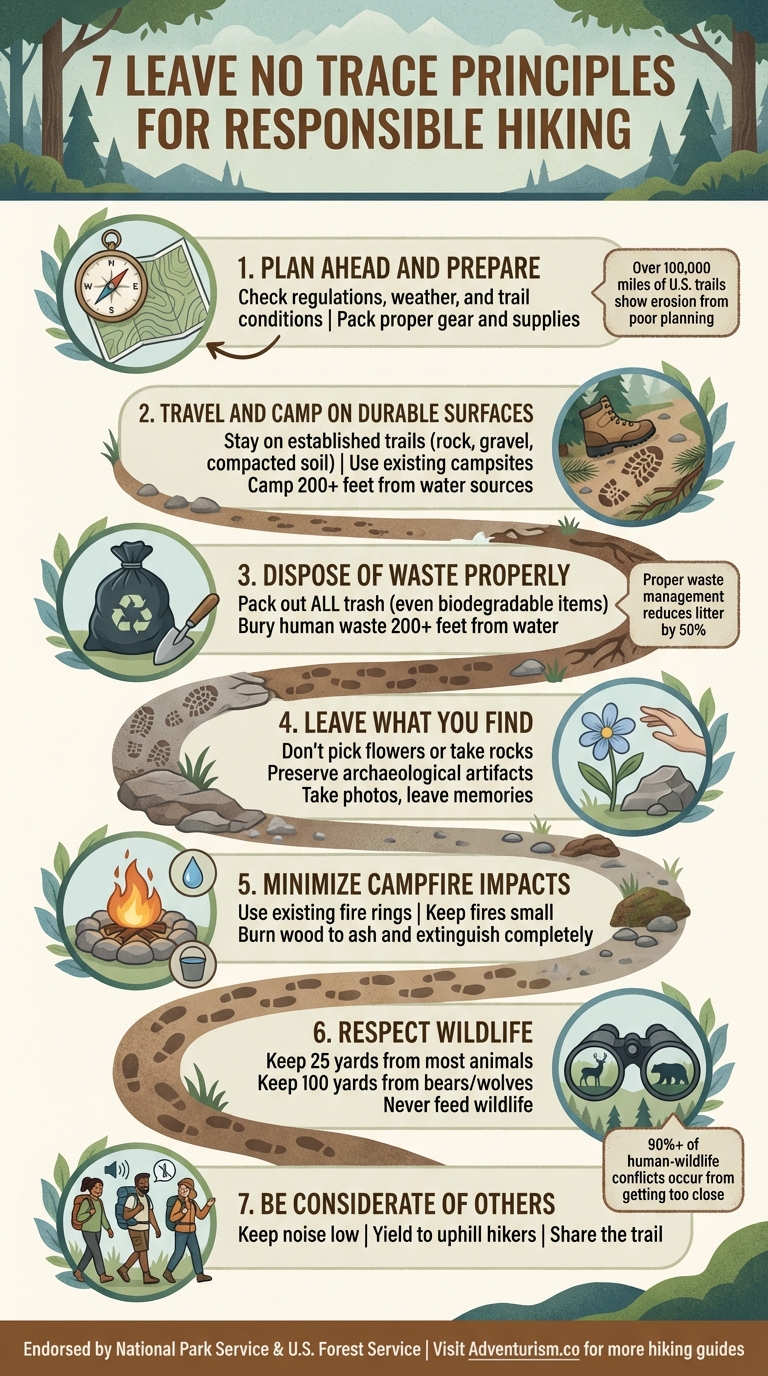
7 Leave No Trace Principles for Responsible Hiking
Beginner’s Guide To Hiking Etiquette On The Trails
Common Mistakes That Damage Nature and Wildlife
Even the most mindful hikers can unintentionally harm trails and wildlife. Understanding these common missteps can help you better protect the natural landscapes you cherish during your adventures. Let’s take a closer look at three common mistakes that can disrupt trail ecosystems and wildlife safety.
Going Off-Trail
Straying from marked trails might seem harmless, but it can cause serious damage. Leaving designated paths disturbs soil, crushes vegetation, and speeds up erosion. For instance, in Rocky Mountain National Park, off-trail shortcuts have expanded trails to as much as ten times their original width, destroying wildflowers and delicate tundra ecosystems that can take decades to recover. Cutting across switchbacks not only increases runoff and erosion but can also trigger landslides. Worse yet, visible shortcuts encourage others to follow suit, amplifying the destruction.
Feeding or Getting Too Close to Wildlife
While it might be tempting to feed wildlife or snap a close-up photo, these actions can have lasting consequences. Feeding animals disrupts their natural behaviors, making them less wary of humans and more dependent on unnatural food sources. This often leads to aggressive behavior and conflicts with people. According to the National Park Service, over 90% of human–wildlife conflicts occur because people get too close. For example, approaching elk calves within 100 feet can double their heart rates, causing stress that may lead to nest abandonment or reduced foraging. These disturbances not only threaten wildlife survival but also diminish the opportunity for future visitors to enjoy untouched natural experiences.
Littering and Improper Waste Disposal
Trash left behind on trails is more than just an eyesore – it’s a threat to ecosystems. Items like discarded wrappers, bottles, and even "biodegradable" waste can poison wildlife and introduce harmful microplastics into water sources. Despite efforts like annual cleanups that remove over a million pounds of trash, plastic ingestion still accounts for 8–14% of bird and mammal deaths. In Great Smoky Mountains National Park, litter has led to bear habituation, resulting in over 100 euthanasia cases since 2010. Additionally, improper disposal of human waste within 200 feet of trails or water can spread harmful pathogens like E. coli, endangering both animals and hikers. Keeping trails clean and safe requires responsible waste management every step of the way.
How to Follow Leave No Trace Principles
Caring for nature begins with the Leave No Trace framework, a set of seven practical guidelines designed to help hikers minimize their environmental impact. Created by the Leave No Trace Center for Outdoor Ethics and endorsed by organizations like the National Park Service and U.S. Forest Service, these principles aim to protect trails, wildlife, and ecosystems across the country. For hikers, three key practices stand out: planning ahead, sticking to durable surfaces, and properly disposing of waste. These steps are essential for preserving the natural world and ensuring its beauty for future generations.
Plan Ahead and Prepare
Before you hit the trail, check regulations, trail conditions, and weather forecasts. Official park or forest websites are great resources for up-to-date information on permits, fire restrictions, seasonal closures, and wildlife advisories. Proper preparation not only keeps you safe but also prevents unnecessary environmental damage. According to the American Hiking Society, over 100,000 miles of U.S. trails show signs of erosion and overuse, often exacerbated by hikers who ignore rules or venture off-path during wet conditions.
Pack the right gear, including maps, first-aid supplies, layered clothing, rain gear, enough food and water, and reusable containers. If you’re hiking in bear country, make sure you’re familiar with food storage rules to avoid attracting wildlife. Planning to filter water from streams? Bring proper treatment equipment and use it away from the water source. Once prepared, focus on reducing your impact by sticking to durable surfaces.
Stay on Durable Surfaces
Walking on established trails protects fragile vegetation and prevents erosion. Stick to surfaces like rock, gravel, compacted soil, or snow, which can handle foot traffic without damage. Avoid delicate areas such as wetlands, alpine meadows, desert cryptobiotic soil crusts, and streambanks, where even a single step can cause lasting harm.
When trails are muddy, stay on the path – even if it means walking through the mud. Detouring around wet spots widens trails and damages surrounding vegetation. The National Park Service highlights the importance of staying on trails to protect biodiversity and prevent habitat destruction, urging hikers to follow Leave No Trace principles.
Dispose of Waste Properly
Pack out everything you bring in – trash, food scraps, microtrash like wrappers and twist ties, used tissues, hygiene products, and even dog waste bags. Even biodegradable items should be carried out, as they can disrupt ecosystems. Studies show that consistent waste management efforts have reduced litter by up to 50% in monitored trail areas, proving the effectiveness of pack-out practices.
Follow local rules for waste disposal, such as digging cat holes at least 200 feet from water sources, and always pack out toilet paper and hygiene products in a sealed bag. These items decompose slowly and can attract wildlife if left behind. Many parks now require the use of wag bags or portable toilet systems because local soil and climate conditions often prevent safe decomposition. When washing dishes, strain out food particles and disperse gray water at least 200 feet from any water source.
sbb-itb-5a98267
How to Respect Wildlife on the Trail
Spotting wildlife while hiking can be a truly rewarding experience, but it also comes with a responsibility: ensuring that your presence doesn’t negatively impact the animals or their habitat. Every interaction with wildlife has consequences, so it’s crucial to observe from a distance and avoid interfering. Following simple practices like keeping a safe distance, refraining from feeding animals, and minimizing noise can protect their well-being and preserve their natural behaviors. These actions also reduce the chances of dangerous encounters, which could lead to animals being relocated – or, in severe cases, euthanized.
These principles align with Leave No Trace guidelines, helping ensure that wildlife remains undisturbed and ecosystems stay healthy.
Watch from a Safe Distance
Enjoying wildlife doesn’t mean getting up close. Instead, rely on tools like binoculars (8× or 10× magnification) or a camera with a telephoto lens (200–300 mm or more) to observe animals without intruding on their space. Many U.S. national parks recommend staying at least 25 yards (about 75 feet) from animals like deer, elk, or smaller mammals, and at least 100 yards (about 300 feet) from predators such as bears and wolves. These distance guidelines help prevent animals from wasting energy fleeing or abandoning their nests.
If you notice an animal stopping its activity, staring at you, moving away, or showing signs of stress, you’re likely too close. In such cases, back away slowly while staying on the trail. For nesting birds or animals with young, it’s especially important to give them extra space. Signs like repeated calls, wing-fluttering, tail flagging, or mock charges indicate distress – step back and allow them plenty of room.
Never Feed Wildlife
Feeding wildlife might seem harmless, but it can have serious consequences. Human food isn’t suitable for most animals and can disrupt their natural foraging habits. Over time, animals like squirrels and chipmunks may lose their fear of humans and become aggressive. Deer might crowd campsites and behave unpredictably, while bears accustomed to human food can develop dangerous behaviors that often lead to their removal.
Even small mistakes – like leaving food scraps, spilling trail mix, or leaving unattended backpacks with open zippers – can attract animals. Always store food securely and double-check your area for leftovers before moving on. In bear country, carry all food and scented items with you during the day and use approved storage methods, like bear canisters or hanging bags, at night. These steps help keep both you and the animals safe.
Keep Noise Levels Low
Natural soundscapes are essential for wildlife. Animals use sound to communicate – whether it’s for mating, marking territory, or detecting predators. Loud noises like shouting or playing music on external speakers can disrupt these behaviors and create unnecessary stress for animals along busy trails.
To minimize disturbance, speak softly, silence your phone, and avoid using external speakers. If you want to listen to music or podcasts, use headphones instead. During dawn and dusk, when wildlife is most active, being quiet is especially important. In areas with large mammals like bears or moose, speaking at a normal volume, clapping gently, or calling out at blind corners can alert animals to your presence, reducing the chance of startling them. Hiking in a group and chatting naturally can also help prevent close encounters while maintaining the peacefulness of the trail.
How to Protect Plants and Ecosystems
Protecting plants and ecosystems while enjoying the outdoors starts with thoughtful trail habits. Hiking may seem harmless, but it can crush plants, compact soil, erode trails, and disrupt wildlife habitats. Frequent use of trails can strip away groundcover, increase water runoff that harms streams and habitats, and cause plant cover to drop by over 50% on informal paths. By adopting simple, intentional practices, you can reduce your impact and still fully enjoy nature.
Leave What You Find
It’s tempting to pick a wildflower or pocket a pretty rock as a keepsake, but even small actions like these can cause harm. If every visitor takes "just one" flower, it can reduce seed production, deprive pollinators of food, and hinder plant regeneration in overused areas. Moving rocks or carving into trees might seem harmless, but these actions disturb local microhabitats. Items like arrowheads, pottery shards, or antique bottles are part of archaeological history and should remain untouched. Removing them damages historical sites and disrupts research efforts by scientists and tribal communities. In fact, many U.S. national parks and federal lands have strict laws against taking natural or cultural objects. Instead of collecting, take photos and leave everything as you found it.
Campsite choices and fire practices are other key ways to minimize your impact on the environment.
Manage Campsites and Fires Responsibly
Where and how you camp can significantly affect the surrounding environment. Always use durable surfaces such as established campsites, bare ground, gravel, sand, or dry grass. Avoid setting up on areas with lush vegetation or fragile soils. In heavily trafficked areas, stick to existing campsites. In remote regions, space out tents at least 200 feet from water sources and trails to minimize disruption. Keeping all camping activities on durable surfaces helps prevent erosion and protects plant roots.
If you plan to build a fire, use existing fire rings in designated areas. Keep fires small and only burn dead, fallen wood that you can break by hand – never cut live branches or strip bark from trees. Make sure to burn wood completely to ash and thoroughly extinguish the fire with water until the ashes are cold. This prevents damage to nearby roots and soil. In places with sensitive ecosystems or heavy visitor traffic, consider using a portable backpacking stove instead of an open fire. And don’t forget to check for seasonal fire bans, which many U.S. states enforce to protect forests, wildlife, and nearby communities.
Adjust to Trail and Weather Conditions
Muddy or snowy trails can present challenges, but staying committed to low-impact hiking is essential. Always walk single file down the center of the trail to avoid widening paths or trampling vegetation. Even a few steps off-trail can create lasting "social trails" that damage ecosystems. In snowy areas, stick to the main packed trail instead of forging side routes to keep your footprint confined.
If part of the trail becomes unsafe or blocked, take a short detour over durable surfaces like rock or bare ground, and rejoin the main trail as soon as you can. When trails are overly muddy or saturated, it’s better to turn back or pick a different route to protect delicate soils. Wearing proper footwear, like waterproof boots or trail runners with good traction, and using trekking poles can help you stay on the trail even in tricky conditions. Checking weather forecasts and trail conditions ahead of time ensures you’re prepared with the right gear and can choose a sustainable route for your hike. By adjusting to trail and weather conditions, you can help preserve the natural environment with every step.
Conclusion
Practicing good hiking etiquette is essential to preserving the trails, wildlife, and natural environments that make outdoor adventures so rewarding. No matter how short or long your hike is, keep the key Leave No Trace principles in mind: stick to durable paths, pack out all trash, give wildlife plenty of space, keep noise to a minimum, and be considerate of other hikers. When people stray off trails or leave behind food scraps, these small actions can add up and harm the landscapes we all value.
Hiking etiquette isn’t something you master once and forget – it’s an ongoing process. As you visit different regions, encounter new ecosystems, or explore trails in varying seasons, you’ll face unique challenges like changing weather, wildlife activity, or local trail regulations. Always check trailhead signs, revisit Leave No Trace guidelines, and prepare ahead for things like seasonal closures or fire restrictions. This mindset of staying informed and adaptable is central to the Leave No Trace philosophy. And when in doubt, always choose the path that leaves no trace.
For your next hike, try focusing on one or two small habits that make a big difference – like bringing a bag to pick up litter, using headphones instead of playing music aloud, or stepping aside to let uphill hikers pass. Share these practices with your group to encourage low-impact habits among everyone you hike with. For more practical advice and in-depth guides, check out Adventurism.co.
FAQs
Why should I stick to designated trails while hiking?
Sticking to designated trails plays a big role in safeguarding the environment and keeping your hiking adventure safe. It helps protect delicate ecosystems, cuts down on soil erosion, and ensures wildlife can thrive without unnecessary disruptions.
When you stay on marked paths, you’re not just protecting nature – you’re also helping to maintain the trail’s beauty for everyone who comes after you. Plus, it keeps you from unintentionally stepping into unsafe or off-limits areas. It’s an easy way to show respect for the outdoors while soaking in all it has to offer.
Why is it harmful to feed wildlife while hiking?
Feeding wildlife might seem like a kind gesture, but it can actually harm animals and disrupt ecosystems in multiple ways. When animals grow dependent on human-provided food, their natural foraging instincts can weaken, often leading to poor nutrition. This reliance on unnatural food sources can also make them more susceptible to diseases and encourage behaviors that are either aggressive or overly dependent on humans.
The impact doesn’t stop there. Feeding wildlife can upset the balance of their habitats, causing overpopulation in certain areas or damage to ecosystems when animals gather in places they wouldn’t naturally frequent. To truly support wildlife and their environments, it’s best to admire animals from a safe distance and allow them to forage as they were meant to in the wild.
What are the essential Leave No Trace principles for hikers?
The Leave No Trace principles aim to guide hikers in reducing their impact on nature and wildlife. These guidelines emphasize the importance of:
- Planning ahead and preparing to ensure safe and low-impact trips.
- Traveling and camping on durable surfaces to protect fragile ecosystems.
- Properly disposing of waste to keep the environment clean.
- Leaving natural objects and artifacts as they are to preserve the area’s beauty and history.
- Minimizing campfire impacts by using established fire rings or alternatives.
- Respecting wildlife by observing from a distance and avoiding interference.
- Being considerate of other visitors to maintain a peaceful and enjoyable experience for everyone.
By embracing these practices, you help protect trails, parks, and wild spaces, ensuring they remain unspoiled and welcoming for future generations.