Trail running shoes are designed for rugged terrain, offering better traction, stability, and protection than regular running shoes. Choosing the right pair depends on the type of trails you run, the shoe’s features, and proper fit. Here’s a quick guide:
- Match Shoes to Terrain:
- Light Trails: Shallow lugs (2–4 mm), lightweight, breathable, moderate cushioning.
- Moderate Trails: Medium lugs (4–6 mm), added cushioning (25–30 mm), balanced stability.
- Technical Trails: Deep lugs (6+ mm), rock plates, reinforced uppers for protection.
- Key Features:
- Cushioning: Minimal (15–20 mm) for agility, moderate (20–30 mm) for versatility, maximum (30+ mm) for comfort on long runs.
- Heel-to-Toe Drop: Higher (8–10 mm) for heel strikers, moderate (4–8 mm) for mixed patterns, zero-drop (0–4 mm) for natural running.
- Outsole: Short lugs for hardpacked trails, deeper lugs for mud or soft ground.
- Fit Tips:
- Waterproofing vs. Breathability:
- Waterproof shoes for wet or snowy conditions.
- Breathable shoes for hot or long runs.
A well-fitted shoe tailored to your trail type ensures comfort, safety, and better performance. Take the time to test models, and always prioritize fit over price.
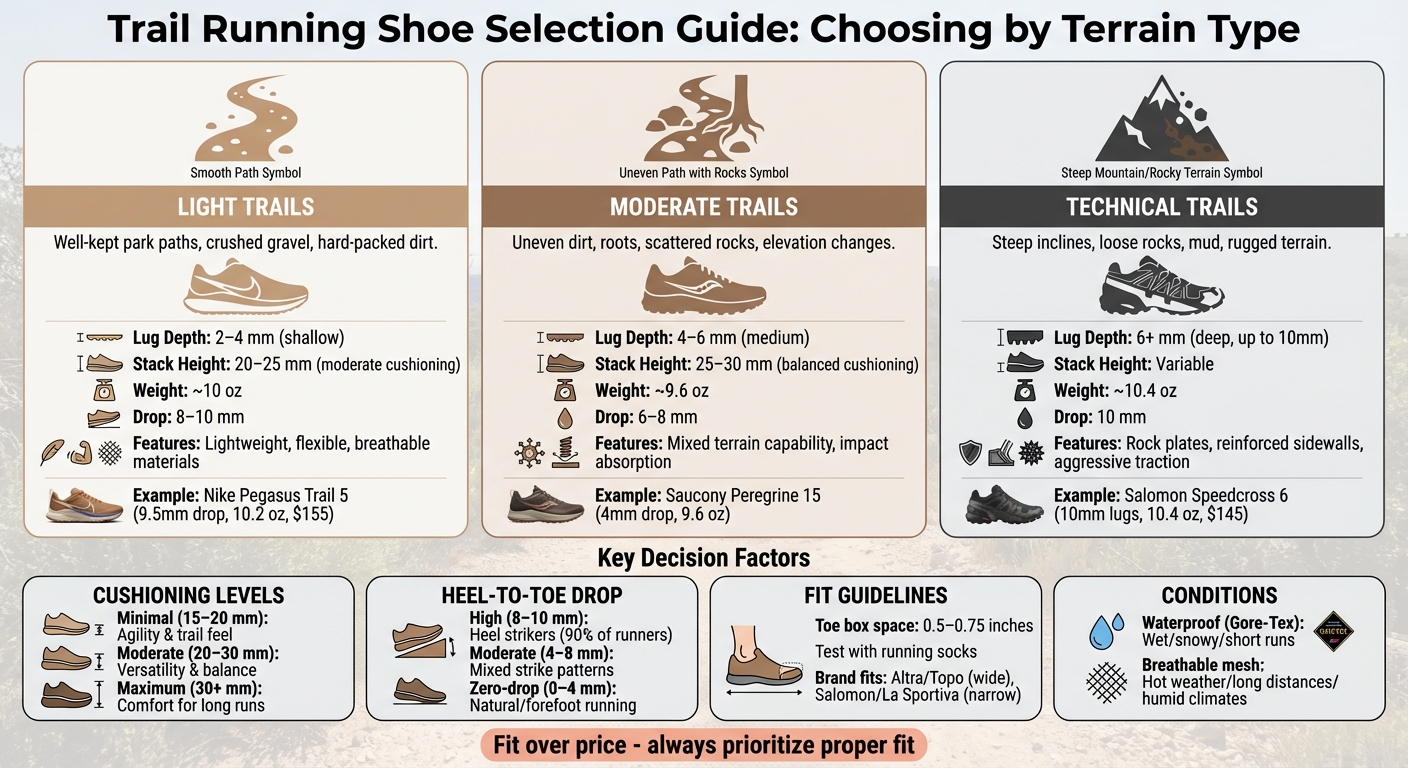
Trail Running Shoe Selection Guide by Terrain Type
How to Choose Trail Running Shoes | REI Co-op
Understand Your Terrain
The type of trail you tackle plays a huge role in determining the features your shoes need. The right pair can make all the difference in traction, stability, and safety. Here’s a breakdown of what to look for based on the terrain.
Light Trails
Light trails typically include well-kept park paths, crushed gravel, or hard-packed dirt with minimal obstacles. Shoes for these conditions should have shallow lugs (around 2–4 mm) for solid ground contact without dragging you down. A lightweight, flexible design with moderate cushioning (about 20–25 mm stack height) and breathable materials will keep you comfortable. A great example is the Nike Pegasus Trail 5, which features a 9.5 mm drop, weighs 10.2 oz, and transitions smoothly between roads and trails.
Moderate Trails
Moderate trails are a bit more challenging, with uneven dirt, roots, scattered rocks, and some shifts in elevation. For these, you’ll want shoes with medium lug depth (4–6 mm) to handle the mixed terrain while maintaining a balanced feel. Cushioning in the 25–30 mm range can help absorb impacts from rocks and small drops, while a moderate heel-to-toe drop (6–8 mm) offers better stability on uneven ground. The Saucony Peregrine 15, with its 4 mm drop and 9.6 oz weight, is a solid choice for these conditions.
Technical Trails
Technical trails bring the most intense challenges: steep inclines, loose rocks, muddy sections, and rugged terrain. For these, shoes with deep lugs (6+ mm) are essential for grip. The Salomon Speedcross 6, for instance, boasts 10 mm lugs that excel on soft, rugged terrain. Additional features like rock plates and reinforced sidewalls offer protection and stability, helping you avoid slips, twisted ankles, or bruises. As GearJunkie explains:
lug length is one of the fastest ways to tune a shoe to your terrain: long for soft surfaces, short for hardpack.
Without these specialized features, navigating technical trails can be risky and uncomfortable.
Key Shoe Features to Consider
After matching your shoes to the terrain, it’s time to focus on specific features that can impact your performance. For trail running, the main factors to evaluate are cushioning, heel-to-toe drop, and traction. These elements influence comfort, running form, and grip, so getting them right is crucial.
Cushioning and Stack Height
The level of cushioning you need depends on the trail conditions. Here’s a quick breakdown:
- Minimal cushioning (15–20 mm): Offers a close-to-ground feel and better agility, ideal for experienced runners who prefer a direct connection to the trail.
- Moderate cushioning (20–30 mm): Balances responsiveness and protection, making it a versatile option for most everyday trail runs.
- Maximum cushioning (over 30 mm): Provides plush comfort and reduces impact, perfect for long-distance runs. However, it may compromise trail feel and stability on uneven or rocky paths.
For example, the Altra Experience Wild 2, weighing 10.4 oz, features a higher stack height for a softer, more cushioned ride. Once you’ve chosen your cushioning level, consider how the heel-to-toe drop will influence your stride.
Heel-to-Toe Drop
Heel-to-toe drop, measured in millimeters, plays a big role in your running mechanics. It refers to the height difference between the heel and forefoot of the shoe. Here’s what to keep in mind:
- Higher drops (8–10 mm): These are great for heel strikers, which make up about 90% of runners, and are often a good choice for those transitioning from road running shoes. The Nike Pegasus Trail 5, with a 9.5 mm drop, is a prime example.
- Moderate drops (4–8 mm): A middle ground that works well for runners with mixed strike patterns. Many experts, including those at REI, recommend this range as a safe option for most biomechanics.
- Low or zero drops (0–4 mm): Found in models like Altra’s zero-drop shoes, these encourage midfoot or forefoot striking, promoting a more natural gait. However, transitioning to lower drops should be done gradually over several weeks to avoid strain on the calves and Achilles.
Once you’ve settled on the right drop, it’s time to think about the outsole and how it handles the terrain.
Outsole and Traction
The outsole is key to ensuring solid grip and stability on different surfaces. Lug depth and rubber compounds are the two main aspects to evaluate:
- Shorter lugs (2–4 mm): Best for hardpacked or rocky trails, as well as mixed road-to-trail runs. For example, the Nike Pegasus Trail 5, priced at $155, uses shorter lugs that allow smooth transitions between pavement and dirt.
- Deeper lugs (4–6+ mm): Ideal for soft, muddy trails where extra grip is essential.
Rubber compounds also matter. Options like Vibram or Contagrip provide superior grip on wet rocks and improve durability. However, softer compounds may wear down faster on paved surfaces. To get the best performance, choose an outsole design that matches the terrain you frequent – go for deeper lugs in muddy environments and shallower ones for hardpack trails.
sbb-itb-5a98267
Getting the Right Fit
Even the most advanced trail shoe won’t deliver its full potential if it doesn’t fit correctly. A poor fit can lead to blisters, bruised toenails, and discomfort that might force you to cut your run short. The good news? Ensuring the right fit comes down to a few simple steps you can follow, whether you’re shopping in-store or at home.
Shoe Sizing and Toe Box Space
Start by measuring both feet in the afternoon while wearing your running socks. Stand with your heel against a wall, mark the tip of your longest toe, and measure the distance. Use this measurement to find your size on the brand’s U.S. size chart, and always size for your larger foot – most people have one foot that’s slightly bigger than the other.
When trying on shoes, leave about 0.5 to 0.75 inches of space beyond your longest toe. This extra room is essential, especially for downhill sections where your foot naturally slides forward. Without adequate space, your toes can repeatedly hit the front of the shoe, leading to bruising and black toenails. Additionally, the toe box should allow your toes to splay naturally for better balance, while avoiding excessive movement inside the shoe. If you’re tackling long descents or ultra-distance runs, opting for a roomier fit can be a smart choice.
Once you’ve checked the size, test the fit with the socks you’ll actually wear when running.
Test with Running Socks
Sock thickness plays a significant role in how your shoes fit. Thicker, cushioned socks can make shoes feel tighter, while thinner racing socks may create extra space. To get an accurate sense of fit, try on trail shoes with the socks you plan to use – typically synthetic or merino wool blends designed for trail running. This step helps avoid surprises, like finding your shoes too snug when you swap out the store’s thin socks for your regular pair. If you rotate between thinner summer socks and thicker winter ones, consider this seasonal difference when choosing your size.
Brand-Specific Fits
Different trail shoe brands cater to different foot shapes and preferences. Altra and Topo Athletic, for instance, are known for their wider, foot-shaped toe boxes, making them a great option for runners with wide forefeet or those who enjoy extra room for toe splay. On the other hand, brands like La Sportiva and Salomon tend to run narrower, providing a snug, precise fit that works well for smaller feet or runners who want a locked-in feel on technical terrain. A good example is the Altra Experience Wild 2, which scores a 9.7/10 for its spacious toe box, designed to accommodate foot swelling during long trail runs.
Since sizing can vary between brands and even models, it’s worth consulting size charts and expert fit notes. If you’re shopping in-store, try on multiple brands side by side. Walk, jog lightly, and simulate inclines to assess heel hold, toe space, and midfoot security. Your heel should remain locked in place without lifting, and there shouldn’t be any rubbing or pressure points after a few minutes of movement.
A well-fitting shoe is the foundation for matching its features to your trail running needs.
Match Features to Your Running Needs
Once you’ve considered fit and terrain, it’s time to think about the features that can boost your performance and comfort. The right combination of features should align with your running style and the conditions you face.
Waterproofing vs. Breathability
Waterproof membranes, like Gore-Tex (GTX), are great for keeping your feet dry in rainy, snowy, or wet conditions. They’re especially handy for shorter runs in cold, damp environments, where staying dry is a priority. But here’s the trade-off: waterproof shoes tend to run warmer, and if water gets in through the ankle opening, they dry slowly. This can lead to a swampy, uncomfortable feeling during longer runs or in humid weather.
For most trail runners, breathable mesh uppers are a better choice – especially for longer distances, ultra runs, or hot climates. Breathable shoes allow heat to escape and dry quickly after stream crossings or heavy sweating, which can help prevent blisters over time. In areas like Arizona, Nevada, or the Southwest, breathability is crucial to avoid overheating. Similarly, in humid regions like the Southeast or Mid-Atlantic during summer, waterproof shoes can trap moisture and feel stifling. Many runners keep both a waterproof pair for wet conditions and a breathable pair for hot or extended runs.
Now, let’s talk about features that offer protection and stability on different terrains.
Protection and Stability Features
If you’re running on rocky trails in areas like the Rockies, Sierra Nevada, or other mountain regions, a rock plate in the midsole can be a game-changer. This firm layer protects your forefoot from sharp rocks and reduces the risk of stone bruising during long runs. For root-filled forest trails in the Northeast, Mid-Atlantic, or Pacific Northwest, features like toe bumpers and reinforced uppers are essential. They shield your feet from stubbing and side impacts, while slightly stiffer midsoles provide added stability on uneven terrain.
On desert trails with hardpacked surfaces and smaller rocks, moderate protection combined with grippy rubber and the right lug depth will help you navigate loose dust and gravel effectively. If you’re prone to ankle sprains, look for shoes with a wider platform, a structured heel counter, and moderate cushioning for extra support. Meanwhile, runners on smoother rail-trail paths can opt for lightweight, flexible shoes with minimal rock protection for a more road-like feel.
Finally, consider cushioning and design based on your typical running distances.
Special Considerations
For shorter runs under 10 miles, go for lightweight shoes with lower to moderate cushioning. For mid-range distances (15–30 miles), moderate cushioning strikes a good balance. And for ultras (50K and beyond), look for shoes with enough cushioning to absorb impact without compromising stability.
If you have wide feet or prefer extra room for natural toe splay, brands like Altra and Topo Athletic offer foot-shaped toe boxes that might suit you well. For steep, muddy trails, the Salomon Speedcross 6 ($145, 10 mm drop, 10.4 oz) stands out with its deep, widely spaced lugs that provide excellent traction on soft ground.
Conclusion
When it comes to trail running shoes, matching them to the terrain, ensuring a proper fit, and choosing features that align with your running style are key. For light, well-maintained trails, shoes with moderate lugs and cushioning are a good choice. If you’re tackling rocky or root-covered paths, go for models with firmer midsoles and dependable traction. For steep or technical terrain, prioritize aggressive lugs, rock plates, and durable uppers to handle loose rocks and sharp grades.
A great shoe is only as good as its fit. Look for a roomy toe box to allow natural toe splay, minimal forward sliding, and a snug fit around the midfoot and heel to prevent slipping. Always try on shoes with the socks you plan to run in, and take a few steps or jog around the store to identify any potential discomfort or hotspots. Before committing to long runs, test your chosen pair carefully on shorter outings.
Don’t rush the decision – explore multiple models, brands, and sizes. Many specialty running stores offer treadmills or short test runs so you can evaluate how a shoe performs under real conditions. Keep in mind that a higher price doesn’t guarantee a better shoe. Fit and functionality are far more important than cost.
Once you’ve found a pair that matches your terrain and feels right, break them in gradually with shorter runs before tackling longer distances or tougher trails. Ultimately, the best trail running shoe is the one that keeps you comfortable and confident on your favorite routes – whether you’re exploring local parks, mountain trails, or desert landscapes. For more outdoor advice, check out Adventurism.co.
FAQs
How can I choose the right lug depth for trail running shoes?
The lug depth of your trail running shoes should match the type of terrain you frequent. For hard-packed trails, go for shallower lugs (about 3-5mm). They’ll give you solid grip without adding unnecessary bulk. On the other hand, if you’re navigating muddy or loose surfaces, choose deeper lugs (6-8mm) to ensure better traction and stability.
The key is finding a balance between grip and comfort, so you feel confident on the trail without sacrificing your overall running experience. Think about the usual conditions of the trails you love most to pick the right option.
Why does heel-to-toe drop matter in trail running shoes?
The heel-to-toe drop – the difference in height between the heel and forefoot – plays a key role in how your foot lands and your overall running experience. A lower drop often promotes a more natural running motion, while a higher drop adds extra cushioning, which can be especially beneficial for those who tend to land on their heels.
The best drop for you depends on factors like your running technique, the type of terrain you tackle, and your personal comfort. On technical trails, a lower drop can enhance stability and balance. Meanwhile, a higher drop might be better suited for less rugged surfaces, offering greater shock absorption.
Should I choose waterproof or breathable trail running shoes?
When you’re running in wet, muddy, or rainy conditions, waterproof shoes can be a lifesaver, keeping your feet dry and comfortable no matter how messy it gets. But if you’re tackling dry, hot weather or logging long miles, breathable shoes are the way to go. They help keep your feet cool and manage sweat by reducing moisture buildup.
Consider the terrain and climate where you usually run, along with what feels best for you, to pick the right pair for your runs.