
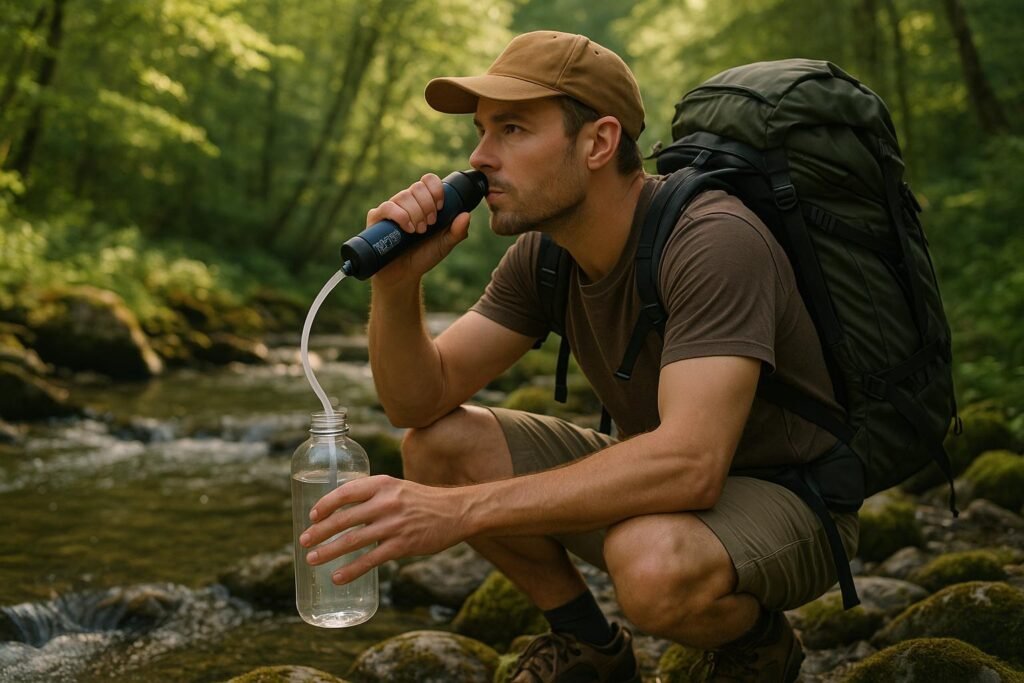
Looking for the best water filters for backpacking? Multi-use water filters are lightweight, flexible tools that can replace heavier gear while keeping your water safe from bacteria and protozoa. This guide highlights seven top-rated filters tested for U.S. trails.
Key Takeaways:
- Best for Solo Hikers: Sawyer Squeeze (3 oz) and Katadyn BeFree (2.3 oz).
- Best for Groups: Platypus GravityWorks 4L (11.5 oz) and Katadyn Gravity Camp 6L (10-12 oz).
- Virus Protection: MSR Guardian Purifier removes viruses, ideal for international or contaminated water.
- Budget-Friendly: LifeStraw Peak Squeeze ($35-$45) offers versatility at a low cost.
- Durability: Sawyer Squeeze lasts up to 100,000 gallons; MSR Guardian handles 10,000 liters with self-cleaning tech.
Quick Comparison:
| Model | Weight | Flow Rate | Capacity | Best For | Price |
|---|---|---|---|---|---|
| Sawyer Squeeze | ~3 oz | 1-1.5 L/min | 100,000 gallons | Lightweight solo use | $35-$45 |
| Platypus GravityWorks | 11.5 oz | 1.75 L/min | 4L (dirty + clean) | Groups (2-4 hikers) | $125-$140 |
| Katadyn BeFree | 2.3 oz | 2 L/min (clean) | ~1,000 liters | Ultralight solo trips | $45-$55 |
| LifeStraw Peak Squeeze | 3.2 oz | 1.5 L/min | 4,000 liters | Budget-friendly versatility | $35-$45 |
| MSR Guardian | 17.3 oz | 2.5 L/min | 10,000 liters | Virus protection, groups | $390-$400 |
| Katadyn Gravity Camp | 10-12 oz | 2 L/min | 6L reservoir | Basecamp, large groups | $90-$110 |
| MSR Trail Base Kit | 16 oz | 1-1.5 L/min | 1,500 liters | Hybrid pump + gravity use | $140-$150 |
Choose based on your trip needs: solo adventurers might prefer ultralight options, while groups benefit from gravity systems. For virus protection, the MSR Guardian is unmatched but heavier. Read on for detailed reviews of these top picks.
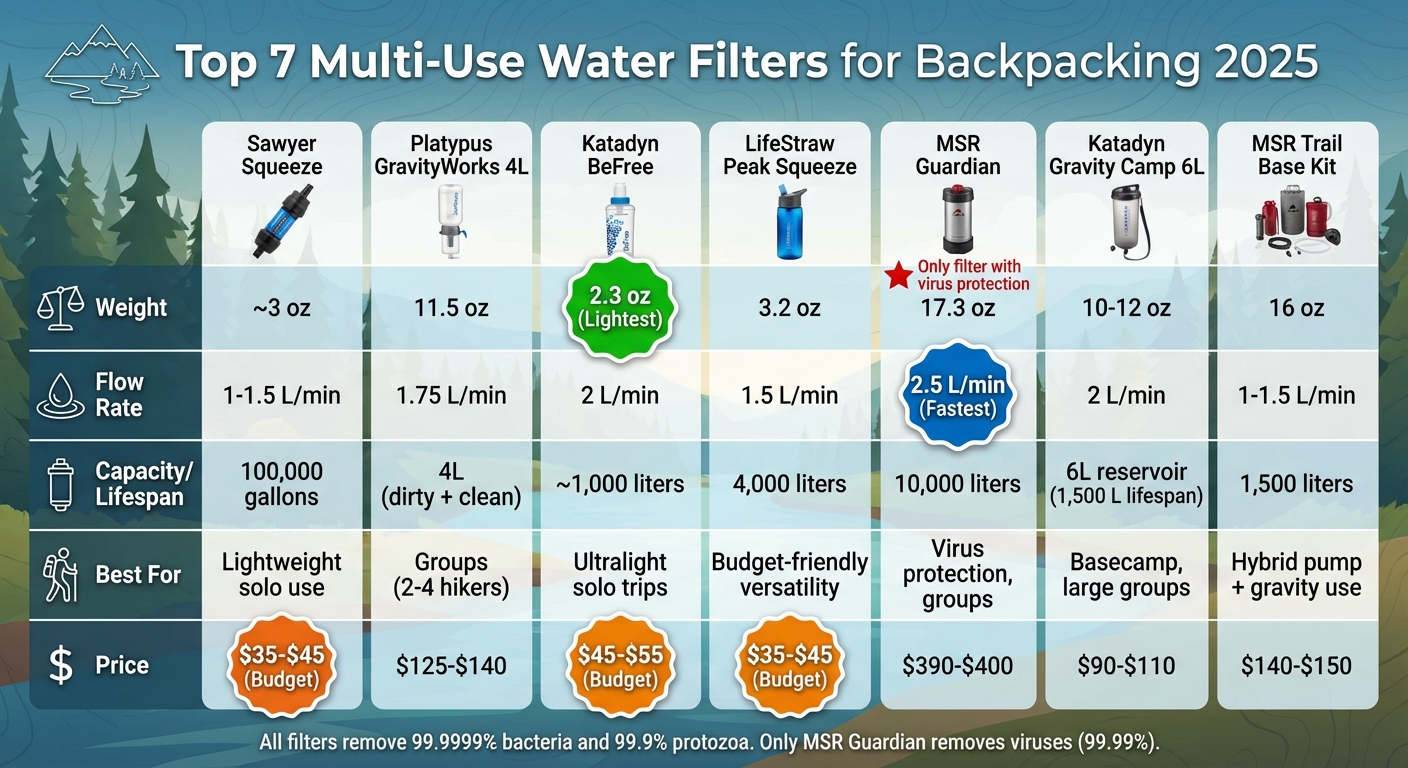
Comparison of Top 7 Backpacking Water Filters 2025: Weight, Flow Rate, and Price
I Tried 8 Hiking Water Filters From REI.. Here’s My Honest Review and Comparison
How To Choose A Multi-Use Backpacking Water Filter
When picking a multi-use backpacking water filter, it’s all about finding the right balance between performance, adaptability, and convenience. Here’s what to look for:
Start with effective filtration. Opt for filters that eliminate 99.9999% of bacteria and 99.9% of protozoa using 0.2-micron hollow-fiber membranes. If you’re dealing with more challenging water conditions, the MSR Guardian steps it up with 0.02-micron filtration, which even tackles viruses.
Flexibility is key for multi-use systems. The best filters can adapt to various setups, working as squeeze systems, gravity filters, hydration bladder attachments, or even direct-drink straws. For example, the LifeStraw Peak Series easily shifts between modes, while the Sawyer Squeeze pairs seamlessly with soft bottles like the Cnoc VectoX 2L, cutting down on the need for extra gear.
Weight and flow rate are two factors you’ll need to balance. If you’re aiming to keep things ultralight, the LifeStraw Peak Straw weighs just 2.3 ounces and delivers water at 1.5 liters per minute. For larger groups, consider options like the Platypus GravityWorks 4L (11.5 ounces, 1.75 liters per minute) or the MSR Guardian, which is heavier at 17.3 ounces but boasts a faster flow rate of 2.5 liters per minute.
Don’t overlook ease of maintenance. Backflushable systems, like the Sawyer Squeeze and HydraPak UltraFlask, are simple to clean with a syringe or coupler, restoring flow quickly. The MSR Guardian takes it a step further with self-cleaning through water recirculation. Filters with pre-filters, such as the Katadyn Gravity Camp 6L, can extend cartridge life to as much as 1,500 liters.
Lastly, consider cold weather performance. Hollow-fiber filters can crack if water inside them freezes. To avoid this, go for freeze-resistant models like the MSR Guardian, or make sure to store other types in a warm, dry place to prevent damage.
Keep these points in mind as you explore the systems detailed in the next sections. They’ll help you find a filter that fits your needs while keeping your backpack light and your water safe.
1. Sawyer Squeeze Water Filter System
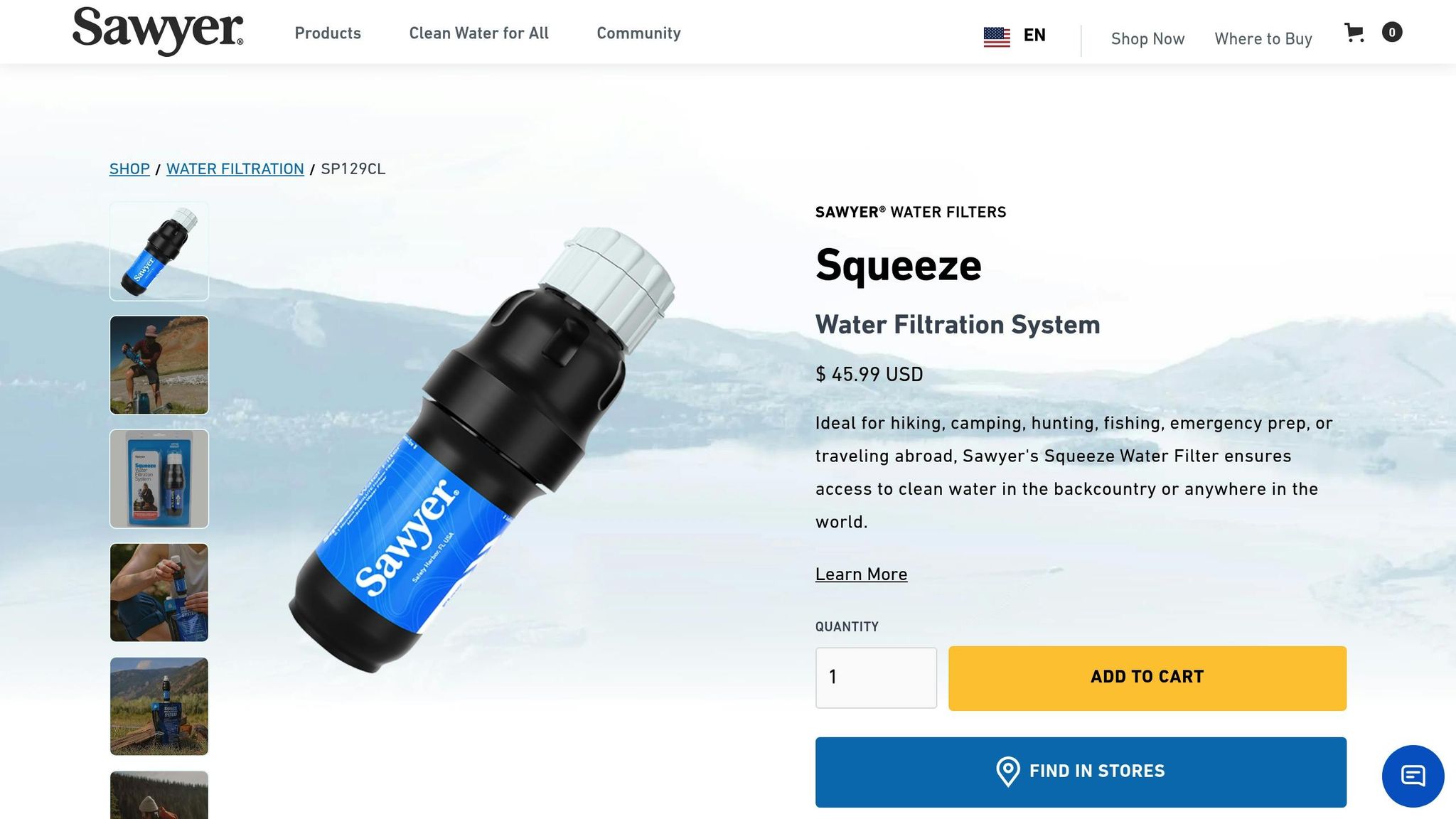
The Sawyer Squeeze is a go-to choice for many thru-hikers and backpackers exploring U.S. trails like the PCT, AT, and CDT. Even ultralight backpacking guru Adventure Alan swears by it as his primary filtration tool. Weighing just about 3 ounces (85 grams), it offers a flow rate of 1 to 1.5 liters per minute when filtering clean water.
Filtration and Purification Performance
This system uses a 0.1-micron hollow fiber membrane to filter out 99.99999% of bacteria (like E. coli), 99.9999% of protozoa (such as Giardia and Cryptosporidium), and microplastics as small as 1 micron. It meets EPA/NSF standards 42 and 53 for filtration. However, it’s important to note that the Sawyer Squeeze doesn’t remove viruses, chemicals, or heavy metals, as it functions as a filter rather than a full purifier.
Flexible Usage Options
The Sawyer Squeeze is designed with versatility in mind. You can use it as a squeeze filter with the included pouch, attach it directly to standard 28 mm bottles, or set it up inline with hydration tubing for a gravity filtration system. Pairing it with durable reservoirs like the CNOC Vecto or HydraPak UltraFlask can make it even more convenient and reliable.
Easy Maintenance and Long Lifespan
Maintaining the Sawyer Squeeze is straightforward. Backflushing with the included syringe every 1 to 3 uses helps keep the flow rate steady. With proper care, this little filter can last for up to 100,000 gallons (about 378,541 liters). Many users report years of dependable use on extended thru-hikes. Just be sure to store it dry and keep it safe from freezing temperatures, as wet hollow-fiber filters can crack in the cold.
Next, let’s take a look at another system that’s perfect for diverse backpacking adventures.
2. Platypus GravityWorks Filter System Four Liter
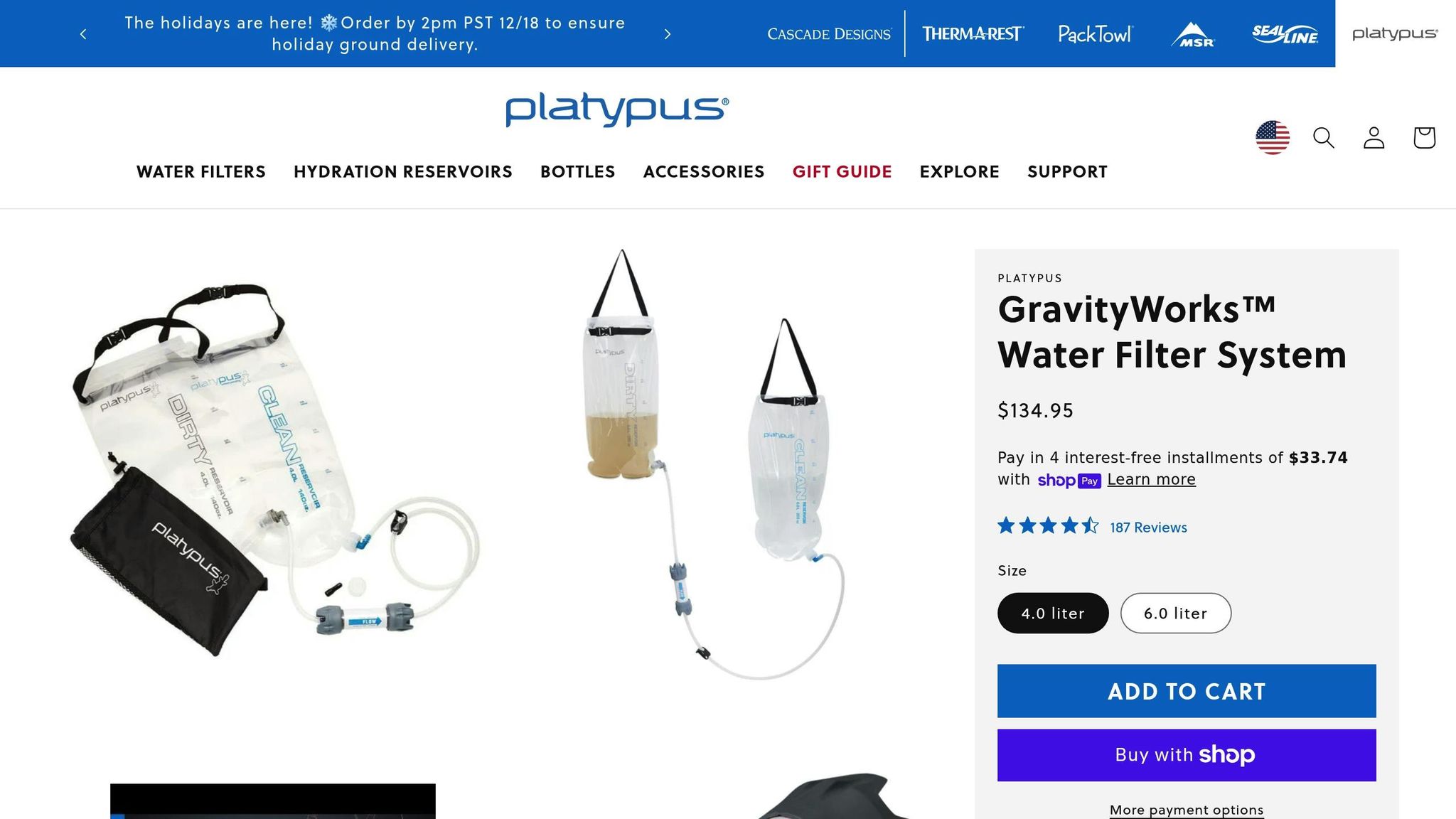
The Platypus GravityWorks 4.0L is a gravity-fed water filtration system designed with groups and basecamp setups in mind. Its detachable components make it versatile – use the hands-free gravity mode to fill multiple bottles or bladders effortlessly, or switch to the direct squeeze option for quick, on-the-go refills. This adaptability makes it a great choice for a variety of backpacking adventures.
Up next, we’ll dive into a lightweight filter perfect for solo hikers who like to move fast.
3. Katadyn BeFree Filter With Soft Flask
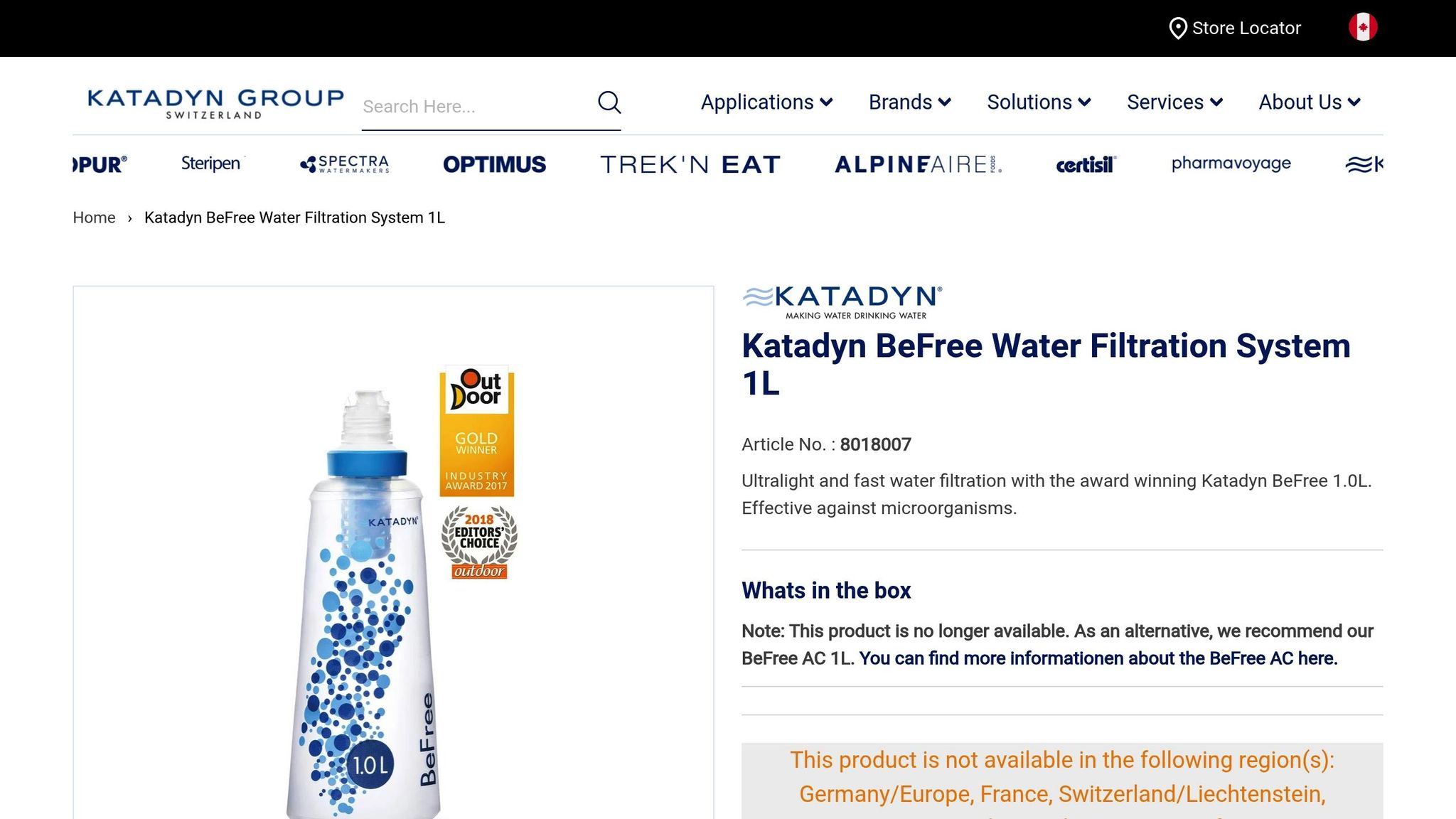
The Katadyn BeFree is a go-to choice for ultralight backpackers who prioritize speed and compact gear. At just 2.3 oz for the 0.6L version and 2.8 oz for the 1L version, it’s lighter than the Sawyer Squeeze and holds its own against the LifeStraw Peak Squeeze. These features make it a popular option for challenging U.S. thru-hikes like the Pacific Crest Trail.
Filtration and Purification Performance
Equipped with a 0.1-micron hollow fiber filter, the BeFree removes 99.9999% of bacteria, 99.9% of protozoa, and microplastics. However, it doesn’t filter out viruses or chemicals. This makes it ideal for typical U.S. wilderness sources, such as streams and lakes.
Versatility for the Trail
The BeFree adapts to different needs on the trail. You can drink directly from the soft flask, use it as a straw for shallow water sources, or attach it to standard 42-mm bottles and hydration packs with adapters. Many Pacific Crest Trail hikers mount the flask on their pack straps or pair it with Smartwater bottles to increase water-carrying capacity.
Weight, Capacity, and Flow Rate
This filter is known for its fast flow rate, delivering up to 2 liters per minute in clean water. In colder conditions (below 50°F) or silty streams, the flow rate can drop to about 0.5 liters per minute. Outdoor Gear Lab testers have praised this speed, especially for solo hikers. When not in use, the collapsible flask design packs down small, making it perfect for minimalist setups.
Field Maintenance and Lifespan
The BeFree filter is rated for 1,000 liters (around 264 gallons), though real-world use often lands between 500 and 800 liters with proper care. Maintenance is simple: shake or swish it in water to clear debris, or use a syringe for backflushing. For longer trips, daily shaking can help maintain performance. When the filter reaches its limit, replacement cartridges are available separately.
Next, we’ll take a closer look at another filter designed for diverse trail challenges.
4. LifeStraw Peak Squeeze and Peak Straw Systems
The LifeStraw Peak series offers two practical options: the Peak Squeeze, which works as a traditional squeeze filter, and the Peak Straw, designed for direct sipping. Both rely on the same advanced technology to cater to various backpacking needs. Outdoor Gear Lab even named the Peak Squeeze a top choice for solo backpackers and day trips, applauding its speed and water quality. Let’s dive into what makes these systems stand out.
Filtration and Purification Performance
Both systems are equipped with a 0.2-micron hollow fiber membrane, which removes 99.9999% of bacteria and 99.9% of protozoa. They meet stringent U.S. EPA and NSF/ANSI P231 standards for microbiological water purification. Reviewers frequently highlight the Peak Squeeze for producing exceptionally clear and clean water. Plus, its updated cartridge design is better at resisting clogs, especially in silty streams often found in the Western U.S.
Multi-Mode Versatility
The Peak Squeeze is compatible with standard 28mm bottles, such as Smartwater bottles – a favorite among ultralight hikers. You can use it in multiple ways: squeeze water directly from soft flasks, set up a simple gravity system by hanging the dirty reservoir to let water flow into clean containers, or opt for the Peak Straw for direct sipping or in-line hydration setups. This combination of straw, squeeze, and gravity methods earned the Peak Series the title of "Most Versatile Filter" from Backpacker magazine.
Weight, Capacity, and Flow Rate
The Peak Straw weighs just 2.3 oz and offers a flow rate of 1.5 liters per minute. The Peak Squeeze, weighing 2-4 oz depending on configuration, delivers even faster water flow. Both systems are compact, folding down to about the size of an energy bar, making them easy to pack. Lab tests have confirmed that the Peak Squeeze is among the fastest squeeze filters available in 2025, making it perfect for solo hikers who need to quickly fill 1-2 liter bottles during water stops. For larger groups, a dedicated gravity system like the Platypus GravityWorks may be better suited, as it handles higher volumes with less physical effort.
Field Maintenance and Lifespan
The Peak Straw is rated to filter up to 4,000 liters, while the Peak Squeeze can last through multiple backpacking seasons with proper care. Regular backflushing helps clear out silt and maintain flow, even when filtering from murky sources. Thanks to its improved design, the Peak Squeeze clogs less frequently than older hollow fiber filters, meaning you won’t need to backflush as often. To prevent damage, keep the filter from freezing temperatures. After your trip, make sure to drain and air-dry the filter thoroughly to avoid odors and microbial growth.
sbb-itb-5a98267
5. MSR Trail Base Water Filter Kit
The MSR Trail Base Water Filter Kit is a versatile system designed to meet the needs of campers who frequently cook and move between campsites. This hybrid setup combines a gravity filter for campsite use with a detachable filter for hydration on the go. At camp, you can hang the dirty water reservoir to filter several liters for cooking or refilling bottles. When you’re on the move, the detachable filter allows for quick sips or single-bottle refills without the need to set up the full gravity system. It’s a practical solution that balances campsite convenience with trail-ready hydration.
Filtration and Purification Performance
Equipped with a 0.2-micron hollow-fiber filter, the Trail Base effectively removes 99.9999% of bacteria and 99.9% of protozoa, as well as sediment and particulates from water sources. However, it’s important to note that it does not remove viruses. If you’re in areas where viruses are a concern, pairing the filter with a chemical treatment is recommended for added safety.
Multi-Mode Functionality
The Trail Base excels in its dual functionality. For campsite use, the gravity filter system utilizes paired reservoirs (usually 2–4 liters each) to process enough water for multiple hikers. It’s perfect for filling bottles, cooking meals, and making hot drinks for 2–3 people. On the trail, the detachable filter serves as a handheld unit, allowing you to drink directly from water sources or quickly fill a single bottle. This adaptability makes it a reliable choice for both stationary and on-the-go hydration needs.
Weight, Capacity, and Flow Rate
Weighing approximately 16.3 ounces, the system offers a flow rate of 1–1.5 liters per minute, depending on how it’s being used. While gravity flow may slow down in silty or cold conditions, it still outperforms traditional hand-pumping methods for group use. The filter cartridge has an impressive lifespan, rated for up to 1,500 liters. For a solo hiker consuming about 3 liters daily, this translates to roughly 500 days of use. For a group of three, it provides around 165 days of filtration.
Field Maintenance and Care
Maintaining the Trail Base in the field is straightforward. The hollow-fiber filter can be backflushed using clean water from your bottle or reservoir, a quick and tool-free process. To keep it functioning efficiently, backflush the filter as soon as you notice a decrease in flow. Collecting water from clear sources helps minimize sediment buildup, extending the filter’s lifespan. Between trips, store the system dry, and in cold conditions, protect the wet filter from freezing to avoid damage.
6. MSR Guardian Purifier System
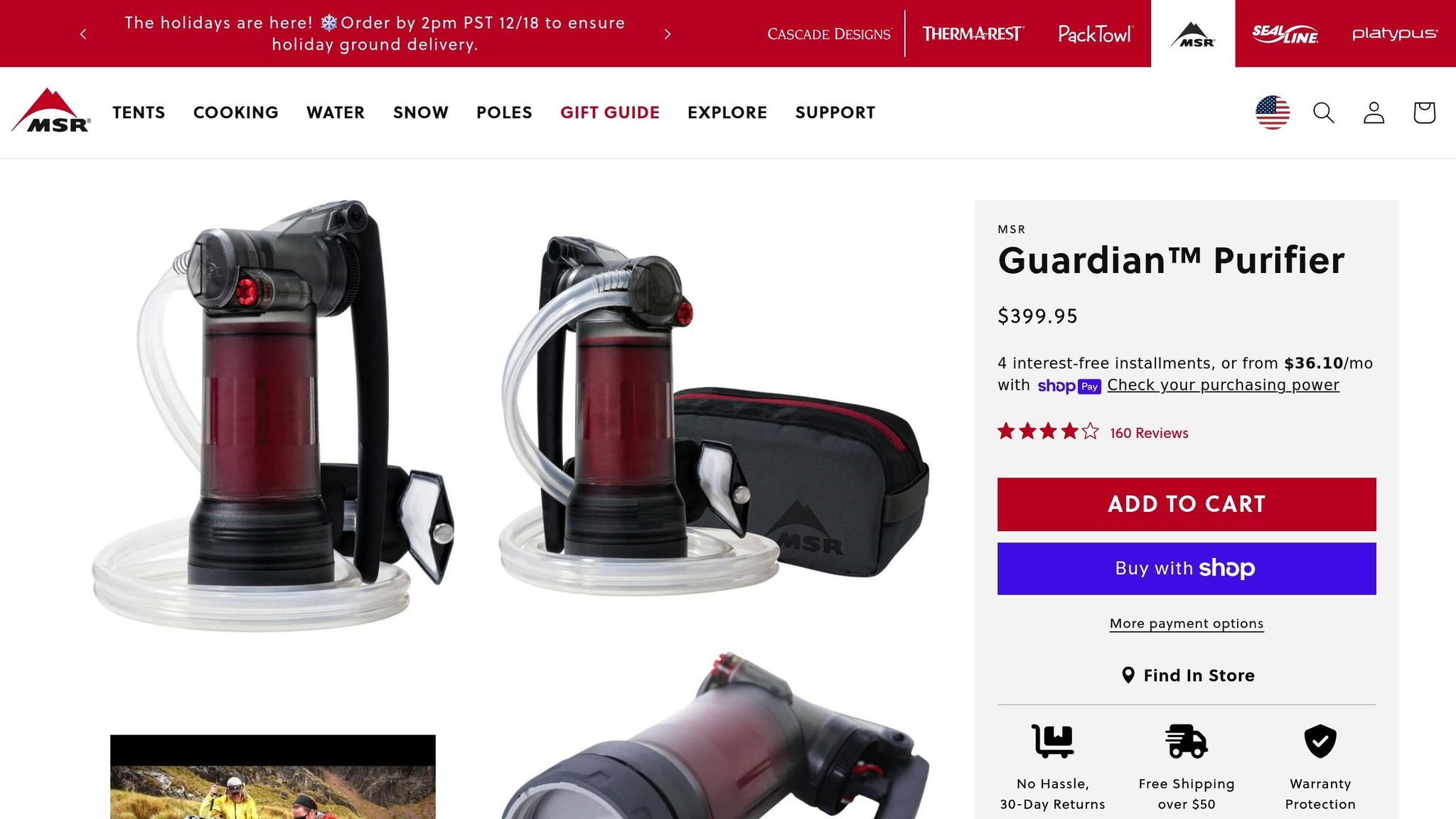
The MSR Guardian Purifier System is built for handling some of the most contaminated water sources out there. Unlike most backpacking filters, the Guardian is a true purifier, meeting U.S. EPA standards by removing 99.99% of viruses, 99.9999% of bacteria, and 99.9% of protozoan cysts. Originally developed for the U.S. military, it’s designed for extreme conditions like heavily polluted water from livestock, sewage, or floodwaters. While it’s overkill for the typical U.S. mountain stream, it’s unmatched when maximum protection is non-negotiable. Let’s dive into what sets it apart from standard filters.
Filtration and Purification Performance
The Guardian uses a 0.02-micron hollow-fiber filter, offering a pore size far finer than most standard filters. This extra-tight filtration can remove viruses, along with bacteria, protozoa, and sediment. It’s no wonder Backpacker magazine called it "Best for Really Bad Water" in their gear roundup, praising its ability to handle flood zones, livestock-contaminated areas, and sewage-polluted sources often found in developing countries. If you’re guiding a group or traveling internationally in areas with questionable water quality, the Guardian provides a level of safety that standard filters just can’t match.
Multi-Mode Versatility
The Guardian isn’t just about top-tier purification – it’s also highly versatile. As a pump purifier, it draws water through an intake hose and delivers clean water into wide-mouth bottles, hydration bladders, or larger containers. This makes it practical for both quick water refills on the trail and larger-scale use at basecamp. It’s efficient enough for a single person to pump water for multiple bottles or cooking pots. Many hikers rely on it as their main system at camp while carrying a smaller squeeze filter for solo day hikes or as a backup option.
Weight, Capacity, and Flow Rate
Weighing in at 17.3 ounces, the Guardian is heavier than most filters, but it makes up for it with a blazing-fast flow rate of 2.5 liters per minute – one of the fastest available. For groups of two to four hikers, this speed is a game-changer, drastically reducing water-stop times on long days. The filter cartridge is rated for an impressive 10,000 liters, far outlasting the typical 1,500–4,000 liters of most competing systems. At $390–$400, it’s a pricey investment, but for guides, expedition leaders, or frequent international travelers, its durability and extended lifespan make it worth considering.
Field Maintenance and Lifespan
What really sets the Guardian apart is its self-cleaning mechanism. With each pump stroke, a small amount of water backflushes the filter automatically, keeping it clog-free and maintaining its fast flow rate without requiring manual cleaning. This feature is especially valuable in silty or glacial water, where other filters often need constant backflushing with a syringe. Most users find they never need to disassemble or manually clean the system. Plus, it’s more resistant to freezing temperatures than traditional hollow-fiber filters, making it a reliable choice for shoulder-season or winter trips when temperatures dip below freezing. For extended adventures in tough conditions, this low-maintenance design is a huge advantage.
7. Katadyn Gravity Camp Six Liter System
The Katadyn Gravity Camp 6L is built for group adventures or basecamp setups, offering a hassle-free way to filter large quantities of water without the need for manual pumping. With its 6-liter reservoir and gravity-fed design, you can simply hang it from a tree or shelter and let gravity do the work. Priced around $90 and weighing 10–12 oz, it’s best suited for group outings or multi-day basecamps rather than solo, ultralight trips.
Filtration and Purification Performance
This system uses a 0.2-micron hollow-fiber Ultra Flow Filter to remove 99.9999% of bacteria, 99.9% of protozoan cysts, and sediment, meeting U.S. backcountry water safety standards. It’s effective against common threats like Giardia and Cryptosporidium, making it ideal for streams and lakes in North America. However, it doesn’t filter viruses, so it’s not classified as a purifier like the MSR Guardian. Still, for most backpacking needs, this level of protection is more than sufficient. The hollow-fiber design also boasts an impressive flow rate of up to 2 liters per minute, which is comparable to many pump filters but without the physical effort.
Versatility for Group Use
The Gravity Camp system simplifies the process of filtering water in bulk. After filling the bag, you just hang it at head height or higher and use the hose clamp to control the flow of water into bottles, cooking pots, or clean reservoirs. Many users place it near their cooking area for easy access during meal prep or hydration breaks. Additionally, it can be paired with personal squeeze or straw filters, allowing individuals to stay hydrated on the go while the gravity system takes care of the larger water needs back at camp.
Weight, Capacity, and Flow Rate
Weighing in at 10–12 oz, the Gravity Camp strikes a balance between portability and capacity. While it’s heavier than minimalist 2–3 liter gravity systems, its 6-liter (1.6-gallon) capacity makes it a strong choice for groups. The 2 L/min flow rate allows you to filter enough water for meals and hydration with just one or two refills, making it ideal for groups of 2–6 people or activities that require a lot of water, like multi-day rafting trips.
Maintenance and Longevity
The filter cartridge is designed to handle up to 1,500 liters of water, and the system includes a pre-filter sleeve to capture larger particles before they can clog the hollow fibers. Regularly rinsing this sleeve in the field helps maintain a steady flow rate and extends the filter’s lifespan, which is particularly important when dealing with silty or algae-filled water. If the flow slows, start by cleaning the pre-filter, checking for hose kinks, and ensuring the bag is hung high enough to maximize pressure. Keep in mind, though, that the cartridge isn’t designed for aggressive backflushing, so once fine sediment or biofilm clogs it, cleaning will only restore partial performance. Treat the 1,500-liter lifespan as a maximum estimate and plan to replace the filter sooner if you frequently use murky water sources.
This wraps up our look at the Katadyn Gravity Camp 6L, a reliable choice for group adventures and basecamp setups.
Comparison Table
Here’s a detailed side-by-side look at seven multi-use water filters to help you weigh their features, strengths, and trade-offs. This table covers filter type, usage modes, weight, capacity, group size suitability, protection levels, advantages, limitations, and U.S. price ranges.
| Model | Filter Type | Usage Modes | Weight | Capacity | Group Size | Protection | Main Advantages | Key Limitations | Price Range |
|---|---|---|---|---|---|---|---|---|---|
| Sawyer Squeeze | Squeeze filter (0.1 micron) | Squeeze, in-line, gravity-compatible, direct drink | ~3 oz | Pairs with 1–2 L containers | Solo / 1–2 hikers | Bacteria, protozoa | Lightweight, reliable, long-lasting, versatile mounting options | Needs regular backflushing; slower for groups; no virus removal | $35–$45 |
| Platypus GravityWorks 4L | Gravity filter (0.2 micron) | Gravity system, bottle/bag filling | ~11.5 oz | 4 L dirty + 4 L clean bags | 2–4 hikers | Bacteria, protozoa | Hands-free, high volume, fast flow (~1.75 L/min), easy to maintain | Bulkier than squeeze filters; requires hanging; can’t freeze when wet | $125–$140 |
| Katadyn BeFree | Squeeze filter (0.1 micron) | Soft-flask squeeze, bottle-top, simple gravity | ~2–2.3 oz | 0.6–1.0 L flask | Solo / 1–2 hikers | Bacteria, protozoa (99.9%) | Fast flow (~2 L/min when new), compact, great for on-the-go use | Shorter lifespan (~1,000 L); flask durability concerns; flow slows in silty water | $45–$55 |
| LifeStraw Peak Squeeze | Squeeze filter (0.2 micron) | Squeeze, straw, gravity-compatible, direct drink | ~3.2–3.5 oz | 1 L pouch | Solo / 1–2 hikers | Bacteria, protozoa | Versatile, durable, good flow, well-tested | Lower capacity than Sawyer; less efficient for groups; no virus removal | $35–$45 |
| LifeStraw Peak Straw | Straw filter (0.2 micron) | Straw, bottle-compatible, basic gravity setups | ~2.3 oz | No integrated reservoir (4,000 L service life) | Solo / emergency use | Bacteria, protozoa | Lightweight, simple, long-lasting, flexible attachment options | Not ideal for filling pots or bottles; straw mode less practical for extended use | $25–$30 |
| MSR Trail Base Kit | Modular filter (pump + gravity) | Hand-pump and gravity system at camp | ~15–16 oz | 2 L reservoir | 2–4 hikers | Bacteria, protozoa | Combines pump and gravity options, balanced flow (~1–1.5 L/min), field-serviceable | Heavier, more complex, pricier; no virus removal | $140–$150 |
| MSR Guardian | Pump purifier (0.02 micron) | Hand pump to bottles or hydration systems | ~17 oz | Pump-style (2.5 L/min flow) | 2–6 hikers / expeditions | Bacteria, protozoa, viruses (99.99%) | Removes viruses, fast flow, self-cleaning, handles turbid water | Expensive, heavy, bulky; overkill for most U.S. trips | $390–$400 |
| Katadyn Gravity Camp 6L | Gravity filter (0.2 micron) | Gravity basecamp system for bottle or pot filling | ~10–12 oz | 6 L reservoir | 4+ hikers / basecamp | Bacteria, protozoa | Large capacity, fast flow (~2 L/min), long lifespan (~1,500 L) | Bulky when packed; needs hanging; flow slows near end of life; no virus removal | $90–$110 |
Choosing the right filter depends on your trip style, group size, and budget. Solo ultralight hikers often favor the Sawyer Squeeze or Katadyn BeFree for their portability. Groups of 2–4 can benefit from the Platypus GravityWorks 4L or MSR Trail Base Kit, offering faster, hands-free filtration. Larger groups or basecamp setups might lean toward the Katadyn Gravity Camp 6L for its high volume, while those requiring virus protection should look at the MSR Guardian – the only model here that tackles viruses.
Conclusion
Selecting the right water filter boils down to aligning the system with your specific trip needs. For solo hikers, compact and lightweight options like the Sawyer Squeeze or Katadyn BeFree are excellent choices. They’re designed to be portable and efficient, making them ideal for individual use. If you’re traveling in a group of two to four, gravity systems such as the Platypus GravityWorks 4L are hard to beat. These systems offer hands-free operation and can handle multiple tasks like cooking, coffee prep, and refilling bottles without requiring constant effort. For larger groups, families, or basecamps, higher-capacity filters like the Katadyn Gravity Camp 6L are better suited. With the ability to filter 6 liters at around 2 L/min, it ensures everyone stays hydrated without delays.
Water quality is another critical factor to consider. For most U.S. streams, a standard filter will suffice. However, if you’re venturing internationally, filtering water from livestock areas, or relying on heavily trafficked sources, a purifier like the MSR Guardian is a smart investment. It removes viruses and filters at 2.5 L/min, offering peace of mind despite its higher weight and price point of $390–$400.
When deciding, weigh factors like weight, flow rate, capacity, and maintenance against your trip style. Ultralight hikers might prioritize saving ounces over speed, while weekend campers may prefer the convenience of a larger gravity system for added comfort. Always test your filter at home before heading out, and pack backup purification tablets for emergencies.
From solo-friendly filters to basecamp-ready systems, this guide provides a range of options to suit your group size, water sources, and backpacking goals. Safe water doesn’t have to be a hassle – choose the right filter, and you can focus on enjoying the adventure ahead.
FAQs
What’s the difference between a water filter and a water purifier?
A water filter is designed to remove contaminants such as bacteria, protozoa, and sediment, ensuring the water is safe for consumption. A water purifier, however, takes it further by also targeting viruses and other microscopic pathogens, providing an extra level of safety.
If you’re heading to regions where waterborne viruses might be a concern, opting for a purifier is the better option. In most backcountry areas within the U.S., though, a filter usually meets the needs effectively.
What’s the best way to maintain my water filter for long-term use?
To keep your water filter working well, regular upkeep is essential. After every use, make sure to clean the filter according to the manufacturer’s instructions. This usually means backflushing or rinsing it with clean water to clear out any dirt or debris. Also, don’t forget to replace the filter elements as recommended – whether that’s after processing a certain amount of water or within the suggested time period. Staying on top of this ensures your filter remains effective.
Storage matters too. Always allow the filter to dry out completely before putting it away in a cool, dry spot. This simple step helps prevent mold and bacteria from forming. By following these tips, you’ll not only extend the life of your filter but also keep it running smoothly.
What is the best water filter for backpacking abroad?
For international backpacking, having a lightweight, reliable, and versatile water filter is a must. Models like the Sawyer Mini and MSR Guardian are favorites among travelers for their sturdy build, user-friendly design, and ability to handle different water sources. These filters effectively remove harmful bacteria, protozoa, and other contaminants, making them a great choice for various environments.
When selecting a water filter, think about its size, weight, and how well it suits the types of water sources you’ll encounter during your trip. This ensures it meets your specific travel requirements.