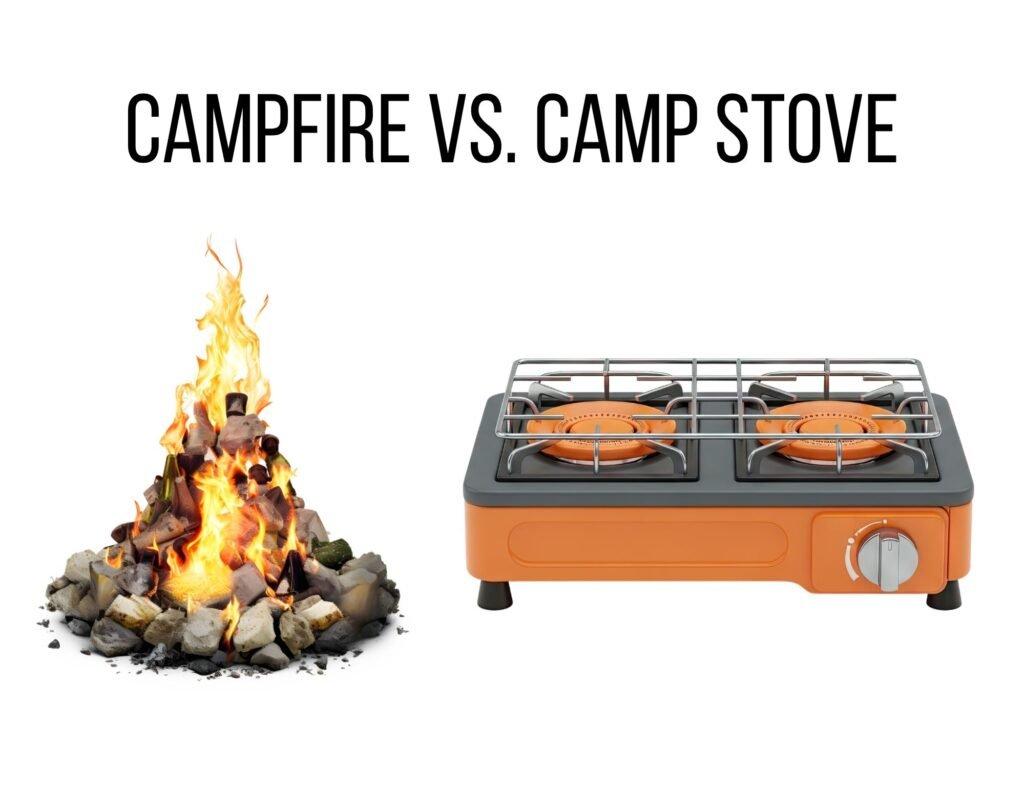
One of the greatest experiences someone can have when camping or hiking is indulging in a meal under the stars or surrounded by nature, letting the flavors and moment culminate into something that etches itself into your mind.
The process of getting this set up can be tedious on either side of the fence when using a campfire or a camp stove, as the pros and cons of the two balance out quite nicely, but rules, regulations, and safety hazards might have you leaning more towards the stove than the campfire. We’ll delve more into that below.
Main Differences Between Cooking Over a Campfire vs. A Camp Stove
On a surface level, one of the biggest differences between the two would be the ability to regulate the fire’s actual temperature constantly. This defines how your meals are cooked, and the overall stability allows you to make a wider variety of foods without the risk of burning.
On top of that, a camp stove will not expose the food to things like leaves, sticks, or other natural things that might find their way onto an open flame, whereas that may happen over a campfire.
Even still, you have to consider the environmental impact, different flavorings, cooking times, cleanup requirements, and the weather. Because there is so much to cover, we have provided more details below.
1. Environmental Impact
When using a campfire, even the most experienced campers or hikers should exercise extreme caution. This is because a single mistake in either the preparation or the extinguishing of the fire could be disastrous.
Opting not to have a quick method to put the fire out, skipping an opportunity to soak the ground around the campfire (to prevent it from spreading, or kindlings from popping out), and forgoing a small bit of leaf raking to prevent unexpected burns, all of these choices can cause a wildfire, and become problematic to say the least.
Assuming the fire itself wasn’t a big enough problem, some people are very prone to burning their garbage instead of carrying it with them until they leave. On the surface, this might sound like a simple solution, especially for things like cardboard, paper, and the like.
However, the issue arises when plastics, rubber, and other hazardous items are thrown into the mix, contaminating the area and potentially endangering you and local wildlife.
2. Flavor
Flavor is a major contender in campfire cooking. There’s just something special about getting that first bite of a smoky piece of meat that can alter your entire day, whether it’s picking you up when you’ve been struggling or heightening an already amazing trip.
Granted, not everyone enjoys smoky flavors in their food. Some people might not want to go through the hassle or prep work to make it happen, which is entirely understandable. To that end, more conventional meals that allow people to tailor their food more closely to what they would make at home tend to sound a little more savory.
The final bit here is optional, but the way you season your food can heavily affect how it tastes at the end of the day. To that end, some people think that, simply because they are cooking over a campfire, they shouldn’t bother seasoning their food.
Shooting for an “All Natural” flavor is fine, but do not deny yourself the opportunity to enjoy a marinated cut of meat that you managed to get to the campsite, then char over an open flame whilst enjoying a good look at the stars. Few things can make someone feel more complete than the serenity enjoyed in such a moment.
3. Cooking Time
When using an open flame, it is very difficult to estimate how long something should cook. How strong your fire is, winds, and other variables can add a lot of complexity to even the most basic meals you are attempting to cook.
Camp stoves, on the other hand, can have their flames easily adjusted to specific temperatures, allowing you not only to guarantee that whatever cut of meat you are cooking is cooked to your desired specifications, but also, more importantly, to time everything to keep a more organized schedule.
4. Clean Up
While you won’t technically need to worry about sanitizing the charred remnants of a campfire before moving on, you will need to take the steps required to ensure the flame itself is fully put out and that there are no lingering embers, or possible kindlings, leaf litter, or other hypothetical issues that might crop up after you and your group have moved on.
Bringing things like a shovel, a bucket of water, and a spare trash bin to collect anything that may have been left around the campsite will prove invaluable for safely putting the fire out and leaving no trace of yourself behind for animals or nature to suffer later.
In the event you use a camp stove, you’ll need to take it apart to whatever capacity you can, scrub the grill, safely disconnect whatever you were using for fuel, and put any additional plates, seasonings, and cookware you were using away, which can be slightly less time-consuming than a campfire. Still, you have the traded effect of carrying it there in the first place.
5. Cookware Requirements
Technically speaking, the only thing you “need” to cook over a fire, utensil-wise, is a nice stick, useful for skewering whatever meats and vegetables you want to make, or a rock to balance a can of your choice on, simplistic, but obviously a solid choice.
Camp stoves give you a greater range of expression on not only how you cook, but what, meaning you can come as prepared as you like, bringing your spatula, cutlery, tongs, forks, knives, literally anything you can make use of in the kitchen assuming your stove has the room for it, even a gigantic pot (if safely mounted), can be used for making large quantities of soup, so maybe even a ladle could find a use in such a situation.
6. Weather Dependency
Perhaps the only real bane on a campfire chef’s list, weather oddities, while a slight drizzle won’t completely put your flame out, it could make the task of starting one more annoying, and if the small bit of rain were to evolve into a storm, your camping experience, and dinner could very well be ruined depending on how talented you are at starting fires in such a situation.
You could hypothetically bring things that let you overcome these odds. Still, maintaining a fire in a downpour is incredibly hard (you’d almost need a roaring flame to keep it going). More importantly, you’d be left exposed to the elements while cooking your meal.
Some methods let you use the remnants of a flame, like wrapping your food in aluminum foil and placing it in the heart of the old fire, letting the residual heat cook it over an admittedly longer period, but that takes skill. No one knows how to do it properly without getting ash and dirt in your food.
Camp stoves, on the other hand, don’t suffer nearly as much from odd weather. Certain conditions, like extreme heat or cold, can be problematic depending on your fuel source, but if you were planning on camping, you more than likely already considered that, so you should be in the clear.
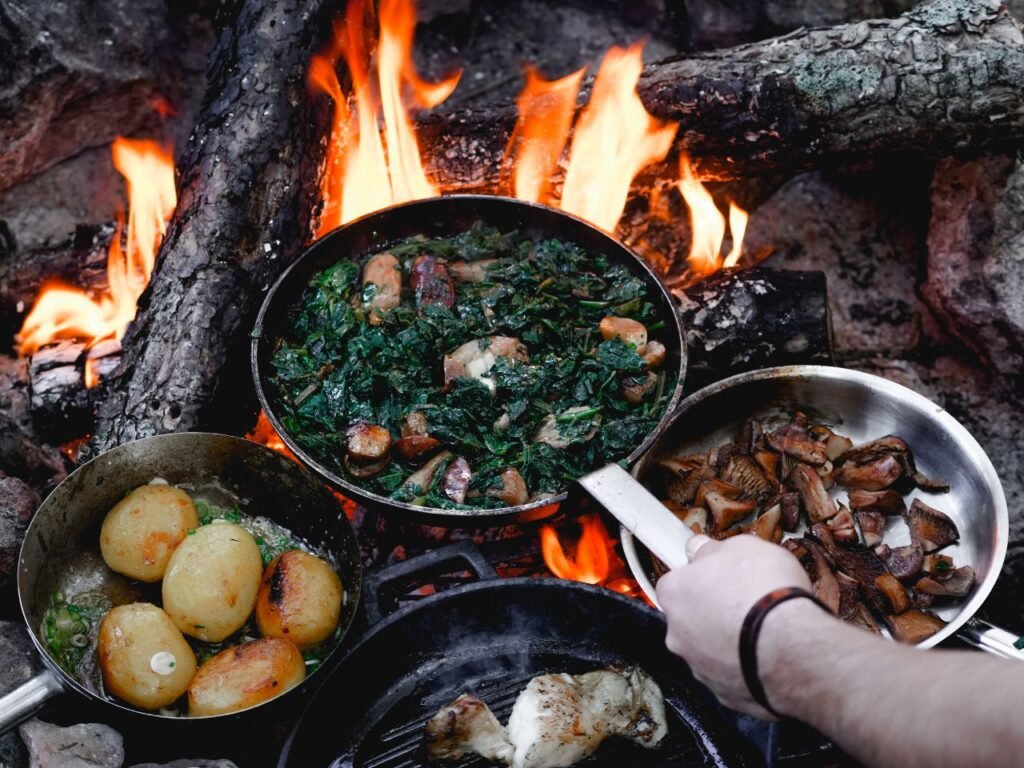
The Pros and Cons of Cooking Over a Campfire
There are many pros and cons to cooking over a campfire. Let us take a look at them down below.
| Pros | Cons |
| Requires just the raw ability to start a fire to get some cooked food going. | You’ll need to designate a location and set it up to be safe in case of a fire. |
| Can elevate the taste of your food if you love smoky flavors and textures. | Both igniting and extinguishing the fire should only be done by someone knowledgeable. |
| Skips hauling heavy equipment to your desired location. | Depending on where you live, you may not even be able to start the fire because it’s illegal. |
| The fire itself can be a great source of warmth. | Clean-up can be a real hassle, depending on how large the fire is and whether it’s guaranteed to be out. |
| Cannot control the temperature of the foods you make. |
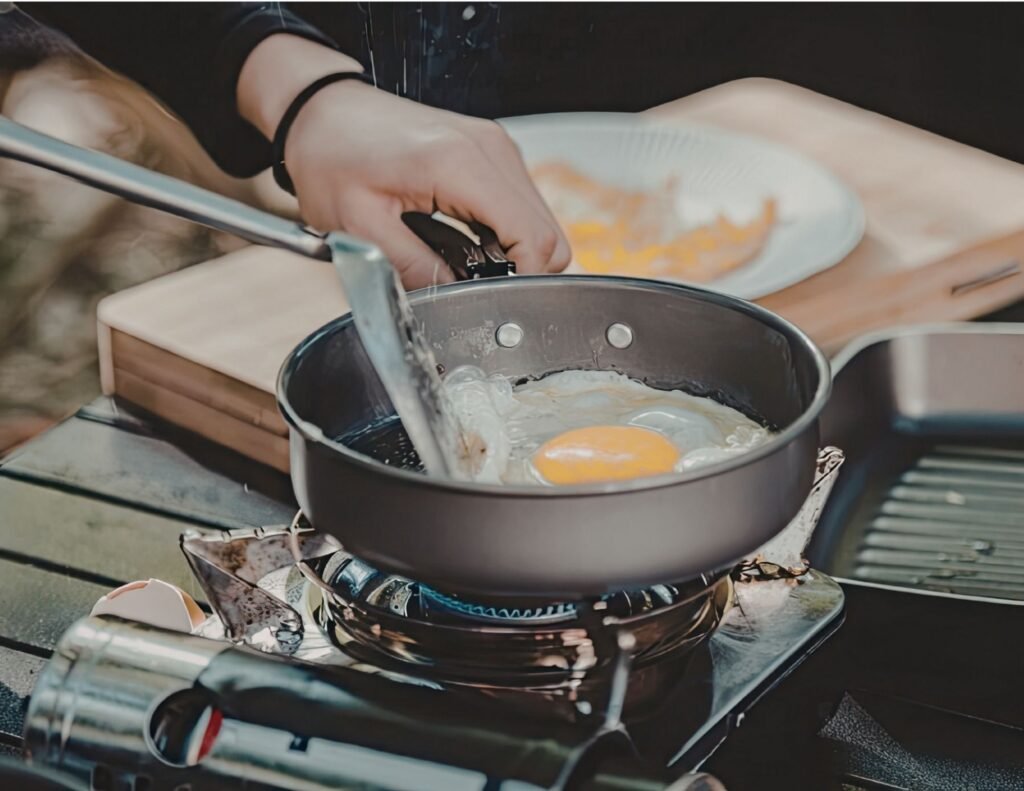
The Pros and Cons of Cooking Over a Camp Stove
On the other hand, camp stoves have both pros and cons. As we did above, we have created an easy-to-read table for you below.
| Pros | Cons |
| You gain the ability to precisely control the temperature of anything you make. | Carrying it to the site is annoying and adds additional weight to whatever you are bringing. |
| Unlike the campfire, you can bring them out regardless of fire bans in most cases. | Said weight is made even greater when considering fuel canisters that need to be lugged. |
| After getting it to the site, the setup is fast, and you’ll be working towards your meal in minutes. | Unlike the ambient warmth of a campfire, the stove is small by comparison. |
| Clean-up is quick and easy, especially if you intend to do the full scrub-down at home. | They don’t write romance novels about looking at the stars by a camp stove. |
What Are Some Tips for Choosing Which Cooking Style to Go With?
Before leaning heavily into one pick or another, it’s good to envision your trip in your mind, and check what kind of weather you’ll need to be dealing with, and more importantly, whether or not there is a fire ban in your area, as these few choices will have a much greater impact on what you are, or aren’t allowed to bring and cook with.
If your trip is going to require you to travel on foot for a long time, you’ll probably be better off making the campfire on-site, as you could easily exhaust yourself or your friends and family by hauling the camp stove to the location.
Conversely, bringing a shovel and a spare bucket (and being mindful of local water sources to fill it) could be a chore, too, depending on the distance from the campsite to the water source, so extinguishing the flame could be problematic, too.
Heavily forested locations also aren’t exactly ideal for campfire cooking, as the smoke, ash, and small embers that get kicked up can be problematic for the animals that are definitely going to be near you. It only takes one small ember settling on a bush or tree for things to go bad.
What Are Some Common Challenges to Outdoor Cooking?
In most situations, cleanup accounts for the vast majority of the difficulty in outdoor cooking. There is something to be said about having your food cooked to your liking, but if it’s not your first time, you can tell quite a bit about its condition visually, especially with red meats.
Additionally, things like making your campfire or hauling the camp stove can prove daunting initially. Still, they can be made easier by distributing the labor amongst friends and family, making it much more of a team effort and ultimately having everyone feel as if they’ve done their part in making the experience possible, which is a moral boost in itself.
If you are camping and cooking over an open flame, you may very well have to contend with flies, mosquitoes, and other bugs attempting to assail you or your food throughout the duration, with other annoyances like falling pinecones, leaves, or even the occasional raccoon (entirely random, but definitely possible).
Do Most Campers Use Both Cooking Styles?
Assuming their state and location allow them to do so legally, yes, most people love utilizing both, if they have access to the camp stove, certain food items are just too easy to make on them even to bother attempting to cook them on a camp fire, and in these situations, people use the campfire for warmth, or skewering some hotdogs, marshmallows, or other simple foods.
Conclusion
You won’t necessarily go wrong regardless of which type of method you go with to cook your food, as at the end of the day you’ll still be fed and taken care of, the bigger concern then becomes how safe are you, and those around you, and can you make a camp fire legally where you are at, assuming you’ve followed the rules, you are in for a delightful time regardless!