
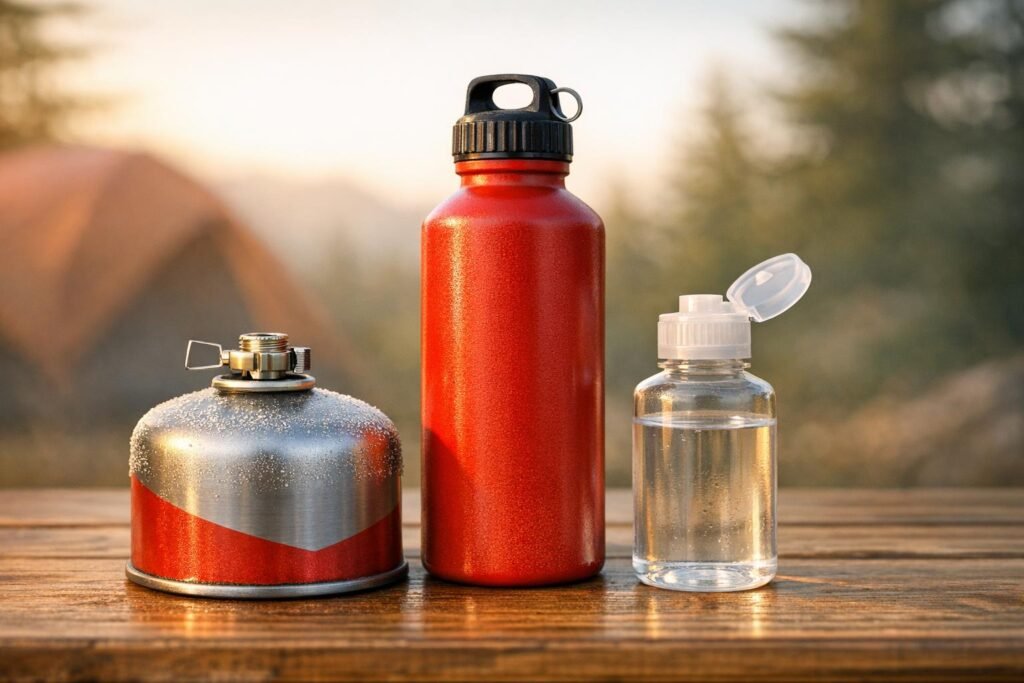
Choosing the right fuel container can make or break your backpacking trip. A reliable container ensures safety, prevents leaks, and protects your gear from damage. Here’s what to consider:
- Safety: Look for self-sealing valves, child-resistant caps, and leak-proof designs to avoid spills or fire hazards.
- Weight & Portability: Lightweight options like isobutane canisters are ideal for short trips, while refillable liquid bottles offer flexibility for longer adventures.
- Material Durability: Aluminum and titanium are strong yet lightweight, while stainless steel is better for rugged conditions. Plastic bottles work well for short trips with alcohol fuel but require modifications for safety.
- Fuel Compatibility: Match the container to your fuel type – white gas, isobutane, kerosene, or alcohol. Cold-weather trips may require specific blends like isobutane-propane.
Quick Comparison
| Container Type | Best For | Weight (oz) | Price Range (USD) | Fuel Type |
|---|---|---|---|---|
| MSR Fuel Bottles | Long trips, liquid fuel | 5.0–8.0 | $23–$31 | White Gas, Kerosene |
| MSR IsoPro Canisters | Cold weather, short trips | 3.5–15.9 | $5–$15 | Isobutane/Propane |
| Snow Peak GigaPower | 3-season backpacking | 3.5–8.8 | $6–$12 | Isobutane/Propane |
| Nalgene Travel Bottles | Short alcohol trips | 0.75–1.0 | $1–$2.50 | Alcohol |
| Platypus SoftBottles | Long alcohol trips | Flexible | Varies | Alcohol |
Pro Tip: Always leave 15%-20% headspace in containers to allow for fuel expansion. Test for leaks before every trip to avoid surprises on the trail.
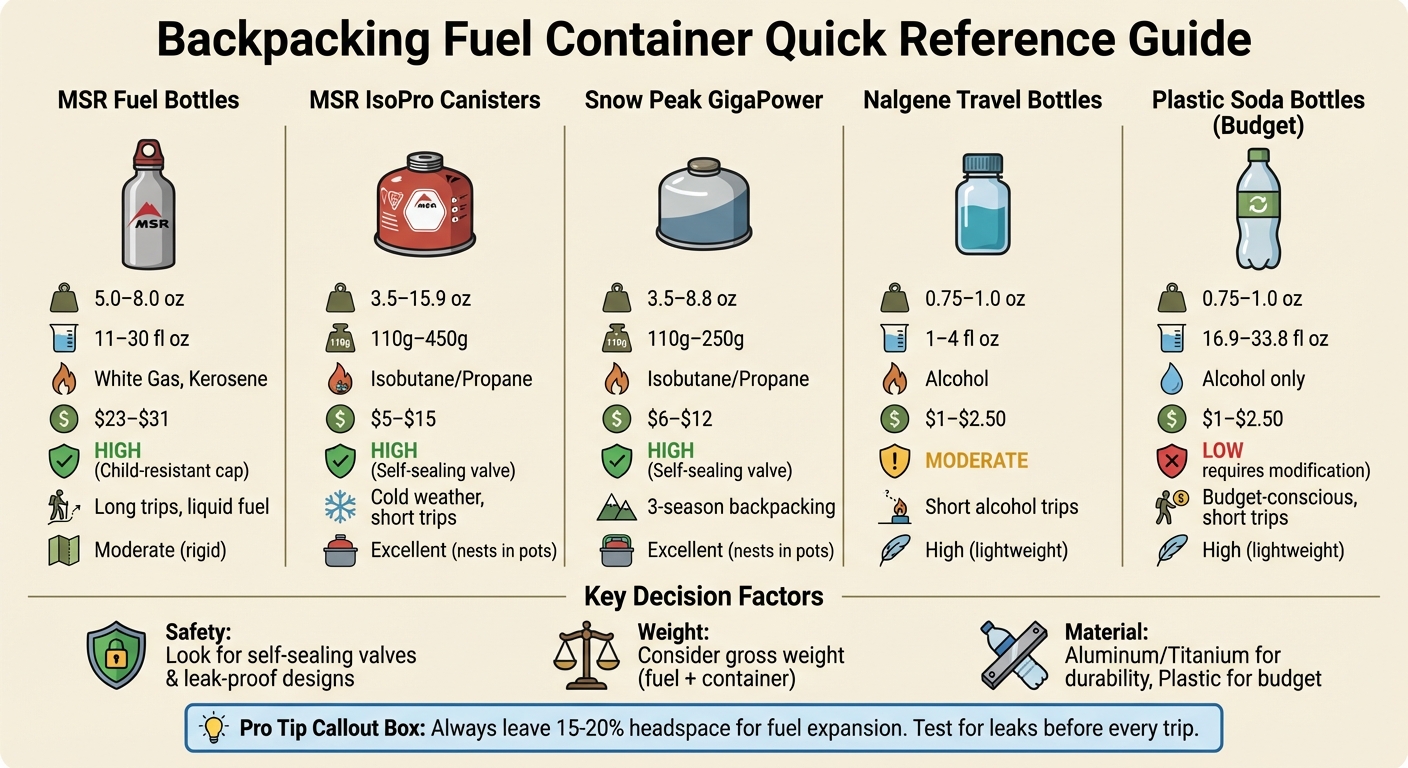
Backpacking Fuel Container Comparison: Weight, Price, and Safety Features
Someone Finally Made a Fuel Bottle That Isn’t Terrible! – Trangia Liquid Fuel Bottle Review
How to Choose a Backpacking Fuel Container
Picking the right fuel container boils down to three key factors: safety features, weight and portability, and material durability. Each element plays a crucial role in ensuring your fuel stays secure and your pack remains manageable.
Safety and Leak Prevention
A fuel container that prevents leaks is non-negotiable. Look for self-sealing valves, like the Lindal B188 valves found on many gas canisters, which automatically seal when detached from the stove. For liquid fuel bottles, high-quality rubber O-rings are essential to create an airtight seal – inspect these regularly for cracks or debris before every trip.
New safety regulations, effective July 12, 2023, now require flame mitigation devices on portable fuel containers to reduce the risk of flash fires. Child-resistant caps offer an additional layer of security, and some containers, like Trangia fuel bottles, feature specialized pour spouts for spill-free, controlled filling.
"If fuel vapor escapes from a fuel container and encounters a spark or flame, it can ignite and flash back into the container, causing a flame explosion".
To ensure safety, always test for leaks after connecting your fuel source – listen for hissing sounds or check for any faint gas odors. Avoid overfilling; leaving 15%-20% headspace allows for fuel expansion. Also, store fuel canisters below 120°F (49°C) to prevent over-pressurization.
Portability and Weight
When thinking about portability, focus on the gross weight – the combined weight of the fuel and the container. For example, a standard 230g isobutane canister has a gross weight of about 356g, which is crucial to consider when planning your pack load. Larger canisters often provide a better fuel-to-container weight ratio, meaning a single large canister can be lighter overall than carrying multiple smaller ones.
For shorter trips, 100g canisters are a convenient choice. With a gross weight of around 194g, they’re compact enough to fit inside most backpacking pots, saving valuable space in your pack. Their 3.5-inch diameter also makes them easy to carry. Liquid fuel bottles, on the other hand, let you bring exactly the amount of fuel you need, though they require a heavier stove and pump system.
Durability and Material Quality
Once safety and portability are covered, it’s time to think about the build quality of your fuel container. The material plays a big role in its performance and longevity. Aluminum is the go-to choice for liquid fuel bottles, offering great impact resistance and a balanced weight, making it ideal for most backpacking scenarios. For those prioritizing ultralight gear, titanium is the top-tier option – it’s tough, corrosion-proof, and significantly lighter. Meanwhile, stainless steel provides unmatched strength for rugged conditions but is better suited for base camps or vehicle camping because of its weight.
Always check thread compatibility and gasket quality before heading out, and perform a leak test to ensure everything is secure.
| Material | Durability | Weight | Best Use Case |
|---|---|---|---|
| Titanium | Extreme; corrosion-proof | Ultralight | Long-distance thru-hiking; gram-counting |
| Aluminum | High; impact-resistant | Moderate | General backpacking and expeditions |
| Stainless Steel | Maximum; professional grade | Heavy | Base camps; vehicle camping; rugged use |
| Plastic | Low to Moderate | Very Light | Short weekend trips; alcohol fuel storage |
Best Backpacking Fuel Containers
When heading out into the backcountry, having a reliable fuel container is essential. Here’s a breakdown of some of the top options, focusing on safety, portability, and durability.
Nalgene Travel Bottles
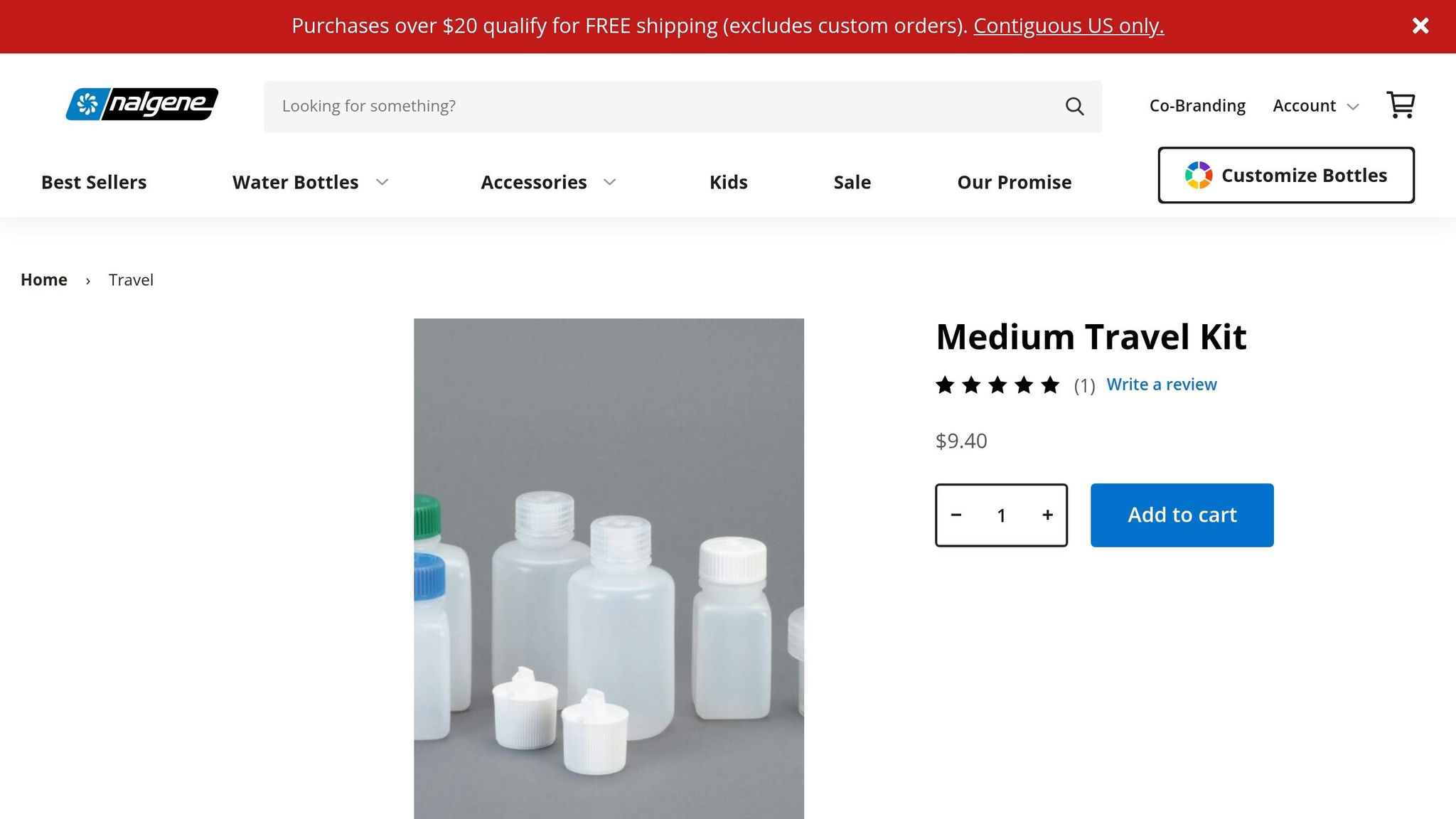
If you’re using alcohol fuel for short trips, Nalgene Travel Bottles are a solid choice. They come in sizes ranging from 1 to 4 fl oz, making them perfect for weekend adventures where only a small amount of fuel is needed. These bottles feature leak-proof screw caps that create a tight seal, so you won’t have to worry about spills in your pack. Plus, their lightweight design ensures they won’t weigh you down. For minimalist alcohol stove users, these bottles are an affordable and practical option.
MSR Fuel Bottles
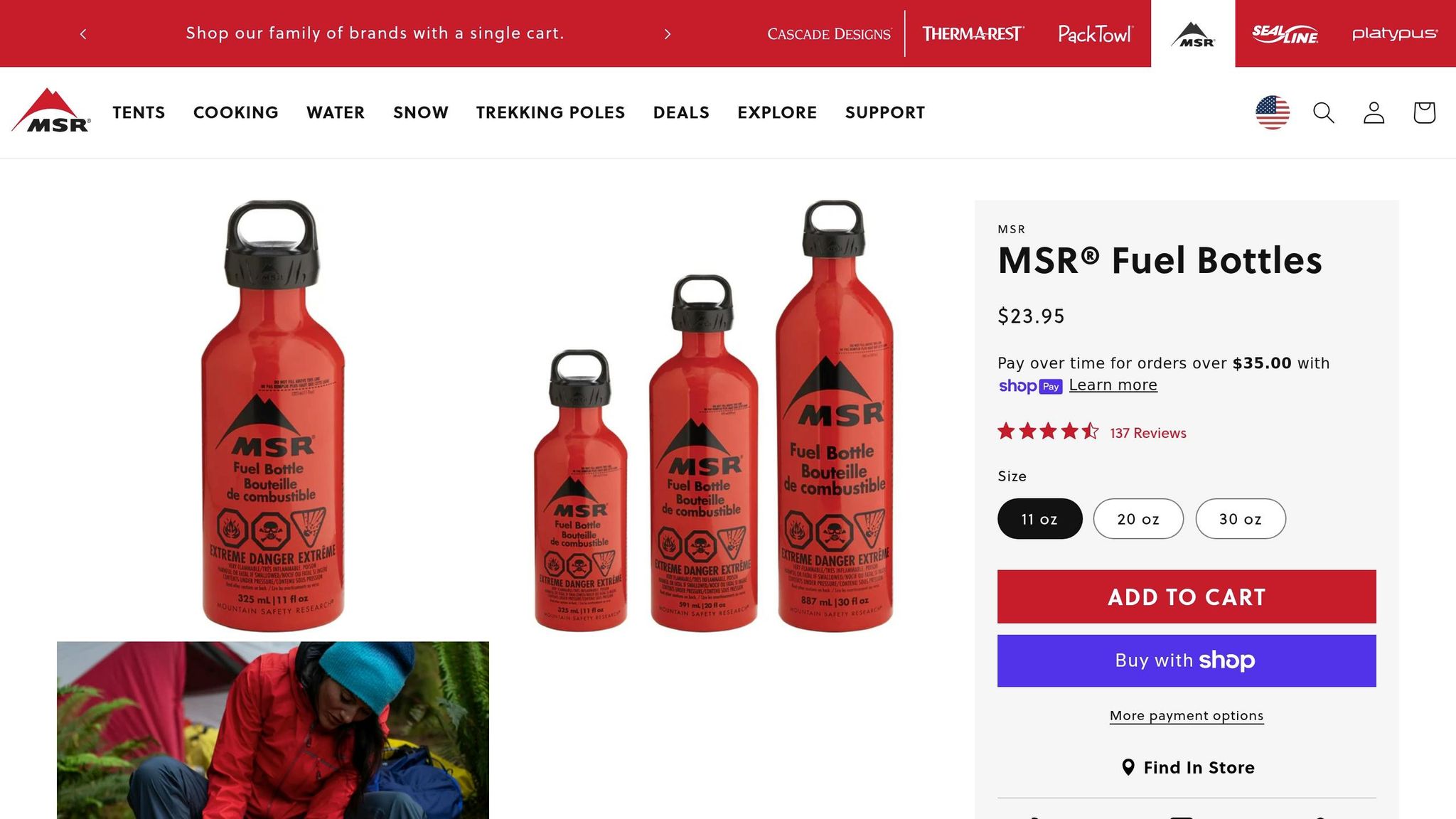
For liquid fuel storage, MSR Fuel Bottles set the standard. Crafted from one-piece impact-extruded aluminum, they’re designed to prevent cracks and leaks. They come in 11 oz, 20 oz, and 30 oz sizes, with weights ranging from 4.3 oz to 7.7 oz when empty. These bottles are built to handle the pressure required for liquid fuel stoves, thanks to reinforced shoulders and bases. They also integrate seamlessly with MSR fuel pumps.
With a 4.7/5 rating from 137 users, one reviewer confidently stated, "They will not leak". Priced between $22.95 and $23.95, they’re a dependable choice for serious backpackers. If the child-safety cap becomes a hassle when the bottle is full, the optional Expedition Fuel Cap ($10.95) is available and removes the need for downward pressure.
Platypus SoftBottles
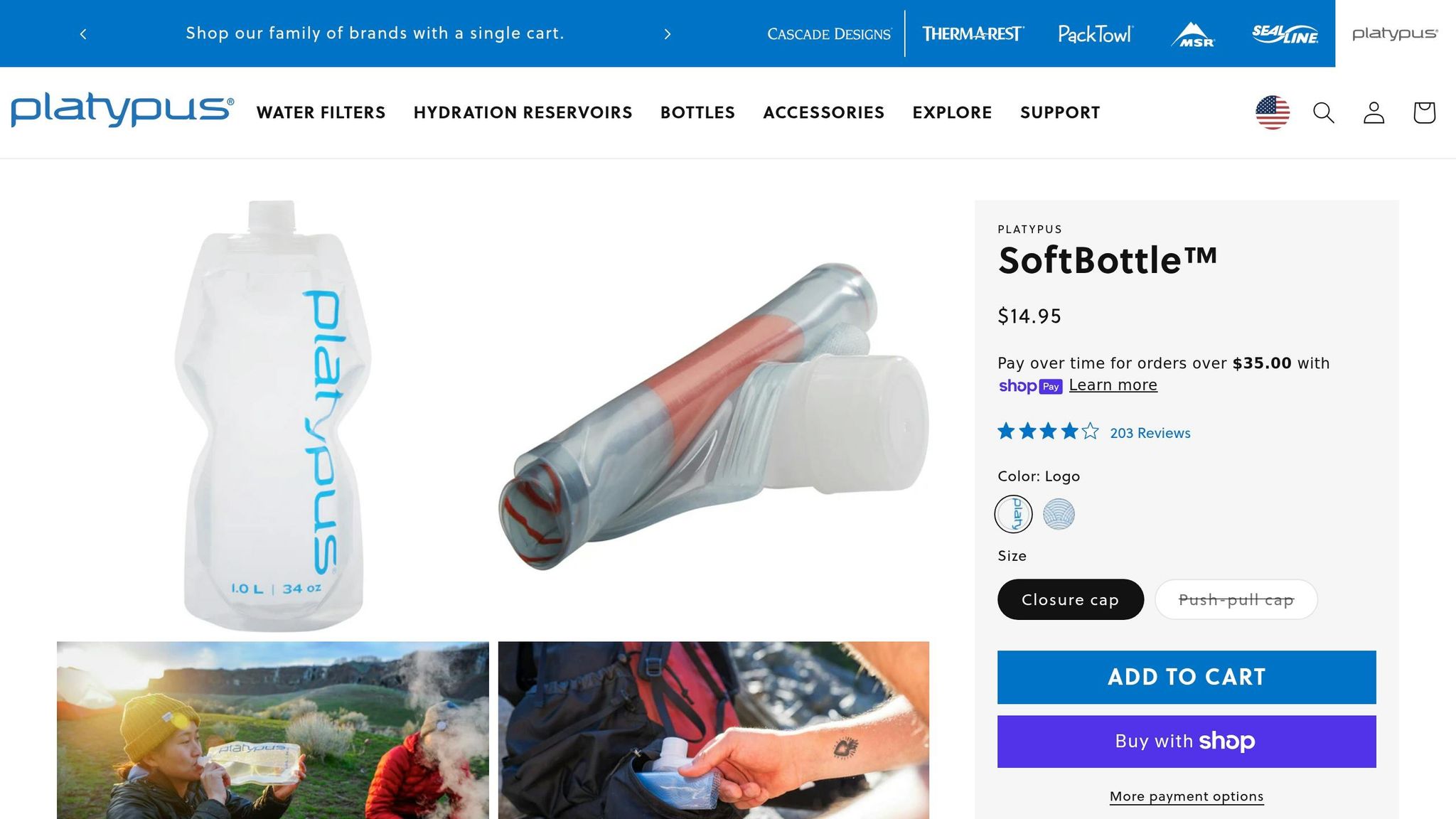
Need to carry larger quantities of alcohol fuel? Platypus SoftBottles are a fantastic solution. Their lightweight, flexible material allows them to collapse as fuel is used, saving valuable space in your pack. This makes them especially useful for thru-hikers or those embarking on extended backcountry trips. Their collapsible design is a smart way to maximize both space and efficiency during long adventures.
MSR IsoPro Canisters
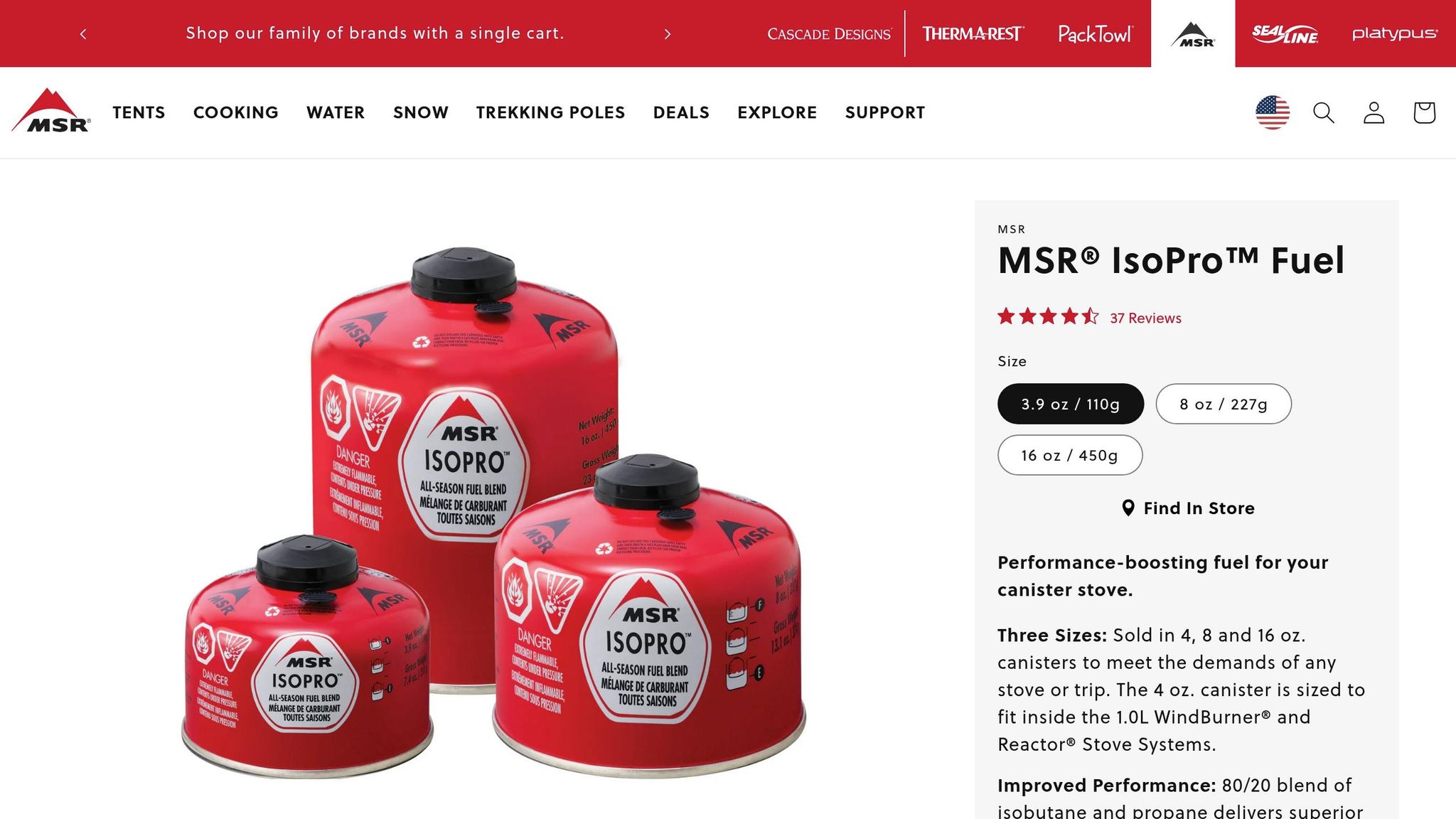
For cold-weather trips, MSR IsoPro Canisters offer excellent performance. Their 80/20 isobutane-propane blend maintains higher vapor pressure in cold temperatures compared to standard mixes. Available in 3.9 oz (110 g) and 8 oz (227 g) sizes, these canisters weigh 7.4 oz and 13.1 oz, respectively. They feature a self-sealing EN 417 Lindal valve to prevent leaks, making them a reliable option for weight-conscious backpackers.
With a 4.8/5 star rating from over 173 reviews on REI, these canisters are priced affordably, starting at $5.95. The larger 8 oz version even includes a wider 4.3-inch base for added stability when using top-mounted stoves.
Snow Peak GigaPower Canisters
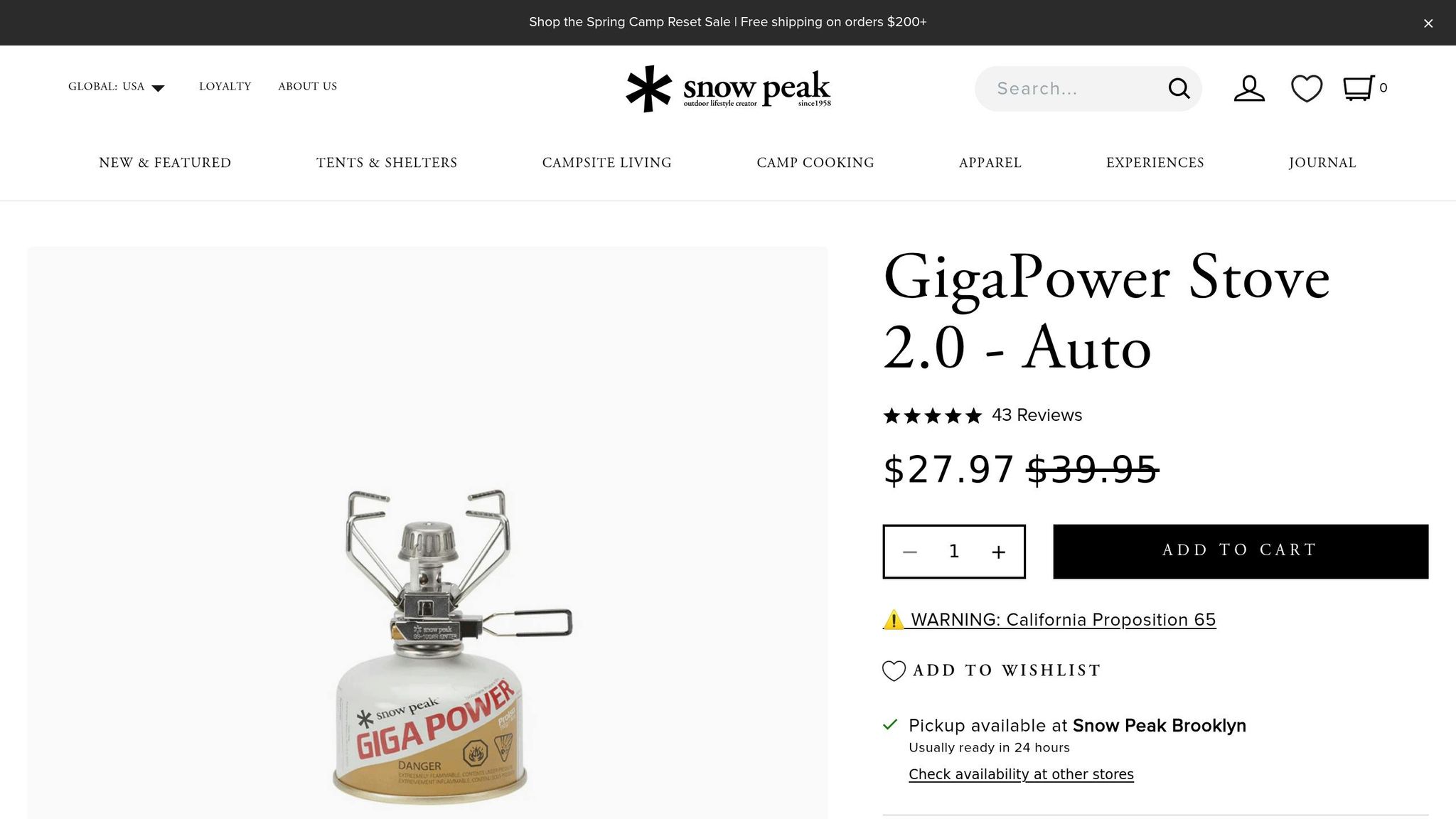
For 3-season backpacking, Snow Peak GigaPower Canisters are a great match for ultralight stoves. Their compact design and compatibility with ultralight setups make them a favorite among those who prioritize keeping their pack weight low. These canisters deliver consistent performance in spring, summer, and fall, making them a dependable choice for most trips outside of extreme cold conditions.
sbb-itb-5a98267
Budget Option: Plastic Soda Bottles
If you’re looking to cut costs and lighten your pack, recycled soda bottles are a practical option for storing alcohol fuel. They’re incredibly affordable – essentially the price of the drink itself, usually between $1.00 and $2.50 – and weigh just 0.75 to 1 oz. Compare that to purpose-built fuel bottles, which weigh around 3 to 4.5 oz and cost anywhere from $4 to $35. However, using soda bottles for this purpose requires careful prep to ensure safety and prevent leaks.
Soda bottles are made from PET (Polyethylene Terephthalate) plastic, which has low absorption and minimal reaction when exposed to aliphatic alcohols like methanol and ethanol. This makes them a good match for fuels like denatured alcohol or HEET. Green-tinted bottles – such as those from Sprite, Mountain Dew, or Ginger Ale – are particularly useful because their color helps distinguish them from water bottles, reducing the risk of accidental ingestion. That said, some modifications are necessary to make these bottles leak-proof.
Standard soda bottle caps aren’t designed with fuel storage in mind, so leaks can happen if the threads aren’t clean or the cap isn’t tightened properly. To improve the seal, test the bottle by squeezing it – if air or liquid escapes, replace the cap’s paper insert with a silicone gasket for a tighter seal. Keep in mind that the plastic insert inside the cap can degrade over time, typically within five years, so it’s a good idea to replace caps every couple of years.
If you’re a budget-conscious backpacker, safety should still be your top priority when repurposing soda bottles for fuel. Remove the original label, and clearly mark the bottle with “FUEL” or “POISON” using a permanent marker. Cover the label with clear packing tape to ensure it stays readable. For extra safety, tie a cord around the neck or add duct tape stripes so the bottle can be identified by touch in low-light conditions. Always store the bottle upright in an external mesh pocket to reduce the risk of leaks damaging your gear.
While soda bottles are a great solution for alcohol fuels on short trips with an alcohol stove, they should never be used for white gas or kerosene. These fuels require specialized metal containers to ensure safety.
Fuel Container Comparison Table
The table below highlights key specs for different fuel containers, making it easier to choose the right one for your backpacking adventures.
When picking a fuel container, factors like weight, capacity, and price can greatly influence both your pack weight and budget. Here’s a breakdown of the main options:
| Container Type | Weight (oz) | Capacity | Fuel Compatibility | Price Range (USD) | Safety Rating | Packability Score |
|---|---|---|---|---|---|---|
| MSR Fuel Bottles | 5.0–8.0 | 11–30 fl oz | White Gas, Kerosene | $23–$31 | High (Child-resistant) | Moderate (Rigid aluminum) |
| MSR IsoPro Canisters | 3.5–15.9 | 110g–450g | Isobutane/Propane | $5–$15 | High (Self-sealing valve) | Excellent (Nests in pots) |
| Snow Peak GigaPower | 3.5–8.8 | 110g–250g | Isobutane/Propane | $6–$12 | High (Self-sealing valve) | Excellent (Nests in pots) |
| Plastic Soda Bottles | 0.75–1.0 | 16.9–33.8 fl oz | Alcohol only | $1–$2.50 | Low (Requires modification) | High (Lightweight, rigid) |
Weights include fuel.
Small isobutane canisters (100–110g) are lighter by about 6 oz (170g) compared to medium ones (220–230g), but they come with a higher cost per gram of fuel. For liquid fuel bottles, aluminum options like MSR typically range in capacity from 10 oz (295 ml) to 30 oz (887 ml), while the Trangia 0.5L fuel bottle weighs only 4.06 oz.
Safety features such as child-resistant caps, self-sealing valves, and safety mechanisms are key advantages for most containers. However, plastic soda bottles fall short in this area, as they require manual modifications – like adding silicone gaskets and proper labeling – to ensure safety.
When it comes to packability, isobutane canisters score high since they can nest inside cookware, saving space. On the other hand, rigid aluminum bottles take up the same amount of space, regardless of how much fuel remains.
For cold-weather trips, keep in mind that fuel performance can drop in lower temperatures. If you’re on a tight budget, modified soda bottles are a cost-effective option for alcohol fuel. However, they require extra preparation and are less durable, making them a trade-off between price and reliability. This comparison underscores the importance of finding the right balance between fuel efficiency, safety, and how well the container fits into your pack.
Conclusion
Choosing the right fuel container plays a key role in making your backpacking experience both safe and hassle-free. Whether you’re leaning toward durable metal bottles or lightweight soda bottles, the decision comes down to balancing safety, weight, and durability to fit your specific trip needs. Metal options like aluminum offer excellent resistance to impacts and corrosion, while titanium is the go-to choice for those focused on ultralight packing. Safety features – like child-resistant caps, leak-proof gaskets, and adequate headspace – are non-negotiable to avoid spills and fire hazards.
"Getting your fuel bottle wrong means dangerous spills, wasted fuel, and genuine frustration when bottles leak during transport." – Chris, Author, CampEquipmentPlus
It’s also important to match your container to the type of fuel and the conditions you’ll face. For example, isobutane canisters are great for short trips in mild weather but can falter in temperatures below 32°F (0°C). On the other hand, refillable liquid fuel bottles are more dependable for winter outings or longer expeditions. Be mindful of container size, ensuring it aligns with the duration of your trip – whether it’s a quick weekend getaway or a multi-day adventure. Always test for leaks and check compatibility before heading out. And remember, never fill beyond the recommended capacity; a 15% to 20% vapor headspace is essential to accommodate fuel expansion in warmer conditions.
Ultimately, the right fuel container safeguards your gear, enhances safety, and ensures your stove is ready when you need it. Whether you splurge on a premium MSR bottle or stick with a budget-friendly soda bottle, compatibility and safety should always come first.
FAQs
How much fuel should I pack?
When preparing for your trip, bring just the right amount of fuel for the journey and the specific conditions you’ll face. Make sure all fuel containers meet safety standards and are tightly sealed to prevent any leaks. Storing fuel correctly is crucial – not only to avoid accidents but also to keep your equipment safe.
Can I fly with stove fuel?
No, you generally can’t bring stove fuel on a plane. It’s considered a hazardous material and is heavily restricted for air travel. Airlines usually prohibit it in both carry-on and checked luggage. If you’re planning to travel with camping gear, it’s best to double-check your airline’s specific rules to avoid any issues.
How do I safely dispose of empty canisters?
To dispose of empty canisters safely, first make sure they’re entirely empty. You can do this by attaching them to a gas adapter and burning off any leftover fuel. Once empty, take them to a hazardous waste disposal site to reduce the risk of pollution or fires. In some areas, steel canisters may be accepted for recycling – check with your local recycling center or waste management facility to confirm. Always handle canisters with care to prevent leaks or accidents.