
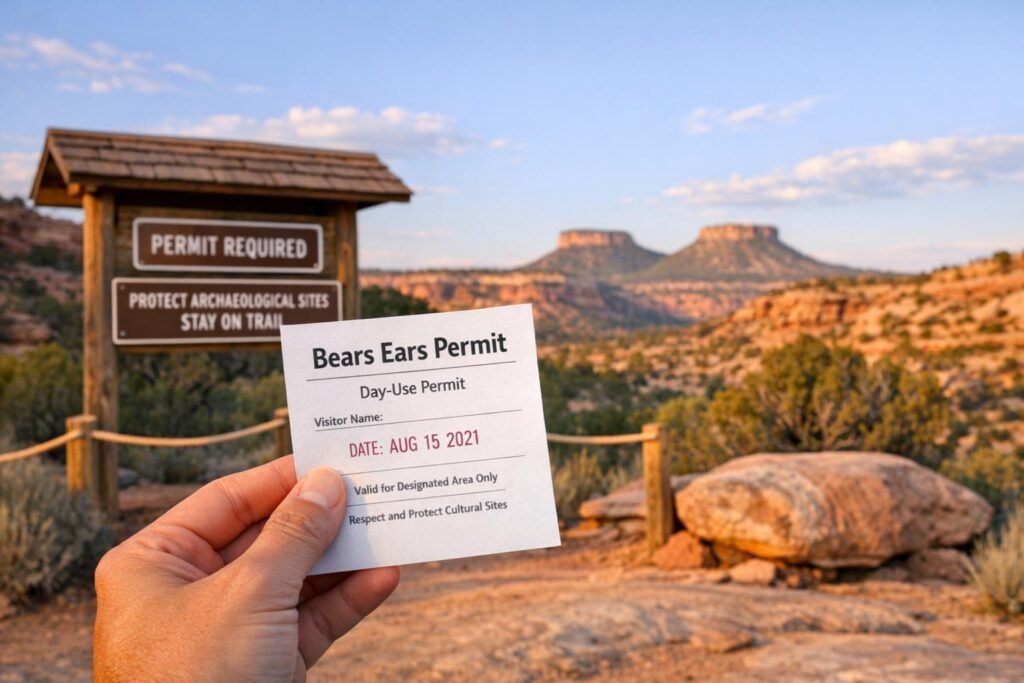
Bears Ears National Monument in Utah is a stunning 1.36-million-acre area rich with archaeological sites and natural beauty. To visit, you’ll need permits for specific activities like hiking, backpacking, or river trips. Here’s a quick breakdown:
- Permits Required For: Moon House day hikes, Cedar Mesa backpacking, San Juan River trips, and group activities.
- Where to Get Permits: Online at Recreation.gov, the Monticello Field Office, or Kane Gulch Ranger Station (seasonal).
- Costs: $5 for Moon House day hikes, $15 per person for Cedar Mesa backpacking, plus a $6 reservation fee.
- Limits: Group size capped at 12, daily visitor quotas apply.
- Rules: Respect archaeological sites – no touching, climbing, or removing artifacts. Dogs and drones are restricted in many areas.
- Seasonal Notes: High-use seasons (March–June, September–October) require advance planning due to quotas.
Permits help protect the area’s fragile resources while ensuring responsible access. Plan ahead, follow the rules, and enjoy this incredible destination responsibly.
Bears Ears National Monument Permit Requirements and Costs Guide
Camping at The Twist – Fish Creek Canyon Wilderness | Exploring Cedar Mesa & Comb Ridge
sbb-itb-5a98267
Permit Requirements Overview
Permits are in place to help safeguard the cultural and historical treasures of Bears Ears. Before you visit, it’s important to know which activities require them. These permits also help limit the impact on the area’s delicate ecosystems.
Activities That Need Permits
Certain activities in Bears Ears require permits. These include day hiking at Moon House, overnight backpacking in Cedar Mesa, day hikes in Cedar Mesa and Comb Ridge, and rafting trips on the San Juan River. The Bureau of Land Management (BLM) emphasizes this point:
"In order to protect this sensitive site, the Bureau of Land Management requires a permit to visit Moon House."
Groups such as schools, scout troops, and commercial tours must also obtain a Special Recreation Permit from the Monticello Field Office. Additionally, drones are banned within the monument, except when a specific permit is issued for approved purposes.
Activities That Don’t Need Permits
If your plans include car touring, roadside viewing, or dispersed camping in designated areas, you won’t need a permit.
Where to Get Permits
You can secure most permits online through Recreation.gov. Other options include:
- BLM Monticello Field Office: Open year-round, offering in-person assistance and permits for commercial groups.
- Kane Gulch Ranger Station: Provides walk-up permits and trip planning services during peak seasons (March–June and September–October) from 8:00 am to 12:00 pm. For Spring 2026, the station will operate from March 19 to June 14, Thursday through Sunday.
- Trailhead self-pay stations: Offer day hiking passes; payment can be made with cash or check.
Next, we’ll dive into the specific types of permits available for Bears Ears.
Permit Types for Bears Ears
Bears Ears National Monument offers different types of permits based on your planned activities and the duration of your visit. These permits come with specific rules, fees, and quotas to help safeguard the area’s archaeological treasures. Below, we’ll focus on two key permits: Moon House day hiking and Cedar Mesa backpacking.
Moon House Day Hiking Permits
If you’re planning to visit Moon House, you’ll need a special permit – regular day hiking passes won’t work here. As the Bureau of Land Management explains:
"Moon House is the only day hike that requires a permit instead of a day hiking pass".
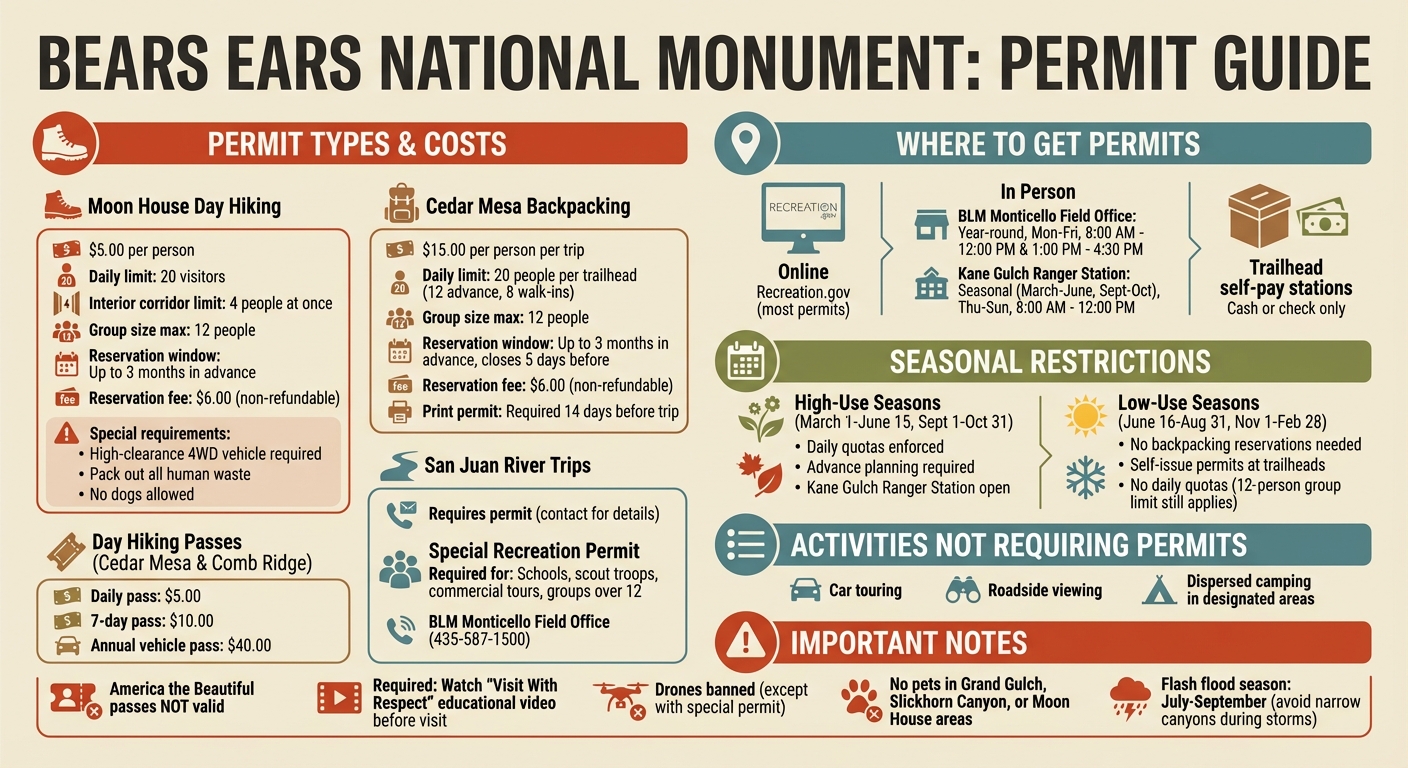
This permit costs $5.00 per person and is valid only for day use within the Moon House Recreation Management Zone in McLoyd Canyon. The site has strict restrictions: only 20 visitors per day are allowed, and no more than 4 people can enter the interior corridor at one time. Permits can be reserved up to 3 months in advance on Recreation.gov, with a $6.00 non-refundable reservation fee. Groups are limited to a maximum of 12 people.
Reaching Moon House requires navigating Snow Flat Road, which demands a high-clearance, four-wheel drive vehicle. The road becomes impassable when wet. Additionally, visitors must pack out all human waste, and dogs are not allowed. These rules are in place to protect the fragile archaeological features of the area.
Cedar Mesa Backpacking Permits
For overnight trips in Cedar Mesa’s canyons, you’ll need a backpacking permit, which costs $15.00 per person per trip. This permit covers overnight stays in areas like Grand Gulch, Slickhorn, Fish, Owl, Road, Lime, and Mule canyons, along with their tributaries. Access is limited to 20 people per trailhead per day, with 12 spots available for advance reservations and the rest reserved for walk-ins. Groups cannot exceed 12 people.
Reservations open 3 months in advance and close 5 days before your trip. Starting 14 days before your trip, you must print your permit and carry a physical copy with you.
It’s important to note that the following passes are not valid in Bears Ears:
"America the Beautiful National Parks and Federal Recreational Lands Annual Pass, Senior Pass, and Veterans Pass do not apply in Bears Ears".
For groups such as commercial tours, schools, scout troops, or clubs, a Special Recreation Permit is required. These groups must contact the BLM Monticello Field Office directly instead of using the online system. These measures ensure that Cedar Mesa’s cultural and historical resources are preserved for future generations.
How to Apply for Permits
Applying Online Through Recreation.gov
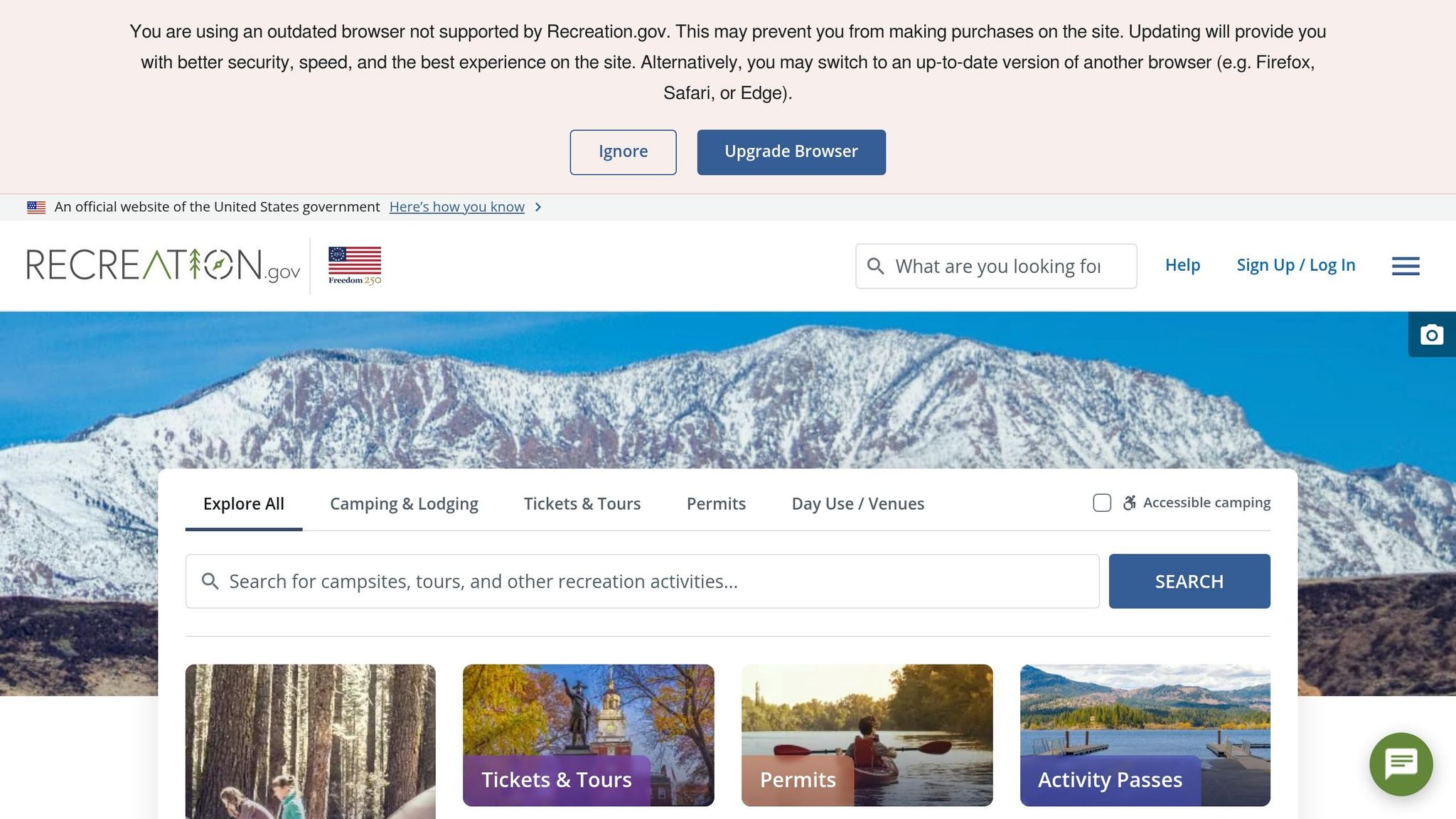
To get your Bears Ears permits, head over to Recreation.gov. Log into your account – or create one if you don’t already have one – then select the activity you’re planning. Options include Cedar Mesa Backpacking, Moon House Day Hiking, San Juan River Lottery/Reservations, or Cedar Mesa & Comb Ridge Day Hiking Passes.
Permits become available 90 days before your entry date. Mark your calendar for three months in advance to snag permits for popular spots like Moon House or high-traffic trailheads. As part of the process, you’ll need to confirm you’ve watched the “Cedar Mesa Visit With Respect” educational video.
Once you’ve paid the $6.00 fee, print your permit right away. It’s also smart to download a copy to your device since cell service in the area is spotty. For river permits, keep in mind printing is only available 14 days before your launch date.
Prefer an in-person experience or need a last-minute permit? Check out the options below.
Getting Permits In Person
If you’re looking for walk-up or last-minute permits, you’ve got two main choices. The Kane Gulch Ranger Station is open seasonally during peak times – spring (March 19–June 14, 2026) and fall – operating Thursday through Sunday, from 8:00 a.m. to 12:00 p.m.. For year-round service, visit the Monticello Field Office, open Monday through Friday from 8:00 a.m. to 12:00 p.m. and 1:00 p.m. to 4:30 p.m..
During the spring and fall seasons, Kane Gulch issues walk-up permits for backpacking and Moon House. For summer or winter trips, you’ll need to contact the Monticello Field Office instead.
When applying in person, be ready to share your trip details: entry and exit points, dates, and group size (up to 12 people). If you’re purchasing day or weekly passes at trailhead fee tubes, make sure to bring exact change.
Both online and in-person application methods aim to protect Bears Ears’ resources while allowing responsible access. While in-person check-ins aren’t mandatory for online reservations, it’s a good idea to stop by a ranger station for updates on weather, road conditions, and water availability. And if you forget to bring your printed permit, the rangers can assist you.
Rules for Protecting Archaeological Sites
Once your permit is approved, it’s essential to act responsibly to help safeguard the heritage of Bears Ears.
Required Educational Video
Before visiting protected areas like Moon House or Cedar Mesa, you’re required to watch the "Visit With Respect" educational video. By accepting your permit, you confirm that you’ve completed this step. This video, introduced in 2018, aims to address the growing concerns over the impact of increased visitation on Bears Ears’ cultural resources. Over its 23 minutes, the video outlines 20 key tips – many of which include Indigenous perspectives – on how to preserve these sacred sites.
Make sure to watch the video before you arrive since cell service in the area is very limited. You can find it on the Bears Ears Partnership website, BLM Utah’s YouTube channel, or Vimeo. Completing this video prepares you to approach these sites with the respect they deserve.
What You Cannot Do
Strict rules are in place to protect these fragile and sacred areas. For instance:
- Do not touch rock art like petroglyphs or pictographs. The natural oils on your hands can cause lasting damage to the pigments and surfaces.
- Avoid leaning on, standing on, or climbing ancestral structures. These are not only delicate but hold deep spiritual significance as ancestral resting places for Tribes and Pueblos.
- Removing or moving cultural items – such as pottery shards, stone tools, corn cobs, textiles, or even historic trash – is illegal.
- Using rock-climbing gear or ropes to access these sites is also prohibited.
Additionally, refrain from camping, building fires, eating, or creating cairns within archaeological sites. If you’re using hiking poles, make sure they have rubber tips to avoid scratching rock surfaces. Specific to Moon House, entering the "Moon Room" or any interior spaces is not allowed.
These rules are in place to ensure the preservation of Bears Ears for future generations.
Visitor Responsibilities and Penalties
As a permit holder, you are legally and financially accountable for any damage caused by your group.
"Looting and vandalism of resources on federal, state and tribal lands is against state and federal law."
If you witness any vandalism or looting, document what you see and report the incident at 722-3998. Additionally, when sharing photos online, make sure to remove GPS coordinates or location details to protect sensitive and unprotected sites.
Next, take some time to familiarize yourself with the fees and additional requirements for your visit to Bears Ears.
Fees, Limits, and Other Requirements
Understanding the costs, restrictions, and guidelines can help you plan a smooth visit.
Costs and Group Size Limits
There’s no general entry fee, but specific permits come with costs. For example:
- Backpacking permits: $15 per person per trip
- Moon House day hikes: $5 per person
- Multi-day passes: $5 daily, $10 for seven days, or $40 for an annual vehicle pass
Keep in mind that America the Beautiful passes don’t cover these fees. These are classified as Individual Special Recreation Permits, not standard entry fees.
Group sizes are limited to 12 people for all activities. Daily quotas also apply – Moon House permits are capped at 20 visitors per day, while high-use seasons limit backpacking trailheads to 20 people daily. Be sure to bring exact cash for trailhead self-pay stations.
Seasonal and Area Restrictions
Bears Ears follows two distinct seasonal schedules:
- High-use seasons: March 1–June 15 and September 1–October 31
- Kane Gulch Ranger Station open Thursday–Sunday, 8:00 a.m.–12:00 p.m.
- Spring 2026 dates: March 19–June 14
- Daily backpacking quotas are enforced
- Low-use seasons: June 16–August 31 and November 1–February 28
- No backpacking reservations needed; self-issue permits are available at trailheads
- Daily quotas are lifted, but the 12-person group limit remains
These measures help protect the area’s delicate resources during busy periods.
Certain areas have specific rules to follow. Pets are not allowed in Grand Gulch, Slickhorn Canyon, their tributaries, or the Moon House Recreation Management Zone. Drones are also banned in Cedar Mesa’s canyons and much of the monument unless you have special authorization. If you’re visiting Moon House, note that camping, fires, and camp stoves are prohibited within the Recreation Management Zone. Additionally, flash floods are most common in July, August, and September – avoid narrow canyons during stormy weather.
Requirements for Commercial and Large Groups
Special rules apply to larger or organized groups. If your group exceeds 12 people or includes organizations like schools, scouts, or commercial tours, you’ll need to skip Recreation.gov and contact the BLM Monticello Field Office directly at 435-587-1500 for a Special Recreation Permit.
These permits come with unique requirements, costs, and capacity limits, depending on your group’s size and purpose. It’s a good idea to reach out early, as processing times can vary based on the season and complexity of your request. These extra steps ensure the monument’s heritage is preserved while accommodating larger groups.
Planning Your Visit to Bears Ears
Once you’ve secured your permits, there are a few more steps to ensure a safe and respectful trip. Start by printing a copy of your permit and checking the latest road and water conditions. You can do this at the Kane Gulch Ranger Station (open 8:00 a.m.–12:00 p.m. during peak seasons, typically Thursday through Sunday) or the Monticello Field Office (open 8:00 a.m.–12:00 p.m., Monday through Friday). This will help you plan a route that’s both safe and accessible.
Carefully map out your route in advance. Many of the access roads, like Snow Flat Road leading to Moon House, require a high-clearance, four-wheel-drive vehicle. These roads can become completely undrivable when wet. Be sure to fill up your gas tank and stock up on essentials in Blanding or Bluff – these towns are your last reliable stops before entering the monument. Bring plenty of water – at least one gallon per person per day, or two gallons if you’ll be hiking strenuously.
Safety is just as important as preparation. Since cell service is almost nonexistent in the area, share your itinerary and expected return time with someone you trust. Download offline maps before you leave, and bring rubber-tipped hiking poles to reduce your impact on the delicate sandstone.
As mentioned earlier in the "Rules for Protecting Archaeological Sites" section, it’s crucial to follow all "Visit with Respect" guidelines to help preserve the area’s cultural heritage. The Bureau of Land Management emphasizes this with a simple reminder:
"The key to visiting Bears Ears National Monument is: know before you go!"
Ruben Pacheco, Communications Specialist with the Bears Ears Inter-Tribal Coalition, further highlights the importance of respect:
"When you remove something from an area, it’s like an act of erasure".
Additionally, turn off GPS and geotagging on your photos before sharing them online. This helps prevent overcrowding and protects the monument’s estimated 100,000 archaeological sites from harm. If you’re visiting during monsoon season (July–September), stay out of narrow canyons if there’s any chance of storms, even if the rain seems far away. These precautions will ensure your trip is not only enjoyable but also aligns with responsible practices for visiting Bears Ears.
FAQs
What’s the fastest way to get a last-minute permit?
The fastest way to snag a last-minute permit for Bears Ears National Monument – like one for a day hike to Moon House – is to head directly to the Kane Gulch Ranger Station. Permits are issued on a walk-in basis, usually between 8 AM and 4 PM. You’ll find the station on Highway 261, about 4 miles south of Highway 95. Keep in mind, availability depends on how many permits are left for the day.
What if weather makes the access roads impassable?
If weather conditions make access roads difficult to navigate, it’s essential to check the latest updates before heading out. The road leading to Moon House can be challenging, often requiring a high-clearance or four-wheel-drive vehicle. Make a stop at the Kane Gulch Ranger Station or reach out to local authorities to confirm road conditions. If the roads are deemed unsafe, it’s best to delay your trip to avoid the risk of getting stranded. Always put safety first by confirming conditions ahead of time.
What happens if I lose or can’t print my permit?
If you misplace or are unable to print your Bears Ears permit, reach out to the issuing agency, such as the BLM Monticello Field Office or Kane Gulch Ranger Station, for help. While permits are typically non-replaceable, a digital copy or your reservation confirmation might be accepted as proof. Make sure to have some form of reservation evidence with you to prevent any complications during your visit.