
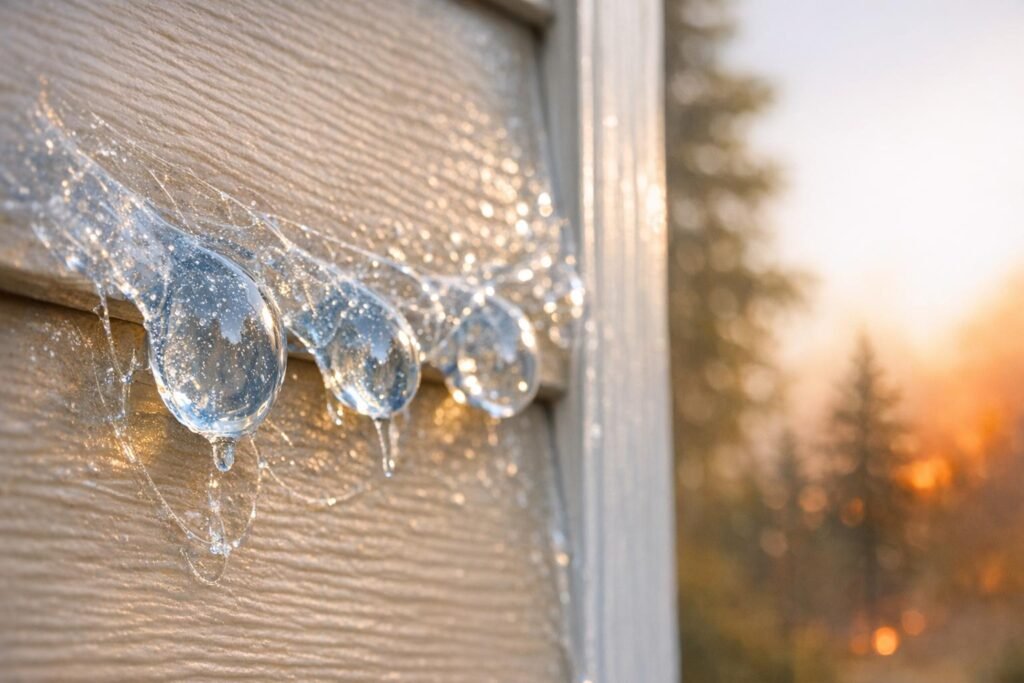
Fire suppression gels are a specialized solution for protecting structures, vegetation, and equipment from fires. These gels combine water and super-absorbent polymers to create a sticky, heat-resistant barrier that can withstand temperatures as high as 3,500°F. They are particularly useful in wildfire-prone areas, offering protection for homes, camping gear, and outdoor assets. Here’s what you need to know:
- How They Work: Gels absorb heat and reduce oxygen around a fire while clinging to surfaces like walls, trees, and roofs. A 1/4-inch layer can last 6–96 hours and can be rehydrated with water if it starts drying out.
- Key Ingredients: Modern gels use water, super-absorbent polymers, cellulose-based polymers, and silica particles for durability. Some advanced gels transform into a protective aerogel foam when exposed to extreme heat.
- Top Products: Barricade II, Ember Bloc Gel, and Phos-Chek Wildfire Home Defense are popular options, each catering to different needs – from personal camping gear to large-scale property protection.
- Benefits: They offer stronger, longer-lasting fire protection compared to water or foam and are biodegradable, making cleanup easy. Gels can delay ignition by up to 7 minutes, buying critical time during emergencies.
- Limitations: Gels lose effectiveness as they dry, especially in windy or low-humidity conditions. Proper application timing and thickness (1/4 inch) are crucial for optimal performance.
Fire suppression gels are a practical tool for wildfire safety, but they require careful application and monitoring to maximize their protective capabilities.
This slime is 10x more fireproof than water | Hard Reset
sbb-itb-5a98267
How Fire Suppression Gels Work
The science behind fire suppression gels explains their ability to protect outdoor assets in extreme conditions. These gels combine super-absorbent polymers (SAPs) and water to create a three-dimensional structure that holds moisture effectively. These polymers, similar to those used in disposable diapers, form tiny, water-filled micro-bubbles encased in a polymer shell. When layered together, these micro-bubbles act like a thermal blanket, shielding surfaces from intense heat. Their thick consistency allows them to stick to vertical surfaces such as walls, tree bark, and camping equipment. The effectiveness of these gels depends on their carefully designed ingredients, which are highlighted below.
Main Ingredients in Fire Suppression Gels
The core components of fire suppression gels are water and super-absorbent polymers. Modern formulations, however, often incorporate cellulose-based polymers and silica particles to improve durability. Surfactants are added to enhance adhesion, while inorganic salts and flame retardants boost their ability to extinguish fires. A recent development from Stanford University has introduced a new type of silica-based gel with a remarkable feature: when exposed to extreme heat, the gel transforms from a soft hydrogel into a durable silica aerogel foam. This foam continues to protect surfaces even after the water content has evaporated. In lab tests, this innovative gel kept plywood safe for over seven minutes, compared to less than 90 seconds for older gel formulations.
"Traditional gels don’t work once they dry out. Our materials form this silica aerogel when exposed to fire that continues to protect the treated substrates after all the water has evaporated."
– Eric Appel, Associate Professor of Materials Science and Engineering, Stanford University
Physical and Chemical Processes
When heat interacts with the gel, the water inside begins to evaporate, absorbing thermal energy in an endothermic reaction that slows ignition. Fully hydrated gels can extend the ignition time of wood from just 15 seconds to over seven minutes. Additionally, the gel smothers flames by cutting off oxygen and coating flammable materials. For instance, Chief Michael J. Alleman of the Meadow Village (LA) Fire Department successfully used FireIce gel to extinguish a magnesium fire in a 2000 Ford Expedition. Unlike water – which can trigger explosions with burning magnesium – the gel safely cooled and coated the engine block without causing any adverse reactions.
However, the performance of these gels diminishes as they dry out. In wildfire conditions with 15% humidity and 22 mph winds, traditional gels can lose half their moisture in under 1.5 hours and completely dry out within approximately seven hours. Once the gel’s moisture drops to its "Critical Remaining Mass" – around 10% to 16% – the residue may no longer protect surfaces and could even become a fire hazard. Proper understanding of these processes is essential for effective application, which will be discussed in the next section.
Types of Fire Suppression Gels
Fire suppression gels cater to a variety of needs, from protecting homes during wildfires to securing critical infrastructure. Below are three well-known options that highlight the range of choices available.
Barricade Fire Retardant Gel
Barricade II is the only liquid fire gel concentrate approved by the U.S. Forest Service that is free from harmful ingredients like Nonylphenol Ethoxylates (NPEs), petroleum distillates, and ammonium phosphates. Its formula relies on superabsorbent polymers that lock in water, creating a strong, wet barrier against fire. A single gallon of concentrate can cover between 500–700 square feet when applied at the recommended 1/4-inch thickness.
This gel works best when applied up to 24 hours before a wildfire, making it an excellent choice for high-risk areas such as eaves, windows, doors, wood shake roofs, and decks. It’s also approved for use in air tankers, helicopters, and ground-based fire engines, offering protection for infrastructure like bridges and power poles. The gel remains effective for 6–36 hours, depending on weather conditions, and can be rehydrated with a light water mist if it begins to dry out. This versatility allows users to prepare for a wide range of outdoor fire safety scenarios.
Ember Bloc Gel
Ember Bloc Gel is designed for personal fire protection, focusing on smaller areas such as camping gear, tents, and other outdoor equipment. Its compact application makes it an excellent option for campers, hikers, and outdoor enthusiasts who want to protect their immediate surroundings.
Phos-Chek Wildfire Home Defense
Phos-Chek Wildfire Home Defense is tailored for large-scale fire protection. It’s a go-to choice for municipalities, fire departments, and property owners with extensive land or multiple structures. Its broad coverage capabilities make it particularly effective for protecting entire neighborhoods and commercial properties during wildfire events.
Benefits of Fire Suppression Gels
Improved Fire Protection
Fire suppression gels provide a stronger defense against fires compared to traditional methods like water or foam. Water tends to run off vertical surfaces or evaporate quickly, but gels stick to structures, vegetation, and equipment, forming a thick thermal barrier capable of withstanding temperatures up to 3,500°F (1,930°C). This unique property makes them a game-changer for outdoor fire protection, especially during wildfires.
One of the most critical advantages is the extended ignition delay. For instance, gels can increase ignition time from just 15 seconds to over 7 minutes. This extra time is crucial for emergency response teams during wildfire events. In the Witch Fire of October 2007, where 1,500 homes were destroyed, Chief Gary Coleman of the Intermountain Fire & Rescue Department praised FireIce® gel as a "force multiplier," enabling limited resources to protect more homes effectively, even under extreme "Red Flag" conditions. Similarly, in the Black Hills National Forest wildfire that same month, almost every home treated with fire-retardant gel was saved, while many untreated neighboring houses were lost.
Gels also reduce the risk of rekindling by cooling fuel sources, coating them, and cutting off oxygen. Research from Stanford, in collaboration with CalFire, demonstrated this effectiveness in September 2019. A cellulose-based gel applied to grass and chamise in San Luis Obispo provided complete ignition protection, even after 0.5 inches of rainfall. Beyond their safety benefits, fire suppression gels also offer significant economic advantages.
Cost Savings for Outdoor Safety
Using fire suppression gels proactively can dramatically reduce resource use and costs. For example, 20,000 gallons of gel applied preventatively can outperform using 1 million gallons of traditional firefighting materials after a fire has started. This efficiency not only conserves resources but also cuts operational expenses for fire departments and property owners.
Another cost-saving feature is the ease of cleanup. Most modern fire suppression gels are 100% biodegradable and non-toxic, requiring only water for removal. This eliminates the need for expensive cleaning procedures or harsh chemicals. Additionally, these gels are compatible with standard firefighting equipment like pumper trucks and water tankers, avoiding the need for costly retrofits.
Insurance companies are also recognizing the value of these gels, with some now offering policies that include fire-retardant gel applications to prevent total losses during wildfires. Considering that federal firefighting costs exceeded $3 billion in 2018, proactive gel treatments provide municipalities with a more economical alternative to traditional, reactive firefighting strategies.
Environmental Impact and Safety Guidelines
Biodegradable and Non-Toxic Options
Modern fire suppression gels are designed with eco-conscious and non-toxic ingredients. A standout example is Eco-Gel™, recognized as the first firefighting water additive to be certified as 100% bio-based. This product is fully biodegradable, safe for surfaces, and environmentally friendly.
In contrast, older fire suppression products often contained harmful chemicals like PFAS, NPEs, and petroleum distillates – substances linked to cancer and endocrine disruption. Newer formulations, such as Barricade® II, eliminate these toxins, prioritizing safety and sustainability.
"Natural polymer hydrogels, which are high in water content, environmentally friendly, and biodegradable, show significant potential for developing clean and efficient extinguishing materials." – MDPI
When it comes to aquatic safety, fire suppression gels are much less harmful than traditional foams. While foams often contain surfactants that disrupt oxygen absorption in water, gels primarily consist of water and biodegradable thickeners. Natural polymer hydrogels, derived from materials like starch or sodium alginate, offer an even safer, fully biodegradable alternative. These advancements reflect a commitment to fire safety without compromising the environment, making them ideal for outdoor use.
Storage and Handling Instructions
Proper storage and handling are key to maintaining the performance of fire suppression gels. Concentrates should be stored at temperatures between 32°F and 120°F, with most products offering a shelf life of up to three years. To prevent settling, shake the containers for two minutes every six months. Always keep containers tightly sealed and shielded from direct UV exposure to preserve their chemical stability.
Some additional precautions include avoiding the use of salt water with the concentrate and refraining from pouring water directly into the container, except during cleanup. For safety during application, remember that wet gel can be slippery – apply it from a ladder instead of walking on treated surfaces. If the concentrate comes into contact with your skin or eyes, flush the area immediately with plain water. While protective equipment like goggles and gloves isn’t mandatory, wearing them is a smart choice. When working near water bodies, always set up mixing points away from the water to minimize environmental impact.
Cleanup is straightforward. Use a pressure nozzle to rinse off the gel with plain water. If the gel has dried, rehydrate it first to make removal easier. After use, flush all application tools and nozzles with warm water to prevent clogging. Lightly mist any drying gel to reactivate its protective properties. These simple steps ensure both safety and efficiency in handling fire suppression gels.
How to Apply Fire Suppression Gels
Surface Preparation and Coverage
Fire suppression gels are a proactive tool for wildfire safety, designed to protect structures before flames approach. Start by shaking the container for about two minutes to ensure the ingredients are well-mixed. Then, attach an eductor nozzle to the container and connect it to a 3/4-inch garden hose.
When applying, focus on eaves, windows, doors, decks, and wood shake roofs, ensuring an even spray. The surface should appear white after application, signaling a 1/4-inch coating. At this thickness, one gallon of concentrate can cover between 500 and 700 square feet. The gel adheres to various materials, including wood, glass, vinyl, metal, and shingles. For a standard 2,500-square-foot structure, you’ll need approximately 5 gallons of gel concentrate, mixed with 300 gallons of water.
If the gel begins to dry during application, simply mist it lightly with water to reactivate the polymers. This rehydration allows the gel to continue expanding, ensuring enhanced protection.
Tools and Application Methods
Once the surface is prepped, the right tools make the application process more efficient. Eductor nozzles are essential for mixing the gel concentrate into the water stream at a specific ratio. Popular options include the QuikAtak (designed for 1-gallon containers) and the AtakPak (a backpack system). For proper operation, ensure your water source delivers at least 30 PSI, which provides a spray reach of about 10 feet. Higher pressures, between 50 and 100 PSI, can extend the reach to 15–20 feet or more.
Backpack systems like the AtakPak or BucketPak offer greater mobility and feature a shut-off valve, letting you switch between applying gel and rinsing as needed. For residential use, the Barricade Fire Gel & Scotty FireFighter Applicator Kit is a solid choice. Priced at $434.00, it includes a 1.5-inch nozzle, 1 gallon of gel, and an applicator.
After completing your application, disassemble all components and flush them with warm water to remove any remaining residue. This maintenance step ensures your equipment stays in good condition for future use.
Top Fire Suppression Gels and Prices
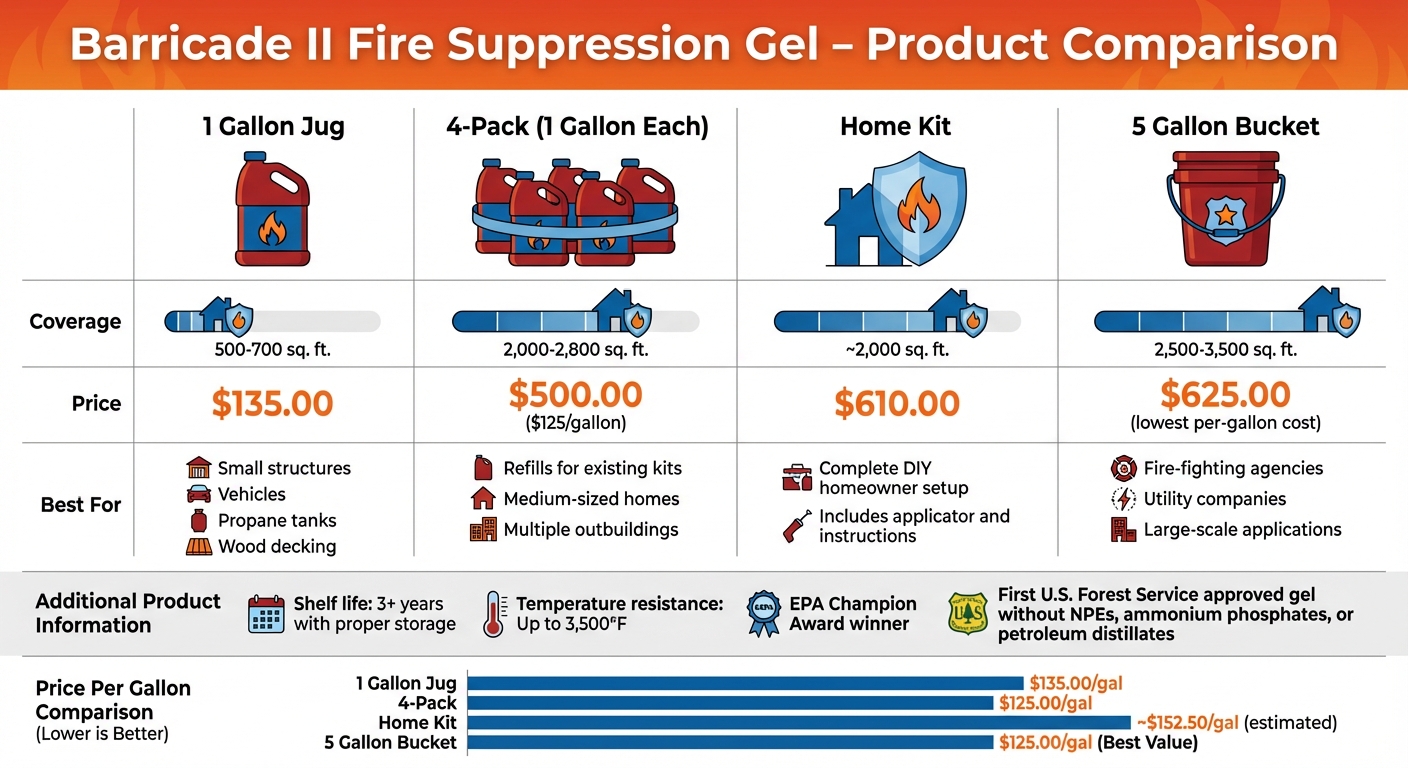
Fire Suppression Gel Products Comparison: Coverage, Pricing, and Best Uses
After covering application techniques and safety tips, let’s dive into the top fire suppression gels and their pricing details.
Barricade II Fire Blocking Gel stands out as a market leader in fire suppression. It earned the EPA’s "Champion Award" and was the first liquid gel concentrate approved by the U.S. Forest Service without harmful additives like Nonylphenol Ethoxylates (NPEs), ammonium phosphates, or petroleum distillates. This gel creates a heat-resistant barrier capable of withstanding temperatures up to 3,500°F – more than double the average wildfire temperature of 1,500°F.
Prices depend on the quantity and application equipment. A single 1-gallon jug costs $135.00, while a 4-pack lowers the cost per gallon to $125.00 (totaling $500.00). For homeowners, the Home Kit is priced at $610.00 and includes four 1-gallon containers along with a garden hose applicator for easy use.
For larger needs, the 5-gallon bucket, priced at $625.00, offers the lowest per-gallon cost. However, it’s primarily designed for fire-fighting agencies and utility companies because of its weight and the specialized equipment required for application.
The gel has a shelf life of at least three years when stored correctly. To maintain its effectiveness, it’s advisable to shake the containers every few months to prevent settling.
Product Comparison Table
| Product Option | Coverage Area | Price | Recommended Uses |
|---|---|---|---|
| 1 Gallon Jug | 500–700 sq. ft. | $135.00 | Small structures, vehicles, or spot protection for propane tanks and wood decking |
| 4 Pack (1 Gallon each) | 2,000–2,800 sq. ft. | $500.00 | Refills for existing kits; coverage for medium-sized homes or multiple outbuildings |
| Home Kit | ~2,000 sq. ft. | $610.00 | Complete DIY setup for homeowners; includes applicator and instructions for full house protection |
| 5 Gallon Bucket | 2,500–3,500 sq. ft. | $625.00 | Large-scale application; typically reserved for fire-fighting agencies and utility companies |
These options provide flexible solutions to suit various fire safety needs, from small-scale protection to larger, professional applications.
Limitations and Usage Tips
Fire suppression gels provide only temporary protection, lasting anywhere from a few hours to several days, depending on conditions. Their effectiveness hinges on staying hydrated – once the water evaporates, the protective barrier weakens. If the gel dries beyond its "Critical Remaining Mass" (10%–16% of the original mass), the residue can actually become fuel, increasing the peak heat release rate by around 20%.
There are also challenges when it comes to applying these gels. For instance, nozzles often clog during use and may require high-pressure air to clear, which can be a serious issue in an emergency. Additionally, some gel formulations struggle to adhere to smooth surfaces like glass or acrylic windows, leaving these areas exposed. Because of these complexities, experts recommend that trained professionals or first responders handle gel application rather than homeowners trying to protect their property at the last minute. Knowing the timeframe for protection is crucial to avoid these problems.
How Long Gels Stay Effective
The duration of protection varies widely based on weather conditions. While manufacturers might advertise 24 to 36 hours of effectiveness, real-world scenarios paint a different picture. Under "red flag" conditions – 90°F (32°C) temperatures, 15% humidity, and 22 mph winds – gels can lose their effectiveness in as little as 3 hours. Wind and humidity play a major role: high winds speed up evaporation, and low humidity accelerates moisture loss. In wildfire conditions with 15% relative humidity and 22 mph winds, gels can reach 50% dehydration in under 1.5 hours and fully dehydrate within 7 hours.
If the gel starts to dry out before the fire arrives, you can restore its protective properties by lightly misting it with water. Rehydrating the gel will cause it to swell and regain its effectiveness. This step aligns with earlier recommendations about rehydrating gels during application and can extend the protection window, but it requires careful monitoring and access to water.
Common Application Errors to Avoid
Beyond the natural limitations of fire suppression gels, user mistakes can further reduce their effectiveness.
- Applying too early: Timing is critical. Since gels lose their effectiveness as they dry, applying them days before a wildfire’s arrival is counterproductive. The gel should be applied just a few hours before the fire is expected to reach the area. Otherwise, it may dry out – or worse, act as fuel – by the time flames arrive.
- Insufficient thickness: A thin application won’t provide adequate protection. The gel layer should be at least 1/4 inch thick, which will appear completely white when applied correctly. Thin or uneven spots can ignite under radiant heat, creating vulnerabilities in the fire barrier.
- Improper mixing: Never add water directly to the concentrate. Always use an eductor nozzle to ensure a consistent mixture. Shake the stored concentrate vigorously for at least two minutes before use, and repeat this every six months during storage to prevent settling.
- Safety hazards during application: The gel is extremely slippery, so avoid walking on roofs or treated surfaces. Use a ladder for safety. Focus application on vulnerable areas like eaves, windows, doors, decks, and wood shake roofs. Asphalt shingles typically don’t require coating unless they’re close to dense vegetation.
Conclusion
Fire suppression gels combine cutting-edge chemistry with practical use to deliver strong protection against wildfires. By forming a heat-resistant barrier, these gels help extend the effectiveness of limited firefighting resources, offering an extra layer of defense in wildfire preparedness and outdoor safety.
Modern formulations, like Barricade II, are free of NPEs, making them safer for the environment while still effectively shielding properties. Their proven ability to provide coverage for varying durations, depending on conditions, makes them a reliable tool for combating wildfire threats.
Applying these gels effectively involves a few key steps: coating vulnerable areas (like eaves and decks) with a 1/4-inch layer, applying the gel before the wildfire approaches, and monitoring for dehydration with proper reactivation when necessary.
"any person with basic level training"
Chief Gary Coleman of the Intermountain Fire & Rescue Department highlights that these systems can be used by anyone with basic training. This accessibility makes fire suppression gels an essential part of any wildfire preparedness plan. By incorporating them, individuals and communities can better protect lives and property, especially in fire-prone areas across the United States.
FAQs
When should I apply fire suppression gel before a wildfire?
Applying fire suppression gel up to 24 hours before a wildfire can significantly improve its effectiveness. This timing allows the gel to properly adhere to surfaces, ensuring it stays in place and provides protection as the fire gets closer.
How do I know the gel layer is thick enough?
To make sure the gel layer provides proper coverage, apply it evenly across the surface to form a consistent, gap-free coating. The layer should clearly cover the area and be thick enough to act as a barrier against flames. If you notice thin or uneven spots, it means the protection isn’t sufficient. Check the layer regularly, especially during dry or windy weather, and reapply as necessary to keep it thick and moist for effective fire suppression.
Can dried fire gel become a fire risk?
Yes, dried fire gel can become a fire hazard. When it dries out, it can make materials more flammable than they were originally, raising the chance of ignition. To reduce risks, always stick to the provided usage instructions and safety precautions.