
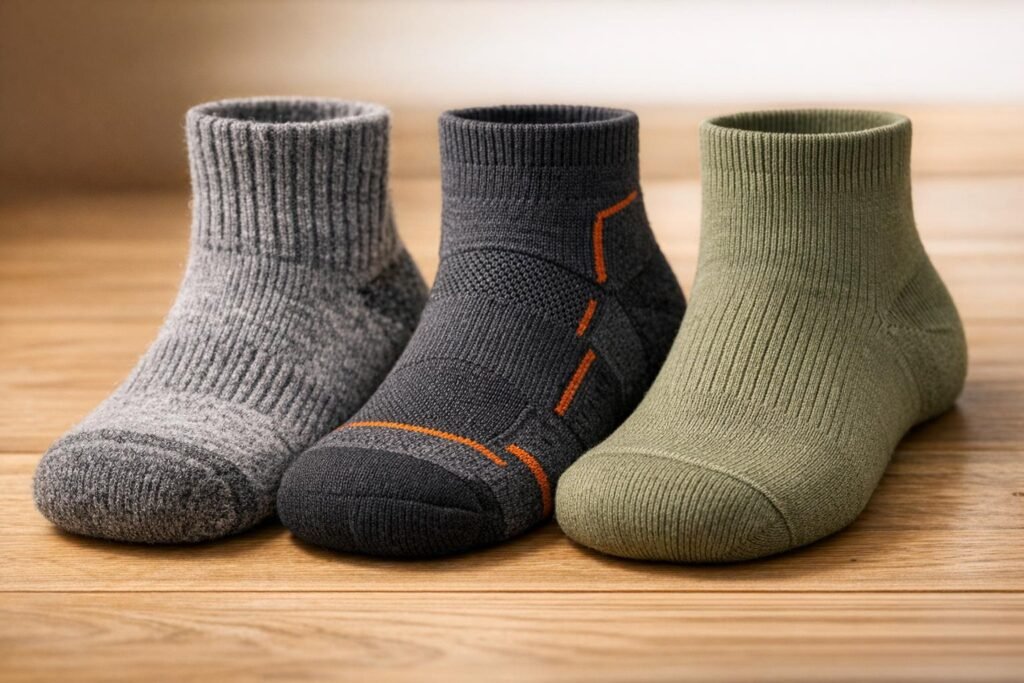
When it comes to hiking, the material of your socks can make or break your experience. The right socks keep your feet dry, regulate temperature, and prevent blisters. Here’s what you need to know:
- Merino Wool: Moisture-wicking, temperature-regulating, odor-resistant, soft, and warm even when wet. Costs $20–$40 per pair but dries slower and needs reinforcement for durability.
- Synthetic Fibers: Durable, fast-drying, and budget-friendly. Includes materials like polyester, nylon, and polypropylene. However, they lack natural odor resistance and provide less insulation in cold weather.
- Bamboo Viscose: Soft, breathable, and naturally anti-odor. Great for sensitive skin but less durable than wool or synthetics.
- Blends: Combine natural and synthetic fibers to balance comfort, durability, and moisture management.
Key Takeaway: Choose merino wool for all-season hikes, synthetic blends for wet or hot conditions, and bamboo for casual hikes or sensitive skin. Avoid cotton – it traps moisture and increases blister risk. Expect to spend $20–$40 per pair for quality hiking socks.
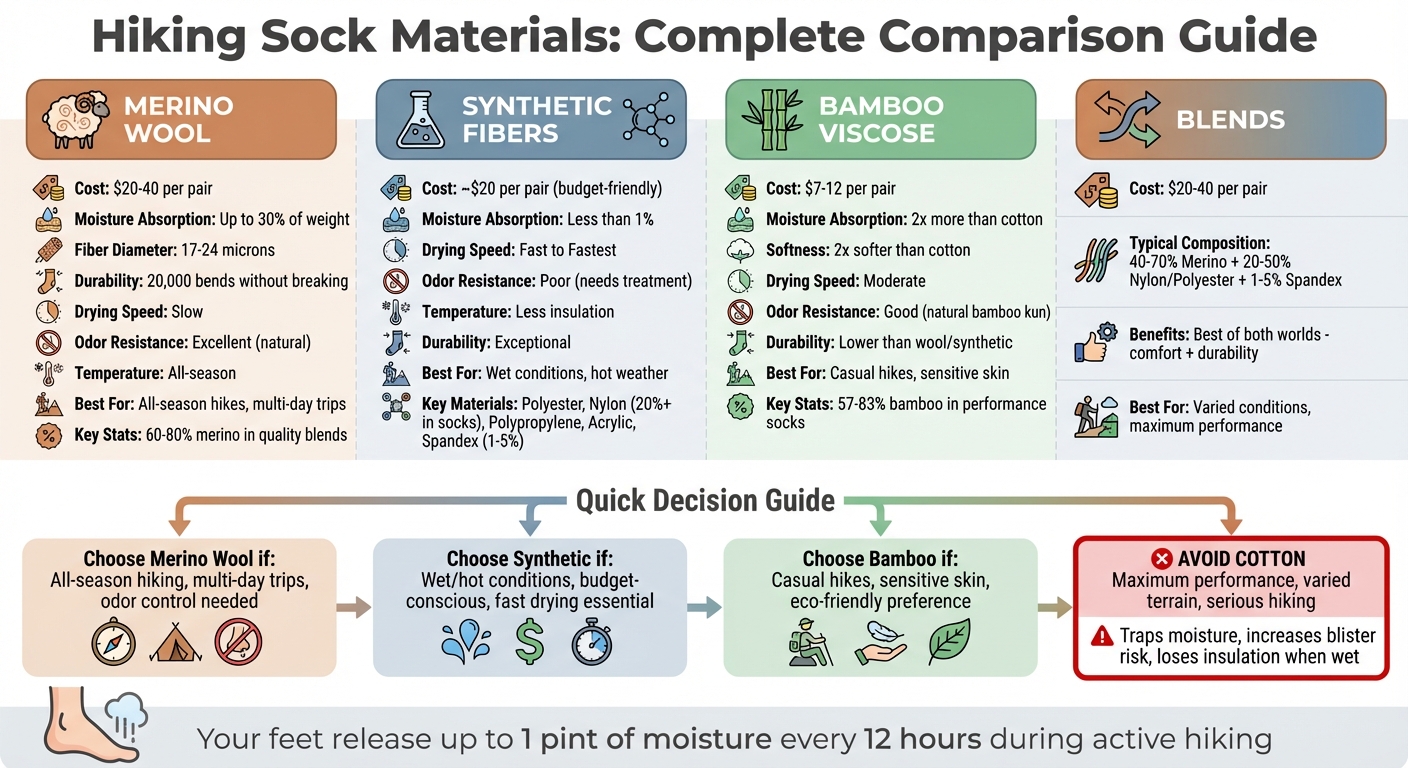
Hiking Sock Materials Comparison: Merino Wool vs Synthetic vs Bamboo
Advice for hiking socks – the science
sbb-itb-5a98267
Merino Wool
When it comes to hiking socks, the material is everything, and merino wool stands out as a top contender. Known as the gold standard for hiking socks, merino wool combines performance and comfort in a way that’s hard to beat. Its fibers are uniquely designed with a water-repelling outer layer and a water-attracting core. This allows merino to wick moisture away from your skin in vapor form – before it turns into liquid sweat – keeping your feet dry and comfortable. Even more impressive, it can absorb up to 30% of its weight in moisture vapor without feeling damp, which helps reduce friction and the risk of blisters.
Another standout feature is its temperature regulation. Thanks to its natural crimp, merino wool traps air pockets that insulate your feet in cold conditions. On the flip side, during hot weather, the moisture stored in the fibers evaporates, creating a cooling effect between your skin and the sock. This makes merino wool an all-season champion, whether you’re hiking through a desert or tackling icy trails in the mountains.
Odor resistance is another reason hikers love merino wool. Its natural lanolin and protein structure inhibit bacterial growth, while the fibers trap odor molecules until the socks are washed.
"Merino wool absorbs odor molecules and traps them until a garment is washed" – Angela Jabara from The Woolmark Company
This means you can wear the same pair for several days without worrying about unpleasant smells – a lifesaver for multi-day backpacking trips when pack weight is a concern.
Comfort is also a major selling point. Merino fibers are incredibly fine, measuring just 17 to 24 microns in diameter, compared to the 40 microns or more of traditional wool. This makes them soft and itch-free, even for those with sensitive skin. Plus, these fibers are surprisingly durable – they can be bent and twisted up to 20,000 times without breaking, far outlasting cotton (3,200 times) and silk (1,800 times). However, pure merino socks aren’t the most rugged option for demanding trails. To improve durability, most high-quality hiking socks blend merino with nylon for added strength and spandex for a snug fit, typically keeping the merino content between 60% and 80%.
With so many advantages, it’s clear why merino wool is a favorite, but it does come with a few trade-offs worth considering.
Pros and Cons of Merino Wool
| Pros | Cons |
|---|---|
| Moisture management – Wicks vapor and absorbs up to 30% of its weight without feeling wet | Higher cost – Ranges from $20 to $40 per pair, much pricier than cotton or synthetic options |
| Odor resistance – Can be worn multiple days without washing | Slower drying – Takes longer to dry compared to synthetic alternatives |
| Temperature control – Keeps feet warm in cold and cool in heat | Moderate durability – Needs nylon reinforcement to prevent wear and tear in high-friction areas |
| Warm when wet – Retains insulation even after heavy rain or stream crossings | Not vegan – Made from animal-derived fibers, which may not suit everyone’s preferences |
| Soft and itch-free – Fine fibers (17–24 microns) ensure comfort |
These qualities make merino wool a standout material, but understanding its strengths and limitations is key when comparing it to synthetic and blended options.
Synthetic Fibers
Merino wool excels in temperature regulation, but synthetic fibers take the lead when it comes to durability and drying speed. Materials like polyester, nylon, polypropylene, acrylic, and spandex offer specific benefits that make them a great choice for hikers, especially in wet conditions. Unlike natural fibers, synthetics absorb less than 1% of their weight in water and dry quickly, which is a game-changer when you’re dealing with rain, humidity, or stream crossings.
Nylon stands out as one of the toughest fibers used in socks. It’s often added to high-wear areas, like the heels and toes, to prevent holes and extend the sock’s lifespan. Hiking socks typically include at least 20% nylon for this reason. Polyester, on the other hand, offers a great balance of strength and moisture-wicking capabilities, while polypropylene takes it a step further with superior moisture management and the fastest drying times – perfect for hot or extremely wet conditions. Acrylic mimics the softness and warmth of wool but doesn’t last as long and can pill over time. Spandex, also known as Lycra or elastane, is usually included in small amounts (1–5%) to add stretch and keep socks snug, preventing uncomfortable bunching.
However, synthetic fibers do have their downsides. One major drawback is odor control. Unlike merino wool, which naturally resists bacteria and smells, synthetic materials can trap body oils and bacteria, leading to quicker odor buildup.
"Synthetic hiking sock fabrics lack any natural odor resistance. As such, they aren’t always the best pick for serious multi-day trekkers." – Ziggy Samuels, Epic Expeditions
To combat this, some manufacturers treat synthetic socks with silver-based antimicrobial agents like SmartSilver or X-Static. While effective, these treatments can wear off over time. Another limitation is temperature regulation – synthetics generally provide less insulation than wool and may lose some moisture-wicking efficiency in freezing conditions.
Despite these challenges, synthetic materials excel in specific situations. For example, polypropylene is ideal for consistently wet environments due to its unmatched moisture-wicking ability. Nylon’s incredible abrasion resistance makes it perfect for hikers who experience rapid wear in high-friction areas. Plus, synthetic socks are often more budget-friendly than merino wool, with solid options available for around $20 per pair. These qualities make synthetic fibers a practical choice for certain hiking needs, demonstrating that material selection should depend on the conditions you face.
Comparison of Synthetic Materials
| Material | Drying Speed | Durability | Key Strength | Best For |
|---|---|---|---|---|
| Polyester | Fast | High | Excellent moisture wicking and strength-to-weight ratio | General hiking in varied conditions |
| Nylon | Fast | Exceptional | Unmatched abrasion resistance | Reinforcing high-wear areas like heels/toes |
| Polypropylene | Fastest | High | Superior moisture wicking; absorbs almost no water | Wet or hot conditions, river crossings |
| Acrylic | Moderate | Moderate | Wool-like softness and warmth at a lower cost | Budget-friendly warmth |
| Spandex | N/A | Low | Elasticity and shape retention | Ensuring a snug, comfortable fit |
Bamboo Viscose
Bamboo viscose stands out as a natural choice for hikers who value softness and environmentally friendly materials. Known for its silk-like texture, bamboo is said to be twice as soft as cotton, offering a smooth feel that minimizes friction and helps reduce the risk of blisters. Its fibers are designed with micro-gaps, which promote excellent breathability and moisture management. In fact, bamboo can absorb nearly twice the moisture of cotton, making it a great option for keeping feet dry. Plus, it naturally regulates temperature, keeping your feet cool in the summer and warm in cooler weather.
One of bamboo’s standout features is its natural antimicrobial property. Thanks to bamboo kun, a substance naturally present in the fibers, it inhibits bacterial growth without the need for added chemicals. This helps keep socks odor-free even during multi-day hikes.
"Bamboo is the new kid on the block… making waves in the hiking community for its eco-friendly attitude, extreme breathability, and fantastic moisture-wicking properties." – Ziggy Samuels, Epic Expeditions
However, bamboo viscose does have some drawbacks. Its softness, while luxurious, compromises its durability compared to tougher materials like merino wool or synthetic fibers. Over time, bamboo socks may wear out faster, particularly in high-friction areas. Additionally, while they dry faster than cotton, bamboo socks take longer to dry than synthetic options like polyester or polypropylene.
"Being relatively softer than merino wool, viscose and lyocell fibers are not as durable and will wear faster than merino wool." – EcoSox
To address these issues, manufacturers often blend bamboo viscose with materials like nylon, spandex, or hemp to strengthen areas like the heel and toe. Most performance bamboo socks feature a fiber composition of 57% to 83% bamboo viscose. They’re also a budget-friendly option, typically costing between $7 and $12 per pair – roughly half the price of premium merino wool socks. Some brands, such as EcoSox, even back their products with guarantees like a Lifetime Blister Free Guarantee.
For hikers with sensitive skin or those prone to irritation, bamboo’s hypoallergenic properties make it a standout choice. However, these socks require more careful care – like air drying and gentle washing – to avoid shrinkage and preserve their moisture-wicking abilities. If you’re tackling rugged trails or need socks that can handle heavy wear, you might want to consider bamboo-hemp blends or switch to merino wool or synthetic alternatives for added durability. Despite its limitations, bamboo viscose remains a solid option for specific hiking needs and opens the door to exploring blended materials.
Material Blends
Combining different fibers in a sock creates a balance of qualities that no single material can achieve on its own. That’s why high-performance hiking socks often blend natural and synthetic fibers to deliver the best of both worlds. For example, merino wool offers moisture management, odor resistance, and comfort, while synthetic fibers like nylon and polyester add durability, shape retention, and quick-drying capabilities.
A typical high-quality hiking sock might include 40–70% merino wool for its moisture-wicking and temperature-regulating properties, 20–50% nylon or polyester to strengthen high-wear areas like the heel and toe, and 1–5% spandex or elastane for a snug, secure fit. The synthetic components ensure the sock retains its shape and dries quickly.
"Synthetic-merino wool hybrids are a gold standard for many hikers. Soft and warm; durable and stretchy – they offer the best of both worlds." – Ziggy Samuels
The ideal blend depends on your hiking conditions. For warm-weather hikes, lighter blends with 30–60% merino wool and a higher proportion of synthetic fibers boost breathability and drying speed. For colder or high-altitude adventures, socks with 50–75% merino wool provide better insulation, as merino remains warm even when damp. Some blends even incorporate 1–5% silver-infused yarns for added antibacterial properties. This thoughtful combination of materials ensures socks that perform well across a variety of terrains and climates.
Examples of Common Blends
Here’s a breakdown of popular hiking sock blends and their standout features to help you choose the right pair for your needs:
| Brand & Model | Composition | Main Benefits |
|---|---|---|
| Darn Tough Hiker Micro Crew | 61% Merino, 36% Nylon, 3% Lycra Spandex | Durable, lifetime warranty, and midweight cushioning |
| Smartwool Classic Mountaineer | 73% Merino, 24% Nylon, 3% Elastane | Heavy cushioning and maximum insulation for cold or high-altitude hikes |
| REI Co-op Midweight Crew | 79% Merino, 20% Nylon, 1% Spandex | High wool content for warmth at a more budget-friendly price |
| Darn Tough Light Hiker | 43% Merino, 54% Nylon, 3% Lycra Spandex | Breathable and durable for summer or warm-weather hikes |
| Covert Threads Jungle Sock | 75% Polypropylene, 25% Nylon | Designed for moisture-wicking in hot, humid, and wet environments |
Expect to pay between $20 and $40 per pair for quality hiking socks. Always check the label – materials are listed by percentage, with the primary fiber (making up at least 40% of the blend) appearing first. Avoid socks containing cotton, as it absorbs moisture and loses insulation when wet.
Choosing the Right Material for Your Needs
The material of your hiking socks can make or break your outdoor experience, especially when it comes to adapting to different environments. For cold-weather hikes, merino wool is a standout choice. It keeps insulating even when damp from snow or sweat, making it a reliable option for winter adventures. To balance warmth and durability, aim for socks with 50–75% merino wool blended with synthetic fibers. For extreme cold or high-altitude conditions, alpaca wool is worth considering. Its hollow fibers provide more warmth for less weight compared to merino wool. If you’re sensitive to wool or on a budget, acrylic is a solid alternative. It mimics wool’s insulating properties while being hypoallergenic and vegan-friendly.
"Merino wool is the reigning champion when it comes to cold-weather hiking socks." – Pine Cliff Resort
When hiking in hot and humid climates, your sock needs change. While merino wool still performs well by cooling as moisture evaporates, lightweight synthetic blends with materials like polypropylene or nylon dry faster and excel in jungle-like conditions. Considering your feet can release up to a pint of moisture every 12 hours during active hiking, socks with mesh zones on the top can enhance breathability. For casual warm-weather hikes, bamboo viscose offers a soft feel and natural antimicrobial properties. However, it’s less durable than wool or synthetic options.
For hikers who prioritize sustainability, material choices also matter. Merino wool stands out as a biodegradable and renewable option. Meanwhile, brands are increasingly incorporating recycled synthetics like Repreve (made from recycled nylon) and Coolmax Eco Made (recycled polyester from plastic bottles) to reduce waste without sacrificing performance. Durability is just as important – look for socks with reinforced heels and toes made with nylon to extend their lifespan. With nearly 13 million tons of clothing and footwear waste generated in the U.S. in 2018, and only about 13% recycled, choosing long-lasting gear is a step toward reducing your environmental footprint.
Lastly, ensure your socks fit well. Socks that make your boots too tight can restrict blood flow, leading to cold feet and increasing the risk of frostbite. Expect to spend $20 to $40 per pair for quality hiking socks.
Conclusion
Choosing the right hiking socks depends on your specific needs and the conditions you’ll face. The fabric plays a key role in how well a sock can manage moisture, regulate temperature, and prevent blisters. As Oscar Brumelis, founder of Hikemuch, emphasizes:
"The main thing that determines whether a hiking sock is good or not is its material".
For all-season hikes, merino wool remains the top choice. In colder weather, go for socks with 50–75% merino wool content. On the other hand, lightweight synthetic blends are better suited for hot, humid conditions because they dry quickly. If you’re looking for a soft option for casual hikes, bamboo viscose can work well, particularly for those with sensitive skin, though it doesn’t match the durability of wool or synthetics.
High-performance socks often combine natural fibers like wool for comfort with synthetic materials for durability and moisture management. This blend provides the softness and temperature control of wool, the quick-drying and tough properties of synthetics, and just enough stretch to stay snug. One thing to remember: avoid cotton entirely – it traps moisture and increases the risk of blisters.
Considering that your feet can release up to a pint of moisture every 12 hours, investing in quality socks that handle moisture effectively is crucial. With most hiking socks priced between $20 and $40 per pair, it’s a good idea to test your sock-and-boot setup on shorter hikes before tackling longer trips. For multi-day adventures, pack at least two pairs to stay prepared. Use this guide to find the perfect socks and make your time on the trail as comfortable as possible.
FAQs
How do I choose sock thickness (lightweight vs midweight vs heavy) for my hike?
When selecting socks, match their weight to the activity and weather. Lightweight socks are ideal for warm weather or short hikes, offering breathability and comfort. Midweight socks work well for everyday use and moderate conditions, striking a balance between warmth and cushioning. For cold climates or challenging terrain, go for heavy socks, which provide extra insulation and padding to keep your feet protected and warm.
Should I wear liner socks, and what material should liners be?
Liner socks are a great addition to your hiking gear. They help prevent blisters, wick away moisture, and boost overall comfort, particularly when worn under thicker hiking socks. Typically crafted from lightweight, breathable materials like synthetic fibers or merino wool, they work to keep your feet dry and comfortable during long treks.
How do I wash and dry merino or bamboo socks without ruining them?
To keep your merino or bamboo socks in great shape, start by turning them inside out before washing. Use cold or lukewarm water on a gentle cycle with a mild detergent. If you prefer handwashing, soak the socks in cool water, then rinse gently – just avoid wringing them out to protect the fibers. When drying, lay them flat on a towel or drying rack, keeping them away from direct heat or sunlight. If you must use a dryer, stick to low heat to prevent any damage.