

Outdoor cardio offers a unique way to improve fitness while enjoying nature. It engages stabilizer muscles, reduces stress, boosts immunity, and burns calories more effectively than indoor workouts. For example, hiking can burn 400–550 calories per hour and lower stress hormones by 28%. Spending just 20 minutes outdoors can significantly improve mood and focus.
Key highlights:
- Physical Benefits: Strengthens muscles, improves heart health, and reduces joint impact.
- Mental Benefits: Reduces anxiety, enhances mood, and sharpens focus.
- Popular Activities: Trail running, hiking, cycling, and power walking.
- Preparation Tips: Use proper gear, stay hydrated, and check weather conditions.
Whether you’re a beginner or advanced, outdoor cardio provides a versatile option for all fitness levels. Start small, stay consistent, and enjoy the health benefits of exercising in natural settings.
Benefits of Cardio in Nature
Physical Health Benefits
Working out in natural settings offers a boost that gym sessions often can’t match. When you’re navigating uneven terrain – like rocks, roots, or hills – you activate stabilizer muscles in your core, glutes, calves, and hip flexors. This kind of engagement is something treadmills just don’t replicate. Plus, hiking can burn anywhere from 400 to 550 calories per hour and has been shown to result in up to four times more weight loss compared to indoor workouts.
"Hiking is really a three-in-one exercise that combines components of cardio, balance, and weightlifting – and this increased complexity creates a greater challenge for our bodies."
- Joyce Gomes-Osman, Physical Therapist and Neurologist, University of Miami Miller School of Medicine
Exercising outdoors also brings measurable benefits to your heart and joints. Green environments help reduce blood pressure and improve cardiac output, while softer natural surfaces lessen the impact on your joints, all while helping to strengthen your bones. Breathing in phytoncides – compounds released by trees – can enhance immune function and reduce inflammation. On top of that, exposure to sunlight naturally boosts vitamin D levels, which is especially important since about 35% of Americans are deficient.
And the perks don’t stop at physical health; the mental and emotional gains are just as compelling.
Mental and Emotional Benefits
Spending time outdoors for cardio isn’t just good for your body – it’s a game-changer for your mind. Natural settings help break the cycle of repetitive negative thoughts that often fuel anxiety and depression. The sensory experience – fresh air, natural light, and the sounds of nature – gives your brain a much-needed reset from the overstimulation of urban life.
Outdoor workouts also encourage the release of feel-good chemicals like endorphins, serotonin, and norepinephrine, which can ease depression and improve your overall mood. For example, research shows that spending five or more hours outside on weekends significantly reduces the risk of mild depression compared to spending less than 30 minutes outdoors. Additionally, exposure to natural light helps regulate your circadian rhythm, leading to better sleep and improved alertness during the day.
"Hiking is an amazing way to get outside and explore, reconnect with feelings of wonder and awe, and reap countless benefits such as decreased anxiety and depression."
- Alyson Chun, Assistant Director of Adventure Sports and Recreation, Stanford University
For the best mental health benefits, aim for at least 120 minutes of outdoor activity per week – this is when the positive effects really start to add up. And if you can exercise near water, like a lake or ocean, you may notice even greater improvements in mood and self-esteem.
Connecting with the Outdoors
Cardio in nature does more than improve your health – it strengthens your connection to the world around you. The simple act of noticing the scent of pine trees, the rustle of leaves, or the chirping of birds helps ground you in the moment and sharpens your awareness. This connection can also build mental resilience, as adapting to unpredictable weather or challenging terrain trains your brain to handle uncertainty. These experiences make outdoor fitness feel less like a chore and more like a fulfilling lifestyle.
"There’s a real sense of peace and composure you get from being outside and away from everything."
- Dr. Aaron L. Baggish, Associate Director of the Cardiovascular Performance Program, Massachusetts General Hospital
And don’t overlook the social benefits. Trails and parks provide a relaxed setting to connect with friends, family, or even local groups. These shared experiences can reduce feelings of isolation and help strengthen your relationships.
sbb-itb-5a98267
Gear for Outdoor Cardio
Footwear and Clothing
When tackling outdoor cardio, the right gear can make all the difference, especially when dealing with unpredictable terrain. Start with footwear tailored to your environment. For rugged trails, trail-specific shoes with aggressive outsoles are a must. On the other hand, standard running shoes work well for smoother, groomed paths. A solid pick for technical trails is the Altra Lone Peak 9, priced around $160 and boasting a 4.8/5 rating on REI.
Clothing should be layered to handle changing conditions. In cooler weather, lightweight, moisture-wicking fabrics paired with a wind-resistant jacket, like the Patagonia Houdini Jacket (about $100), offer protection from light rain and wind. Fully waterproof jackets should be reserved for extreme conditions, as they can trap moisture and leave you feeling damp. During summer, prioritize breathable clothing, polarized sunglasses to cut glare, and a lightweight hat such as the Janji AFO Hyperlight Cap (approximately $38 and rated 4.8/5 on REI) to shield you from the sun. Winter workouts call for shoes with excellent traction and, if you’re navigating snowy terrain, gaiters to keep snow out of your footwear.
Hydration and Navigation Tools
Staying hydrated is critical, especially for runs lasting over an hour. A hydration vest like the Salomon Adv Skin 12, starting at about $114.93, comes equipped with two 500 ml (17 fl oz) soft flasks and extra storage for essentials. For shorter sessions under 60 minutes, a handheld bottle or waistbelt will suffice. If you’re exercising for over an hour, aim to drink 4 to 6 ounces every 20 minutes, and for workouts exceeding 90 minutes, include electrolytes to maintain balance.
Navigation tools are equally important. A GPS watch can help track your distance, speed, and heart rate while offering real-time route mapping. However, it’s always wise to carry a physical map and compass as a backup. For backcountry adventures where cell service is unreliable, consider a satellite communicator like the Garmin inReach Mini 2 (around $350, rated 4.4/5 from 1,641 reviews). It provides two-way messaging, location sharing, and an SOS feature. Additionally, download offline maps or save screenshots of your planned route before heading out.
Safety Items
Safety should never be overlooked, even for daytime outings. A headlamp with at least 200 lumens is essential for runs that might extend into the evening. The Black Diamond Distance 1500 headlamp (around $249.95, rated 4.5/5 from 73 reviews) is a standout option, offering up to 1,500 lumens and a "Comfort Cradle" strap to reduce bounce.
A lightweight first-aid kit is another must-have. The Adventure Medical Kits Ultralight .3, priced at about $13.95, is waterproof and compact, making it perfect for treating blisters, cuts, or minor sprains. An emergency blanket, such as the SOL model (approximately $6.95), is also a smart addition. Weighing just 2.5 ounces, it reflects up to 90% of body heat, offering critical warmth in unexpected situations. Lastly, pack an emergency whistle – it’s far more effective than shouting when signaling for help.
With the right equipment, you’ll be ready to take on outdoor cardio while staying safe, comfortable, and prepared for anything.
Outdoor Cardio Workout Ideas
Trail Running and Jogging
Trail running is a fantastic way to challenge your body while improving stamina, agility, and balance. Unlike running on smooth pavement, trails offer uneven terrain that forces your core and stabilizing muscles to engage as you navigate rocks, roots, and shifting ground. This not only enhances coordination but also burns more calories.
If you’re new to trail running, start with run–walk intervals. For example, walk for 10 minutes, then run for 5 minutes, and repeat this cycle 2–4 times. As your endurance builds, gradually increase the running time while reducing the walking intervals. To add a fun twist, try fartlek sprints – use natural landmarks like trees or rocks as markers. Sprint between two points, then jog at an easy pace until you reach the next marker.
To ensure you’re working at the right intensity, calculate your target heart rate by subtracting your age from 220. Beginners should aim for 40–60% of this number, while more experienced runners can push for 60–80%. Use intervals to stay within your target range.
Looking for another way to enjoy the outdoors? Hiking offers a similar cardio boost with added benefits.
Hiking for Cardio
Hiking combines cardio with balance and strength training, making it a well-rounded workout. For instance, a 170-pound person can burn about 693 calories during a 90-minute hike. On more challenging terrain, the calorie burn can climb to 400–550 calories per hour.
If you’re just getting started, stick to flat or gently rolling trails and gradually work your way up to steeper inclines as your fitness improves. Want to make your hike more intense without switching trails? Add a weighted backpack or use trekking poles to engage your upper body.
Prefer something lower impact? Cycling and power walking are excellent alternatives that still deliver strong cardiovascular benefits.
Cycling and Power Walking
Cycling is an ideal low-impact option that’s easy on the joints while still engaging your core. Riding on natural paths not only provides great cardio benefits but also adds an element of balance. A 170-pound person cycling at a casual pace can burn about 308 calories per hour. To increase the intensity, try interval training: tackle 2-minute hill climbs at a challenging pace, then recover with 2 minutes of easy coasting. Repeat this cycle three times for a solid workout. The varied terrain of outdoor cycling also works your core more than stationary biking.
Power walking is another simple yet effective cardio option that requires minimal equipment. Keep your pace brisk – fast enough to make talking possible but singing difficult. For a full-body workout, incorporate park bench circuits: every 10 minutes, stop for exercises like tricep dips, step-ups, or incline push-ups using a sturdy bench. Get creative with natural obstacles, like using a fallen log for balance exercises or lunges. To up the challenge, carry hiking poles to engage your upper body or choose routes with hills to elevate your heart rate.
A Great Outdoor Cardio Routine! Looking to improve your stamina…GIVE THIS A TRY!!!
Safety and Preparation
To make the most of your outdoor cardio sessions, it’s important to prepare for weather conditions, stay hydrated, and take steps to avoid injuries.
Weather and Terrain Preparation
Before heading outside, check the weather forecast and look for any park alerts about trail closures, lightning risks, or extreme temperatures. Dr. N. Stuart Harris, Chief of the Division of Wilderness Medicine at Massachusetts General Hospital, highlights how location-specific factors matter: "If you’re taking a hike in mid-July in the Arizona desert, there’s a very different list of considerations than if you’re in the mountains of Montana or the forests of North Carolina". Since thunderstorms are more common in the afternoon, aim for morning workouts whenever possible.
Dress as if it’s 20°F warmer than the actual temperature. In hot weather, choose moisture-wicking, lightweight, and light-colored clothing, and steer clear of cotton, which retains moisture [30,31]. For colder conditions, layer up and include a hat and gloves. If it’s raining, a brimmed hat can help keep your vision clear [4,30]. Avoid exercising outdoors during the hottest part of the day, typically between 12:00 p.m. and 3:00 p.m..
Always let someone know your route and expected return time. Bring a physical map and compass as backups – relying solely on your phone’s GPS can be risky due to battery life or lack of cell service in remote areas. Stick to marked trails to avoid getting lost and to minimize your impact on the environment.
Once you’ve planned your route and chosen the right gear, the next step is managing hydration and nutrition.
Hydration and Nutrition
Staying hydrated is key, and it’s best to drink before you feel thirsty. As Muscle & Fitness points out, "Once you’re thirsty, you’re already behind". During your workout, try to drink 4 to 6 ounces of water every 20 minutes. If your session lasts over an hour, add 30 to 60 grams of carbohydrates per hour to keep your energy up. Pack portable snacks like trail mix, nuts, or granola bars – salty options can help replenish lost electrolytes. Watch for dehydration symptoms, which range from mild (dry mouth, headache, muscle cramps, dark urine) to more severe (confusion, dizziness, or a rapid heartbeat).
Injury Prevention
After addressing hydration and nutrition, focus on preparing your body for the workout. Spend 5–8 minutes warming up with moves like leg swings, ankle circles, high knees, or butt kicks. This helps you adjust to uneven terrain and lowers your risk of injury. Proper form is essential – engage your core and maintain good posture during activities like running or power walking. If you experience chest pain, confusion, a fever above 103°F, or a rapid, weak pulse, stop exercising immediately. These may be signs of heat stroke, which requires urgent medical attention [4,31].
Keep in mind that your body needs 4 to 14 days to acclimate to exercising in hot conditions, so ease into outdoor workouts gradually, especially if you’re new or returning after a break. If you’re taking medications like beta-blockers or diuretics, consult your doctor beforehand, as these can influence how your body handles heat [29,31].
Weekly Outdoor Cardio Plans
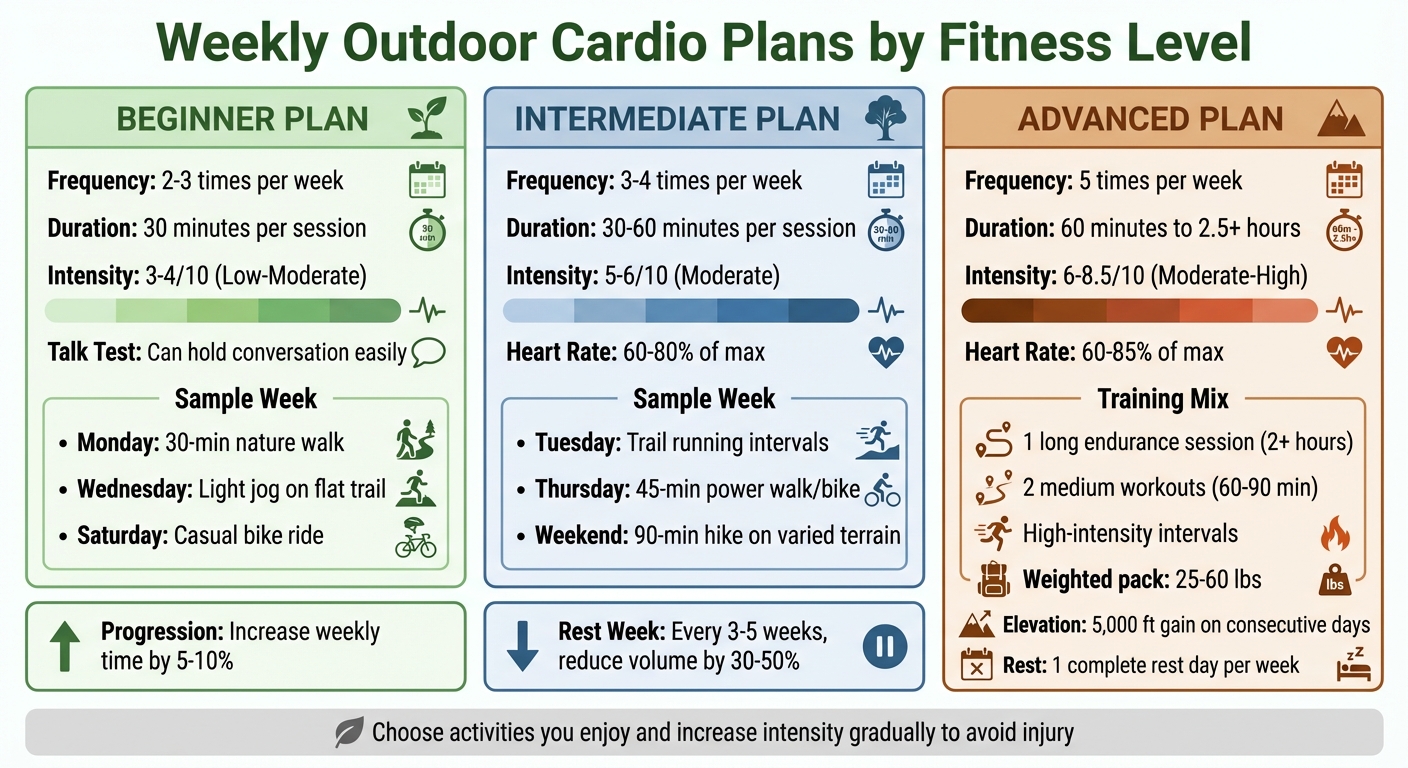
Weekly Outdoor Cardio Training Plans by Fitness Level
When creating a weekly outdoor cardio plan, it’s important to consider your current fitness level and gradually increase the intensity over time. A well-structured plan not only helps you stay consistent but also reduces the risk of injury.
Beginner Plan
If you’re just starting out, focus on building a routine that feels manageable and enjoyable. Start with 30 minutes of cardio 2–3 times a week at a low-to-moderate intensity level (3–4/10). A handy way to measure your effort is the "Talk Test" – you should be able to hold a conversation without difficulty. If talking becomes hard, ease up on your pace.
A beginner week might look like this:
- Monday: A 30-minute nature walk
- Wednesday: A light jog on a flat trail
- Saturday: A casual bike ride
As Sarah, Founder of Miss Adventure Pants, advises:
"Your No. 1 goal for this phase is to establish a consistent workout routine that you enjoy".
When you’re ready to step it up, increase your weekly cardio time by 5–10% – a slow and steady approach helps you avoid injuries.
Once you’ve built a solid foundation, you can move on to a more structured plan.
Intermediate Plan
For those with some cardio experience, aim for 3–4 sessions per week, each lasting 30–60 minutes at a moderate intensity level (5–6/10). At this stage, try adding aerobic intervals – push yourself harder for one minute, then recover for three minutes. Efforts should target 60–80% of your max heart rate.
Here’s an example of an intermediate week:
- Tuesday: Trail running intervals
- Thursday: A steady 45-minute power walk or bike ride
- Weekend: A 90-minute hike on varied terrain
Mixing up your activities keeps things engaging and prevents your body from adapting too quickly. To ensure proper recovery, schedule a "rest week" every 3–5 weeks, cutting your training volume by 30–50%.
If you’re ready for more intensity, the advanced plan takes things to the next level.
Advanced Plan
An advanced plan includes five active training days per week, with workouts ranging from 60 minutes to over 2.5 hours. Aim for 60–85% of your max heart rate, with occasional peak intervals at the higher end. Balance your week with one long endurance session (2+ hours), two medium-length workouts (60–90 minutes), and high-intensity anaerobic intervals.
For tougher terrain, start weighted conditioning by hiking with a pack. Begin with 25 pounds and gradually work up to 60 pounds. Advanced routines may also include back-to-back high-intensity days, such as climbing 5,000 feet of elevation gain on consecutive days to simulate challenging conditions. Tempo sessions are another great addition – hike uphill at a moderate-fast pace for 30–60 seconds until talking becomes difficult, then recover.
Don’t forget to schedule at least one complete rest day each week. On recovery days, opt for low-impact activities like swimming or cycling to maintain your fitness while giving your joints a break.
Conclusion
Outdoor cardio delivers incredible benefits for both your body and mind. It strengthens your heart, supports bone health, and burns calories efficiently – all while engaging stabilizer muscles as you navigate uneven terrain. On the mental side, spending time in nature can lift your mood, sharpen your focus, and even boost memory.
What’s more, outdoor cardio is an option for everyone, no matter your fitness level. Whether you’re strolling through a park, jogging along a scenic trail, or tackling steep hills, nature serves as a versatile, open-air gym. The varied terrain adds natural challenges, and breaking workouts into shorter, manageable sessions throughout the week makes it easier to stay consistent.
To make the most of your outdoor workouts, preparation is essential. Check the weather, stay hydrated, and let someone know your route. By taking these simple precautions, you can enjoy your time outside safely and effectively.
Whether you’re starting with a couple of 30-minute sessions each week or pushing your limits with more intense hill climbs, consistency is the key to success. Choose activities you genuinely enjoy, switch up your routine to keep things interesting, and pay attention to your body’s needs. Gradually incorporating outdoor cardio into your lifestyle can transform your fitness journey – the natural world is ready to inspire and challenge you.
FAQs
What are the main benefits of doing cardio workouts outdoors instead of indoors?
Exercising outdoors brings together physical activity and mental rejuvenation in a way that indoor workouts often struggle to replicate. Running, cycling, or hiking in natural settings not only boosts your heart and lung health but also strengthens your muscles, bones, and balance. Plus, moving your body in the great outdoors comes with some serious mental perks – like easing stress, lifting your mood, and sharpening your focus.
But there’s more to it than just fitness. Stepping outside means soaking up fresh air, basking in sunlight for that all-important Vitamin D, and enjoying the peaceful vibe of natural surroundings. These elements don’t just make your workout more enjoyable – they can also help reduce the risk of chronic illnesses, making outdoor exercise a refreshing and rewarding choice.
What’s the best way for beginners to start outdoor cardio workouts?
Starting outdoor cardio workouts can be both simple and enjoyable. Pick an activity that feels manageable, whether it’s brisk walking, light jogging, cycling on a smooth path, or taking a short hike on an easy trail. Make sure to wear comfortable, supportive shoes and plan a modest route, such as a 1- to 2-mile loop or a 20-minute bike ride. Check the weather beforehand, and bring along essentials like water, sunscreen, and a phone with GPS for safety.
Start small with 10- to 15-minute sessions, 2–3 times a week, at a pace where you can comfortably hold a conversation. As your stamina improves, gradually increase the time or distance. You can also mix in simple intervals – try 30 seconds of a quicker pace followed by 90 seconds of recovery. To keep things interesting, treat each session as a mini-adventure. Explore new trails, aim to visit a few parks this month, or set small, achievable goals. With regular effort, you’ll not only build a healthy cardio routine but also get to enjoy the fresh air and natural surroundings.
What precautions should I take for outdoor cardio workouts?
Preparation is crucial for staying safe during outdoor cardio workouts. Before heading out, check the weather forecast and let someone know your planned route and expected return time. Pack the essentials: at least 2 liters of water, a snack, a map or a fully charged phone, and a basic first-aid kit. If you’re venturing into higher elevations or areas with unpredictable weather, bring extra layers and a windproof jacket to stay prepared.
Sun protection is a must. Apply broad-spectrum sunscreen (SPF 30 or higher) at least 15 minutes before starting your workout, and reapply every two hours or after sweating. Wear a wide-brimmed hat, UV-blocking sunglasses, and light-colored, moisture-wicking clothing to keep cool and shield yourself from harmful rays. Stay hydrated by drinking water regularly. On particularly hot or humid days, consider drinks with added electrolytes. If the temperature climbs above 90°F, plan your workout for early morning or evening and take breaks in shaded areas to avoid overheating.
When you’re out in nature, respect your surroundings. Stick to marked trails, maintain a safe distance from wildlife, and secure any food to prevent attracting animals. For added safety, carry a whistle or personal alarm and familiarize yourself with basic navigation and emergency protocols. With thoughtful preparation, you can enjoy the rewards of outdoor exercise while staying safe and comfortable.