
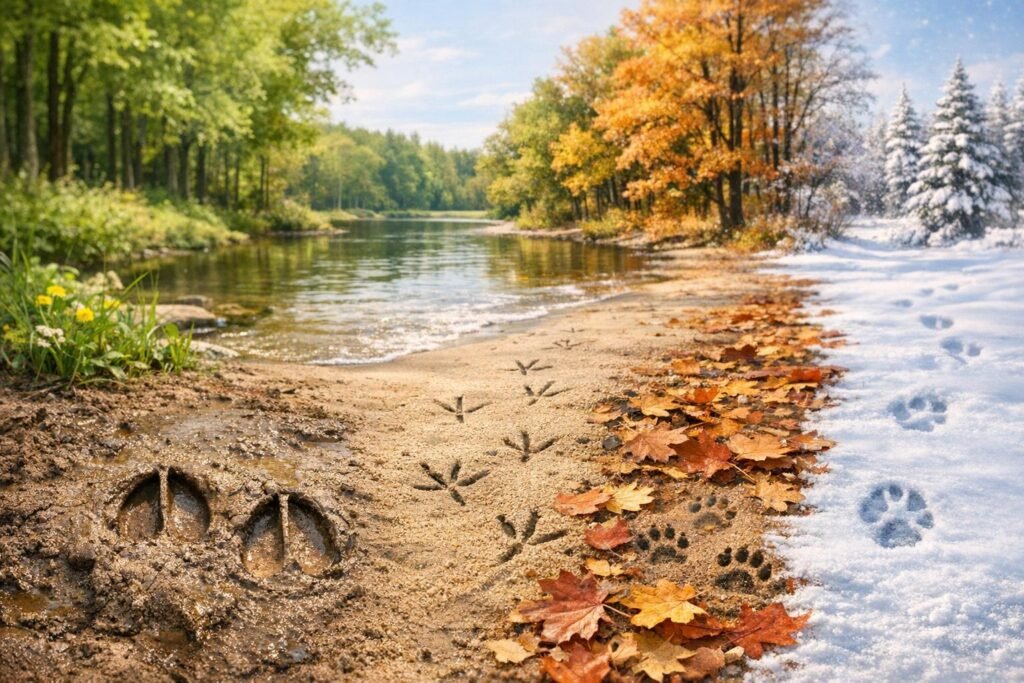
Want to make your outdoor adventures more rewarding? Learning to identify wildlife tracks and signs can deepen your connection with nature. This guide breaks down how seasonal changes affect animal behavior, the best surfaces for spotting tracks, and how to safely observe wildlife without disturbing their habitats.
Here’s a quick overview of what you’ll learn:
- Spring: Look for tracks in muddy areas and listen for breeding calls.
- Summer: Focus on water sources and subtle signs like flattened vegetation.
- Fall: Watch for migration patterns, deer scrapes, and disturbed leaf litter.
- Winter: Use fresh snow to spot clear trails and gait patterns.
Safety and respect are key – always keep your distance and follow Leave No Trace principles. Ready to sharpen your tracking skills? Let’s dive in!
Core Principles of Wildlife Tracking
How to Read Tracks and Signs
When you’re examining animal tracks, start by focusing on the shape of the footprints. For example, canine tracks – like those from dogs, coyotes, or wolves – usually show claw marks because these animals can’t retract their claws. On the other hand, feline tracks from bobcats or mountain lions rarely display claw marks since their claws remain sheathed while walking. The size of the track is another clue: prints smaller than 2 inches often belong to animals like foxes or raccoons, while those over 3 inches may indicate wolves or mountain lions. Deer leave behind cloven hoof prints that measure 2–3 inches long, and black bear tracks feature five toes with claw marks, spanning up to 4 inches across.
Stride patterns can also reveal an animal’s speed and movement. By measuring the distance between consecutive prints (stride length) and the gap between left and right tracks (straddle width), you can determine whether the animal was walking, trotting, or galloping. These patterns are especially helpful during key times like spring breeding season or fall migration.
Tracks aren’t the only signs to look for. Scat, or animal droppings, can give insights into diet. Carnivores often leave tubular droppings with visible hair strands, while herbivores like deer leave pellet-shaped scat. Feeding marks add even more context. For instance, bark stripped near the ground suggests rabbits, while antler rubs on young trees point to deer activity during the fall rut. Observing the gait – whether it’s a walk, trot, lope, gallop, bound, or hop – along with nearby disturbed vegetation or food remains, can deepen your understanding of an animal’s seasonal behavior.
Seasonal changes bring even more layers to these signs, influencing how and where animals leave their marks.
How Seasons Affect Animal Behavior and Habitats
The time of year has a big impact on animal behavior and the signs they leave behind. In winter, food becomes scarce, so animals often forage in concentrated areas, leaving more tracks in a smaller space. In summer, the abundance of food spreads animals out, resulting in scattered trails and less obvious signs. Spring is a time of fresh activity, as animals emerge from hibernation and males establish territories through scrapes or vocalizations. During fall migration, many species create well-worn trails as they move south.
Breeding cycles and hibernation also influence the types of signs you’ll find. Spring often brings new tracks as animals search for mates, while winter activity is more limited, with species like coyotes and foxes leaving the most evidence. Animals may cluster in resource-rich habitats like thickets during lean times, creating dense trails. Seasonal conditions also affect how tracks are preserved. For instance, melting snow in spring can erase tracks quickly, summer’s dry ground can make signs harder to spot, and fallen leaves in autumn often obscure prints. Paying close attention to these seasonal nuances is key to successful tracking.
Weather and terrain add yet another layer of complexity to the art of tracking.
How Weather and Terrain Impact Tracking
Weather and terrain can make or break your ability to spot tracks. Snow provides an excellent medium for clear prints, but timing is everything. Waiting a day or two after a snowfall allows trails to accumulate without being obscured by fresh snow. Be mindful of south-facing slopes, where snow melts quickly in the morning, and focus on shaded areas for better results.
Mud is another excellent surface for capturing detailed impressions, like claw marks and toe pads, though it dries and cracks over time, losing its clarity. On dry ground, tracks fade quickly, so scat or disturbances in the dust often become your best clues. Moist soils, like silt or mud, can preserve intricate details, while coarse or dry sand tends to collapse, making tracks harder to read. Weather also affects how animals communicate – cold air carries sounds farther, while rain muffles them.
Understanding these factors helps you adapt your approach based on the conditions, but safety and ethics should always remain a priority.
Safety and Ethics While Tracking
Safety is essential when tracking wildlife. Always keep a safe distance – at least 100 yards – from potentially dangerous animals like bears or mountain lions. Instead of following tracks toward a den, trace them back to where the animal came from to avoid disturbing it, especially in winter when conserving energy is critical. Tools like binoculars or trail cameras allow you to observe from afar. If you’re tracking in snowy conditions, gear like snowshoes or skis can help, and always check the weather forecast to avoid risks like hypothermia or heat exhaustion. Traveling in groups and informing someone of your plans adds another layer of safety.
Ethical tracking practices are just as important. Stick to "leave no trace" principles by staying on designated trails and avoiding sensitive areas like dens or bedding sites. Never bait or disturb wildlife, and respect seasonal closures or restrictions. Use non-invasive tools like iNaturalist or iTrack Wildlife apps for identification to minimize your impact. The goal is to observe and learn without disrupting natural behaviors. Avoid visiting high-traffic areas during breeding seasons, and if you handle scat or feeding remains, wear gloves to protect both yourself and the environment. Following these guidelines ensures that your tracking efforts are both safe and respectful, while also improving the accuracy of your observations.
Wildlife Tracking Tips by Season
Spring: Tracking Breeding and Emergence Activity
Spring is a perfect time for tracking wildlife, as thawing ground and frequent rains create soft, muddy surfaces that clearly capture animal tracks. Look for signs near stream banks, wet trails, and areas around ponds and vernal pools. Animals like deer, raccoons, opossums, squirrels, and birds often leave tracks in these spots as snow melts and the ground softens. The Illinois Extension highlights that forest preserve trails during this season can reveal a wealth of tracks thanks to the damp soil conditions.
During dawn and dusk, keep your ears open for bird songs and amphibian calls near wetlands. These sounds often indicate breeding activity, and you may spot tracks, egg masses, or even shed skins along muddy edges. After a spring rain, early mornings are ideal for finding crisp tracks on unpaved roads and soft trails, as many animals move overnight. You might also notice birds carrying nesting materials, which can lead you to their nesting zones near food sources like shrub thickets.
As the season transitions to summer and conditions dry out, tracking becomes more challenging, requiring a sharper eye for subtle signs.
Summer: Finding Signs in Dry Conditions
Summer’s dry, hard ground can make tracking tricky, but there are still ways to spot wildlife activity. Focus on subtle indicators like flattened vegetation, scat, and ambient sounds. Water sources such as creeks and ponds become essential gathering points for animals, so check the muddy edges for tracks and scat. Walk slowly along these areas to spot trails and entry points.
In drier conditions, narrow game trails – paths where vegetation is repeatedly flattened or broken – can reveal more about animal movement than isolated prints. Since dense foliage often limits visibility, rely on your ears as much as your eyes. Listen for alarm calls, the rustle of undergrowth, or bird mobbing behavior. Observing browse patterns can also provide clues; for example, torn branches higher up may point to deer, while clean cuts closer to the ground suggest rabbits.
When summer gives way to fall, falling leaves open up new opportunities for tracking migration and mating behaviors.
Fall: Following Migration and Mating Patterns
Fall is an active season for wildlife as animals prepare for winter and engage in mating behaviors. For white-tailed deer, this means the rut, which leaves behind telltale signs like scrapes (bare patches of soil pawed by bucks) and rubs (saplings with stripped bark). Look for these along well-worn trails that connect bedding areas to feeding zones, especially near fields and mast-producing trees like oaks.
With leaves falling, visibility improves, making it easier to spot wildlife. At dawn or dusk, watch for bird migration overhead and check beneath roost trees for droppings or feathers that indicate stopover sites. Mast crops such as acorns and beechnuts attract deer, turkeys, and squirrels, so look for cracked shells, dug-up spots, and nearby scat.
In woodlands covered with leaf litter, individual prints may be hard to find, but repeated use of trails creates subtle paths. These are often most noticeable on cool, damp mornings after a light rain.
Winter: Using Snow and Ice to Your Advantage
Winter snow offers some of the clearest opportunities for tracking wildlife, as it highlights gait patterns and movement over long distances. The USDA suggests that the second morning after a snowfall is ideal for observing tracks since animals will have had time to move, and the snow remains fresh.
Focus your tracking efforts along likely travel routes like streams, fence lines, forest roads, and the edges where cover meets open fields. Understanding basic gait patterns – such as walking, trotting, bounding, or hopping – can help you interpret animal movements more effectively. Follow trails that lead to feeding areas, bedding sites, or scent posts, but avoid venturing too far to prevent disturbing the animals.
Keep an eye out for dens, burrows, and subnivean tunnels, which are often marked by snow mounds, breathing holes, or small entry points. For example, fox or coyote trails may meander over these hidden networks as they hunt. Be mindful of timing – avoid tracking during active snowfall or strong winds, as these conditions can quickly obscure tracks. Additionally, steer clear of sunlit south-facing slopes, where midday melting can erase tracks in no time.
Always prioritize maintaining a safe distance, even when winter conditions make tracking easier.
Advanced Animal Tracking Techniques
sbb-itb-5a98267
Season-by-Season Tracking Comparison
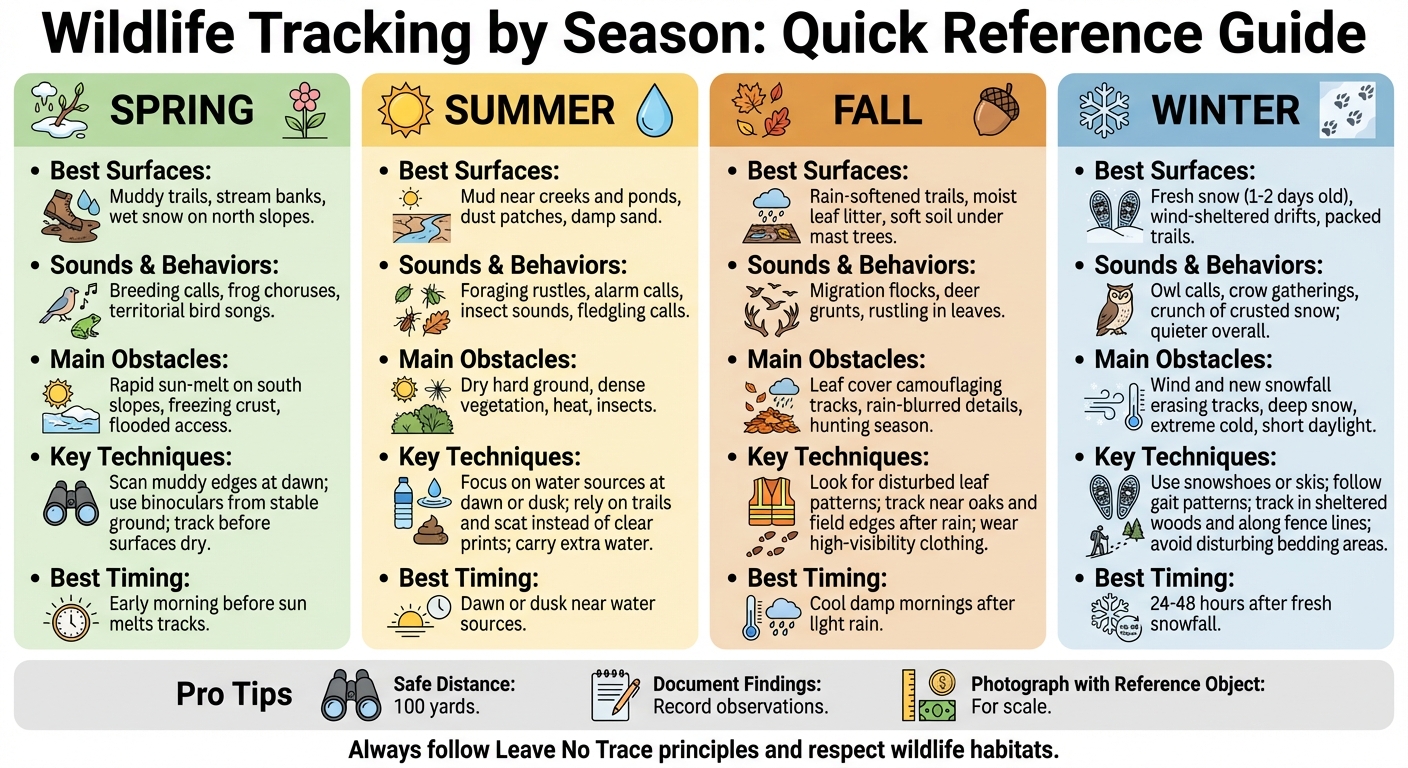
Seasonal Wildlife Tracking Guide: Best Conditions and Techniques by Season
Each season presents distinct tracking conditions that influence where you’ll find signs and how to adjust your approach. By understanding these seasonal variations, you can plan outings that take advantage of the season’s strengths while addressing its challenges.
In spring, the thawing ground and soft mud are ideal for spotting detailed prints, but tracks on sun-warmed south slopes can disappear quickly. Summer brings harder, drier surfaces where clear prints are scarce, making secondary signs like crushed vegetation, scat, and sounds near water sources more important. Fall offers damp leaf litter and heightened animal activity due to migration and mating seasons, although fallen leaves can obscure individual tracks. In winter, fresh snow – best observed one to two days after a storm – preserves detailed gait patterns, though wind and additional snowfall can quickly erase them. This breakdown highlights the key differences across seasons, offering a practical guide for tracking in any environment.
To make the most of spring, focus on north-facing areas and muddy edges before the sun causes rapid melting. During summer, early mornings near water sources and dust patches are your best bets. In fall, game trails near mast-producing trees after rain are prime spots. For winter tracking, use snowshoes or skis to navigate sheltered routes, and consider tracing tracks in reverse to avoid disturbing animals in resting areas. These strategies align with core tracking principles and are summarized in the table below for quick reference.
Quick Reference Table by Season
| Season | Ideal Surfaces | Common Sounds & Behaviors | Main Obstacles | Techniques |
|---|---|---|---|---|
| Spring | Muddy trails, stream banks, wet snow on north slopes | Breeding calls, frog choruses, territorial bird songs | Rapid sun-melt on south slopes, freezing crust, flooded access | Scan muddy edges at dawn; use binoculars from stable ground; track before surfaces dry |
| Summer | Mud near creeks and ponds, dust patches, damp sand | Foraging rustles, alarm calls, insect sounds, fledgling calls | Dry, hard ground, dense vegetation, heat, insects | Focus on water sources at dawn or dusk; rely on trails and scat instead of clear prints; carry extra water |
| Fall | Rain-softened trails, moist leaf litter, soft soil under mast trees | Migration flocks, deer grunts, rustling in leaves | Leaf cover camouflaging tracks, rain-blurred details, hunting season | Look for disturbed leaf patterns; track near oaks and field edges after rain; wear high-visibility clothing |
| Winter | Fresh snow (1–2 days old), wind-sheltered drifts, packed trails | Owl calls, crow gatherings, the crunch of crusted snow; quieter overall | Wind and new snowfall erasing tracks, deep snow, extreme cold, short daylight | Use snowshoes or skis; follow gait patterns; track in sheltered woods and along fence lines; avoid disturbing bedding areas |
This table serves as a handy guide to match your tracking methods with the unique conditions of each season, helping you spend less time guessing and more time observing wildlife.
Planning and Recording Your Tracking Trips
How to Plan Your Tracking Trips
Timing is everything when it comes to tracking wildlife. The best window for spotting clear tracks is about 24 to 48 hours after fresh snowfall. This allows animals enough time to leave trails while minimizing interference from wind or additional precipitation. Planning your outings during this period will help you find the most visible tracks, complementing the seasonal strategies mentioned earlier.
Steer clear of rainy or windy days, as these conditions can obscure tracks. In spring, head out early in the morning before the sun melts snow on south-facing slopes. During the dry summer months, focus your efforts on shaded areas near reliable water sources like creeks, ponds, or springs, where animals often gather to escape the heat.
Covering ground systematically is key. Whether you’re on foot, skis, or snowshoes, aim to explore at least 6 miles (10 km) per outing. Concentrate on game trails, fence lines, water sources, or areas rich in mast-producing trees, especially during fall. Revisiting the same routes two to three times throughout the winter can give you a clearer picture of local wildlife activity.
Once your route is planned, make sure to document your findings promptly to maintain accurate tracking records.
Recording Your Observations
When documenting your trips, include essential details like the date (MM/DD/YYYY), time (using a 12-hour format with AM/PM), weather conditions (temperature in °F, precipitation in inches, and wind), and habitat type (e.g., deciduous forest, wetland, or meadow). For tracks, measure and record specific features such as length, stride, and straddle in inches, along with gait patterns like trotting or bounding.
A waterproof notebook is a must for jotting down notes in wet or snowy environments. Alternatively, smartphone apps like iNaturalist can help with community-based identification, while iTrack Wildlife is great for recognizing local species. Always photograph tracks with a reference object – like a ruler, coin, or other standard-sized item – placed next to them to ensure accurate size comparisons later. Capture images of scat, bark damage, feeding signs, and the surrounding habitat to piece together an animal’s story. Don’t forget to note the direction of travel and whether the tracks appear fresh or weathered.
For those looking to sharpen their tracking abilities, there are excellent resources to guide you.
Learning Resources for Wildlife Tracking
Regional field guides can be invaluable. For example, "Tracks of Alaska Animals" is ideal for northern areas, while Mass Audubon tracking guides are perfect for the Northeast. The USDA Forest Service also provides free snow tracking PDFs, and state extension services, like Illinois’, offer seasonal wildlife behavior resources. These tools can help you narrow down potential species based on local range maps and habitat types.
Hands-on experience is the quickest way to improve. Look for workshops, seminars, or programs hosted by groups like Mass Audubon, or connect with experienced trappers and wildlife experts in your area. Sharing observations and comparing notes with other trackers can also provide fresh insights. For additional guidance on planning outdoor adventures – whether for camping, hiking, or backpacking – check out Adventurism.co at https://adventurism.co. They offer practical tips to help you immerse yourself in nature and organize your trips effectively.
Conclusion
Tracking wildlife year-round transforms a simple hike into a living, breathing story of nature. By tuning into the rhythms of spring’s muddy trails, summer’s subtle signs, fall’s migration clues, and winter’s crisp snow tracks, you’ll start to uncover the hidden lives of animals around you. Each season offers its own unique narrative, turning your time outdoors into an ongoing exploration.
As you hone your skills, they’ll naturally build upon one another. Learning to read tracks, timing your outings for peak activity, and documenting your findings – whether in a waterproof notebook or using tools like iNaturalist – will deepen your connection with the natural world. Whether you’re snowshoeing after a fresh snowfall or wandering along shaded creek beds in the heat of July, you’ll begin to interpret the silent stories unfolding in your surroundings. These seasonal strategies will become second nature as you continue to practice.
"Adventurism is a sense of excitement about discovering the unknown. It’s a long journey that combines people, places, and experiences."
– Adventurism.co
This weekend, take a familiar trail and look closer – flattened grass, scat near water, or territorial markings might catch your eye. Use your seasonal quick-reference table as a guide, and over time, you’ll start to notice patterns in local wildlife behavior. These repeated observations will sharpen your expertise as you revisit the same paths throughout the year.
For more tips and inspiration to elevate your outdoor tracking adventures, visit Adventurism.co at https://adventurism.co. With these seasonal insights in hand, your next outing could unlock a new chapter in the wild stories waiting just beyond the trailhead.
FAQs
What are the best ways to observe wildlife without disrupting their natural habitat?
When watching wildlife, it’s important to do so responsibly. Stay quiet and keep a safe distance to avoid disturbing the animals. A good pair of binoculars or a camera with a zoom lens can help you observe them closely without intruding on their space. Sudden movements or loud noises should also be avoided, as these can startle the animals.
Always stick to marked trails and pay attention to posted signs. These guidelines are there to protect both the wildlife and their habitats. By being mindful of your presence, you can immerse yourself in the experience while ensuring the animals remain undisturbed.
What are the best surfaces to look for animal tracks during different seasons?
Tracking animal footprints can be a seasonal adventure, with each time of year offering its own ideal surfaces for spotting tracks. In the winter, snow and mud provide crisp, well-defined impressions that are easy to identify. As spring arrives, moist soil and soft layers of leaf litter become the go-to spots for finding tracks. During the summer, dry dirt and gravel serve as excellent surfaces for spotting prints. And in the fall, fallen leaves or the first dustings of snow create perfect conditions for tracking. Being mindful of these seasonal changes can make the experience of observing wildlife tracks both simpler and more enjoyable.
How do the seasons impact the wildlife signs I can observe?
Seasonal changes have a noticeable impact on the wildlife signs you’re likely to encounter. As animals adjust their habits throughout the year, the tracks, droppings, and sounds they leave behind evolve as well. Take winter, for example – snow often makes animal tracks stand out more clearly, but spotting other clues like scat or feeding marks can become a challenge. On the other hand, spring and summer bring a surge in activity, offering fresh evidence such as newly nibbled plants and an increase in vocalizations as animals grow more active.
Keep an eye on your surroundings. Shifts in weather, vegetation, and animal behavior tied to the seasons play a big role in determining what signs you’ll find and how easy they are to notice.