
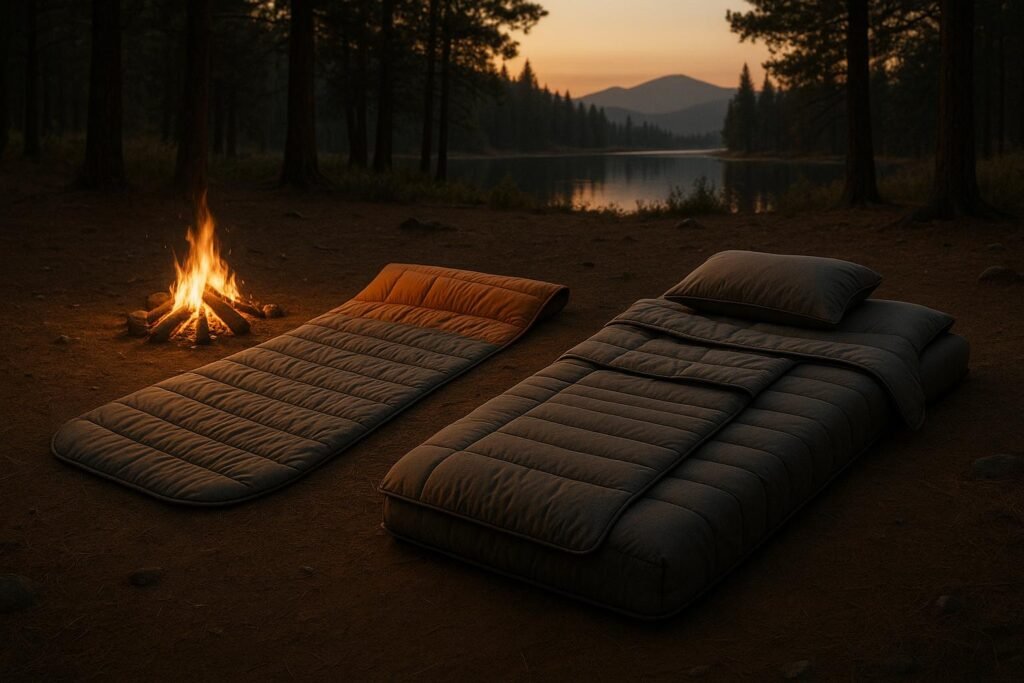
When packing for outdoor adventures, multi-function sleeping gear can save you space, weight, and money. These systems combine multiple uses – like sleeping bags that double as quilts or wearable jackets, and sleeping pads that integrate with bags for better warmth. They’re ideal for backpackers, campers, and paddlers who want flexibility across seasons and conditions. Key features to look for include temperature ratings, R-values, and insulation types (down or synthetic). Choosing the right setup depends on your activity, climate, and comfort needs. The goal? A lighter pack, fewer items, and a better night’s sleep outdoors.
ONE Sleeping System For All Season Camping? This Is It!
What Is Multi-Function Sleeping Gear?
Multi-function sleeping gear is all about versatility. These systems are designed to perform multiple roles – like transforming from a sleeping bag into a quilt or even doubling as camp seating. Instead of packing separate items for sleeping, staying warm, or sitting comfortably, you get one adaptable setup. For instance, a bag might spread out into a quilt on warm nights and cinch into a mummy shape when temperatures drop. Some wearable designs even function as insulated jackets, perfect for those chilly mornings while cooking breakfast or scanning the horizon for wildlife.
The concept is straightforward: cut down on weight and bulk by replacing single-purpose items with gear that does more, all while ensuring you stay warm, comfortable, and safe in varying outdoor conditions. This is especially important because your sleeping system is often one of the heaviest and bulkiest items in your pack. For U.S. backpackers and campers covering 10, 15, or even 20+ miles a day, a heavy load can lead to exhaustion or even injuries. Every ounce saved means less strain, leaving more energy for the trail – and more room in your pack for essentials like food, water, or safety gear.
Another big draw? Many outdoor enthusiasts want a single system that works across different seasons and trip types. A convertible bag that’s great for summer camping in the Southeast but also handles cool spring nights in the Rockies offers better value and practicality than owning multiple bags. Plus, a modular system lets you adjust on the go. If the weather changes or you decide to extend your trip, removable liners or layers allow you to tweak insulation without packing extra gear "just in case." This adaptability is a game-changer for activities like thru-hiking, bikepacking, or paddling trips, where conditions can vary day by day. Let’s dive into the features that make these systems so versatile.
Features That Add Functionality
Multi-function sleeping gear comes in a variety of designs, each offering flexibility in its own way. Convertible sleeping bags and bag-quilt hybrids are among the most popular. These systems often feature full-length, two-way zippers that allow the bag to open completely into a quilt or blanket. On warm nights, you can spread it out for better airflow. When it gets colder, zip it back up into a snug mummy or semi-rectangular shape. Some models even include footbox zippers or drawcords, so you can switch between heat-trapping and ventilated modes in seconds.
Sleeping bag and pad integration systems take things a step further. These setups use straps, sleeves, or snaps to attach the bag or quilt directly to your sleeping pad, keeping you centered and eliminating drafts around the edges. This is especially handy for ultralight quilts, which rely on the pad for bottom insulation. By anchoring the bag to the pad, you stay warm and comfortable without the extra weight of full underside insulation.
Modular and wearable systems offer even more options. Modular designs might include a base sleeping bag with a removable liner, over-quilt, or zip-in shell. This allows you to add or remove layers depending on the season, turning a 3-season bag into a winter-ready setup or stripping it down for summer trips. Wearable designs, sometimes called "quilt-jackets" or "bag-coats", come with arm ports, waist drawcords, and snaps so you can move around camp while wearing the bag. This eliminates the need for a separate insulated jacket, saving both weight and space.
Other functional touches include cinchable hoods and insulated draft collars, which help trap warmth around your head and neck. Some systems also feature pad sleeves that double as pack frames or footboxes that can be opened for ventilation or closed to retain heat. A great example is the U.S. military’s Modular Sleep System (MSS), which combines multiple bags, a bivy, and a compression sack into a versatile setup for different environments. While not as lightweight as modern options, it highlights how modular designs can extend the range and lifespan of sleep gear.
These thoughtful design elements not only improve flexibility but also enhance warmth and efficiency, which are reflected in their performance ratings.
Performance Ratings and Specifications
Understanding the technical details of your sleep system is key to matching it to your needs. Temperature ratings, measured in degrees Fahrenheit in the U.S., indicate the lowest temperature at which an average sleeper can stay reasonably warm. However, factors like your metabolism, clothing, humidity, wind, and the insulation of your sleeping pad all affect how warm you’ll actually feel. Many seasoned campers plan for a 10°F safety margin below the coldest expected temperature. For example, if nighttime lows might hit 30°F, a bag rated to 20°F provides a comfortable buffer. Manufacturers often list separate ratings – comfort, limit, and survival – with the comfort rating being the most practical for planning.
R-value, which measures how well a sleeping pad resists heat loss to the ground, is another critical factor. Higher R-values mean better insulation. For instance, the Therm-a-Rest NeoAir XLite NXT has an R-value of about 4.5, making it a solid choice for 3-season use. For colder conditions, like early-season storms or winter camping, a pad like the Therm-a-Rest NeoAir XTherm NXT (R-value ~7.3) provides extra warmth. In multi-function systems, the pad’s insulation often allows the bag or quilt to be lighter and more compact. Pairing a high-R-value pad with a versatile bag-quilt hybrid can be more effective – and lighter – than relying on the warmest bag alone.
Insulation type and fill power are also important. Many multi-function bags use 850+ or 900-fill-power hydrophobic goose down, which offers excellent warmth-to-weight ratios and compresses well for easy packing. Synthetic insulation, while heavier and bulkier, performs better in wet conditions and stands up to repeated compression, making it a good choice for damp climates or users prioritizing durability.
Design details like zippers, hoods, draft collars, and baffles directly influence comfort and warmth. Full-length zippers with draft tubes block cold air from sneaking in, while adjustable hoods and insulated collars help retain heat around your head and shoulders. Baffles, which hold insulation in place, should be well-constructed to prevent cold spots caused by shifting or compressed fill.
Many bags come in multiple lengths and widths to suit different body types. A properly sized bag minimizes dead space, improving thermal efficiency and comfort. If you’re a side sleeper or move around a lot, a roomier cut with convertible features can make a big difference in how well you rest.
When planning your multi-function sleep system, think of it as a complete setup – bag or quilt, pad, liner, clothing, and possibly a bivy – rather than focusing on individual pieces. Combining a moderately warm bag with a well-insulated pad and appropriate sleep clothing often creates a lighter, more adaptable system than relying on one heavy-duty bag. Test your setup on short trips or close to home before venturing deep into the backcountry. Reliable components like durable zippers and proven insulation should always take priority over flashy extras that add complexity without real benefits.
Types of Multi-Function Sleeping Gear
Multi-function sleeping gear comes in three main categories, each offering a mix of flexibility and practicality for different outdoor adventures. Choosing the right type depends on your activities and the conditions you expect to face.
Convertible Sleeping Bags and Quilts
Convertible sleeping bags and quilts are designed to function both as a traditional sleeping bag and as an open quilt. With zippers or adjustable closures, they can be fully opened for better ventilation on warm nights or sealed tight to retain heat when it’s chilly. This versatility makes them a favorite among ultralight backpackers and thru-hikers who often deal with unpredictable weather.
These designs often use high-fill-power down to provide warmth without adding extra weight. Quilts, in particular, skip the back insulation entirely, relying on a sleeping pad underneath to keep you warm. Take the Therm-a-Rest Corus quilt, for example – it’s a three-season layer that can be paired with another bag or liner for colder conditions, extending its usability without needing a separate winter bag.
Convertible sleeping gear also works well for car camping. You can use the bag as a blanket on an air mattress or cot, or even zip two compatible bags together for shared warmth and comfort.
Sleeping Bag and Pad Systems
Sleeping bag and pad systems are designed to integrate a sleeping bag or quilt with a sleeping pad using features like pad sleeves, straps, or snap connectors. This setup keeps you securely on the pad all night, reducing drafts and preventing you from rolling onto the cold ground. It’s especially helpful for side sleepers or restless sleepers who change positions frequently.
By anchoring the sleeping bag to the pad, manufacturers often reduce or skip insulation on the underside of the bag. The pad takes care of ground insulation, allowing the sleeping bag to focus on trapping warm air around your body. This approach not only enhances thermal efficiency but also makes the system lighter and more compact. Many modern designs include attachment points to ensure a snug and stable fit, keeping you warm and comfortable throughout the night.
Modular and Wearable Systems
Modular systems provide incredible flexibility by combining multiple components that can be layered or used independently. A typical setup might include a lightweight summer bag, a cold-weather bag, a waterproof bivy cover, and a compression sack. With these pieces, you can adapt your sleeping system to a variety of conditions, from mild summer nights to freezing winter expeditions – all without carrying multiple separate bags. These systems are particularly useful for overlanders, hunters, and campers who need one kit to handle a range of climates.
Wearable systems, on the other hand, double as camp clothing. With armholes, full-length zippers, and adjustable hems, they can transform into an insulated parka or poncho. Perfect for cold-weather camping or hanging out at basecamp, these "quilt-jackets" or "bag-coats" let you stay warm and mobile without needing a bulky jacket.
When deciding between these options, think about your usual activities and the environments you’ll be in. Convertible bags and quilts are great for backpackers who need flexibility, sleeping bag–pad systems prioritize warmth and stability, and modular or wearable setups are ideal for year-round adventurers who want maximum adaptability.
sbb-itb-5a98267
What to Look for When Evaluating Sleeping Gear
Now that you’ve explored the various designs of multi-function sleeping gear, it’s time to dive into the key performance features that make all the difference. Once you’ve settled on the type of gear you need, take a closer look at its specifications to ensure it meets your needs.
Insulation Types and Fill Power
When it comes to insulation, multi-function sleeping gear typically uses either down insulation (sourced from goose or duck) or synthetic fibers, each with its own pros and cons. Down insulation stands out for its excellent warmth-to-weight ratio and compressibility, making it ideal for those who prioritize lightweight gear. However, it tends to be pricier and needs hydrophobic treatment to maintain performance in damp conditions. On the other hand, synthetic insulation is bulkier but shines in wet environments because it retains warmth even when damp, dries quickly, and is easier on the wallet.
Another important factor is fill power, which measures the quality and loft of down. Higher fill power (like 800–900) traps more air per ounce, resulting in lighter and more compressible gear. Mid-range options (around 650–750) often strike a balance between performance and cost, making them a popular choice for many users in the U.S.. Some advanced systems even combine treated down with water-resistant fabrics or synthetic overlays, offering a versatile solution for variable weather conditions.
Weight, Packed Size, and Durability
The weight and packed size of your sleeping gear can significantly impact your comfort, especially if you’re hitting the trails. Backpackers usually prioritize lightweight, compact gear, while car campers may lean toward options with extra features. For example, a convertible sleeping bag paired with a sleeping pad can work well for both casual car camping and more intense backpacking trips.
Durability is another critical factor. The denier of the shell fabric plays a big role here. Lower-denier fabrics are lighter and better suited for gentle use, while higher-denier fabrics offer greater abrasion resistance for tougher conditions. Look for durable zippers, reinforced stitching, and a solid manufacturer warranty to ensure your gear lasts. Adding a liner can also help protect the insulation and extend the lifespan of your gear without adding much weight.
Additional Functional Features
Extra features can make a big difference in how versatile and user-friendly your sleeping gear is. Look for options like two-way zippers for adjustable ventilation, pad-attachment systems to minimize drafts, removable liners for easy cleaning, and interior pockets for storing small essentials. These additions can enhance your gear’s functionality without adding unnecessary bulk.
For instance, you can pair a mid-rated convertible sleeping bag with a high-R-value pad for colder nights, then use the same bag as a quilt with a lighter pad in warmer weather. This kind of adaptability shows how a single system can meet your needs across different seasons.
How to Choose the Right Sleeping Gear
Once you know what to look for in sleeping gear, the next step is finding the setup that suits your specific needs. The best choice depends on where you’re headed, what activities you have planned, and how you prefer to sleep.
Match Gear to Your Activity
The type of adventure you’re embarking on plays a big role in determining the gear you’ll need.
For car camping, comfort takes precedence over weight and packability. You can opt for spacious rectangular or semi-rectangular sleeping bags that unzip completely to double as blankets. Pair these with thicker self-inflating or foam-core pads for a bed-like feel. For family or couples, bags that convert into doubles are a great option. On warm summer nights, bags that can transform into blankets add an extra layer of flexibility.
Backpacking, on the other hand, is all about efficiency. Every ounce matters when you’re carrying everything on your back. Lightweight mummy or semi-rectangular bags (or quilts), high-fill-power down (800–900 range), and compact air pads with the right R-value for cold nights should be your focus. Modular systems are also a smart choice – using one insulated pad with interchangeable overbags or quilts lets you adapt to different temperatures without lugging extra gear.
Paddling trips bring their own set of challenges, particularly moisture. Canoeing, kayaking, or rafting means your gear might face water exposure, so synthetic insulation or water-resistant down is a must. Waterproof compression sacks are key, and modular setups with a separate bivy or shell can double as emergency storm protection. Multi-use gear, like wearable quilts or systems that combine jackets with half-bags, can keep you warm during long evenings without requiring extra dry layers.
Once you’ve matched your gear to your activity, it’s time to consider the climate and temperature range.
Consider Climate and Temperature Range
Your sleeping gear should be rated at least 10–15°F below the coldest temperature you expect to encounter. Lab ratings are based on ideal conditions, but real-world factors like wind, humidity, and individual sleeping habits can make it feel colder – especially in high-altitude areas or exposed deserts.
For most conditions, a 30–35°F three-season sleeping bag paired with a pad (R-value 3–4) works well. For shoulder-season or winter trips, you’ll need gear rated closer to 15–20°F and pads with an R-value above 4.5. In cold weather, the pad’s R-value is often more critical than the bag itself, as much of your body heat is lost to the ground. Upgrading a pad from R 2 to R 4 can feel like adding 10–15°F to your sleeping bag. For snow camping or extreme cold, look for pads with an R-value of 5 or higher. Stacking pads is another option if needed. For example, the Therm-a-Rest NeoAir XLite NXT pad (R-value 4.5) is suitable for most three-season conditions, while the XTherm NXT (R-value 7.3) is designed for winter use.
A multi-function setup can simplify things. A high-R-value pad can be used year-round, paired with a lighter summer bag or quilt that doubles as a liner or overbag during colder spells. Some models even allow you to adjust the volume to fine-tune heat retention by about 10°F.
When deciding between down and synthetic insulation, think about your typical climate and activities. Down is lighter, warmer for its weight, and compresses better – ideal for backpackers – but it requires careful moisture management and performs best in dry conditions. Synthetic insulation, on the other hand, handles dampness well, dries faster, and is generally more affordable. It’s a solid choice for humid environments, rainy seasons, or paddling trips where water exposure is a concern.
With your activity and climate in mind, you’ll also need to balance your choices against your budget and comfort preferences.
Budget, Comfort, and Fit
Understanding what you’re paying for can help you balance cost with performance. Entry-level sleeping bags from major retailers typically cost $60–$100. These often feature synthetic insulation and bulkier rectangular designs. Mid-range options, priced between $200–$350, cater to backpackers and include features like 650–800 fill-power down, pad integration, and convertible zippers. High-end bags with premium down (800–900 fill) and ultralight designs for cold or demanding conditions can cost $400–$700 or more.
Budget-friendly options may weigh more and pack down less, but they often offer greater durability. Mid-range gear strikes a balance, offering good features at a reasonable price. Modular systems can range from $300 to over $800, depending on the quality and components.
Fit and comfort are just as important as temperature ratings. A sleeping bag or quilt should cover your shoulders without compressing insulation at your feet. Side sleepers or those with broader shoulders may need extra width to move comfortably without crushing the loft. Features like expanded footboxes, stretch panels, or wrap-style quilts can make a big difference. Integrated pad attachments are also helpful for keeping your setup in place through the night.
If possible, test gear with your usual sleepwear to ensure a good fit. Manufacturers often provide size charts, which can help you find the right option.
For a practical solution, consider a modular system that includes a pad, bag or quilt, optional liner or overquilt, and a bivy or shelter. This setup can adapt to various needs – whether it’s a summer car-camping trip, a backpacking adventure in the Rockies, or a rainy paddling excursion. Outdoor blogs like Adventurism.co (https://adventurism.co) offer trip reports, gear lists, and packing tips tailored to different U.S. climates and activities, helping you make informed decisions about your sleeping gear.
Final Thoughts
When it comes to multi-function sleeping gear, the goal is to create a system where all the pieces work together seamlessly, rather than just collecting individual items. The right mix of a convertible sleeping bag or quilt, a well-insulated pad, and flexible accessories can prepare you for a variety of conditions while keeping your pack lighter and less bulky.
The key decisions boil down to three main factors: the type of system you need (like convertible bags, integrated bag-pad combos, or modular setups), the performance features that impact your comfort (such as insulation type, R-value, temperature rating, and fit), and how well those choices align with your specific trips and activities. Whether you’re tackling chilly nights in the Rockies or enjoying mild summer camping in the Southeast, having gear that adapts to different conditions can make all the difference. Add-ons like liners, quilts, or wearable components can expand your system’s range and often provide better value over time.
Before making a purchase or upgrade, take a moment to consider your needs: What activities are you planning? What temperatures will you encounter? How long are your trips? What’s your preferred sleep style? And don’t forget to factor in your comfort preferences – because even the most "optimized" system won’t get much use if it feels cramped or uncomfortable.
Avoid common pitfalls like focusing solely on a sleeping bag’s temperature rating while ignoring the pad’s R-value or the fit of the system. Many people also get caught up chasing ultra-lightweight or budget options, only to end up with gear that’s uncomfortable, lacks durability, or doesn’t suit their sleeping position. Striking the right balance between warmth, comfort, weight, and cost is essential to making a choice you won’t regret.
Even seasoned backpackers refine their sleep systems over time. Try testing your gear in low-stakes settings like your backyard, car-camping trips, or short overnights. These trials can help you fine-tune elements like clothing layers, ventilation, and how your pad and quilt work together. Keep simple notes on what worked and what didn’t – maybe you were too cold at a certain temperature or found a pad too noisy – and adjust accordingly. Often, small tweaks like adding a liner or changing your sleep clothing can make a big difference without requiring a complete overhaul.
A versatile sleep system gives you the flexibility to pack for quick weekend trips, spontaneous road adventures, or a mix of car camping and backcountry overnights. Lighter, more adaptable gear can also make extended trips more manageable, whether you’re covering more miles, exploring remote areas, or combining activities like backpacking and paddling without needing separate setups for each. Resources like Adventurism.co (https://adventurism.co) offer tips and trip ideas to help you get the most out of your gear in a variety of settings.
Ultimately, the best sleep system is one that keeps you warm, comfortable, and confident during your adventures – not just the lightest or most expensive option. Start by honestly assessing your needs, invest in gear that suits your primary activities and climates, and refine your setup through real-world use. This approach ensures your gear leads to more nights under the stars, not just more clutter in your closet.
FAQs
What’s the difference between down and synthetic insulation, and how do I choose the best option for my multi-function sleeping gear?
When deciding between down and synthetic insulation, it’s all about matching your choice to your specific needs, the environment you’ll be in, and how much you’re willing to spend. Down insulation, made from duck or goose feathers, is known for being lightweight, highly compressible, and offering exceptional warmth for its weight. But there’s a catch: it doesn’t perform well when wet and typically comes with a higher price tag.
On the flip side, synthetic insulation is often more budget-friendly, holds up better in damp conditions, and dries much faster. The trade-off? It can be bulkier and a bit heavier compared to down.
If you’re heading out into cold, dry conditions or need gear that’s easy to pack and carry, down might be your go-to. However, for wetter climates or if you’re keeping an eye on costs, synthetic insulation is a solid, dependable choice. Think about what matters most to you – whether it’s warmth, packability, weight, or weather resistance – before making your pick.
What are the advantages of combining a sleeping bag with a sleeping pad for outdoor adventures?
Integrating a sleeping bag with a sleeping pad can make a world of difference when it comes to outdoor sleeping. The sleeping pad acts as a barrier between you and the cold, hard ground, providing insulation to retain body heat and cushioning for added comfort. This pairing not only keeps you warmer but also helps you sleep more soundly, even in chilly conditions.
Many sleeping bags are specially designed to complement sleeping pads, featuring built-in straps or sleeves to secure the pad in place. This prevents the frustrating experience of sliding off the pad in the middle of the night. For backpackers and campers, this setup strikes a great balance between comfort and practicality, making it easier to enjoy a restful night outdoors.
How do I choose multi-function sleeping gear that works well in different climates and for various activities year-round?
To make sure your multi-function sleeping gear works well across different climates and activities, prioritize flexibility and practicality. Opt for gear with adjustable features, such as removable insulation layers or materials that help regulate temperature. This way, you’ll stay comfortable whether it’s warm or chilly. Choosing water-resistant and breathable fabrics is also key to dealing with unpredictable weather.
Think about how you plan to use the gear, too. If you’re backpacking, lightweight and compact designs are a must. On the other hand, sturdier options might be better for car camping or situations where portability isn’t a concern. Always check the gear’s temperature rating to make sure it matches the weather you’ll encounter on your trips.