Introduction
For those drawn to the great outdoors, wild camping offers an unparalleled way to connect with nature, escape the noise of daily life, and rediscover simple pleasures. But for beginners, stepping into the world of wild camping can feel overwhelming. What gear do you really need? How do you pick a suitable campsite? And how can you ensure safety and comfort without overpacking?
This guide breaks down everything you need to know, based on practical, real-world experience. Whether you’re completely new to wild camping or looking to refine your approach, this article will walk you through the essentials – from choosing the right tent to navigating your first solo camp. Let’s dive into the transformative journey of wild camping, one step at a time.
Why You Should Start Wild Camping
Wild camping isn’t just about pitching a tent in the wilderness – it’s a way to reset your mind, explore untamed landscapes, and embrace the serenity of nature. Unlike traditional camping, it’s about seeking adventure beyond organized campgrounds and connecting with the raw outdoors.
However, starting out can be intimidating. Solo camping, in particular, requires overcoming mental hurdles like fear of isolation. But as experienced wild campers know, the rewards far outweigh the challenges. The key is preparation.
Getting Started: The Bare Essentials
1. Start Simple: Choosing Your Shelter
When it comes to wild camping, your shelter is the cornerstone of your experience. But don’t overcomplicate it at the beginning.
- Tents vs. Bivvy Bags:
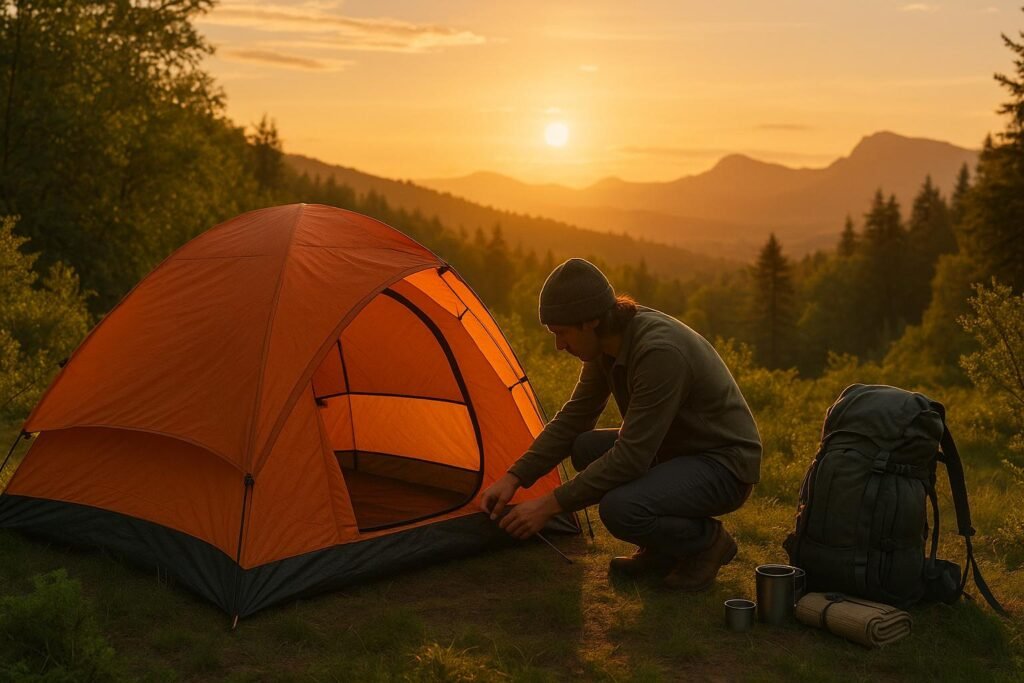
The video emphasizes that first-time campers should avoid bivvy bags. While stealthy and lightweight, bivvy bags can be claustrophobic and uncomfortable for beginners. Instead, invest in a secondhand or affordable two-person tent. A two-person tent offers enough space for you and your gear without being excessively bulky. Look for budget-friendly options from brands like OEX or Naturehike, easily available on platforms like eBay or outdoor retailers. Keep in mind: size matters. A tent that’s too small will leave you cramped, while one that’s too large may be unnecessarily heavy to carry. - Practical Tip: Always set up your tent at home or in a park before your first trip. Familiarize yourself with the process to avoid frustration in the wilderness.
2. Comfort Above All: Create a Sleep System
Your sleep system determines how well-rested you’ll feel after a night under the stars. It consists of two elements: what you sleep on and what you sleep in.
- Sleeping Mats:
A good sleeping mat provides insulation from the ground and enhances comfort. Options include:- Closed-cell foam mats: Lightweight, affordable, but offer minimal comfort.
- Inflatable mats: Better insulation and comfort, but pricier.
Pay attention to the R-value of the mat, which measures insulation. For summer camping, a low R-value suffices. For colder weather, look for mats with an R-value of at least 3.
- Sleeping Bags:
Beginners should stick with synthetic sleeping bags as they’re affordable and durable. Choose a bag rated for two or three seasons depending on your climate. Avoid down bags initially since they’re expensive and better suited for experienced adventurers. - Pro Tip: If your sleeping bag isn’t warm enough, layer with a lightweight fleece blanket or pair it with a quilt.
3. Carrying It All: Selecting the Right Backpack
Your backpack is the backbone of your wild camping setup. But don’t overthink this purchase initially.
- Start with What You Have: If you already own a large rucksack, use it. For longer-term plans, look for a 60-65L backpack. Budget options like the Nepal 65 are perfectly adequate for beginners.
- Avoid Overpacking: New campers often carry far more gear than necessary, leading to unnecessarily heavy packs. As a rule of thumb, pack your sleeping system at the bottom, heavier items in the middle, and daily essentials at the top.
Fine-Tuning Your Setup: Gear and Tools
4. Cooking and Eating Essentials
Cooking while camping should be simple and efficient. Start with a basic camp stove (gas or alcohol-based), a lightweight pot for boiling water, and a durable spork. Avoid splurging on titanium cookware or extensive camping utensils right away – those are upgrades for later.
- Try This First: Use pre-packed meals or instant noodles for your first few trips. They’re lightweight and easy to prepare.
5. Clothing: Layering Is Key
Wild camping is all about adaptability, and proper layering ensures comfort in changing conditions.
- Start with basic, budget-friendly layers:
- A base layer made of synthetic or merino wool.
- A mid-layer like a fleece jacket for added warmth.
- Waterproof outer layers.
- Down jackets are the ultimate upgrade for cold nights but aren’t essential for your first outings.
6. Optional Comfort Items
While not strictly necessary, certain items can significantly improve your experience:
- Camp Chairs: Go for lightweight folding chairs if sitting on the ground isn’t appealing.
- Tables: A small, collapsible table makes meal prep more convenient.
- Lighting: Rechargeable headlamps or lanterns are invaluable for nighttime tasks.
Where to Camp: Tips on Location
Wild camping requires careful site selection. When choosing a spot:
- Avoid farming areas, especially fields with livestock.
- Look for flat, dry ground away from flood-prone areas.
- Always research local regulations to see if wild camping is permitted.
Wild Camping in the UK
- In England and Wales, wild camping is restricted, but places like Dartmoor allow it in designated zones.
- Scotland permits wild camping under its Right to Roam laws, making it an excellent destination for beginners.
The Evolution of Wild Camping: Learning Over Time
The speaker emphasizes that wild camping is an evolutionary process. No one starts out with the "perfect setup", and every trip teaches you something new.
- Over time, you’ll refine your gear to suit your preferences, upgrading to lighter tents, more comfortable sleeping systems, and durable backpacks.
- You’ll also discover what’s essential for your style of camping – whether it’s prioritizing comfort or embracing minimalism.
Mental and Physical Benefits of Wild Camping
Beyond the gear, wild camping offers profound mental and physical benefits:
- Mental Reset: Camping disconnects you from screens and daily stressors, allowing you to recharge in nature.
- Physical Activity: Carrying a pack and exploring rugged terrains provides a full-body workout.
Key Takeaways
- Start with the basics: A budget-friendly tent, sleeping bag, and mat are all you need for your first trip.
- Embrace trial and error: Your gear will evolve as you discover your unique camping preferences.
- Pack light and smart: Avoid overpacking by sticking to essentials.
- Location matters: Research your camping area and follow local regulations.
- Layer your clothing: Prepare for changing weather conditions by layering effectively.
- Learn from experience: Every trip offers insights on what works and what doesn’t.
- Enjoy the process: Wild camping is as much about the journey as the destination.
Conclusion
Wild camping is an ever-evolving journey of discovery, patience, and connection with nature. While the first few trips may come with challenges, the rewards of self-reliance, quietude, and awe-inspiring views are unmatched. Start small, embrace the adventure, and let nature guide you to a world of freedom and simplicity.
So pack your gear, step outdoors, and begin your wild camping story today. The wilderness awaits!
Source: "Full Beginners Guide to Wild Camping" – Wild Beard, Wild Camping, YouTube, Sep 3, 2025 – https://www.youtube.com/watch?v=HwnDVHPkqwk
Use: Embedded for reference. Brief quotes used for commentary/review.